Nana Muazin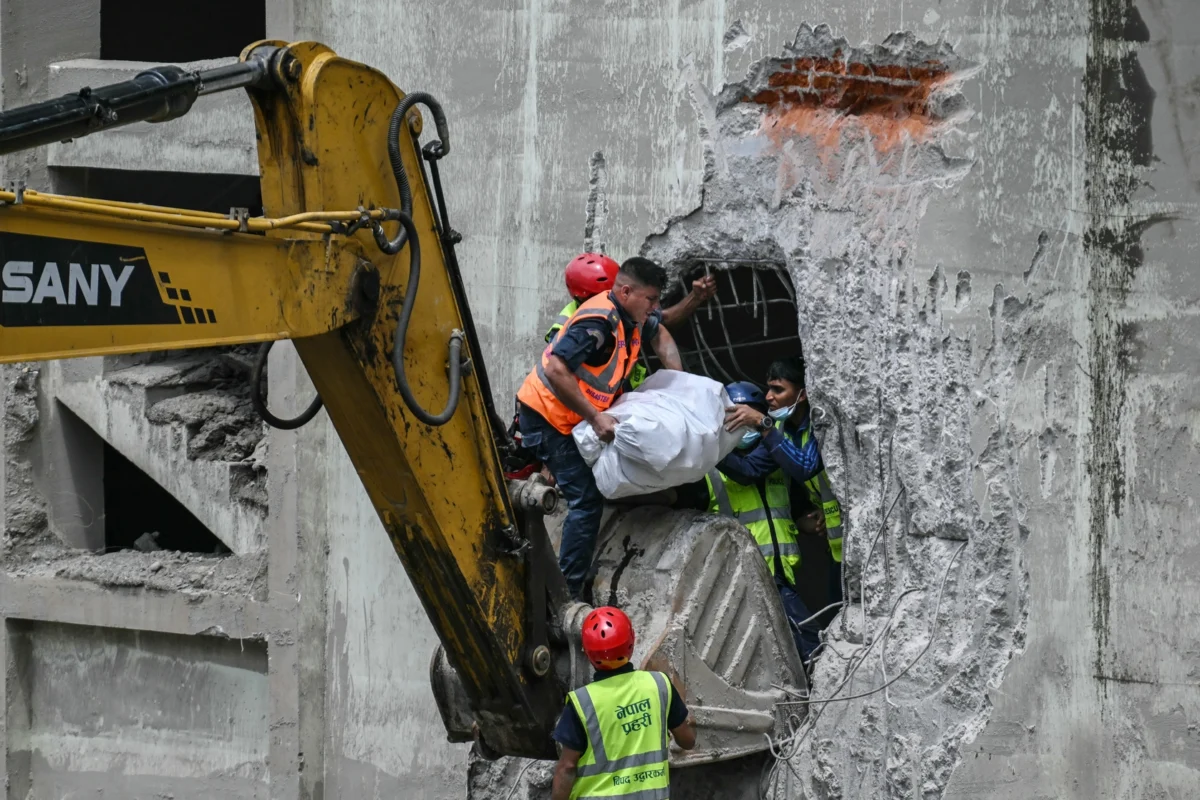
Rescuers from Nepal and China battled tirelessly through Sunday, confronting treacherous leg-sucking mud, the constant threat of rising river levels, and the unpredictable dynamics of a newly formed lake, as they intensified their search for thousands missing in the aftermath of a devastating wall of water and debris that swept through the Himalayas, engulfing entire villages. The colossal flash flood, triggered by a glacial collapse, has left a trail of unimaginable destruction, with official figures painting a grim picture of loss and a daunting humanitarian crisis unfolding across the transboundary region.
The catastrophe, which originated on the China-Nepal border on Wednesday morning, August 27, 2026, was officially attributed to a glacial collapse on the southern slope of Lirung Peak in Nepal, according to reports from the US Geological Survey (USGS) and China’s state news agency Xinhua. This geological event unleashed an ice-rock avalanche, which rapidly transformed into a massive debris flow, plummeting more than 20 kilometers downstream. The torrent crashed into Gyirong Port in Tibet and surged into Nepal’s river systems, causing widespread devastation. As of Sunday, August 30, 2026, the combined official tally from both nations indicated a staggering 3,044 individuals remained missing, alongside 750 confirmed deaths. The tragic scope of the disaster extended even further, with reports of some bodies being swept downstream as far as India, highlighting the interconnectedness of the Himalayan river systems and the far-reaching impact of such an event. In Nepal alone, 734 deaths were confirmed, with 2,498 people, including hundreds of foreign nationals, unaccounted for. Across the border in Tibet, 16 lives were lost, and 546 individuals were still missing, as reported by China’s state broadcaster CCTV. Indian officials further corroborated the cross-border impact, announcing the recovery of seven bodies from rivers flowing from Nepal, believed to be victims of the floods.

The Genesis of Disaster: Glacial Collapse and GLOFs
The event described is characteristic of a Glacial Lake Outburst Flood (GLOF), a phenomenon of increasing concern in high-mountain regions worldwide, particularly the Himalayas. GLOFs occur when natural dams, typically composed of glacial moraine (accumulations of unconsolidated debris), containing glacial meltwater lakes fail suddenly. This failure can be triggered by various factors, including an ice avalanche falling into the lake, an earthquake, or, as in this case, a direct collapse of a glacier front or ice-rock avalanche directly generating a massive debris flow. The Lirung Peak event, involving a fractured glacier triggering an ice-rock avalanche, demonstrates the inherent instability of these high-altitude environments.
Scientific consensus increasingly links the rising frequency and intensity of such events to climate change. Global warming leads to accelerated glacier melt, forming and expanding glacial lakes, and destabilizing ice and rock formations. The UN climate chief, Simon Stiell, underscored this connection in a statement, remarking, "The sudden glacial collapse and flash flood is a devastating reminder of how fragile these mountain environments can be." The Himalayas, often referred to as the "Third Pole" due to its vast ice reserves, are particularly vulnerable. The rapid retreat of glaciers creates larger and more numerous proglacial lakes, often dammed by unstable moraine, increasing the potential for catastrophic breaches. Monitoring these thousands of glacial lakes and developing robust early warning systems remains a significant challenge for regional authorities.
A Race Against Time: Rescue Operations and Challenges
Rescue efforts have been arduous and fraught with peril since the disaster struck. In Nepal’s Nuwakot district, where the Trishuli River bore the brunt of the deluge, emergency teams have been battling "leg-sucking mud" and the constant threat of further inundation. A critical focus of the Nepali army and engineers has been the Trishuli 3A hydroelectric site, where workers are believed to be trapped in a tunnel. By Sunday, rescuers achieved a crucial breakthrough, successfully inserting a pipe into the passage and commencing the delivery of air. Nepali Home Minister Sudan Gurung confirmed this development in a statement, offering a glimmer of hope amidst the despair. However, the operations were severely hampered early Sunday by overnight rain and rising river waters, which refilled the excavation area. Conditions eased later in the day, allowing teams to resume their efforts, but the unpredictable weather remains a formidable adversary.

Across the border in Tibet, Chinese rescuers faced similar, if not more immediate, dangers. Near the hardest-hit area of Gyirong Port, rescue operations were temporarily paused on Sunday. State media reported that rescuers were "moved to a safe location" after a new lake formed due by a landslide, posing an imminent risk of further flooding. The formation of such impoundment lakes is a common secondary hazard following large-scale debris flows, as vast quantities of sediment block river channels. Later on Saturday, however, state broadcaster CCTV provided an update, citing China’s Ministry of Water Resources, which stated that the lake was "discharging naturally" and had been "essentially drained," allowing for a cautious resumption of operations. Xinhua reported a significant deployment, with a total of 2,141 rescuers near the Gyirong site, including over 500 in the worst-affected zone. Chinese authorities also reported the evacuation of 555 stranded tourists and 499 Chinese residents from Tibet.
Infrastructure Crippled: Economic Fallout and Recovery Demands
The economic repercussions of the disaster are immense, particularly for Nepal, a nation already contending with significant financial pressures. The Himalayan region is a hub for vast energy infrastructure projects, and the floods have dealt a severe blow to this vital sector. Nepal’s disaster authority listed a staggering 933 hydropower workers among the missing, underscoring the direct impact on critical national infrastructure and the human capital invested in it. Hydroelectric power is a cornerstone of Nepal’s energy supply and a potential source of export revenue, making the damage to sites like Trishuli 3A particularly concerning for the country’s long-term economic outlook.
Beyond energy, entire villages have been obliterated. Buddhi Ram Dangol, a survivor in Nepal’s Nuwakot district, articulated the devastating reality: "All the settlements near the river were swept away. There is nothing left." This sentiment echoes across affected communities, where homes, farmlands, and livelihoods have been irrevocably lost. The reconstruction bill, according to Nepali Foreign Minister Shisir Khanal, could run into "billions of dollars," a sum that vastly exceeds Nepal’s limited domestic resources. Khanal issued an urgent appeal for specialized international assistance, including heavy-lift drones and advanced technology to locate trapped individuals, as well as forensic testing kits to identify bodies and freezer units for their storage, given the accelerated decomposition rate of bodies in water. The long road to recovery will require not only financial aid but also expertise in engineering, urban planning, and environmental restoration to rebuild resilient communities and infrastructure in a highly vulnerable landscape.

The Search for the Missing: Foreigners, Pilgrims, and Locals
The human toll of the disaster extends to a diverse group of individuals, reflecting the Himalayas’ global appeal as a destination for adventure and spiritual journeys. On Sunday, Nepal’s disaster authority reported that 589 foreigners were unaccounted for, a figure that includes trekkers drawn to the region’s breathtaking landscapes and Hindu pilgrims en route to Tibet’s sacred Mount Kailash. Among these were members of organized tours, such as the Isha Foundation, led by Indian guru Sadhguru. The Foundation stated in an Instagram post on Saturday that 80 of its members had been on a group trip in the area, adding a somber note that "At this time, there seems to be no encouraging indications of survivors at the immigration office area."
The agony of waiting to learn the fate of missing relatives is palpable. At an army base serving as a rescue hub in Bidur, Nepal, families huddled around lists of rescued individuals pasted on a wall, their faces etched with desperation. Kalka Sharda, scanning the names with a heavy heart, exemplified this collective anguish: "I have come here looking for my son." For many, the prospect of rebuilding their lives from nothing adds another layer of profound trauma to their grief. The identification of recovered bodies poses a significant challenge, particularly for those swept downstream or heavily damaged. The request for forensic testing kits and freezer units from Foreign Minister Khanal highlights the grim reality facing authorities as they strive to provide closure to grieving families. The psychological impact on survivors and communities, witnessing such widespread destruction and loss, will be enormous and long-lasting, necessitating comprehensive psychosocial support in the recovery phase.
Global Solidarity: International Aid Pours In
The scale of the disaster has prompted a swift and substantial international humanitarian response. Nations and international organizations have pledged significant financial aid and specialized assistance to support Nepal’s recovery efforts. The United States and Canada each committed $3.6 million in humanitarian aid. The United Kingdom followed suit with an offer of $6.8 million, demonstrating a strong commitment to assisting the affected region. The United Nations released $2.5 million in emergency funding, while the European Union promised $2.3 million.

Humanitarian organizations have also mobilized rapidly. The International Federation of Red Cross and Red Crescent Societies (IFRC) allocated over $1 million from its emergency funds and launched an emergency appeal for $31 million, signaling the extensive needs on the ground. Beyond financial contributions, specific expertise has been offered. Malaysia announced it would send search and rescue specialists to assist in operations and contribute an additional US$1 million to Nepal for recovery efforts and victims. These contributions, while significant, are just the initial steps in what will undoubtedly be a protracted and costly recovery process, underscoring the international community’s recognition of the immense challenge facing Nepal. The collaborative spirit, exemplified by the Chinese and Nepali foreign ministers discussing sharing satellite and hydrological data, is crucial for effective disaster management and future preparedness in the shared Himalayan ecosystem.
Long-Term Horizon: Climate Vulnerability and Future Preparedness
The devastating glacial collapse and subsequent flash flood serve as a stark warning about the increasing vulnerability of the Himalayan region to the impacts of climate change. While GLOFs have historically occurred, their frequency and potential for catastrophic consequences are amplified by warming temperatures, which accelerate glacial retreat and destabilize mountain slopes. The formation of new glacial lakes and the weakening of natural dams mean that communities downstream face heightened risks.
Addressing this challenge requires a multi-faceted approach. Enhanced scientific monitoring of glacial lakes and glaciers across the vast and remote Himalayan range is paramount, utilizing satellite imagery, ground-based sensors, and hydrological data. Developing robust early warning systems, capable of rapidly detecting potential GLOF events and disseminating timely alerts to downstream communities, is critical for saving lives. This also necessitates cross-border cooperation, as demonstrated by the discussions between China and Nepal on data sharing, given that many glacial systems and river basins traverse national boundaries. Beyond immediate disaster response, there is an urgent need for long-term strategies focused on climate change adaptation, including building resilient infrastructure, relocating vulnerable communities where necessary, and fostering a deeper understanding of the risks among local populations. The reconstruction efforts in Nepal and China must integrate these considerations, aiming to build back not just what was lost, but to build better and safer, in recognition of the evolving environmental threats posed by a warming planet.

The catastrophic events in the Himalayas underscore the urgent need for global action on climate change mitigation, alongside robust regional strategies for adaptation and disaster preparedness. As rescue operations transition into recovery and reconstruction, the resilience of the local communities, supported by international solidarity, will be tested to its limits. The memory of the "wall of water and debris" will forever be etched into the landscape and the lives of those affected, serving as a powerful reminder of nature’s formidable power and the critical importance of safeguarding these fragile mountain environments.


 Sagoh
Sagoh
 Asro
Asro