Ammar Sabilarrohman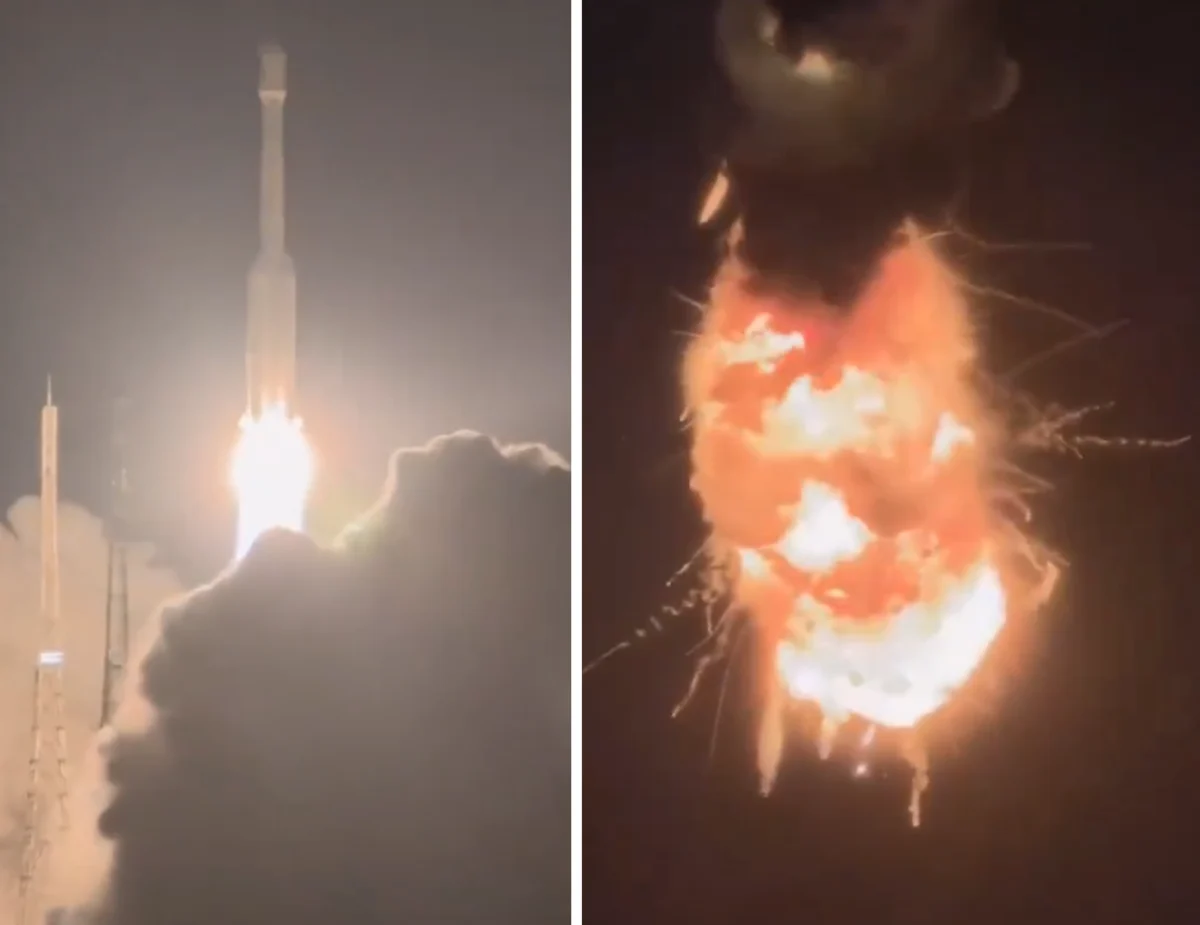
A Chinese Long March 7A carrier rocket, tasked with deploying the critical Zhongxing-4B communications satellite, suffered a catastrophic failure shortly after liftoff on Monday, August 10, 2026, with state media attributing the incident to a "flight anomaly" while widespread reports and vivid amateur videos depicted the spacecraft exploding dramatically in mid-air. The incident, which occurred at 8:02 pm local time (1202 GMT) from the Wenchang Space Launch Site on China’s southern Hainan island, marks a significant, albeit potentially temporary, blow to Beijing’s rapidly expanding and strategically vital space program, championed by President Xi Jinping as the nation’s "space dream."
A Fiery Ascent and Sudden Demise
The launch commenced as planned, with the powerful Long March 7A ascending into the night sky, a spectacle often watched by crowds gathered near the coastal launch facility. However, moments after its initial climb, eyewitness accounts and social media footage began to surface, painting a starkly different picture than the routine success China’s space endeavors have largely enjoyed in recent years. Singapore-based broadcaster Channel NewsAsia, among others, shared compelling videos showing a large fiery ball erupting in the sky, followed by debris. One particularly widely circulated video, reportedly posted by a social media user in Hainan just hours after the launch, captured the rocket disintegrating into a spectacular inferno approximately 85 seconds into its flight, leaving behind a lingering cloud of grey smoke before remnants presumably fell back to Earth. The visual evidence strongly suggests a violent explosion rather than a controlled abort, raising immediate questions about the integrity of the launch vehicle.

State news agency Xinhua, while confirming the failure, remained concise in its reporting, stating only that an "anomaly" occurred during the flight of the rocket, which was carrying the Zhongxing-4B communications satellite. The agency added that the cause of the failure is currently under investigation, a standard response from Chinese authorities in the aftermath of such incidents. This brevity contrasts sharply with the immediate and graphic imagery shared online, highlighting the often-divergent narratives between official Chinese state media and independent or citizen-generated reports.
China’s Ascendant Space Ambitions: The "Space Dream"
The failed launch unfolds against a backdrop of unprecedented investment and accelerated development in China’s space sector. Over the past two decades, Beijing has poured billions of dollars into its ambitious program, transforming it from a relatively nascent player into a formidable global competitor. President Xi Jinping has frequently invoked the "space dream," articulating a vision where China achieves technological independence, enhances national prestige, and establishes itself as a dominant force in space exploration and utilization. This vision encompasses a broad spectrum of objectives, from constructing a permanent space station to conducting crewed lunar landings and exploring distant planets.
China’s space program is centrally managed by the China National Space Administration (CNSA) and supported by a vast network of state-owned enterprises, research institutes, and universities. Its strategic importance is multi-faceted: it serves national security interests through advanced reconnaissance and communication capabilities, drives technological innovation across various industries, fosters national pride, and enhances China’s soft power and geopolitical influence. The program’s milestones have been numerous and impressive, including the successful Chang’e lunar missions (which included the first-ever soft landing on the far side of the Moon), the Tianwen-1 Mars mission (successfully landing a rover on the Red Planet), and the ongoing construction and operation of the Tiangong space station, a symbol of China’s sustained human spaceflight capabilities. These achievements underscore a methodical and determined approach to becoming a leading space power, challenging the long-held dominance of the United States and Russia.

The Long March Series: A Workhorse with Challenges
The Long March (Chang Zheng) series of rockets constitutes the backbone of China’s space launch capabilities, a family of expendable launch systems that have been in operation for over five decades. The Long March 7A, specifically, is a relatively new variant designed to be a medium-lift carrier rocket, optimized for placing heavy payloads, such as communications satellites, into geostationary transfer orbit (GTO). Its development was crucial for China’s growing demand for high-capacity satellite launches, particularly for advanced communications, navigation, and remote sensing missions.
This latest failure, however, is not the first for the Long March 7A. Its maiden flight in March 2020 also ended in failure, with Xinhua reporting at the time that a "malfunction occurred" shortly after launch. The specifics of that incident were never fully disclosed, but it led to a period of investigation and presumably modifications before subsequent successful launches of the variant. The recurrence of a failure for the same rocket type within a relatively short period raises legitimate questions about the vehicle’s reliability and the underlying design or manufacturing processes. While rocket science is inherently complex and failures are a known risk in space exploration, repeat failures of a specific variant can signal deeper systemic issues that require thorough scrutiny.
The Long March 7A is a three-stage rocket, utilizing kerosene and liquid oxygen (kerolox) propellants in its core and booster stages, a modern and environmentally friendly choice compared to older hypergolic fuels. Its design aims to enhance China’s independent access to space for its most demanding missions, particularly those requiring high-altitude orbits. The loss of the Zhongxing-4B communications satellite represents not just a financial setback, but also a delay in deploying critical infrastructure that could support various civil and potentially military applications, including enhanced broadband internet, broadcast services, and secure government communications.

The Wenchang Space Launch Site: China’s Gateway to High Orbits
The Wenchang Space Launch Site, located on the northeastern coast of Hainan Island, is China’s newest and southernmost launch facility. Its coastal location offers significant advantages, including the ability to launch larger rockets with heavier payloads due to the lower latitude, which provides a boost from the Earth’s rotation. Furthermore, its proximity to the ocean allows for debris from spent rocket stages to fall safely into the sea, minimizing risks to populated areas, a critical consideration for powerful launch vehicles like the Long March 7A and the even larger Long March 5. Wenchang is specifically designed to handle China’s next-generation heavy-lift rockets and missions targeting geostationary orbit, lunar, and interplanetary destinations, making it a cornerstone of the nation’s ambitious space agenda. The repeated failures of the Long March 7A from this strategically important site will undoubtedly prompt rigorous internal reviews of launch procedures, vehicle performance, and quality control.
Global Reactions and the Inherent Risks of Rocketry
The incident quickly garnered attention within the global space community. Elon Musk, CEO of SpaceX, a company intimately familiar with the complexities and risks of rocket launches, offered a concise and empathetic reaction on X (formerly Twitter). Commenting on a post about the failed launch, Musk stated, "rockets are insanely hard," adding, "I hope they have a speedy recovery." His words underscore a fundamental truth in the aerospace industry: despite decades of technological advancement, launching objects into space remains an incredibly challenging endeavor, fraught with numerous potential points of failure, from engine malfunctions to structural weaknesses or software glitches.

Musk’s company, SpaceX, itself has experienced its share of launch failures and explosions during the development and testing of its Starship program, illustrating that even the most innovative and well-funded space ventures are not immune to setbacks. Just days prior to the Chinese incident, a four-tonne piece of a SpaceX rocket was believed to have unintentionally crashed into the Moon, a separate but illustrative event highlighting the unpredictable nature of space objects and trajectories. Such incidents serve as a stark reminder of the fine margins and immense forces involved in spaceflight.
Internationally, the failure will be observed closely. While China has made great strides, a second failure for a key launch vehicle variant could prompt external analysts to re-evaluate the reliability figures of certain aspects of its program. However, it is unlikely to derail China’s long-term ambitions. Major space powers, including the United States, Russia, and Europe, have all experienced significant launch failures throughout their histories, and these setbacks, while costly, often lead to crucial lessons learned that ultimately strengthen future programs.
Implications and the Road Ahead
The loss of the Long March 7A and its Zhongxing-4B payload represents a significant financial and programmatic blow for China. The investigation into the "flight anomaly" will be critical. Chinese space engineers and scientists will meticulously analyze telemetry data, eyewitness accounts, and any recovered debris to pinpoint the exact cause of the failure. This process, while often opaque to external observers, is vital for implementing corrective measures and ensuring the safety and reliability of future missions. Potential causes could range from an engine failure in one of the stages, a structural issue, a guidance and control system malfunction, or even a problem with the payload fairing separation.

For China’s ambitious goal of landing astronauts on the Moon before 2030, a direct competition with the United States’ Artemis program, this setback introduces an element of caution. While the Long March 7A is not directly used for crewed lunar missions (which would rely on much larger Long March 9 or 10 rockets currently under development), launch vehicle reliability is paramount for any major space endeavor. Any questions regarding the quality control or engineering processes within China’s broader rocket manufacturing ecosystem could lead to delays or increased scrutiny across other projects.
However, China’s track record demonstrates resilience. The nation has consistently shown an ability to learn from failures, adapt, and push forward with its strategic objectives. The successful landing of a reusable rocket in July, a major step towards reducing launch costs and increasing frequency, is a testament to this persistent innovation. While the current failure is a visible misstep, it is more likely to serve as a catalyst for deeper introspection and refinement within its space program rather than a permanent impediment to its "space dream." The global space race continues, and while "rockets are insanely hard," China has proven its determination to overcome challenges on its path to becoming a preeminent force in the cosmos.

 Evan Lee Salim
 Jia Lissa