Dwi Wanna
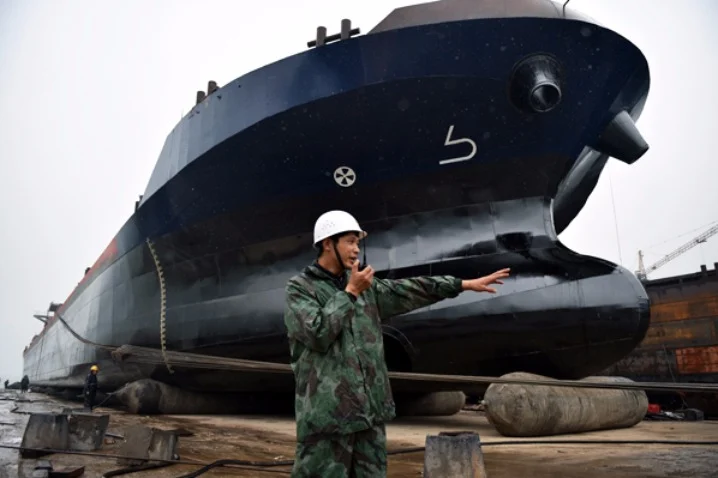
China’s shipbuilding industry has achieved a significant milestone, ascending to the top position globally in new orders over the past 11 months, successfully surpassing its long-standing rival, South Korea. This pivotal shift, confirmed by leading international industrial analysis agency Clarkson Research Services, marks the first time in seven years that China has secured the leading share of the global shipbuilding market, underscoring a profound transformation within its maritime manufacturing sector from sheer volume to high-value, technologically advanced, and environmentally sustainable vessels.
A Historic Shift in Global Maritime Dominance
According to data released by the reputable British shipbuilding and marine analysis agency Clarkson Research Services on a recent Friday, from January to November of the current year, China’s shipbuilding order volume reached an impressive total of 7.13 million compensated gross tons (CGT) across 324 vessels. This figure firmly placed China ahead of South Korea, which received 5.74 CGT during the same period. The compensated gross tonnage (CGT) metric is particularly important in the shipbuilding industry as it accounts for the amount of work required to build a ship, reflecting complexity and value rather than just simple tonnage or volume. A higher CGT indicates a greater proportion of sophisticated and specialized vessels.
This reclaiming of the top spot after a seven-year hiatus is not merely a statistical anomaly but a robust indicator of China’s sustained growth and strategic pivot in the global maritime industry. The data further illuminated China’s commanding market share, securing 36.3 percent of global orders, a substantial 7 percentage points higher than South Korea’s 29.4 percent. This differential highlights a widening gap in new business acquisition and signals a potential long-term trend in the competitive landscape.
The Trajectory of China’s Shipbuilding Industry: From Follower to Frontrunner
For decades, global shipbuilding dominance has been a fiercely contested arena. Following the decline of European shipyards in the mid-20th century, Japan emerged as the primary shipbuilding power. By the late 20th century, South Korea, leveraging advanced technology and efficient production methods, began to challenge and eventually surpassed Japan, establishing itself as the world leader, particularly in complex and high-value vessels like LNG carriers and large container ships. China, initially a latecomer, began its ascent in the early 2000s, primarily focusing on bulk carriers and simpler vessel types, leveraging its vast industrial capacity and competitive labor costs.
The period leading up to the global financial crisis of 2008 saw China rapidly expand its capacity, briefly topping the order books. However, a subsequent downturn in global trade and overcapacity in the industry led to significant consolidation and intense competition, during which South Korea managed to maintain its lead, particularly in the high-end segments. The current resurgence of China’s shipbuilding industry is therefore a testament to years of strategic investment, technological upgrading, and a concerted effort to move up the value chain. This latest achievement reflects a culmination of national industrial policies, such as the "Made in China 2025" initiative, which identified advanced maritime equipment as a key strategic sector for development and innovation.
Beyond Volume: A Strategic Pivot Towards High-Value Vessels
The shift in China’s shipbuilding prowess is not solely about the quantity of orders but critically, about the quality and complexity of the vessels being commissioned. Chinese shipyards have been performing exceptionally well this year, attracting orders for sophisticated and high-value-added ships that were traditionally the preserve of South Korean or European yards.
A significant highlight was the order placed in August by French shipping giant CMA CGM SA. The company commissioned nine massive 22,000 twenty-foot equivalent units (TEU) container vessels, dividing the prestigious contract between Shanghai Waigaoqiao Shipbuilding Co and Hudong Zhonghua Shipbuilding Co. These ultra-large container ships represent the pinnacle of modern maritime engineering, requiring advanced design, construction techniques, and propulsion systems, typically commanded by a select few shipyards globally. Securing such an order signals a high level of trust in Chinese yards’ capabilities and a direct challenge to established players.
Further underscoring this strategic pivot was the landmark agreement reached in October involving China State Shipbuilding Corp, China Investment Corp, and Carnival Corp, the world’s largest cruise operator. This consortium committed a total investment of 25.5 billion yuan ($3.85 billion) to construct a super luxury cruise ship. This order was unprecedented, marking the first time Chinese shipbuilding companies had ever received a contract of this kind. Cruise ship construction is widely considered one of the most complex and specialized areas of shipbuilding, involving intricate interior design, advanced safety systems, and stringent regulatory compliance, often requiring hundreds of subcontractors and decades of expertise. Entering this market segment signifies China’s ambition and growing capability to compete at the very highest end of maritime manufacturing.
Dong Liwan, a respected shipbuilding industry researcher at Shanghai Maritime University, emphasized the strategic implications of these developments. "With the orders for high-value-added ships continuing to go to Chinese shipyards, their South Korean competitors will definitely feel the pinch," Liwan stated. This sentiment reflects the growing pressure on traditional leaders as China increasingly encroaches upon their most profitable market segments.
Innovation and Intelligence at Sea: The Future of Maritime Technology
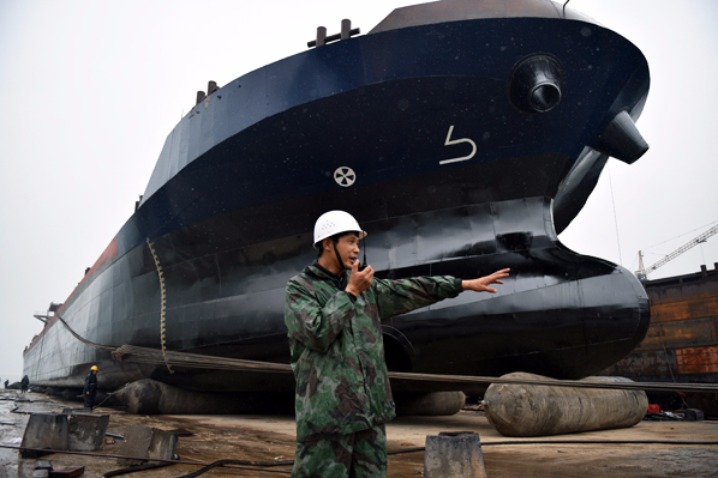
The resurgence of China’s shipbuilding industry is deeply intertwined with its commitment to innovation, intelligence, and environmental sustainability. The industry is actively moving from a quantity-centric model to one focused on quality, driven by advancements in smart technology and eco-friendly designs.
Sun Licheng, president of the China Classification Society, articulated this transformative vision. "China’s shipbuilding industry is realizing the transformation with its hardworking spirit to achieve technical breakthrough and innovation," Sun remarked. He further elaborated that while maintaining growth, the industry is simultaneously undergoing a profound shift in its production mode, structural adjustment, and upgrading, thereby reinforcing China’s shipbuilding status in the world. Sun outlined an ambitious national goal: to become a strong shipbuilding country by 2020, with a significant acceleration in the development of advanced intelligent manufacturing and industrial equipment capability.
This vision is already manifesting in tangible achievements. At the recent All China Maritime Conference and Exhibition, China State Shipbuilding Corporation proudly delivered the world’s first smart ship, named "Great Intelligence." This vessel, with a loading capacity of 38,800 metric tons, represents a leap forward in maritime technology. Smart ships integrate advanced sensors, communication systems, artificial intelligence, and big data analytics to optimize operations, enhance safety, improve energy efficiency, and potentially enable autonomous navigation. Such innovations promise to revolutionize maritime logistics and port operations, offering unprecedented levels of efficiency and predictability. The "Great Intelligence" serves as a powerful testament to China’s dedication to leading the digital transformation of the shipping industry.
Embracing Green Technologies for Sustainable Shipping
Alongside intelligence, environmental sustainability has become a cornerstone of China’s shipbuilding strategy. As global regulations tighten and environmental consciousness grows, shipyards capable of delivering greener vessels gain a significant competitive edge. The International Maritime Organization (IMO) has implemented increasingly stringent regulations on emissions, driving demand for ships that consume less fuel and produce fewer pollutants.
In a clear demonstration of this commitment, COSCO Dalian shipyard signed orders with Thordon Bearings, a prominent marine industry solution provider, for its cutting-edge water-lubricated propeller shaft bearings. This technology is a game-changer as it utilizes seawater as the lubrication medium, entirely eliminating the need for oil, which traditionally poses a significant risk of pollution through leaks or spills. This adoption of environmentally benign technology underscores a proactive approach to ecological responsibility.
Alex Li, managing director of CY Engineering Co Ltd, Thordon Bearings’ partner in China, highlighted the significance of this collaboration. "The latest order is a significant sign showing Chinese shipbuilders’ commitment to reducing industry-borne emissions and pollutants," Li stated. This move is indicative of a broader industry trend where environmental performance is becoming a key differentiator, influencing shipbuilding contracts and shaping the future of maritime transport. Chinese shipyards are investing heavily in research and development for alternative fuels such as LNG (liquefied natural gas), methanol, and even exploring hydrogen and ammonia propulsion systems, alongside advanced exhaust gas cleaning systems (scrubbers) to meet global emission reduction targets.
Competitive Landscape and Broader Economic Implications
China’s ascendancy naturally reshapes the global competitive landscape. While South Korea remains a formidable force, particularly in specialized segments like LNG carriers and offshore drilling rigs, the increasing overlap in capabilities poses a direct challenge. South Korean shipyards have historically benefited from government support and technological leadership, but they now face higher labor costs and intense competition from China’s rapidly advancing industry. Japan, another traditional shipbuilding power, continues to innovate but faces similar pressures from both China and South Korea. This dynamic rivalry is expected to drive further innovation and consolidation across the industry globally.
Economically, a strong shipbuilding sector provides substantial benefits to China. It generates significant export revenue, creates a vast number of jobs across a complex supply chain (including steel production, engine manufacturing, electronics, and various maritime services), and contributes substantially to the nation’s GDP. The development of advanced shipbuilding capabilities also strengthens China’s overall industrial base, fostering technological self-reliance and boosting related sectors. Furthermore, a robust domestic shipbuilding industry is strategically important for China’s expanding maritime trade, its ambitious Belt and Road Initiative, and its burgeoning naval power, ensuring sovereign control over crucial industrial capabilities.
Challenges and the Road Ahead
Despite its impressive achievements, China’s shipbuilding industry faces ongoing challenges. The cyclical nature of global trade and shipping demand means that order books can fluctuate significantly. Global economic uncertainties, geopolitical tensions, and the continuous race for technological superiority require constant investment in research and development. Maintaining a skilled workforce, adapting to rapid technological changes, and navigating complex international trade policies will be crucial for sustained success.
However, the current trajectory suggests a determined path forward. China’s strategic vision to become a "strong shipbuilding country by 2020" and beyond involves continuous investment in intelligent manufacturing, green technologies, and high-value-added vessel types. The commitment to technical breakthroughs, innovation, and production mode transformation underscores a long-term strategy aimed not just at market leadership but at defining the future of global maritime engineering. The current data from Clarkson Research Services serves as a powerful affirmation of this strategic direction and solidifies China’s position at the forefront of the global maritime industry.

 Evan Lee Salim
 Suro Senen