Muslim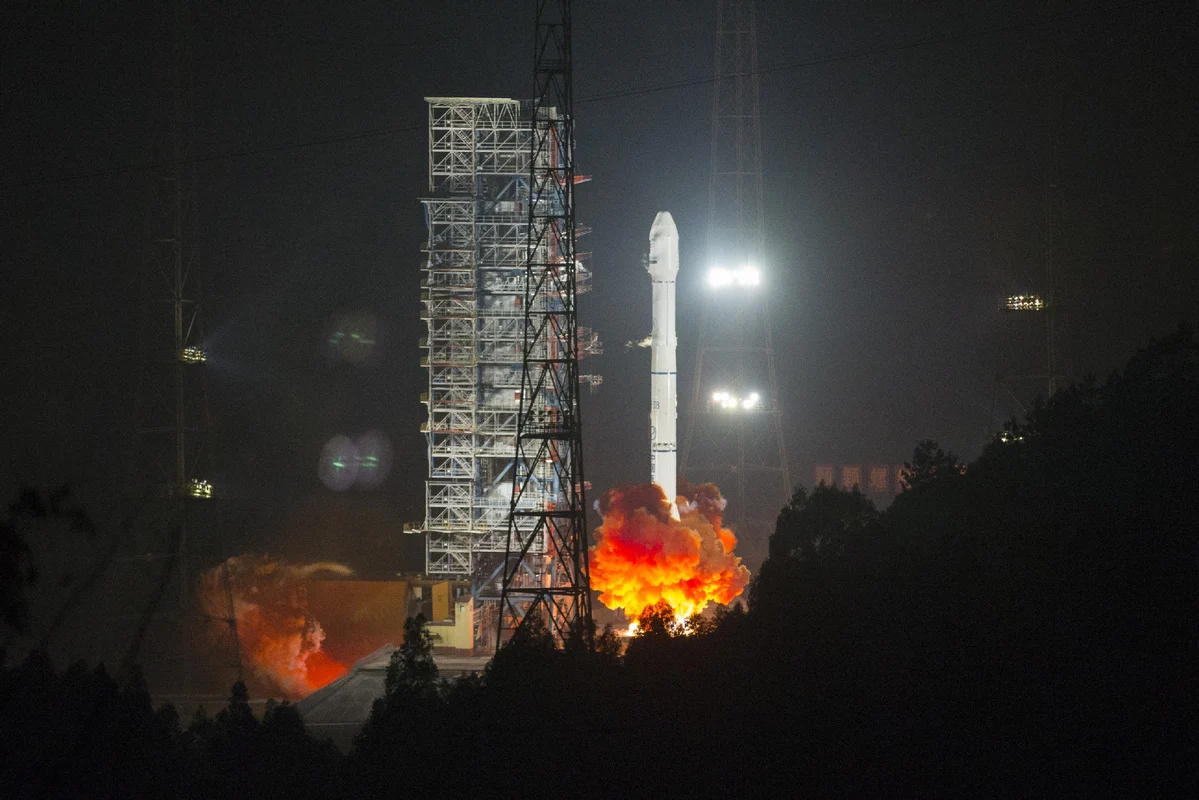
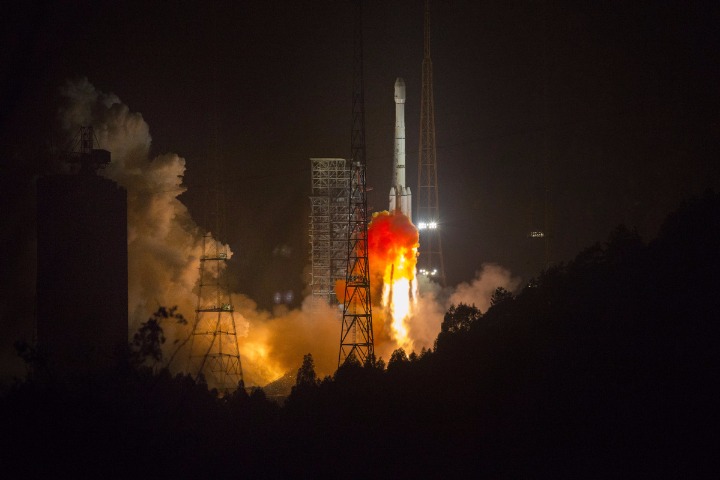
The successful launch of Algeria’s first communication satellite, Alcomsat-1, from the Xichang Satellite Launch Center in China’s southwestern Sichuan province on early Monday, December 11, 2017, signifies a pivotal moment in the burgeoning aerospace partnership between China and Algeria. This mission, carried out with precision by a Chinese Long March-3B carrier rocket, not only placed the satellite into its intended orbit but also underscored China’s growing capabilities in providing advanced space technology solutions to international partners. The Alcomsat-1 satellite is poised to revolutionize telecommunications and broadcasting services across Algeria, enhancing connectivity and supporting critical national development initiatives.
A New Era of Connectivity for Algeria
The Alcomsat-1 satellite, a product of extensive collaboration between the Algerian Space Agency (ASAL) and Chinese aerospace entities, is designed to provide a comprehensive suite of communication services. Its primary applications will include facilitating high-definition television broadcasting, enabling robust emergency communication networks, supporting distance education programs to reach remote areas, bolstering e-governance initiatives to improve public services, enhancing enterprise communication infrastructure, expanding broadband internet access, and contributing to satellite-based navigation systems. This multifaceted functionality is expected to significantly bridge the digital divide within Algeria, fostering greater social inclusion and economic development.
The launch marked the 258th mission for the Long March rocket family, a testament to the reliability and growing sophistication of China’s launch vehicle technology. The Long March-3B, a heavy-lift rocket, is specifically designed for launching geostationary transfer orbit satellites, making it an ideal choice for placing the Alcomsat-1 into its operational orbit. The successful deployment at 40 minutes past midnight local time highlights the meticulous planning and execution involved in such complex space missions.
Deepening Bilateral Ties Through Space Exploration
The Alcomsat-1 project represents the first cooperative endeavor in the aerospace industry between China and Algeria, a significant step forward in their long-standing diplomatic and economic relations. This partnership extends beyond mere technology transfer, embodying a shared vision for leveraging space capabilities for societal advancement. The collaboration involved extensive training for Algerian engineers and technicians, fostering indigenous expertise in satellite operation and management. This capacity-building aspect is crucial for Algeria’s long-term strategic goals in the space domain.
China’s commitment to supporting developing nations in their pursuit of advanced space technologies has been a cornerstone of its "Belt and Road Initiative" (BRI). The Alcomsat-1 launch is a prime example of this commitment, showcasing China’s willingness to share its technological prowess and contribute to the development of partner countries. This initiative not only strengthens bilateral ties but also promotes a more inclusive global space ecosystem.
Chronology of a Landmark Mission
The journey of Alcomsat-1 from concept to orbit involved several key stages:
- Early Planning and Agreement: Discussions and agreements between ASAL and Chinese counterparts likely began several years prior to the launch, outlining the satellite’s specifications, mission objectives, and the framework for cooperation.
- Satellite Design and Manufacturing: The Alcomsat-1 satellite itself would have undergone a rigorous design and manufacturing process in China, adhering to stringent international standards for quality and performance. This phase would have involved close consultation with Algerian experts to ensure the satellite met specific national requirements.
- Testing and Integration: Comprehensive testing of the satellite and its components would have been conducted to ensure its readiness for launch. This would have included environmental testing to simulate the harsh conditions of space.
- Transportation to Launch Site: The satellite, along with its protective payload fairing, would have been transported to the Xichang Satellite Launch Center in Sichuan province.
- Launch Preparations: In the weeks leading up to the launch, the Long March-3B rocket would have been assembled, and the satellite integrated with the launch vehicle. Extensive pre-launch checks and simulations would have been performed.
- Launch Day (December 11, 2017):
- Early Morning: The Long March-3B rocket carrying Alcomsat-1 lifted off from the Xichang Satellite Launch Center.
- Ascent and Separation: The rocket’s stages would have ignited sequentially, propelling the satellite through Earth’s atmosphere and into its transfer orbit. The satellite would have been released from the rocket at the appropriate altitude and trajectory.
- Orbit Insertion: Ground control teams would have monitored the satellite’s trajectory, performing maneuvers as necessary to place it into its final geostationary orbit.
- Post-Launch Operations: Following successful orbit insertion, ASAL would have commenced in-orbit testing and commissioning of the Alcomsat-1 satellite, preparing it for operational service.
Technical Specifications and Capabilities
While specific technical details of the Alcomsat-1 satellite were not fully disclosed in the initial report, communication satellites of this nature typically employ advanced technologies to fulfill their diverse roles. Alcomsat-1 is understood to be a geostationary communication satellite, meaning it orbits Earth at an altitude of approximately 35,786 kilometers, maintaining a fixed position relative to a point on the Earth’s surface. This allows for continuous communication coverage over a specific region.
The satellite likely features a range of transponders operating across different frequency bands (e.g., C-band, Ku-band, Ka-band) to support various services. Its payload would be designed for high-capacity data transmission, enabling the delivery of digital television signals, internet connectivity, and voice communications. The inclusion of satellite-based navigation capabilities suggests that Alcomsat-1 may also contribute to positioning, navigation, and timing (PNT) services, augmenting existing systems.
The choice of a Long March-3B carrier rocket indicates the satellite’s substantial mass, requiring a powerful launch vehicle to achieve the necessary orbital parameters. China’s Long March series of rockets has a strong track record of successful launches, with an increasing number of missions dedicated to international commercial and governmental satellite deployments.
Official Reactions and Statements
While direct quotes from Algerian and Chinese officials were not provided in the initial report, the significance of the launch would undoubtedly have been acknowledged by high-ranking representatives from both nations.
From the Algerian Side (Inferred): Officials from ASAL and the Algerian government would likely have expressed profound satisfaction and pride in achieving this historic milestone. Statements would have emphasized the strategic importance of Alcomsat-1 for Algeria’s national development, highlighting its role in enhancing communication infrastructure, expanding access to education and information, and strengthening national security. The collaboration with China would have been lauded as a model of successful international partnership, contributing to Algeria’s technological sovereignty and self-reliance.
From the Chinese Side (Inferred): Representatives from the China National Space Administration (CNSA) and relevant aerospace corporations would have congratulated the Algerian partners on the successful launch. They would have underscored China’s dedication to peaceful space exploration and its commitment to providing high-quality space services to the global community, particularly to developing nations. The launch would have been presented as a testament to the advanced capabilities of China’s space industry and its role as a reliable partner in international aerospace cooperation.
Broader Implications and Future Prospects
The successful launch of Alcomsat-1 has several significant implications:
- Enhanced Digital Inclusion: By providing broader and more reliable internet and broadcasting services, Alcomsat-1 will help to connect remote and underserved communities across Algeria, fostering greater digital inclusion and participation in the global information society.
- Economic Growth and Diversification: Improved communication infrastructure is a critical enabler of economic activity. Alcomsat-1 will support the growth of businesses, facilitate e-commerce, and attract foreign investment, contributing to Algeria’s economic diversification efforts.
- Strengthened National Security and Disaster Response: The satellite’s capabilities in emergency communication and navigation will enhance Algeria’s ability to respond effectively to natural disasters, improve border security, and maintain vital communication links during crises.
- Algeria’s Growing Space Ambitions: This launch marks a significant step in Algeria’s long-term space program. It demonstrates the country’s commitment to developing its indigenous capabilities in space technology and leveraging it for national benefit.
- China’s Global Reach in Space: The Alcomsat-1 mission further solidifies China’s position as a major global player in the satellite manufacturing and launch services market. It showcases the competitiveness and reliability of Chinese space technology, potentially leading to further international partnerships.
- Potential for Future Collaboration: The success of this maiden aerospace venture is likely to pave the way for deeper collaboration between China and Algeria in various aspects of space exploration, including the development of future satellites, ground infrastructure, and joint research initiatives. This could extend to other African nations seeking to develop their own space capabilities, with China potentially acting as a key facilitator.
The Alcomsat-1 mission is more than just the deployment of a satellite; it represents a tangible outcome of strategic partnership and a forward-looking vision for leveraging space technology to address societal needs and drive national development. As Algeria harnesses the capabilities of its first communication satellite, the enduring partnership with China in the realm of aerospace is poised to yield further advancements and mutual benefits for years to come.


 Nana Wu
 Suro Senen