Nana
Nana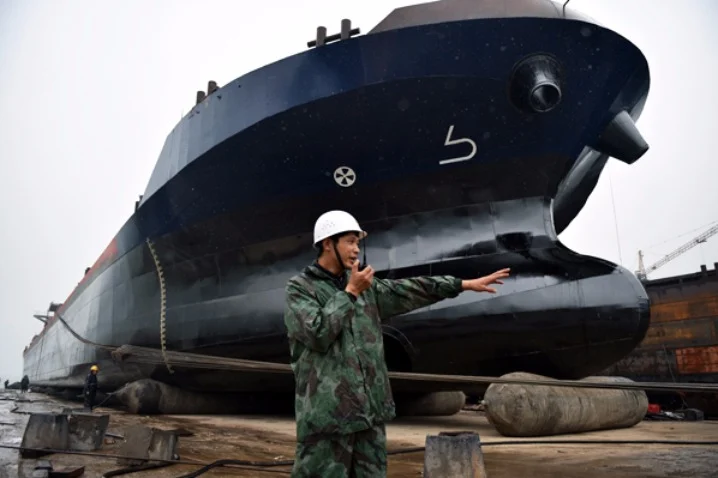
In a significant realignment of the global maritime industry, China has emerged as the world’s leading shipbuilding nation, securing the top position in new orders for the first eleven months of the current year. This landmark achievement, based on data released by the authoritative British shipbuilding and marine analysis agency Clarkson Research Services, marks the first time in seven years that China has surpassed its formidable South Korean counterpart in this crucial metric, signaling a profound shift in the competitive landscape of the global shipbuilding sector.
From January to November, Chinese shipyards accumulated a staggering 7.13 million compensated gross tons (CGT) across 324 vessels. This robust performance places China firmly ahead of South Korea, which received 5.74 million CGT during the same period. The compensated gross tonnage metric is particularly indicative, as it accounts for the workload required to build different types of ships, reflecting not just sheer volume but also the complexity and value of the vessels ordered. China’s market share now stands at an impressive 36.3 percent of global shipbuilding orders, a decisive 7 percentage points higher than South Korea’s 29.4 percent. This ascendancy underscores a strategic and sustained effort by China to transform its shipbuilding industry, moving beyond a focus on sheer quantity to prioritize technological sophistication, environmental sustainability, and higher-value-added vessel types.
A Decade of Transformation: China’s Rise in Global Shipbuilding
The narrative of China’s rise in shipbuilding is one of deliberate industrial policy, massive investment, and relentless technological pursuit. For decades, the shipbuilding industry was dominated first by European nations, then by Japan, and most recently by South Korea, particularly in the high-tech, high-value segments like LNG carriers, large container ships, and offshore platforms. China’s entry into the global shipbuilding arena gained significant traction in the early 2000s, initially focusing on bulk carriers and tankers, leveraging its vast industrial capacity and competitive labor costs. However, the ambition to become a "strong shipbuilding country" – a key tenet of its national industrial strategy – necessitated a move up the value chain.
The period preceding this current achievement saw intense competition, particularly following the global financial crisis of 2008, which led to significant overcapacity in the shipbuilding industry worldwide. South Korea had maintained its dominance in high-end shipbuilding through continuous innovation and a focus on complex vessel types. For seven consecutive years, they held the pole position in new orders. China’s consistent investment in research and development, modernization of shipyard infrastructure, and cultivation of a skilled workforce, often supported by state-backed financial incentives, gradually narrowed the technological gap. This recent triumph in order volumes is a culmination of these long-term strategic efforts, indicative of a maturation in China’s industrial capabilities and its growing appeal to international clients seeking advanced maritime solutions.
Strategic Orders Highlight Shift Towards High-Value Vessels
A closer examination of the orders secured by Chinese shipyards reveals a clear strategic pivot towards more sophisticated and lucrative segments of the market. Historically, China excelled in building standard bulk carriers and oil tankers. However, recent contracts showcase a diversified portfolio that includes some of the most complex and technologically demanding vessels.
One notable example is the order placed by French shipping giant CMA CGM SA in August. The company commissioned nine ultra-large container vessels (ULCVs), each with a capacity of 22,000 twenty-foot equivalent units (TEUs). These colossal ships, among the largest in the world, were divided between Shanghai Waigaoqiao Shipbuilding Co and Hudong Zhonghua Shipbuilding Co. The construction of such massive container ships demands advanced engineering, precise manufacturing, and significant expertise in propulsion systems and stability, areas where Chinese shipyards are now demonstrating world-class capabilities. The ability to secure such a prestigious order from a major global shipping line signals a robust vote of confidence in China’s technical prowess and delivery reliability.
Even more indicative of China’s upward trajectory is the groundbreaking agreement signed in October between China State Shipbuilding Corp (CSSC), China Investment Corp (CIC), and Carnival Corp, the world’s largest cruise operator. This monumental deal, valued at a total of 25.5 billion yuan ($3.85 billion), involves the construction of a super luxury cruise ship. This particular order represents a monumental leap for Chinese shipbuilding, as it is the first time Chinese companies have ever received a commission for such a high-complexity, high-value vessel. Cruise ship construction is widely considered the pinnacle of naval architecture and marine engineering, requiring intricate interior design, advanced systems integration, and adherence to stringent safety and comfort standards. This contract not only signifies a major technological breakthrough but also opens a lucrative new market segment for Chinese shipbuilders, previously almost exclusively dominated by European yards.
Dong Liwan, a distinguished shipbuilding industry researcher at Shanghai Maritime University, underscored the implications of these developments. "With the orders for high-value-added ships continuing to go to Chinese shipyards, their South Korean competitors will definitely feel the pinch," he stated. This sentiment reflects the direct competitive pressure now being exerted on traditional leaders in the high-end market. South Korean shipyards have historically relied on their expertise in these complex vessels to maintain profitability amidst fluctuating market conditions for simpler ship types. China’s encroachment into this domain poses a significant challenge to their long-term competitive strategy.
Driving Forces: Intelligence, Green Technology, and Industrial Upgrade
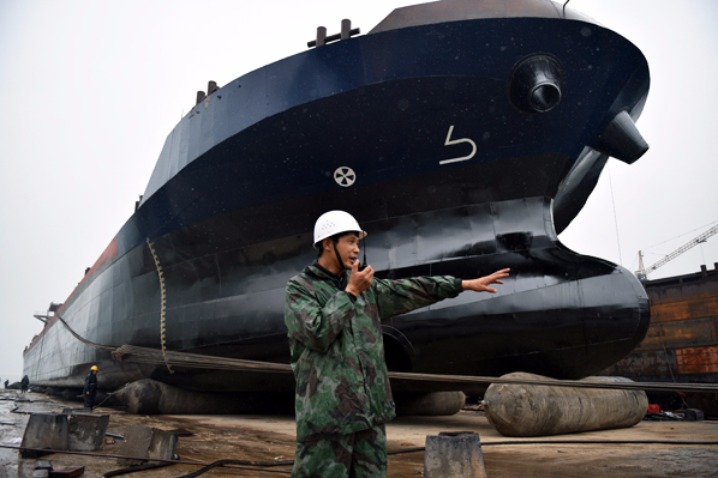
The paradigm shift in China’s shipbuilding business is explicitly driven by a national imperative to move from a "quantity-focused" approach to one that prioritizes "quality." This transformation is encapsulated by the twin pillars of intelligence and environmental friendliness, which are becoming hallmarks of modern Chinese-built vessels.
Sun Licheng, president of the China Classification Society, articulated this vision, stating, "China’s shipbuilding industry is realizing the transformation with its hardworking spirit to achieve technical breakthrough and innovation." He emphasized that "while maintaining growth, it is realizing production mode transformation, structural adjustment and transformation, and upgrading, and reinforcing China’s shipbuilding status in the world." The ultimate goal, as outlined by Sun, is to become a "strong shipbuilding country by 2020," a target that involves accelerating the development of advanced intelligent manufacturing and enhancing industrial equipment capability. This ambition is directly aligned with broader national strategies like "Made in China 2025," which aims to elevate China’s manufacturing sector across various high-tech industries.
The commitment to intelligent shipbuilding is already yielding tangible results. At the recent All China Maritime Conference and Exhibition, China State Shipbuilding Corporation (CSSC) unveiled and delivered the world’s first smart ship, named "Great Intelligence." This vessel, a bulk carrier with a loading capacity of 38,800 metric tons, integrates advanced technologies such as intelligent navigation systems, real-time data analysis for optimized performance, and predictive maintenance capabilities. Such smart ships leverage artificial intelligence, the Internet of Things (IoT), and big data to enhance operational efficiency, reduce fuel consumption, and improve safety, setting a new benchmark for maritime technology.
Concurrently, the focus on environmental sustainability is gaining paramount importance, driven by increasingly stringent global regulations from bodies like the International Maritime Organization (IMO). Chinese shipbuilders are actively adopting and developing green technologies to meet these demands. An exemplary case is COSCO Dalian shipyard, which signed orders with Thordon Bearings, a leading marine industry solution provider, for its water-lubricated propeller shaft bearings. These innovative bearings utilize seawater as the lubrication medium instead of traditional oil, thereby eliminating the risk of oil pollution in marine environments. Alex Li, managing director of CY Engineering Co Ltd, Thordon Bearings’ partner in China, highlighted the significance of this adoption: "The latest order is a significant sign showing Chinese shipbuilders’ commitment to reducing industry-borne emissions and pollutants." This move is part of a broader trend within Chinese shipyards to incorporate cleaner fuel systems (such as LNG dual-fuel engines), exhaust gas scrubbers, ballast water treatment systems, and energy-efficient designs to future-proof their vessels and cater to environmentally conscious clients.
Broader Implications and Future Outlook
The rise of China in global shipbuilding has profound implications that extend beyond mere market share figures. Economically, it solidifies China’s position as a dominant industrial powerhouse, contributing significantly to its GDP, employment, and technological self-reliance. The shipbuilding sector is a crucial component of China’s overall maritime strategy, underpinning its vast shipping fleet, naval expansion, and the ambitious Belt and Road Initiative (BRI), which relies heavily on efficient and modern maritime logistics.
For the global shipbuilding industry, China’s ascent intensifies competition, particularly for South Korea and to a lesser extent, Japan and European specialized yards. South Korean shipbuilders, while still holding strong positions in certain niche markets like LNG carriers and ultra-large crude carriers (ULCCs), will need to innovate further and differentiate their offerings to maintain profitability. This competitive pressure could spur further technological advancements across the industry as nations vie for dominance in areas like autonomous shipping, alternative fuels, and modular construction techniques.
Environmentally, China’s commitment to "green" and "intelligent" shipbuilding is a positive development for global efforts to decarbonize the shipping industry. As the world’s largest shipbuilder by volume, China’s embrace of sustainable practices has the potential to accelerate the adoption of cleaner technologies across the entire maritime value chain.
Looking ahead, China’s ambition to become a "strong shipbuilding country" by 2020 and beyond suggests continued investment and innovation. This will likely involve further integration of digital technologies, advanced robotics in manufacturing, and the exploration of novel materials and propulsion systems. The geographical spread of China’s shipbuilding industry, from coastal hubs like Shanghai, Dalian, and Guangzhou to inland centers along the Yangtze River like Chongqing, provides a vast industrial base to support these aspirations. As global trade patterns evolve and environmental regulations tighten, China’s strategically positioned and increasingly sophisticated shipbuilding sector is poised to play an even more pivotal role in shaping the future of global maritime commerce and technology.

 Evan Lee Salim
 Suro Senen