Basiran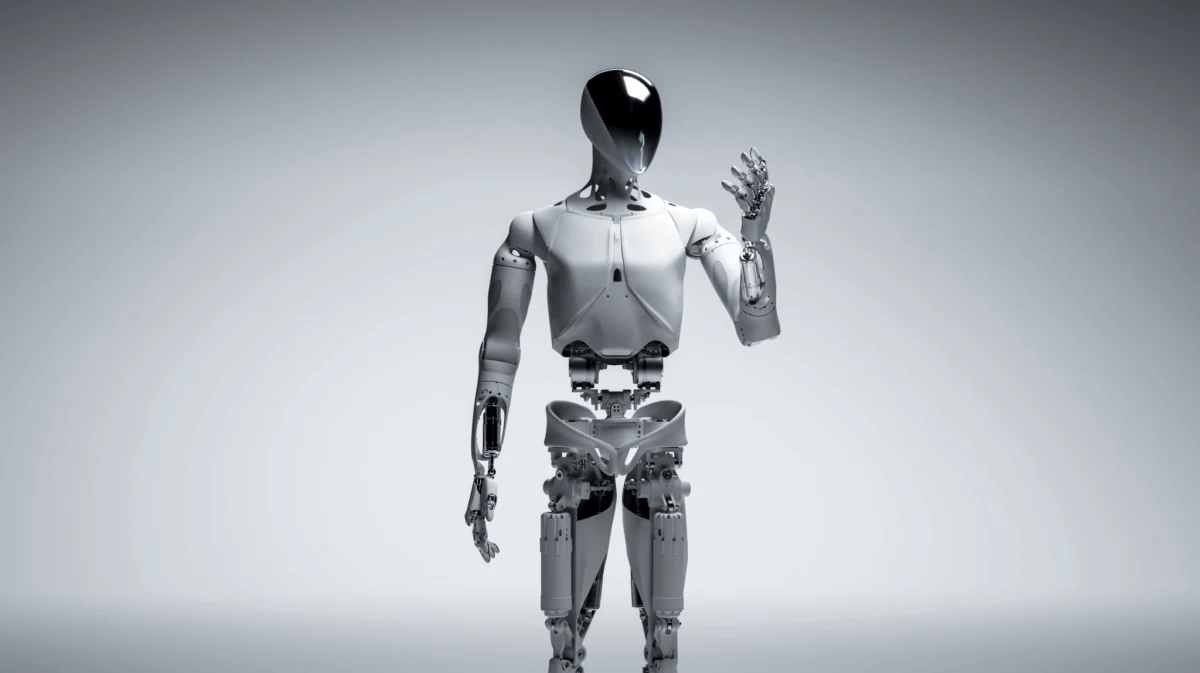
Beijing has vehemently accused the United States of orchestrating a campaign to "suppress" Chinese companies, launching a sharp rebuke on Wednesday after Washington imposed a sweeping ban on the import of humanoid and quadruped robots manufactured abroad. This move by the US Federal Communications Commission (FCC) marks a significant escalation in the ongoing technological and economic rivalry between the world’s two largest economies, drawing immediate condemnation from China’s Foreign Ministry, which pledged to take "necessary measures" to safeguard its companies’ interests.
The Genesis of the Ban: National Security Concerns
The US Federal Communications Commission (FCC) announced its decision on Tuesday, adding "advanced robotic devices," specifically those designed to mimic human or animal locomotion – humanoid and quadruped robots – to a growing list of banned items. The rationale behind this stringent measure, as articulated by the FCC, stems from profound national security concerns. A task force convened by the White House reportedly concluded that foreign-built robots, particularly those from countries deemed strategic adversaries, could pose "a cybersecurity risk that threatens the security of critical infrastructure" and jeopardize "the safety and security" of US residents. This broad framing suggests fears that these advanced machines could be exploited for espionage, sabotage, or to collect sensitive data, potentially feeding into foreign intelligence gathering operations or disrupting essential services.

Historically, the US has expressed increasing apprehension regarding the integration of technology from certain foreign nations, especially China, into its critical infrastructure and consumer markets. This ban is not an isolated incident but rather a continuation of a broader strategy aimed at decoupling sensitive technological supply chains and mitigating perceived security risks. Previous actions have seen Chinese telecommunications giants like Huawei and China Telecom placed on restricted lists, alongside certain types of drones, reflecting a consistent pattern of concern over data integrity, surveillance capabilities, and potential backdoors in hardware and software. The inclusion of "mobile robots" that emulate human and animal movement signifies an expansion of this concern into the rapidly evolving field of advanced robotics, which is increasingly becoming a strategic technological frontier.
China’s Swift and Firm Rejection
China’s response was swift and unequivocal. Speaking at a regular news conference, Foreign Ministry spokesperson Mao Ning articulated Beijing’s "firm opposition" to the FCC’s action. "China has always firmly opposed the US overstretching the concept of national security to suppress Chinese companies," Mao Ning stated, echoing a long-standing grievance from Beijing regarding Washington’s technology policies. The spokesperson further asserted that the Chinese government would "take necessary measures" to protect the legitimate rights and interests of its companies, though she did not specify what these measures might entail. Such language often precedes retaliatory actions, which could range from diplomatic protests to trade restrictions or the establishment of a "blacklist" for US companies.
Mao Ning also framed the US ban as an act of protectionism, arguing that such measures ultimately harm American interests. "Protectionism cannot enhance US competitiveness. It will only harm the interests of American companies and consumers," she warned. This argument suggests that by restricting access to a competitive global market, US industries might lose out on innovation, cost efficiencies, and diverse supply options, potentially leading to higher prices for consumers and slower technological adoption domestically. Beijing views these bans not merely as security precautions but as deliberate attempts to impede China’s technological ascent and maintain US dominance in key high-tech sectors.

The Global Robotics Landscape and China’s Ascendancy
The ban arrives at a time when the global robotics industry is experiencing unprecedented growth, with China emerging as a dominant force. The market for humanoid and quadruped robots, while still nascent compared to industrial robotics, is projected to expand significantly in the coming years. Analysts estimate the global robotics market to reach hundreds of billions of dollars within the next decade, driven by advancements in artificial intelligence, machine learning, and sophisticated sensor technologies. Humanoid robots, capable of performing complex tasks in human environments, and quadruped robots, known for their agility and ability to navigate challenging terrains, are at the forefront of this innovation wave.
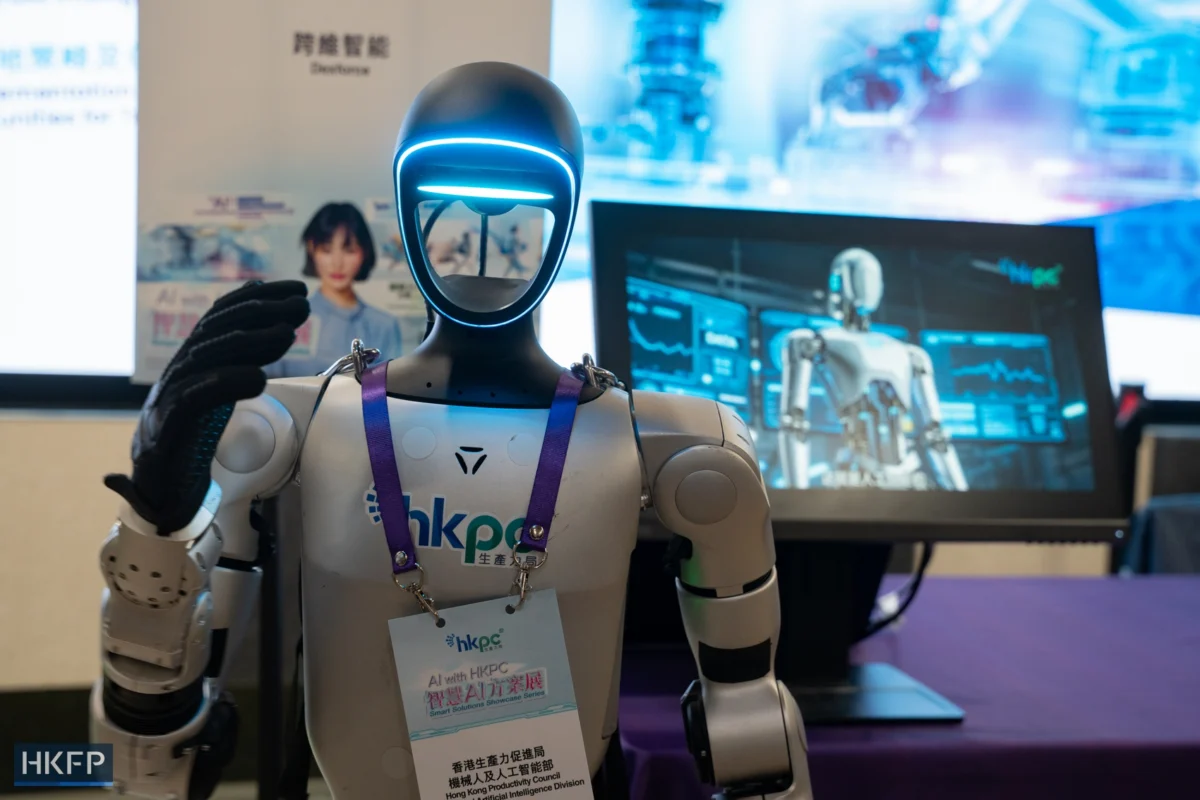
China has heavily invested in robotics as a strategic industry, viewing it as crucial for its economic transformation and technological sovereignty. Government initiatives, substantial research and development funding, and a vast domestic market have fueled a rapid expansion of local companies. Firms like X-Peng (often associated with electric vehicles but also developing humanoid robots), Unitree Robotics (a prominent developer of quadruped robots), and other emerging players have demonstrated remarkable progress, often producing robots at competitive prices. These robots are not confined to laboratories; they are increasingly ubiquitous in China, deployed in a diverse range of applications from industrial settings like factories and warehouses to public-facing roles in hotels, shopping centers, and even healthcare facilities. Their widespread adoption in China contrasts sharply with their more limited, specialized use in the US, primarily in confined industrial spaces such as automobile assembly lines and logistics hubs.
The US market for these advanced robots has, to a significant extent, relied on imports, with China being a major supplier due to its manufacturing capabilities and competitive pricing. This reliance, coupled with the rapid technological advancements made by Chinese firms, has intensified US concerns about potential vulnerabilities in the supply chain and the security implications of integrating foreign-made advanced robotics into sensitive sectors.

Broader Implications and the US-China Tech Rivalry
This latest ban further exacerbates the already tense technological competition between the United States and China. The conflict extends beyond tariffs and trade deficits, delving deep into strategic industries like semiconductors, artificial intelligence, quantum computing, and now, advanced robotics. The US strategy, often characterized as "de-risking" or "small yard, high fence," aims to restrict China’s access to critical technologies and prevent it from leveraging its technological prowess in ways perceived as detrimental to US national security.
The concept of "dual-use technology" is central to these concerns. Many advanced robotic systems, while having clear civilian applications, also possess characteristics that could be adapted for military or intelligence purposes. For instance, highly agile quadruped robots could be used for reconnaissance or payload delivery in complex environments, while humanoid robots could be deployed in hazardous zones, potentially even in combat support roles. The potential for these technologies to be used in ways that contradict US interests underpins the national security justification for the ban.
A Chronology of Escalating Tech Tensions
The ban on advanced robots is another chapter in a long-running saga of US-China tech tensions:

- 2018-Present: The Trump administration initiated broad tariffs on Chinese goods, including technology, and began targeting specific companies.
- 2019: Huawei was placed on the Entity List by the US Commerce Department, effectively cutting it off from critical American technology and components, severely impacting its smartphone and network equipment businesses. The US cited national security concerns, alleging Huawei’s ties to the Chinese government and potential for espionage.
- 2020: The US broadened its restrictions to include TikTok and WeChat, citing data security and privacy concerns, though these actions faced legal challenges and varying degrees of implementation.
- 2020: China Telecom Americas, a state-owned telecommunications carrier, faced increasing scrutiny, eventually leading to the FCC revoking its authorization to operate in the US in 2021, citing national security risks.
- 2021: Additional Chinese tech companies were added to various US blacklists, including those linked to surveillance technology and alleged human rights abuses.
- 2022: The US implemented stringent export controls on advanced semiconductors and chip manufacturing equipment to China, a move designed to hobble China’s ability to develop cutting-edge AI and supercomputing capabilities.
- 2023: Further restrictions were introduced, including limitations on US investments in certain sensitive Chinese technologies.
- Late 2023/Early 2024: The FCC continued to add Chinese companies and product categories, including certain drones, to its list of equipment deemed to pose unacceptable national security risks.
- This Week: The ban on humanoid and quadruped robots.
This timeline illustrates a consistent trend of the US using regulatory and economic levers to limit China’s technological reach and influence, especially in areas deemed critical for national security and economic competitiveness.
Potential Economic Repercussions and Industry Reactions
The immediate economic repercussions of the ban are likely to be felt across the supply chains that connect Chinese robot manufacturers with US distributors and end-users. For US companies that have relied on cost-effective and technologically advanced Chinese robots for industrial applications, the ban will necessitate a costly and time-consuming pivot to alternative suppliers, potentially leading to increased operational expenses and delays in automation projects. This could impact industries ranging from automotive manufacturing to logistics and warehousing, where such robots are increasingly integral.
Industry analysts suggest that the ban could spur greater domestic investment and production in the US robotics sector. However, building out a robust domestic supply chain for advanced robotics will require significant capital, skilled labor, and time, and may not immediately match the scale or cost-efficiency offered by established Chinese manufacturers. This could place US companies at a disadvantage in terms of global competitiveness if they cannot quickly develop comparable alternatives.

For Chinese robotics companies, the US market, while significant, is only one piece of a much larger global pie. They are likely to intensify efforts to expand into other markets, particularly in developing nations and regions less aligned with US geopolitical concerns. The ban could also galvanize China’s push for greater self-sufficiency in key technological components, further reducing its reliance on foreign suppliers and reinforcing its domestic innovation ecosystem.
Ultimately, the ban on advanced robotic imports from abroad, primarily targeting Chinese manufacturers, underscores a deepening chasm in the US-China relationship. It highlights the strategic importance of emerging technologies in the geopolitical arena and signals a continued willingness by the United States to employ strong measures in the name of national security, even if it entails economic costs and further exacerbates global trade tensions. The "necessary measures" promised by Beijing will be closely watched, as the tit-for-tat dynamic in this technological rivalry shows no signs of abating.

 Muslim
 Laily UPN