Lina Hope
Driven by an unwavering confidence in China’s robust economic trajectory, particularly within its rapidly expanding automotive and chemical production sectors, German chemical behemoth BASF SE has significantly escalated its investment footprint in the nation. The company recently celebrated the operational launch of two pivotal manufacturing facilities in Shanghai, underscoring its strategic commitment to the Asia-Pacific region and its largest market, China. These dual inaugurations, following a series of substantial capital injections, solidify BASF’s intent to enhance local production capabilities, shorten supply chains, and foster closer collaboration with its diverse customer base in the region.
Strategic Expansion in Automotive Coatings
Late last month, BASF commenced production at its new 140 million euros automotive coatings facility in Shanghai. This state-of-the-art plant represents a significant expansion of the company’s existing operations, building upon a successful 50 million euros automotive coatings joint venture with Shanghai Huayi Fine Chemical. The investment is strategically designed to bolster BASF’s local manufacturing capacity, enabling it to more effectively cater to the burgeoning demand within China’s automotive market and the broader Asia-Pacific region.
The new facility is equipped to produce a comprehensive range of automotive coatings, including thinners, primers, clear coats, and advanced waterborne base coats. These products are critical components in modern vehicle manufacturing, contributing not only to aesthetic appeal but also to vehicle durability and protection. The plant’s capabilities are further enhanced by a new automotive application center, poised to offer automotive manufacturers unparalleled access to advanced research and development (R&D) facilities. This center, integrated with the BASF Innovation Campus Asia Pacific (Shanghai), is slated to be fully operational by the end of 2018 and will feature cutting-edge technologies, including a 3-D robot specifically designed for coatings application, facilitating precise and efficient testing and development.
Dirk Bremm, President of BASF’s coatings division, articulated the strategic rationale behind this expansion: “The global automotive market is expected to continue to grow significantly, with China as the biggest driver. The inauguration of this new plant in Shanghai will help us to support the growth of our customers and take an active role in developing the Chinese automotive market.” This statement highlights BASF’s proactive approach to aligning its growth strategy with the world’s most dynamic automotive landscape.
China’s Dominance in the Global Automotive Sector
The strategic timing of BASF’s investment is inextricably linked to China’s unparalleled dominance in the global automotive industry. In 2016, China alone manufactured an astounding 28.12 million vehicles and sold 28.03 million units, marking year-on-year increases of 14.5 percent and 13.7 percent, respectively. This performance cemented China’s position as the world’s largest automobile market for the eighth consecutive year, a testament to its robust domestic demand and sophisticated manufacturing ecosystem.
The broader Asia-Pacific region, significantly influenced by China’s output, accounted for a staggering 48.6 million light vehicle units produced in 2016, representing 52 percent of global production. This regional concentration underscores the imperative for global suppliers like BASF to establish strong, localized production and R&D footprints within this pivotal market. The growth drivers for China’s automotive sector are multifaceted, including rising disposable incomes, rapid urbanization, the expansion of the middle class, and increasingly, government initiatives promoting new energy vehicles (NEVs) and premium segments. As consumers’ preferences shift towards higher quality, more durable, and environmentally friendly vehicles, the demand for advanced coatings and materials is expected to continue its upward trajectory, providing a fertile ground for BASF’s specialized products.
Pioneering Chemical Catalyst Manufacturing in Asia-Pacific
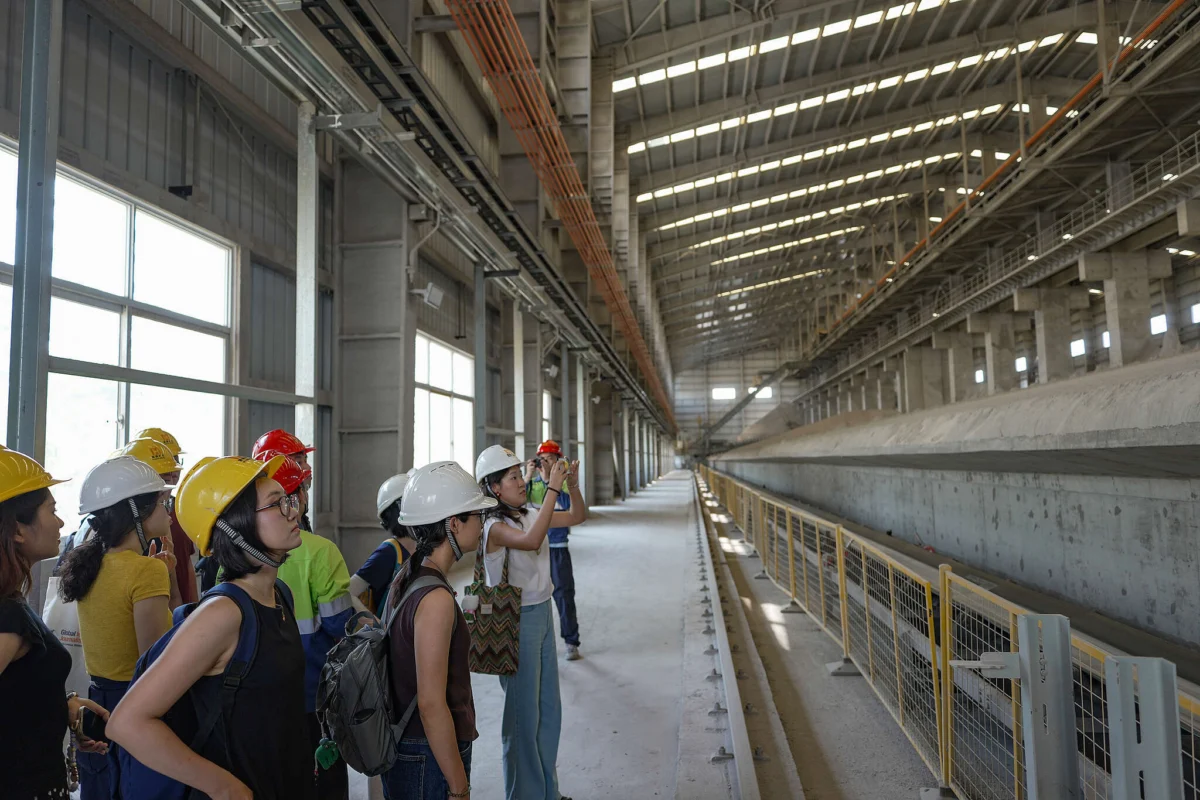
In a separate yet equally significant development, BASF inaugurated its first chemical catalyst manufacturing facility in the Asia-Pacific region on November 30. This plant, wholly owned by BASF, is strategically positioned to serve the burgeoning chemical industry across China and the wider Asia-Pacific, focusing on the production of base metal catalysts and absorbents. These products are fundamental to a vast array of chemical processes, enabling more efficient, sustainable, and cost-effective manufacturing across various downstream industries.
Detlef Ruff, BASF’s Senior Vice-President for process catalysts, emphasized the milestone status of this new facility: “The start of our new, world-scale production plant for chemical catalysts in Shanghai represents a milestone for our process catalysts business. Sixty percent of the world’s chemical production will happen in Asia by 2020, with more than half in China.” This projection underscores the profound shift in the global chemical industry’s center of gravity towards Asia, with China at its core.
The localization of catalyst production brings several tangible benefits, as highlighted by Ruff. It is expected to significantly strengthen BASF’s relationships with its chemical industry customers in Asia, enhancing customer experience through improved product availability and shortened lead times. Furthermore, the plant’s integration with the BASF Innovation Campus Asia Pacific in Shanghai enables the company to offer customers regionally specific development and production of the latest catalyst technologies. This synergy between R&D and manufacturing ensures that BASF can swiftly adapt to evolving customer requirements and market demands, providing tailored solutions that are optimized for local conditions. The plant is also designed with future scalability in mind, offering potential for additional expansion and flexibility to accommodate new customer production requirements in the years to come.
China’s Chemical Industry: A Global Nexus
China’s chemical industry has undergone a remarkable transformation, evolving from a regional player to the world’s largest chemical producer and consumer. This growth is fueled by massive domestic demand from industries such as automotive, electronics, construction, textiles, and agriculture. The country’s drive towards industrial upgrading, coupled with stringent environmental regulations, has created a strong impetus for advanced, high-performance chemical products and sustainable manufacturing processes.
The shift of global chemical production to Asia, with China leading the charge, is not merely a quantitative increase but also a qualitative one. There is a growing emphasis on specialty chemicals, green chemistry, and innovative materials that align with China’s broader economic goals of moving up the value chain. BASF’s investment in advanced catalyst production directly supports these objectives, providing essential components for cleaner production, more efficient resource utilization, and the development of next-generation materials crucial for modern industries. This strategic alignment positions BASF not just as a supplier but as a partner in China’s industrial modernization journey.
BASF’s Enduring Legacy and Strategic Alignment with China
BASF’s current wave of investments is part of a long-standing and deepening commitment to the Chinese market, spanning several decades. The company established its first business activities in China in 1885, making it one of the earliest multinational chemical companies to recognize the nation’s immense potential. Over the years, BASF has steadily expanded its presence, developing a comprehensive network of production sites, R&D centers, and sales offices across the country. By the end of 2016, BASF, along with its partners, had invested a substantial 19.7 billion yuan (approximately 2.5 billion euros at the time) in state-of-the-art production facilities, particularly in strategic industrial zones like Caojing in Shanghai.
Stephan Kothrade, President Functions Asia-Pacific, and President and Chairman Greater China for BASF, articulated the broader impact of these investments: “Together with our partners, BASF has invested 19.7 billion yuan as of the end of 2016 in state-of-the-art production located in Caojing of Shanghai. What we produce here directly supports the development and modernization of Chinese industry. Our solutions improve efficiency and sustainability in the chemical industry and other industries, and reduce reliance on imports, thus enhancing competitiveness of our customers in light of supply-side reform.”
This statement encapsulates BASF’s strategic alignment with China’s national development agenda. The company’s advanced solutions contribute directly to the efficiency and sustainability goals of Chinese industries, fostering innovation and reducing the country’s reliance on imported high-tech chemical products. This not only enhances the competitiveness of BASF’s local customers but also supports the overarching objectives of China’s supply-side reform.
Broader Implications and the Role of Supply-Side Reform
China’s supply-side structural reform, initiated in 2015, represents a fundamental shift in the country’s economic policy. Its primary aim is to transition the economy from an investment-driven, quantity-focused growth model to one that prioritizes quality, innovation, and sustainability. This involves managing market capacities, fostering technological upgrades, boosting innovation, and improving the overall efficiency of resource allocation. For industries like automotive and chemicals, this translates into a demand for higher-performance materials, cleaner production technologies, and advanced R&D capabilities.
BASF’s investments are perfectly aligned with these reform objectives. By bringing world-class manufacturing and R&D capabilities to China, BASF contributes to the modernization of local industries. The production of advanced waterborne coatings, for instance, offers environmental benefits over traditional solvent-based systems, supporting China’s aggressive pollution control targets. Similarly, cutting-edge catalysts are crucial for making chemical processes more efficient and less resource-intensive, reducing waste and emissions. The establishment of the BASF Innovation Campus Asia Pacific (Shanghai) as a regional R&D hub further reinforces this commitment, enabling collaborative innovation that addresses specific regional challenges and market needs.
Moreover, by localizing production of critical components like automotive coatings and chemical catalysts, BASF helps to strengthen China’s domestic supply chains, making them more resilient and less susceptible to global disruptions. This strategy not only benefits BASF by bringing it closer to its customers but also plays a vital role in enhancing the overall competitiveness of Chinese manufacturers in the global marketplace, a key goal of the supply-side reform. The investment signifies a deeper integration of BASF into China’s industrial fabric, moving beyond mere market access to active participation in shaping the future of its strategic sectors.
Future Outlook and Strategic Direction
Looking ahead, BASF’s continued investment trajectory in China, including its ongoing development of the massive Verbund site in Zhanjiang, signals a long-term strategic commitment. The Verbund concept, a core element of BASF’s integrated production strategy, aims to create highly efficient value chains, minimizing resource consumption and maximizing output. Such large-scale, integrated investments underscore BASF’s confidence in China’s sustained economic growth and its pivotal role in the global economy.
The company’s focus on innovation, sustainability, and localized solutions positions it strongly to capitalize on China’s evolving industrial landscape. As China continues its journey of industrial upgrading, technological innovation, and sustainable development, the demand for advanced materials and chemical solutions will only intensify. BASF, with its expanded footprint and integrated approach to R&D and manufacturing, is poised to remain a leading partner in this transformative process, contributing significantly to both its own growth and the modernization of Chinese industry. The dual facility inaugurations in Shanghai are not merely expansions; they are strategic declarations of BASF’s enduring partnership with China’s future.

 Evan Lee Salim
 Suro Senen