 Lina Irawan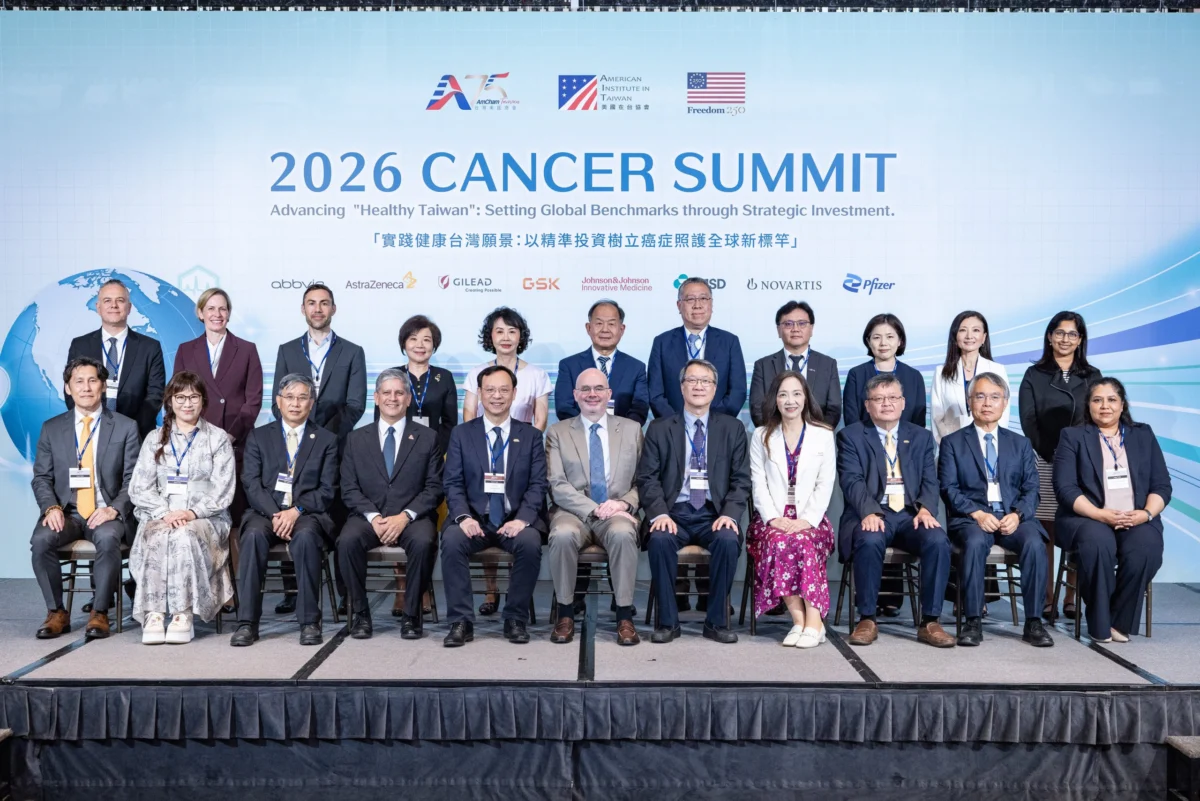
The American Chamber of Commerce in Taiwan (AmCham Taiwan), in a strategic partnership with the American Institute in Taiwan (AIT), convened the 2026 AmCham Taiwan Cancer Summit at the Regent Taipei on July 28, 2026. This high-level assembly, themed "Advancing ‘Healthy Taiwan’: Setting Global Benchmarks through Strategic Investment," served as a critical platform for multisectoral dialogue aimed at revolutionizing the island’s oncological care landscape. The summit brought together an influential cohort of government officials, industry executives, academic researchers, and patient advocacy representatives to address the urgent need for sustainable resource allocation within Taiwan’s Cancer Drugs Fund (CDF) and the broader National Health Insurance (NHI) framework.
The 2026 summit arrives at a pivotal moment for Taiwan’s healthcare policy. As cancer remains the leading cause of death in Taiwan—a position it has held for over four decades—the government has accelerated its efforts to modernize treatment protocols and financial mechanisms. Central to the day’s discussions was the "Healthy Taiwan" vision championed by President Lai Ching-te, which sets an ambitious national target of reducing the standardized cancer mortality rate by one-third by the year 2030. Achieving this goal requires not only clinical excellence but also a radical shift in how innovative therapies are funded and integrated into the public health system.
A Strategic Vision for National Health Transformation
AmCham Taiwan President Carl Wegner opened the proceedings by emphasizing that the complexity of modern oncology demands a collaborative approach that transcends traditional boundaries. Wegner noted that while scientific breakthroughs in genomics and immunotherapy are moving at an unprecedented pace, the administrative and financial infrastructures required to deliver these innovations to patients often lag behind. He stressed that public-private partnerships are the "connective tissue" of a resilient healthcare system, ensuring that laboratory innovation translates into measurable improvements in patient survival and quality of life.
The summit’s Grand Keynote Dialogue featured Minister of Health and Welfare Shih Chung-liang, who provided an in-depth look at the government’s roadmap for healthcare reform. Minister Shih detailed the role of the newly established Healthy Taiwan Promotion Committee, a body designed to synchronize policy across various departments to foster a more holistic approach to public health. The Minister’s presence underscored the administration’s commitment to viewing healthcare investment not merely as a cost center, but as a fundamental pillar of national security and economic stability.
Financial Sustainability and the Evolution of the Cancer Drug Fund
A primary focus of the 2026 summit was the financial health and operational efficiency of the Cancer Drugs Fund (CDF). Established as a specialized mechanism to bridge the gap between the regulatory approval of innovative drugs and their formal inclusion in the National Health Insurance reimbursement list, the CDF has become a lifeline for patients seeking access to cutting-edge treatments.
Minister Shih revealed significant updates regarding the fund’s scale and scope. "Cancer prevention and control cannot be sustained without stable, long-term funding," he stated during his keynote. He confirmed that the government has more than doubled the cancer screening budget, increasing it from NT$2.8 billion to NT$6.8 billion. This surge in funding is intended to facilitate earlier detection, which is statistically linked to lower long-term treatment costs and higher survival rates.
Furthermore, the CDF, which became fully operational in its current iteration in 2025, is being fine-tuned to ensure that reimbursement cycles align more closely with international treatment guidelines. Historically, Taiwan has faced criticism for the "reimbursement gap"—the time delay between a drug’s availability in Western markets and its subsidized availability in Taiwan. The 2026 strategies discussed at the summit aim to minimize this lag, ensuring that Taiwanese patients are not disadvantaged by geography.
Digital Transformation and Data-Driven Oncology
Beyond direct funding, the summit addressed the necessity of digital transformation in streamlining cancer care. Minister Shih highlighted the government’s efforts to modernize administrative procedures, such as the prior authorization process for expensive therapies. By migrating these processes to digital platforms, the Ministry of Health and Welfare (MOHW) aims to reduce the bureaucratic burden on healthcare providers, allowing clinicians to focus more on patient care rather than paperwork.
Crucially, this digital shift enables more robust data collection. The summit participants explored how real-world evidence (RWE) and follow-up evaluation data could be used to assess the clinical efficacy of drugs funded through the CDF. This data-driven approach allows the government to verify whether the high costs of innovative therapies are yielding the expected health outcomes, thereby ensuring that limited budget resources are utilized with maximum effectiveness. This move toward "value-based healthcare" is seen as a essential step in maintaining the long-term solvency of the NHI system.

Aligning with International Standards of Care
The second major pillar of the summit focused on clinical alignment with global benchmarks, specifically the National Comprehensive Cancer Network (NCCN) guidelines. Panelists, including leading oncologists and medical researchers, discussed the challenges of integrating global standards into the local clinical environment.
The discussion spanned several critical areas of oncology, including:
- Breast and Gynecologic Cancers: Experts discussed the increasing role of precision medicine and the need for broader access to PARP inhibitors and antibody-drug conjugates (ADCs).
- Hematologic Malignancies: The panel reviewed the progress of CAR-T cell therapies in Taiwan and the infrastructure requirements for expanding these complex treatments to more hospitals.
- Comprehensive Care Pathways: Speakers emphasized that "care" extends beyond the infusion room. They called for enhanced support in early diagnosis, molecular profiling, and long-term survivorship programs to ensure a "connected" ecosystem.
By aligning Taiwan’s domestic protocols with NCCN and other internationally recognized standards, the summit participants argued that Taiwan could enhance its reputation as a premier destination for clinical trials and medical tourism in the Asia-Pacific region.
A Chronology of Collaboration: From Moonshot to Summit
The 2026 Cancer Summit marks the fourth year of this specific format, but the roots of U.S.-Taiwan healthcare cooperation run much deeper. The partnership was significantly bolstered in 2021 when AmCham and AIT began organizing annual healthcare innovation forums. These forums were initially inspired by the "Cancer Moonshot" initiative in the United States, a program aimed at accelerating the rate of progress against cancer through increased funding and international cooperation.
In 2023, under the leadership of AmCham Taiwan’s Pharmaceutical Committee, the forum was officially rebranded as the Cancer Summit to reflect the specific urgency of the oncological crisis. Since then, the summit has evolved from a general policy discussion into a high-stakes strategic planning session that directly influences legislative and budgetary decisions in Taiwan. The 2026 iteration represents the most ambitious gathering to date, reflecting the high priority placed on health by the current administration in Taipei.
Broader Implications and Future Outlook
The implications of the 2026 Cancer Summit extend beyond the immediate medical community. For the international pharmaceutical industry, the summit signals Taiwan’s willingness to create a more predictable and transparent market for innovative drugs. For the Taiwanese public, it represents a promise of more equitable access to life-saving treatments regardless of socioeconomic status.
Economic analysts suggest that the "Healthy Taiwan" initiative could have a significant "multiplier effect." By reducing cancer mortality and improving the health of the workforce, Taiwan can mitigate the economic losses associated with premature death and disability. Furthermore, the emphasis on digital health and data collection positions Taiwan as a potential leader in the burgeoning "Bio-ICT" sector, where the island’s semiconductor expertise meets clinical research.
As the summit concluded, AmCham Taiwan reaffirmed its commitment to maintaining a continuous policy dialogue with the government. The consensus among attendees was clear: while the goal of reducing cancer mortality by one-third by 2030 is formidable, it is achievable through the sustained application of strategic investment, international alignment, and public-private synergy.
The 2026 AmCham Taiwan Cancer Summit has effectively set the stage for the next phase of Taiwan’s healthcare evolution. By focusing on the sustainability of the Cancer Drugs Fund and the integration of global care standards, Taiwan is not only working to save lives at home but is also establishing itself as a global benchmark for how a modern society can confront the enduring challenge of cancer. Through the continued partnership between the United States and Taiwan, the vision of a "connected cancer care ecosystem" is moving closer to reality, promising a healthier future for all.


 Raul Delapena Setiawan
 Asro
Asro