Reynand Wu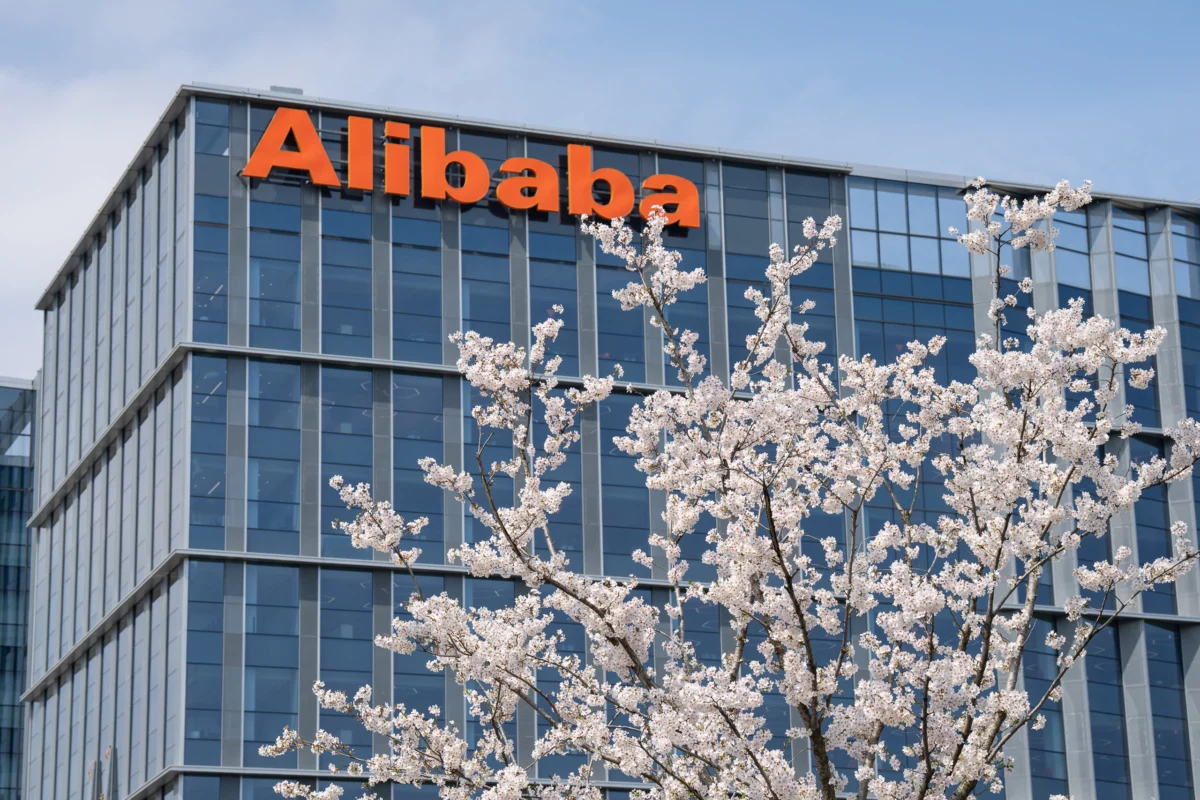
Alibaba Group Holding Ltd. is reportedly exploring a significant shift in its monetization strategy for its highly regarded Qwen series of open-weight artificial intelligence models, potentially introducing a revenue-sharing mechanism for large commercial users. This proposed plan would entail Alibaba taking a percentage of the revenue generated by enterprises that deploy and utilize its Qwen models, extending the company’s commercial reach beyond its established cloud platform. While sources indicate that discussions are ongoing and the precise percentage for revenue sharing remains unfinalized, the initiative could be implemented as early as the coming week.
Alibaba’s AI Ambitions and the Qwen Ecosystem
Alibaba has positioned itself as a formidable player in the global AI race, particularly within China’s intensely competitive landscape. Its commitment to AI innovation is spearheaded by Alibaba Cloud, the company’s data intelligence backbone and one of the world’s leading cloud service providers. The Qwen (Tongyi Qianwen) family of large language models (LLMs) represents a cornerstone of this strategy. Launched initially as a proprietary model, Alibaba made a strategic decision to open-source several iterations of its Qwen models, including Qwen-7B and Qwen-1.8B, Qwen-VL (for vision-language tasks), and Qwen-Audio, to foster broader adoption and accelerate innovation within the developer community. This move was largely seen as an effort to democratize AI and build a robust ecosystem around its technologies, mirroring similar strategies by global tech giants like Meta with its Llama series.
The open-sourcing initiative aimed to empower developers and enterprises to access, customize, and deploy powerful AI models without prohibitive upfront costs, thereby accelerating the integration of advanced AI capabilities across various industries. Alibaba’s philosophy appeared to be one of "AI for all," making sophisticated models accessible while indirectly strengthening its cloud services as the preferred platform for deploying and scaling these solutions.
Evolution of Alibaba’s Monetization Strategy
Currently, Alibaba employs a tiered monetization model for its AI offerings. Customers who choose to host and utilize Alibaba’s proprietary AI models directly through Alibaba Cloud’s infrastructure are charged based on their consumption of cloud resources, such as computing power (GPU hours), storage, and API calls. This is a standard "pay-as-you-go" cloud services model prevalent across the industry.
However, a distinctive aspect of Alibaba’s strategy, particularly for its open-weight Qwen models, has been the general absence of direct model fees for customers running these models within their own data centers or on third-party cloud platforms. This approach has encouraged widespread adoption and experimentation, allowing businesses to integrate Qwen models into their applications without incurring direct licensing costs for the model itself. The reported new plan marks a significant departure from this existing paradigm, signaling a strategic pivot towards directly monetizing the value generated by its AI intellectual property, even when deployed off its primary cloud platform.
The Proposed Revenue Share Model: Mechanics and Challenges
The shift to a revenue-sharing model for large commercial users of Qwen models introduces a complex yet potentially lucrative pathway for Alibaba. While specific details are still under negotiation, such a model typically involves a contractual agreement where the model provider receives a predetermined percentage of the revenue generated by the product or service that incorporates their AI model.
Implementing such a model presents several intricate challenges. Firstly, defining "large commercial users" will be crucial. This could be based on revenue thresholds, user base size, or the scale of AI model deployment. Secondly, accurately attributing revenue directly generated "from the model’s use" can be notoriously difficult. Many modern applications integrate AI as one component among many, making it challenging to isolate the specific financial contribution of the AI model. Companies would need robust tracking and auditing mechanisms, potentially requiring transparent reporting from commercial users. Negotiations would also need to clarify what constitutes "revenue" – gross, net, subscription fees, transaction fees, etc.
The percentage of revenue share will be a critical factor in adoption. Too high, and it risks deterring commercial users who might opt for entirely free open-source alternatives or develop their in-house solutions. Too low, and it might not sufficiently compensate Alibaba for its substantial research and development investments in these advanced models. Industry precedents for such revenue-sharing models are sparse in the foundational AI model space, making Alibaba’s move a potential trailblazer.
Timeline and Chronology of Alibaba’s AI Journey
Alibaba’s journey into large language models has been rapid and impactful:
- April 2023: Alibaba Cloud officially unveils Tongyi Qianwen (Qwen), its proprietary large language model, initially integrated into its DingTalk workplace collaboration app and Tmall Genie smart speaker.
- August 2023: Alibaba makes a strategic move to open-source its Qwen-7B and Qwen-7B-Chat models, allowing developers worldwide to access, download, and deploy them for commercial use. This was a significant step in democratizing access to powerful LLMs.
- October 2023: Further iterations are released, including Qwen-VL, a vision-language model, and Qwen-Audio, showcasing Alibaba’s commitment to multimodal AI.
- December 2023: Alibaba introduces Qwen-1.8B and Qwen-1.8B-Chat, smaller yet powerful models designed for efficient deployment on resource-constrained devices.
- April 2024: Alibaba releases Qwen-2, an enhanced series of open-source models, further improving performance and capabilities across various benchmarks. This continuous development underscores the company’s ongoing investment.
- May 2024 (Reported): The current report emerges, suggesting Alibaba is poised to introduce a revenue-sharing model for large commercial users of its Qwen models, potentially as early as the first week of June 2024.
This reported plan comes amidst an intense global race to monetize AI innovation, with companies increasingly seeking sustainable business models to recoup the massive investments in R&D, compute infrastructure, and talent required to build and maintain cutting-edge AI.
Broader Industry Context and Competitive Landscape
The global AI market is projected to grow exponentially, with China being a critical hub for innovation and adoption. Data from IDC indicates that China’s AI market size is expected to reach nearly $150 billion by 2026. Within this vibrant ecosystem, Alibaba faces fierce competition from domestic giants like Baidu (with its Ernie Bot), Tencent, Huawei, and SenseTime, all investing heavily in their own foundational models. Globally, players like OpenAI (GPT series), Google (Gemini), and Meta (Llama series) set the pace for technological advancement and monetization strategies.
OpenAI, for instance, primarily monetizes its models through API access, charging per token or usage, and offering enterprise solutions. Meta’s Llama 2, while "free for commercial use" up to certain user thresholds, still encourages larger enterprises to engage with its partners or consider specific licensing agreements. Alibaba’s reported move could represent a unique hybrid approach, combining the open-source ethos with a direct commercial revenue stream for its most impactful deployments. It acknowledges that while open-sourcing fuels adoption, it doesn’t inherently guarantee direct financial returns commensurate with the immense investment.
Inferred Reactions and Implications
While Alibaba has not officially commented on the report, given the ongoing nature of negotiations, the implications of such a move are broad for various stakeholders.
For Alibaba:
- New Revenue Stream: This strategy could unlock a significant new revenue stream, especially as the adoption of Qwen models continues to scale across various industries. This is crucial for demonstrating profitability and sustainable growth in its AI ventures.
- Balancing Act: It represents a delicate balancing act between fostering an open-source ecosystem and realizing commercial returns. The success will depend on how Alibaba communicates the value proposition and justifies the revenue share.
- Competitive Positioning: This move could differentiate Alibaba’s monetization approach from competitors, potentially setting a precedent in the open-weight model space.
For Commercial Users:
- Increased Costs: Large commercial users, particularly those who have built significant applications on Qwen models, would face increased operational costs. This could prompt a re-evaluation of their AI strategy and total cost of ownership.
- Value Assessment: Businesses would need to rigorously assess the value generated by Qwen models to justify the revenue share, potentially leading to demands for enhanced model performance, specialized features, or dedicated support from Alibaba.
- Diversification: Some users might consider diversifying their AI model portfolio, exploring alternative open-source models that remain entirely free for commercial use, or investing more heavily in in-house AI development to mitigate future cost increases.
For the Broader AI Ecosystem:
- Precedent Setting: If successful, Alibaba’s revenue-sharing model could set a precedent for other developers of powerful open-weight models, influencing how foundational AI is commercialized in the future.
- Definition of "Open-Source": This move further blurs the lines between truly "free and open" software and commercially leveraged "open-weight" models. It highlights the economic realities that even open AI models often require significant resources to develop and maintain.
- Innovation Incentives: While potentially increasing costs for users, it could also provide stronger incentives for model developers to continuously innovate and improve their offerings, knowing there’s a direct path to financial return on widespread adoption.
The reported plan by Alibaba underscores the evolving landscape of AI monetization. As artificial intelligence moves from nascent technology to indispensable infrastructure, companies are grappling with how to sustainably fund the immense research and development required. Alibaba’s potential shift to a revenue-sharing model for its Qwen series is a bold step that could reshape the commercial dynamics of the open-weight AI model ecosystem, balancing the imperative of widespread adoption with the necessity of financial viability. The coming weeks will likely reveal more details as negotiations progress and the industry watches closely for what could be a pivotal moment in AI commercialization.

 Layla Zulfa