 Azzam Bilal Chamdy
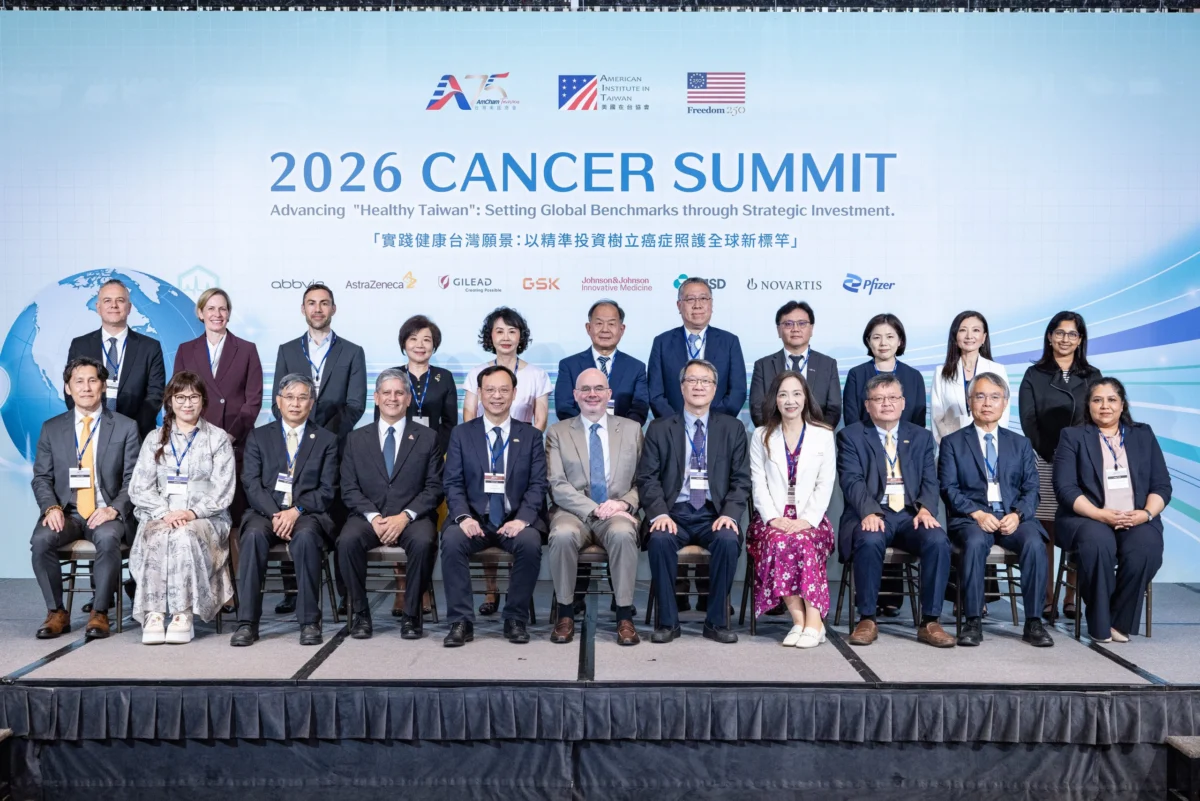
The American Chamber of Commerce in Taiwan (AmCham Taiwan), in a high-level collaboration with the American Institute in Taiwan (AIT), successfully convened the 2026 AmCham Taiwan Cancer Summit on July 28 at the Regent Taipei. This landmark event, themed "Advancing ‘Healthy Taiwan’: Setting Global Benchmarks through Strategic Investment," served as a critical platform for multisectoral dialogue aimed at revolutionizing the island’s oncological landscape. By gathering prominent leaders from government ministries, international pharmaceutical industries, academic research institutions, and patient advocacy organizations, the summit addressed the urgent need for sustainable financing models and the integration of innovative therapies into Taiwan’s public health framework. The primary focus of the 2026 assembly was the optimization of the Cancer Drugs Fund (CDF) and the alignment of local clinical practices with international standards of care to fulfill the national mandate of significantly reducing cancer mortality by the end of the decade.
A Vision for a Healthy Taiwan: Reducing Mortality by 2030
The summit was anchored in the "Healthy Taiwan" vision championed by President Lai Ching-te, which posits that a nation’s strength is inextricably linked to the health of its citizens. Central to this vision is an ambitious public health target: reducing Taiwan’s standardized cancer mortality rate by one-third by the year 2030. Achieving such a goal requires a departure from traditional healthcare management toward a more proactive, investment-heavy strategy that prioritizes early detection and rapid access to breakthrough treatments.
AmCham Taiwan President Carl Wegner opened the proceedings by emphasizing that cancer remains a formidable global challenge that transcends borders. He noted that addressing the complexities of modern oncology requires more than just scientific discovery; it demands robust public-private partnerships and a commitment to sustainable investment. Wegner highlighted that the summit’s objective was to ensure that the "innovation" occurring in laboratories is translated into "impact" at the bedside. He underscored the necessity of building a resilient healthcare ecosystem that is not only prepared for current challenges but is also "future-ready" for the next generation of precision medicine.
Strategic Investment and the Evolution of the Cancer Drugs Fund
A focal point of the day’s discussions was the strategic management of the Cancer Drugs Fund (CDF). Minister of Health and Welfare Shih Chung-liang, participating in the Grand Keynote Dialogue, provided an in-depth look at the government’s fiscal and policy roadmap. Minister Shih acknowledged that the sustainability of cancer care is dependent on stable, long-term funding mechanisms that can withstand the rising costs of specialized medicine.
In a significant policy disclosure, Minister Shih detailed the expansion of the national cancer screening budget, which has seen a dramatic increase from NT$2.8 billion to NT$6.8 billion. This surge in funding is designed to catch malignancies at earlier, more treatable stages, thereby reducing the long-term financial burden on the National Health Insurance (NHI) system. Furthermore, the establishment of the CDF in 2025 has provided a dedicated financial vehicle to bridge the gap between the regulatory approval of innovative drugs and their eventual reimbursement under the NHI.
The Minister explained that the CDF is specifically designed to help Taiwan’s reimbursement timelines keep pace with international treatment guidelines. Historically, the lag between a drug’s global launch and its availability to Taiwanese patients has been a point of contention. The 2026 summit highlighted how the CDF is now being used to mitigate this delay, ensuring that patients with life-threatening conditions do not have to wait years for access to life-saving immunotherapies and targeted treatments.
Digital Transformation and Data-Driven Resource Allocation
Beyond direct funding, the summit delved into the role of digital transformation in streamlining cancer care. Minister Shih outlined how the Ministry of Health and Welfare (MOHW) is advancing the digitalization of administrative procedures, particularly the prior authorization process for expensive cancer treatments. By moving these processes into a digital framework, the government aims to reduce the bureaucratic burden on healthcare providers and accelerate the delivery of care to patients.
Moreover, the integration of big data is becoming a cornerstone of Taiwan’s healthcare strategy. The data collected through these digital platforms is being utilized for rigorous follow-up evaluations and real-world evidence (RWE) studies. This data-driven approach allows policymakers to assess the clinical effectiveness of drugs funded by the CDF. If a treatment proves highly effective in the Taiwanese population, the data supports its permanent inclusion in the NHI reimbursement list. Conversely, if the real-world outcomes do not meet expectations, resources can be reallocated to more promising therapies. This "value-based" healthcare model ensures that every dollar of the public budget is utilized to maximize patient survival and quality of life.

Aligning with International Standards and NCCN Guidelines
The second major pillar of the summit focused on the alignment of Taiwan’s oncology practices with international benchmarks, specifically those established by the National Comprehensive Cancer Network (NCCN). Medical experts representing various specialties—including breast cancer, gynecologic cancers, and hematologic malignancies—shared the latest clinical developments and discussed the barriers to adopting global standards in Taiwan.
Panelists emphasized that "connected cancer care" involves more than just drug access; it requires a comprehensive pathway that spans early diagnosis, precision staging, multidisciplinary treatment, and long-term survivorship support. The consensus among the experts was that Taiwan must continue to update its clinical protocols to reflect the rapidly evolving global landscape. For instance, the transition toward personalized medicine—where treatment is tailored to the genetic profile of the individual tumor—requires a sophisticated infrastructure for genomic testing, which is currently a priority for the "Healthy Taiwan" initiative.
The discussion also highlighted the importance of strengthening the "continuum of care." Experts argued that by aligning with NCCN guidelines, Taiwan can ensure that its patients receive the same quality of care as those in the world’s leading medical centers. This alignment not only improves patient outcomes but also enhances Taiwan’s reputation as a global hub for clinical trials and biomedical research.
The Role of U.S.-Taiwan Collaboration: From Moonshot to Summit
The 2026 Cancer Summit marks the fourth year of this specialized forum, but its roots extend back to 2021, when AmCham and AIT first began organizing healthcare innovation forums. The current format was inspired by the United States’ "Cancer Moonshot" initiative, a program aimed at accelerating cancer research and making more therapies available to more patients.
The partnership between the U.S. and Taiwan in the realm of healthcare is built on a foundation of shared values and mutual interests. Both nations face the challenges of an aging population and a rising incidence of chronic diseases, with cancer remaining a leading cause of death. By leveraging the expertise of U.S.-based pharmaceutical giants and Taiwan’s world-class medical infrastructure and data systems, the two partners are creating a synergy that benefits the global medical community.
The summit serves as a vital diplomatic and economic bridge. For U.S. companies, Taiwan offers a sophisticated market with high-quality data and a transparent regulatory environment. For Taiwan, collaboration with U.S. entities provides access to cutting-edge technology and investment that fuels the domestic biotech sector. This bilateral cooperation is a key component of the broader U.S.-Taiwan relationship, demonstrating that healthcare is a domain where strategic interests and humanitarian goals converge.
Broader Impact and Future Implications
The implications of the 2026 Cancer Summit extend far beyond the walls of the Regent Taipei. The strategies discussed—ranging from the NT$6.8 billion screening budget to the digital overhaul of treatment authorizations—signal a fundamental shift in how Taiwan views healthcare spending. Rather than seeing it as a cost to be contained, the government is increasingly viewing it as a strategic investment in human capital.
As Taiwan moves toward its 2030 goal of a one-third reduction in cancer mortality, the world is watching. If Taiwan can successfully balance the financial sustainability of its National Health Insurance system with the high costs of innovative oncology, it will indeed set a global benchmark. The summit concluded with a reaffirmed commitment from AmCham Taiwan to continue its role as a facilitator of policy dialogue. By maintaining a constant exchange between government agencies and industry partners, AmCham aims to ensure that the momentum generated at the summit translates into tangible policy changes.
In the coming months, stakeholders expect to see further refinements to the CDF’s operational guidelines and increased transparency in the NHI’s decision-making processes. The "Healthy Taiwan" initiative is not merely a political slogan but a comprehensive roadmap that, if executed effectively, will redefine the experience of cancer care for millions of people. Through continued U.S.-Taiwan collaboration and a steadfast commitment to innovation, the vision of a resilient, connected, and world-leading cancer care ecosystem is moving closer to reality.


 Jia Lissa
 Dwi Wanna