Nana Muazin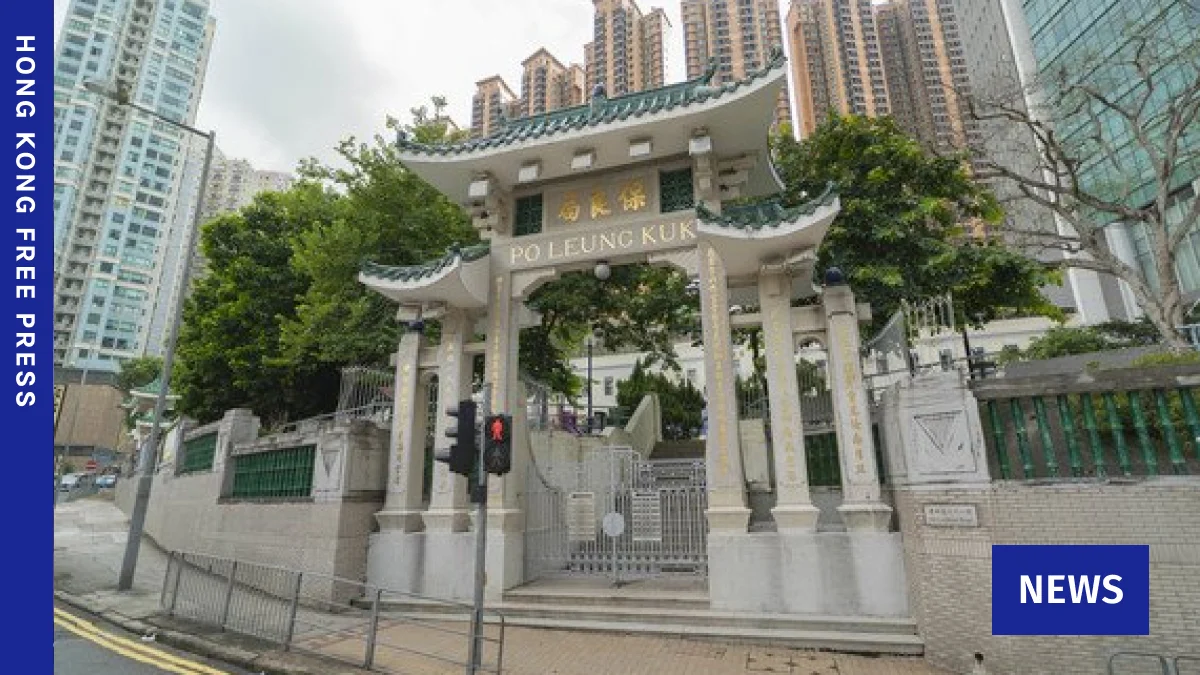
The Po Leung Kuk, a venerable institution in Hong Kong with a legacy spanning over a century, has appointed 16 staff members to serve as "national security tutors" as part of a broader government initiative aimed at embedding national security awareness across various sectors of society. This development marks a significant step in the ongoing efforts by the Hong Kong government to promote understanding and adherence to national security principles among its citizens and within key organizations. The appointed tutors will be instrumental in disseminating information and fostering a sense of responsibility regarding national security among the charity’s extensive workforce, its diverse service users, and the wider public.
The initiative, spearheaded by the Security Bureau and the Home and Youth Affairs Bureau, is a direct extension of policy directives outlined in the 2024 Policy Address by Hong Kong leader John Lee. This address emphasized the crucial role of community-level engagement in strengthening national security awareness. The Po Leung Kuk’s participation signifies the government’s strategy to leverage established and trusted organizations to reach a broad demographic, integrating national security education into the fabric of community services.

A Multi-faceted Approach to National Security Education
Senior service managers May Cheung and Sherman Cheung, who have volunteered to serve as tutors within the Po Leung Kuk’s newly formed "national security education team," highlighted their commitment to this crucial undertaking. Their volunteerism underscores a willingness within the organization to embrace the government’s agenda. Speaking at the launch ceremony of the team, they emphasized a pedagogical approach that prioritizes engagement over coercion. "We will not ‘force-feed’ concepts of national security," May Cheung stated, as reported by Ming Pao. Instead, the team plans to integrate national security awareness into existing community events and cultural celebrations, such as the Mid-Autumn Festival, making the learning process more organic and relatable.
This nuanced approach aims to demystify national security, presenting it not as an abstract or intimidating subject, but as an integral component of societal well-being and stability. The tutors intend to employ a four-tier strategy to achieve this objective. Firstly, internal staff training will ensure that all personnel within the Po Leung Kuk are well-informed and equipped to discuss national security matters. Secondly, national security exhibitions will be organized to provide accessible and informative displays. Thirdly, education will be extended to service users, ensuring that those who benefit from the Kuk’s services are also exposed to these principles. Finally, broader community outreach efforts will aim to extend the reach of national security awareness beyond the immediate circles of the charity.

Further elaborating on the innovative methods being employed, May Cheung revealed that the national security education team is actively developing creative educational materials. In collaboration with colleagues in child care services, they are designing picture books specifically embedded with national security themes. These books are slated for distribution to over 100 schools and educational institutions operated by the Po Leung Kuk across Hong Kong. This strategy targets a young audience, aiming to instill an understanding of national security from an early age through age-appropriate storytelling and illustrations.
Government’s Expanding National Security Framework
The Po Leung Kuk’s involvement is part of a larger, systematic effort by the Hong Kong government to institutionalize national security education. The concept of designated national security tutors was first formally announced by Chief Executive John Lee in his 2024 Policy Address. This announcement signaled a strategic shift towards proactive community engagement in safeguarding national security. The initial phase of this initiative focused on training members of community care teams, which were established in 2022 as part of Lee’s broader "improving district governance" agenda. These teams, comprising over 5,000 volunteers across more than 450 district-level units, were identified as ideal conduits for disseminating information and fostering a sense of collective responsibility.

The formal launch of the District Tutor Training Scheme by the Security Bureau and the Home and Youth Affairs Bureau in November 2024 provided a structured framework for this widespread educational push. This scheme mandates that each appointed instructor promote national security information to a minimum of 30 individuals annually, as detailed in a government letter obtained by Ming Pao. This requirement ensures a measurable impact and a consistent flow of information throughout the community.
In June of the same year, the Social Welfare Department actively reached out to approximately 200 subsidized non-governmental social service organizations. These organizations were formally invited to nominate managerial-level staff for training as national security instructors. The Po Leung Kuk’s response and subsequent appointment of 16 tutors exemplify the proactive engagement of these organizations in aligning with government directives.
Historical Context and Evolution of the Po Leung Kuk

The Po Leung Kuk’s commitment to social welfare and community well-being is deeply rooted in its history. Founded in 1878, its initial mandate was to combat the trafficking of women and children in Hong Kong and to provide shelter and education for victims. Over its long history, the organization has evolved significantly, expanding its scope to address a wide array of social needs. Today, the Po Leung Kuk operates a comprehensive network of services, including elderly care homes, rehabilitation clinics, healthcare facilities, holiday camps, and educational institutions ranging from kindergartens to secondary schools.
This extensive reach and deep penetration into Hong Kong’s social infrastructure make it a critical partner in the government’s national security education drive. The organization’s long-standing reputation for service and its direct engagement with vulnerable populations and the general public position it uniquely to disseminate the government’s message effectively. The integration of national security education into its existing service framework, as demonstrated by the development of children’s picture books and the planned use of cultural festivals, reflects a thoughtful adaptation to the new policy environment.
Broader Implications and Potential Impact

The government’s strategy to appoint national security tutors within prominent charitable organizations like the Po Leung Kuk signifies a clear intent to mainstream national security discourse. This approach moves beyond traditional law enforcement and security apparatus, embedding the concept into the everyday operations of civil society. The emphasis on "awareness" rather than explicit enforcement suggests a long-term goal of cultivating a culture of security consciousness.
However, this initiative also raises questions about the potential implications for the autonomy and traditional roles of these charitable organizations. While the Po Leung Kuk has framed its participation as a voluntary effort to contribute to societal harmony, the government’s directive nature and the mandatory reporting requirements for tutors could create an environment where organizations feel compelled to align their activities closely with state objectives. The success of this initiative will likely depend on the balance struck between promoting national security and maintaining the integrity and public trust that these charities have cultivated over decades.
The appointment of these tutors and the broader government scheme represent a significant development in Hong Kong’s evolving socio-political landscape. As the government continues to implement its national security agenda, the role of civil society organizations in disseminating information and fostering understanding will remain a key focus. The Po Leung Kuk’s engagement serves as a case study in how long-standing social welfare institutions are adapting to these new policy imperatives, with the ultimate impact on the organization and the wider community yet to be fully assessed. The multi-pronged approach, focusing on education, community engagement, and the development of tailored materials, indicates a strategic and determined effort to ensure that national security becomes a shared responsibility across all segments of Hong Kong society.


 Asep Darmawan