Nana Wu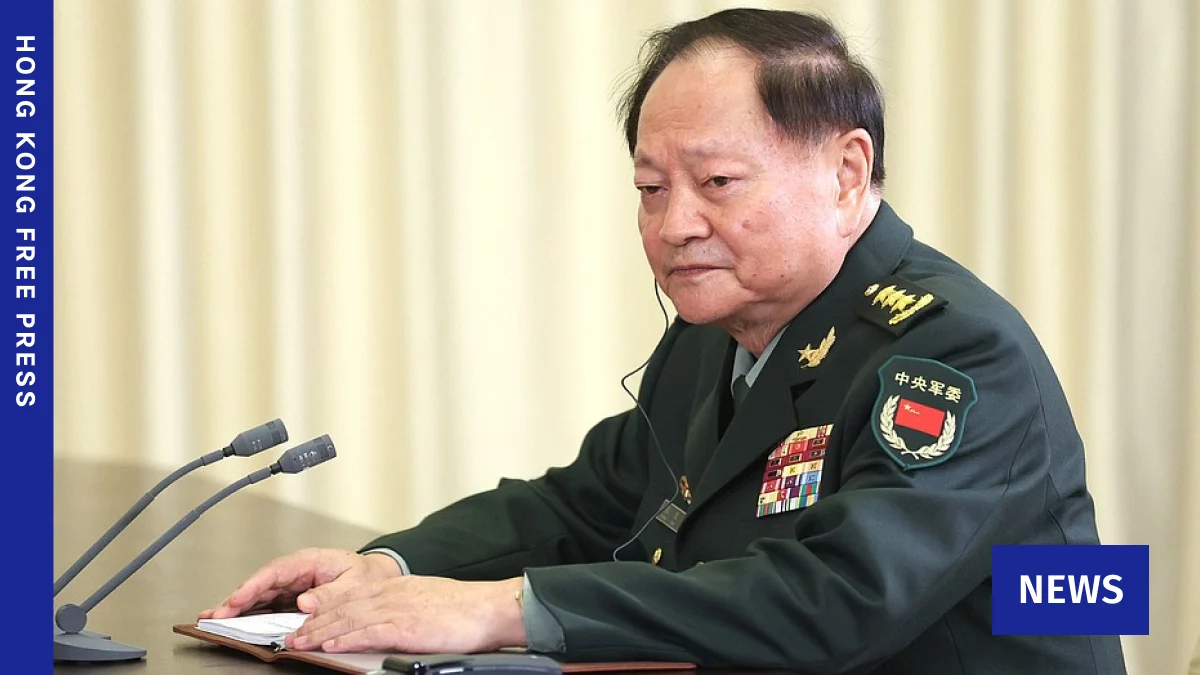
Beijing, China – China has expelled two high-ranking military officers, General Zhang Youxia and Lieutenant General Liu Zhenli, from the ruling Communist Party this week, state media reported on Monday. The expulsions follow months of intense scrutiny and investigation into what officials described as "serious violations of the law and discipline," a common euphemism for corruption within the Chinese political lexicon. The announcement underscores President Xi Jinping’s relentless and far-reaching anti-graft campaign, which has consistently targeted the People’s Liberation Army (PLA) as a critical area for ensuring absolute loyalty and efficiency.
General Zhang Youxia, who previously held the highly influential position as the more senior of two vice chairmen on the Central Military Commission (CMC), was considered China’s highest-ranked general and a veteran "princeling" with deep ties to the Party elite, including a long-standing personal relationship with President Xi Jinping. His downfall has particularly sent shockwaves through the political and military establishments, given his exceptional seniority and the widespread perception of his closeness to the nation’s supreme leader. Lieutenant General Liu Zhenli, the second officer implicated, also held a significant position within the military hierarchy. The cases of both men have now been transferred to the military’s legal organs for further review and prosecution, signaling a potential for severe legal repercussions.
The Purge of Senior Military Leadership
The expulsion of Zhang Youxia and Liu Zhenli represents a significant escalation in President Xi Jinping’s anti-corruption drive within the military. Since assuming power in 2012, Xi has waged an unprecedented campaign against corruption, which he has repeatedly framed as an existential threat to the Communist Party’s legitimacy and governance. While the campaign, famously dubbed "tigers and flies," has ensnared officials at all levels, the military has been a particularly sensitive and critical target. Xi has consistently emphasized the need for the PLA to be "absolutely loyal" to the Party and himself, viewing corruption not merely as economic malfeasance but as a direct threat to the Party’s command over the armed forces and the military’s combat readiness.

The Central Military Commission (CMC) stands as the Party’s highest military command body, directly overseeing the PLA. Its vice chairmen are among the most powerful figures in China’s defense apparatus, responsible for strategic planning, operational command, and personnel management. Zhang Youxia’s position as the senior vice chairman placed him at the pinnacle of military power, second only to President Xi Jinping himself, who chairs the CMC. His removal sends a unequivocal message that no individual, regardless of rank, perceived proximity to the leadership, or historical ties, is immune to the anti-graft dragnet.
A Deep Dive into the Charges and Accusations
State news agency Xinhua, in its report detailing the expulsions, provided the first public insights into the nature of the charges against the two generals. The investigation concluded that Zhang and Liu had "become disloyal to the Party… and crossed red lines" by engaging in a litany of offences. These included "forming cliques," a charge often leveled against officials perceived to be building independent power bases or challenging the centralized authority of the Party leadership. More explicitly, they were accused of "accepting huge sums of money for personal gain" and "using their positions to help others in matters such as job promotion." Xinhua specifically highlighted that their cases involved "exceptionally large sums of money," underscoring the severity of the financial corruption involved.
The accusation of "disloyalty to the Party" is particularly grave within China’s political system. It transcends mere criminal misconduct, touching upon the fundamental principles of Party discipline and unity. In the context of Xi Jinping’s leadership, loyalty is paramount, and any deviation is seen as an act of defiance against the Party’s absolute authority and, by extension, against Xi himself. Forming cliques, often referred to as "gangs" or "factions," is interpreted as undermining Party unity and creating parallel power structures, which the Party leadership views with extreme suspicion. The use of official positions for personal gain, especially in job promotions, speaks to systemic issues of patronage and influence peddling that have long plagued the military and government bureaucracy, undermining meritocracy and fostering a culture of illicit exchange.
Chronology of a High-Profile Investigation
The path to these high-profile expulsions has unfolded over several months, marked by the characteristic opacity of China’s anti-corruption probes.

- January (unspecified date): The Ministry of National Defense publicly announced that Zhang Youxia and Liu Zhenli were under investigation for "serious violations of discipline and the law." This initial announcement, though vague, immediately signaled the gravity of the situation, as such phrases are standard euphemisms for corruption investigations conducted by the Party’s internal disciplinary bodies.
- "Last month" (implied February/March): Both Zhang Youxia and Liu Zhenli were stripped of their positions in the state Central Military Commission. This administrative step typically precedes formal Party expulsion and criminal prosecution, effectively removing them from their official duties and powers while investigations proceed.
- Monday (unspecified date, recent): The Communist Party’s top officials, meeting in Beijing, formally "decided to expel" the two men from the Party. Concurrently, their cases were officially transferred to the military’s legal organs for "review and prosecution," indicating that criminal charges are expected to follow the Party disciplinary actions.
- Future (unspecified date): The expulsions are subject to formal ratification at a plenary session of the Party’s Central Committee. While this ratification is typically a formality for decisions already made by the top leadership, it serves to legitimize the process through the Party’s highest deliberative body.
This timeline illustrates the multi-stage process of China’s anti-corruption campaign, which typically begins with a Party investigation, followed by removal from official posts, Party expulsion, and finally, criminal prosecution in the state legal system.
President Xi Jinping’s Unyielding Anti-Corruption Campaign
President Xi Jinping’s anti-corruption drive, launched shortly after he came to power in late 2012, has been unprecedented in its scale and duration. Data from the Party’s Central Commission for Discipline Inspection (CCDI) indicates that millions of officials, from low-level "flies" to high-ranking "tigers," have been investigated, disciplined, or prosecuted. Within the military, the campaign has been particularly intense. Prior to the current cases, numerous senior generals have been purged, including former CMC vice chairmen Guo Boxiong and Xu Caihou, both of whom were close allies of Xi’s predecessor, Hu Jintao. Their downfalls were pivotal moments, demonstrating Xi’s determination to assert his authority over the military and dismantle entrenched networks of patronage and corruption.
The campaign’s focus on the military is multi-faceted. Firstly, it aims to enhance the PLA’s combat effectiveness by rooting out corruption that diverts resources, compromises quality in procurement, and undermines morale and meritocracy. Secondly, and perhaps more crucially from the Party’s perspective, it serves to consolidate Xi Jinping’s personal control over the armed forces, ensuring that the military’s loyalty is directed solely to him and the Party center. This political objective is paramount, as the PLA is the ultimate guarantor of the Communist Party’s rule.
The Central Military Commission and Loyalty to the Party
The Central Military Commission (CMC) is the most powerful military body in China, effectively controlling all aspects of the People’s Liberation Army. President Xi Jinping serves as its chairman, underscoring the Party’s absolute command over the barrel of the gun. The CMC comprises a chairman, two vice chairmen, and several members. Zhang Youxia’s role as senior vice chairman meant he was a key figure in strategic decision-making, military reforms, and personnel appointments. His removal, therefore, is not merely the ousting of a corrupt official but a significant shake-up at the very apex of China’s military command structure.

The Party’s official statements regarding the expulsions consistently "reaffirm the firm position that… there is absolutely no place for corrupt elements to hide within the military." This rhetoric is designed to project an image of a clean, disciplined, and formidable fighting force. More importantly, it reinforces the narrative that the Party is proactively addressing internal weaknesses to strengthen its governance and ensure the military remains an obedient instrument of its will. The concept of "absolute loyalty to the Party" is a cornerstone of military doctrine in China, and purges of this nature serve as stark reminders to other officers of the consequences of perceived disloyalty or illicit activities.
Implications for China’s Military Modernization
China is engaged in an ambitious and rapid military modernization program, aiming to transform the PLA into a world-class fighting force by 2049. This endeavor requires vast resources, technological innovation, and a highly disciplined and professional officer corps. Corruption, particularly involving "exceptionally large sums of money" and "job promotion" scandals, directly impedes these goals. It can lead to the procurement of substandard equipment, the promotion of unqualified personnel based on illicit payments rather than merit, and the siphoning off of funds meant for training and development.
By purging high-ranking officials like Zhang Youxia and Liu Zhenli, the Party aims to demonstrate its commitment to eliminating these obstacles. The stated goal is to create a military that is not only technologically advanced but also ideologically pure and operationally efficient. However, such large-scale purges can also have unintended consequences, potentially impacting morale, creating uncertainty within the command structure, and leading to risk aversion among officers who fear being caught in future purges. The challenge for Beijing is to strike a balance between rooting out corruption and maintaining stability and cohesion within its vast military machine.
Xi’s Consolidation of Power and Political Signaling
The expulsion of Zhang Youxia, a figure widely regarded as close to President Xi Jinping, is particularly telling about the nature of Xi’s power and political strategy. Zhang’s father was a revolutionary general and a comrade-in-arms of Xi’s own father, Xi Zhongxun, forging a bond between the two leaders that goes back generations. This "princeling" connection and perceived personal trust made Zhang’s fall all the more unexpected to many observers. His removal suggests that even deep personal ties are secondary to the imperative of absolute loyalty to Xi and the Party’s anti-corruption agenda.

This incident sends a potent signal throughout the Party and the military: no one is indispensable, and loyalty must be unquestioning and continuously demonstrated. It reinforces Xi Jinping’s authority, demonstrating his willingness to remove even long-standing allies if they are perceived to have crossed "red lines." Such moves serve to further centralize power around Xi, dismantle potential rival power networks, and ensure that all factions and individuals within the Party and military are aligned with his vision and leadership. The campaign, therefore, is not just about corruption; it is fundamentally about political control and the consolidation of Xi’s paramount position.
The Opaque Nature of Chinese Anti-Graft Operations
The investigations and subsequent expulsions in China’s anti-corruption campaign are characterized by a high degree of opacity. Information is released selectively by state media, typically after the internal Party disciplinary process has largely concluded. Details of the alleged crimes are often broad, such as "serious violations of discipline and the law" or "exceptionally large sums of money," without specific itemized accusations or public trials in their initial stages. The accused are rarely given a public platform to defend themselves, and the process is largely conducted behind closed doors by Party disciplinary organs before being handed over to the state legal system.
This lack of transparency, while allowing the Party to maintain tight control over the narrative and avoid public scrutiny of its methods, also fuels speculation and raises questions about due process. Critics argue that the anti-corruption campaign, while genuinely targeting malfeasance, can also be leveraged to remove political rivals or consolidate power. However, from Beijing’s perspective, this opaque and top-down approach is seen as necessary to effectively combat deep-seated corruption within a vast and complex system, ensuring swift action and maintaining Party discipline.
Looking Ahead: The Future of the PLA and Party Discipline
The expulsions of Zhang Youxia and Liu Zhenli mark another significant chapter in President Xi Jinping’s ongoing efforts to reshape China’s military and political landscape. As China continues its military modernization and asserts its geopolitical influence, ensuring a loyal, disciplined, and effective PLA remains a top priority for Beijing. The anti-corruption campaign, particularly its military component, is therefore unlikely to abate.

These events underscore the Party’s commitment to maintaining strict discipline and demanding absolute loyalty, especially from its most senior officials. The message is clear: the Party’s authority and President Xi’s leadership are supreme, and any deviation, whether through corruption or perceived disloyalty, will be met with severe consequences. The long-term impact on the PLA’s command structure, morale, and overall effectiveness will continue to be a subject of close observation for analysts worldwide.

 Laily UPN