Nana
Nana
Chinese President Xi Jinping has called for intensified cooperation with the United States, as reported by Beijing’s state media, just hours after his arrival in Washington on Wednesday evening local time and a formal greeting by President Donald Trump. The conciliatory remarks set a cautiously optimistic tone for what are anticipated to be high-stakes discussions between the leaders of the world’s two largest economies.
In written remarks disseminated by the official Xinhua news agency, President Xi emphasized, "Our two countries should be partners rather than rivals." He elaborated on the deep interdependence between the nations, stating, "the Chinese and US peoples have enjoyed long-standing friendly exchanges, and our interests are deeply intertwined." This diplomatic overture underscores a strategic push from Beijing to stabilize a relationship often characterized by friction and strategic competition.
The highly anticipated meeting between Trump and Xi, marked by a handshake on a red carpet at Joint Base Andrews, is poised to address a litany of complex issues. These include persistent trade imbalances, intense technological competition—particularly in the rapidly evolving field of artificial intelligence—and China’s diplomatic and economic ties with Tehran, which remains a significant point of contention for Washington. The stakes extend beyond bilateral relations, with global trade, technological advancement, and regional stability hanging in the balance.

A History of Complex Relations and Recent Tensions
The backdrop to this summit is a period of sustained tension and strategic rivalry that has defined US-China relations for several years. Following the initial phase of the "trade war" that began in the late 2010s, both nations implemented significant tariffs on hundreds of billions of dollars worth of goods. While some agreements, such as the "Phase One" trade deal, provided temporary relief, underlying structural issues like intellectual property theft, forced technology transfers, and market access barriers have largely persisted.
Economically, the US trade deficit with China, though fluctuating, has remained a prominent point of contention for the Trump administration. Data from the US Department of Commerce, for instance, showed the bilateral goods deficit hovering around hundreds of billions of dollars annually in the years leading up to 2026, albeit with shifts in specific sectors. American agricultural exports to China, while recovering from initial trade war impacts, have faced volatility, and US manufacturers have continued to lobby for a level playing field. Conversely, Chinese state-owned enterprises have faced increased scrutiny and restrictions in the US market, particularly in critical infrastructure and high-tech sectors.
Technological competition has escalated into a defining feature of the rivalry. The race for dominance in artificial intelligence, 5G telecommunications, quantum computing, and advanced semiconductors has become a geopolitical flashpoint. Both nations have poured massive investments into these areas. By 2026, China’s national AI strategy, for example, had propelled it to be a global leader in AI research output and patent filings, often rivaling or surpassing the United States in certain metrics. This rapid advancement has fueled US concerns about national security, economic competitiveness, and the potential for dual-use technologies to be leveraged for military advantage. Restrictions on technology transfers and the blacklisting of Chinese tech firms have become common tools in Washington’s policy arsenal, creating significant ripple effects across global supply chains.

Geopolitically, differences over Iran’s nuclear program and regional influence have strained relations. The US withdrawal from the Joint Comprehensive Plan of Action (JCPOA) and subsequent re-imposition of sanctions on Iran placed Beijing in a difficult position, as China remains a significant consumer of Iranian oil and maintains substantial trade links. Washington has consistently pressed allies and trading partners to reduce their engagement with Tehran, leading to diplomatic pressure on China to align with US policy. Other geopolitical flashpoints, such as China’s assertiveness in the South China Sea, human rights issues in Xinjiang and Hong Kong, and the enduring question of Taiwan, also cast long shadows over the bilateral dialogue.
Xi’s Vision for a "Stable Relationship"
President Xi’s written remarks ahead of the summit outlined a strategic framework for the future of US-China relations. He expressed eagerness for "in-depth exchanges with President Trump on major issues concerning our bilateral relations and the global situation," as reported by Xinhua. His proposed model for engagement included working "towards each other to foster a stable relationship characterised by cooperation as the mainstay, competition within bounds, manageable differences and peaceful prospects."
This concept of "competition within bounds" suggests a recognition from Beijing that outright rivalry is unsustainable and potentially dangerous, while acknowledging that competition is an inherent aspect of the relationship between two rising powers. The emphasis on "manageable differences" implies a desire to prevent disagreements from spiraling into broader conflicts, instead seeking mechanisms for de-escalation and pragmatic problem-solving. This nuanced approach signals a shift from purely confrontational rhetoric to one that seeks to define the parameters of competition.

In a notable rhetorical flourish, President Xi even alluded to President Trump’s signature political slogan, stating that "the great rejuvenation of the Chinese nation and the goal of making America great again can fully go hand in hand." This statement, while carefully crafted for diplomatic impact, suggests an attempt to find common ground and frame the aspirations of both nations as potentially complementary rather than inherently antagonistic. It aims to bridge ideological divides by appealing to shared national ambitions, albeit interpreted through distinct political lenses.
Xi concluded his pre-summit remarks with an expression of confidence, asserting, "I am confident we can achieve this." He further added, "I believe that with the joint efforts of both sides, this visit will yield fruitful results, enhance the well-being of our two peoples and bring new hope for world peace." These statements reflect a desire to project an image of constructive engagement and a commitment to global stability, potentially aiming to reassure international partners who have grown wary of the escalating tensions between the two powers.
Key Discussion Points and Anticipated Outcomes
The agenda for the Trump-Xi summit is expected to be comprehensive and challenging.

Trade: While a full resolution to all trade disputes is unlikely in a single summit, progress on specific areas could be made. Discussions might focus on China’s commitment to purchasing more US agricultural and energy products, further opening of its financial markets, and stronger enforcement of intellectual property rights. The US, in turn, might consider rolling back certain tariffs or refraining from new restrictions on Chinese firms, particularly if China demonstrates tangible progress on structural reforms. However, the deeply ingrained issues of state subsidies for Chinese industries and the role of state-owned enterprises will likely remain difficult to resolve.
Technology and AI: This segment of the talks is particularly fraught. The US has consistently pressed for safeguards against cyber espionage, restrictions on the export of advanced technologies to China, and greater transparency in Chinese AI development. China, on its part, views its technological advancement as a matter of national sovereignty and economic destiny. A potential outcome could involve agreements on certain "red lines" regarding the military application of AI or protocols for data security. However, fundamental disagreements over technological decoupling and supply chain resilience are expected to persist. The US has been particularly concerned about China’s progress in developing cutting-edge chips and its ambition to achieve self-sufficiency in semiconductor manufacturing, investing hundreds of billions in domestic production to reduce reliance on foreign technology.
Geopolitical Issues and Iran: China’s continued economic engagement with Iran, despite US sanctions, remains a core concern for Washington. The US is likely to reiterate its demands for China to curtail its oil imports from Iran and to cease any activities that could undermine the sanctions regime. Beijing, while acknowledging US concerns, often emphasizes its independent foreign policy and the legitimacy of its trade relations. Any agreement on this front would likely involve China finding alternative energy sources or scaling back its engagement with Iran in a way that minimizes economic disruption for China. Other regional issues, such as stability on the Korean Peninsula and navigation freedom in the South China Sea, might also feature in the discussions.
Official Reactions and Broader Implications

While President Xi’s remarks were publicly shared via state media, the immediate reaction from the White House was more reserved, focusing on the importance of direct dialogue. A White House spokesperson, speaking on background, indicated that President Trump looked forward to "frank and productive discussions" aimed at ensuring "fair and reciprocal trade, addressing national security concerns, and promoting American interests." This language signals that while the US is open to cooperation, its primary objectives remain firmly rooted in its strategic priorities.
Analysts widely concur that the summit’s success will not be measured by grand pronouncements but by incremental progress on specific issues and a demonstrated commitment from both sides to manage their escalating competition. Dr. Eleanor Vance, a senior fellow at the Center for Strategic and International Studies (CSIS), noted, "Xi’s call for partnership and ‘competition within bounds’ offers a potential off-ramp from unchecked rivalry. However, the true test lies in whether these words translate into concrete policy changes and a genuine de-escalation of tensions, particularly in trade and technology."
The implications of this summit are far-reaching. For the global economy, a significant de-escalation of trade tensions could provide a much-needed boost to global growth, reducing uncertainty for businesses and consumers. Conversely, a failure to find common ground could lead to further economic fragmentation, potentially accelerating the decoupling of supply chains and increasing protectionist measures.
In the realm of technology, the outcomes could shape the future of innovation. Agreements or disagreements on AI governance, cybersecurity, and intellectual property protection will influence global standards and the pace of technological development. The future of open internet access and the integrity of global digital infrastructure also rest heavily on how these two technological giants choose to interact.

Geopolitically, the summit offers a chance to avert potential crises and foster greater stability in critical regions. A more cooperative US-China relationship could facilitate multilateral efforts on issues like climate change, pandemic preparedness, and nuclear non-proliferation. Conversely, continued mistrust could exacerbate existing conflicts and hinder international cooperation on shared global challenges.
Ultimately, President Xi’s emphasis on partnership and managed competition represents a significant diplomatic gambit. The summit provides a critical juncture for both leaders to either reaffirm a path of strategic rivalry or to forge a more stable, albeit competitive, framework for the world’s most consequential bilateral relationship. The success of this endeavor will have profound consequences for their respective nations and for the broader international order for years to come.

 Nana Wu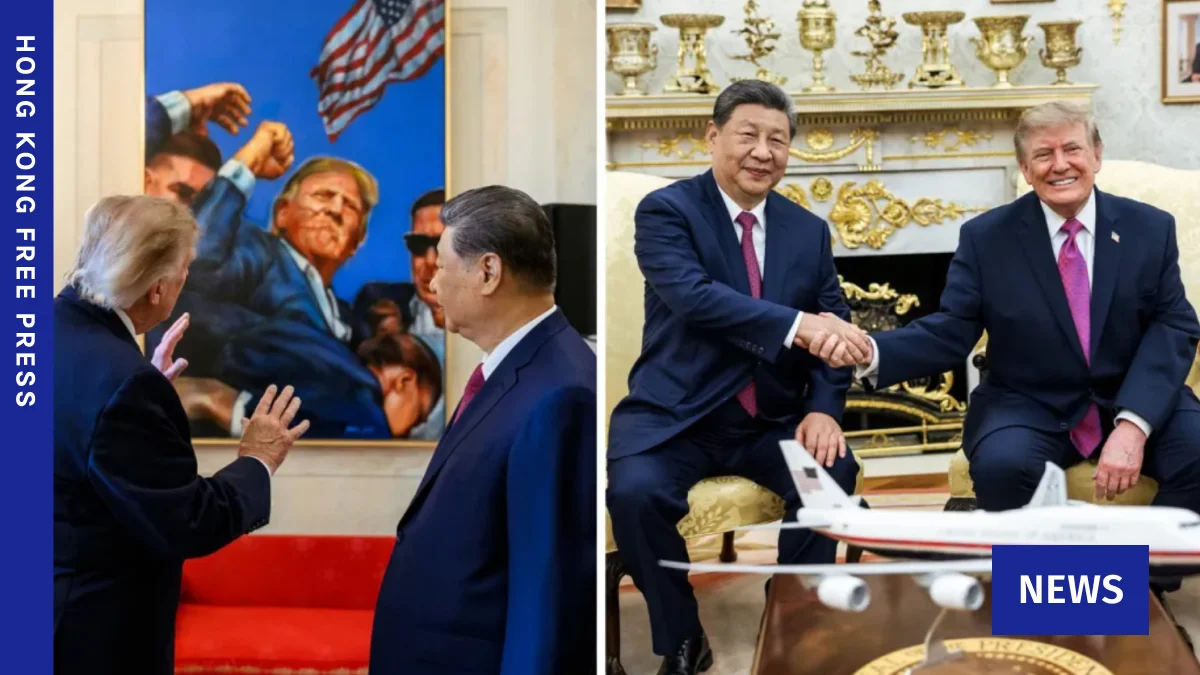
 Iffa Jayyana