Iffa Jayyana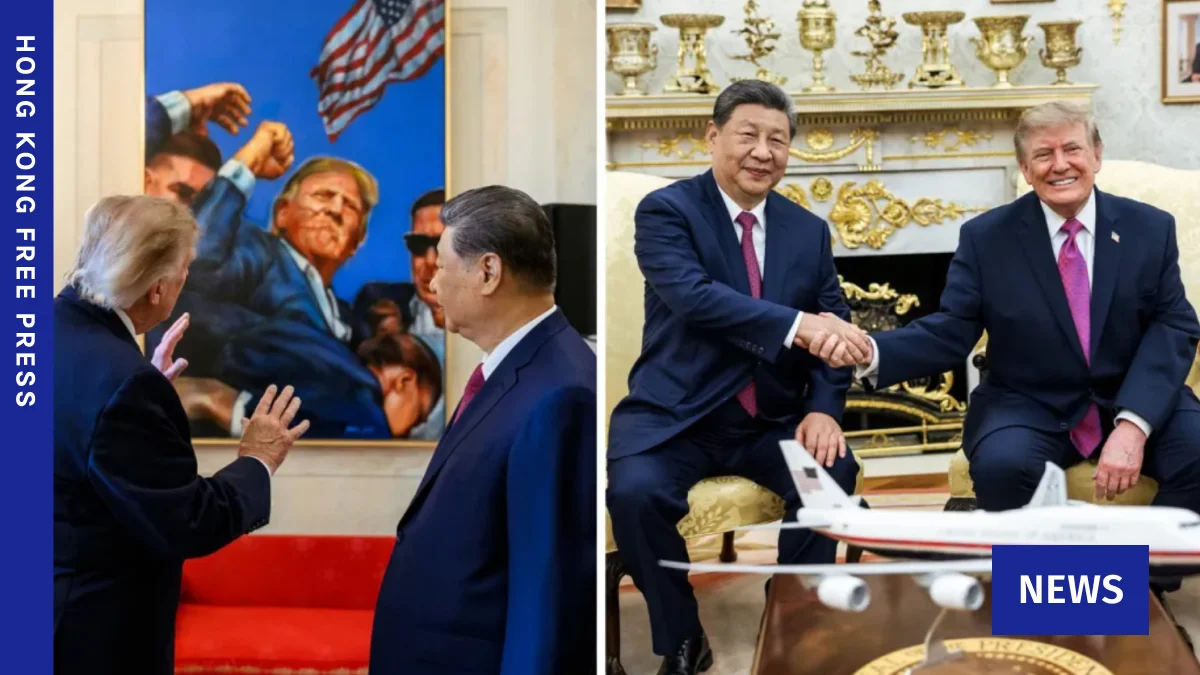
WASHINGTON, United States – Chinese President Xi Jinping on Thursday urged his American counterpart, Donald Trump, to ensure the world’s two preeminent powers peacefully manage their deepening rivalry, even as Trump rolled out an elaborate welcome at the White House for the state visit. The high-stakes engagement, part of a three-day visit from September 23 to 25, saw leaders from Beijing and Washington navigate a complex tapestry of geopolitical tensions, economic competition, and burgeoning technological frontiers, all underscored by a grand display of diplomatic pomp.
President Xi, arriving for his first White House visit in over a decade, underscored the critical need for stability, stating in his opening remarks, "there is no conflict and no confrontation between us." His pronouncement served as a direct call for de-escalation amidst a period marked by strategic competition. On the other hand, President Trump, at 80 years old, adopted a notably warmer tone, hailing a "truly great friendship" with Xi and asserting that they had "made tremendous strides on the issues facing our two countries." This divergence in rhetoric highlighted the underlying complexities of a relationship characterized by both profound interdependence and persistent friction.

The Grand Spectacle and Diplomatic Pageantry
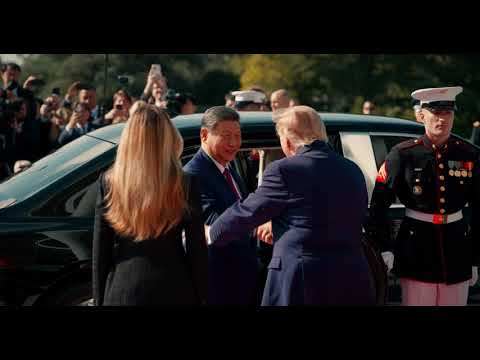
The day’s events were meticulously choreographed to project an image of robust bilateral relations, despite deep-seated disagreements. The spectacle began even before Thursday’s formal ceremonies. On Wednesday, in a rare gesture symbolizing the importance of the visit, President Trump personally greeted President Xi at Joint Base Andrews, marking the first time in over six decades that a U.S. president had extended such an honor to a visiting head of state. This personal touch set the stage for the lavish welcome that unfolded.
Thursday’s itinerary commenced with a formal welcome ceremony on the White House South Lawn, replete with military honors. Following this, Presidents Trump and Xi inspected a military parade conducted on the newly renovated Rose Garden, a symbolic space within the White House complex. The aerial display was particularly striking, featuring American military jets, including a B-2 bomber – a type notably used in recent operations targeting Iranian nuclear facilities last year. This flyover, with U.S. and Chinese flags fluttering side-by-side over the West Wing, served as a potent visual reminder of both nations’ military might and the delicate balance of power they represent.

The pageantry extended beyond formal ceremonies. In a notable symbolic gesture, President Trump later escorted President Xi to the new helipad he had commissioned at the White House, boasting of its "million-year" granite construction. He then took the Chinese leader aboard his Marine One helicopter, a highly exclusive and sensitive piece of U.S. military equipment, offering a rare glimpse into American presidential access and trust. These elaborate gestures were widely interpreted as an attempt by the Trump administration to foster a personal rapport with President Xi, mirroring Trump’s consistent efforts throughout his presidency to cultivate strong individual relationships with foreign leaders.
Superpower Rivalry and the Call for Peaceful Coexistence
At the heart of President Xi’s message was the imperative for the United States and China to navigate their inherent superpower rivalry without resorting to conflict. This emphasis on peaceful management reflects global anxieties about the potential for miscalculation or escalation between the world’s two largest economies and military powers. Analysts suggest that Beijing’s consistent messaging for "no conflict, no confrontation" aims to secure a stable external environment for its continued economic development and to counter perceptions of China as an aggressive rising power. The call for peaceful coexistence is a cornerstone of China’s foreign policy rhetoric, especially concerning its relationship with the United States, as both nations grapple with their respective spheres of influence and global leadership ambitions.

The economic interdependence between the two nations, despite ongoing trade disputes, means that a direct confrontation would have catastrophic global consequences. Therefore, while competition is inevitable, managing it through dialogue and agreed-upon frameworks remains a priority for both sides, even if the definitions and parameters of "peaceful management" often differ significantly between Washington and Beijing.
Divergent Views on Emerging Technologies: Artificial Intelligence
One of the most intriguing points of discussion, as highlighted by both leaders, was the future of artificial intelligence (AI). President Xi emphasized the critical need for AI to remain "always under human control," echoing a growing global chorus of concern about the ethical, security, and societal implications of advanced AI systems. This stance aligns with China’s own ambitious AI development strategy, which also includes significant state control and ethical guidelines.

In stark contrast, President Trump, who referred to AI as "super intelligence – SI," has historically dismissed warnings about AI posing existential threats to humanity. His remarks struck a more optimistic, albeit less cautious, tone regarding the technology’s rapid advancement. This divergence signals a potential fault line in future bilateral discussions, not only on the development and deployment of AI but also on international governance frameworks for this transformative technology. The strategic race for AI dominance is a core component of the broader technological rivalry between the U.S. and China, encompassing everything from microchip manufacturing to data security and quantum computing. The ability to control and leverage AI is seen as crucial for future economic prosperity and national security, making this a critical, yet complex, area for bilateral engagement.
Geopolitical Flashpoints: Taiwan and the Iran War
Beyond the grand pronouncements, the Oval Office discussions delved into more contentious geopolitical issues, revealing significant policy chasms. President Xi explicitly urged President Trump to show "prudence" and oppose independence for Taiwan, the self-governing island that Beijing considers an inseparable part of its territory. This reiteration of China’s "red line" on Taiwan underscores the enduring sensitivity of the issue. The United States officially acknowledges the "One China" policy but also maintains robust unofficial relations with Taiwan, including providing defensive weaponry under the Taiwan Relations Act. Any perceived shift towards recognizing Taiwanese independence is viewed by Beijing as a grave challenge to its sovereignty and a potential trigger for conflict.
The ongoing "Iran war" also featured prominently. President Xi, whose country has reportedly shared intelligence with Tehran, called for an end to the conflict "through negotiation as soon as possible." This position highlights a divergence from the U.S. approach, particularly given the previous year’s bombing of Iranian nuclear facilities by U.S. B-2 bombers, as noted in the original article. The U.S. has long sought to curtail Iran’s nuclear ambitions and regional influence, often through sanctions and military pressure. China, as a major energy importer and a significant diplomatic player, typically advocates for diplomatic solutions and stability in the Middle East, maintaining relations with various regional actors. The mention of China sharing intelligence with Tehran suggests a complex, potentially adversarial, dynamic to U.S. interests in the region, further complicating the superpower relationship.
Underlying Economic Tensions: The Trade War
Despite the diplomatic pleasantries, the specter of the ongoing trade war loomed large over the visit. Initiated by President Trump’s administration with tariffs on Chinese goods, the trade dispute has been characterized by retaliatory measures and profound disruptions to global supply chains. The U.S. has cited concerns over intellectual property theft, forced technology transfer, and a persistent trade deficit as justifications for its actions, while China has consistently denied these accusations and condemned the tariffs as protectionist.

In a small but significant sign of progress, U.S. Treasury Secretary Scott Bessent announced a two-month extension of a trade truce that had been set to expire in November. This temporary reprieve suggests a mutual desire to prevent further escalation, allowing more time for negotiations aimed at a broader, more sustainable trade agreement. However, the fundamental structural issues underpinning the trade imbalance and technological competition remain unresolved, indicating that the truce merely postpones, rather than resolves, the core economic friction points. The trade relationship between the U.S. and China, valued at hundreds of billions of dollars annually, is too significant for either nation to fully disengage, yet too imbalanced for long-term stability without significant reforms.
Other Areas of Friction and Unaddressed Issues
During a brief exchange with the press, Presidents Trump and Xi conspicuously avoided questions on several other pressing and sensitive issues. These included fentanyl trafficking, a major public health crisis in the United States often linked to precursor chemicals originating in China, and the case of jailed Hong Kong pro-democracy media mogul Jimmy Lai. The latter highlights enduring U.S. concerns about human rights and democratic freedoms in Hong Kong, particularly in the wake of the National Security Law imposed by Beijing. China views these matters as internal affairs, vehemently rejecting any foreign interference. The leaders’ silence on these topics underscores the strategic decision to prioritize broader diplomatic optics and areas of potential cooperation over public confrontation on deeply divisive issues.

Adding a touch of characteristic Trumpian flair, the U.S. president also joked about the Chinese press corps being "the friendliest," a comment that came just days after several American news outlets, including CNN, MS Now, and Politico, had been barred from the White House, only to return following a court order. This anecdote, while seemingly lighthearted, subtly highlighted the contrasting approaches to press freedom and media relations in the two countries.
Analysis and Implications
This state visit, characterized by both elaborate ceremony and candid, albeit private, discussions on critical issues, underscored the inherent duality of the U.S.-China relationship. While the pageantry aimed to project stability and mutual respect, the substantive exchanges revealed deep, persistent fault lines on matters ranging from global governance of AI to geopolitical flashpoints like Taiwan and the Iran conflict, and economic tensions stemming from the trade war.

Few major breakthroughs were publicly announced, suggesting that the primary objective of the visit was less about achieving immediate, tangible agreements and more about managing expectations, maintaining open lines of communication, and preventing the world’s most consequential bilateral relationship from veering into outright confrontation. For President Trump, the visit likely served to reinforce his image as a leader capable of engaging directly with global powers, while for President Xi, it offered an opportunity to assert China’s vision for a multipolar world and advocate for its core interests on the global stage.
The personal diplomacy showcased, particularly by President Trump, signifies an ongoing attempt to leverage individual rapport in an effort to smooth over structural disagreements. However, the complexities of the U.S.-China dynamic extend far beyond personal chemistry, encompassing deeply entrenched national interests, ideological differences, and a fierce competition for technological and geopolitical leadership. The explicit calls for peaceful management from Xi, coupled with the lavish welcome from Trump, paint a picture of a relationship that is simultaneously cooperative and competitive, interdependent and deeply adversarial. The coming months and years will undoubtedly test the capacity of both nations to heed Xi’s call for "no conflict and no confrontation" as they navigate the ever-evolving landscape of superpower rivalry.

 Dwi Wanna
 Asep Darmawan