Muslim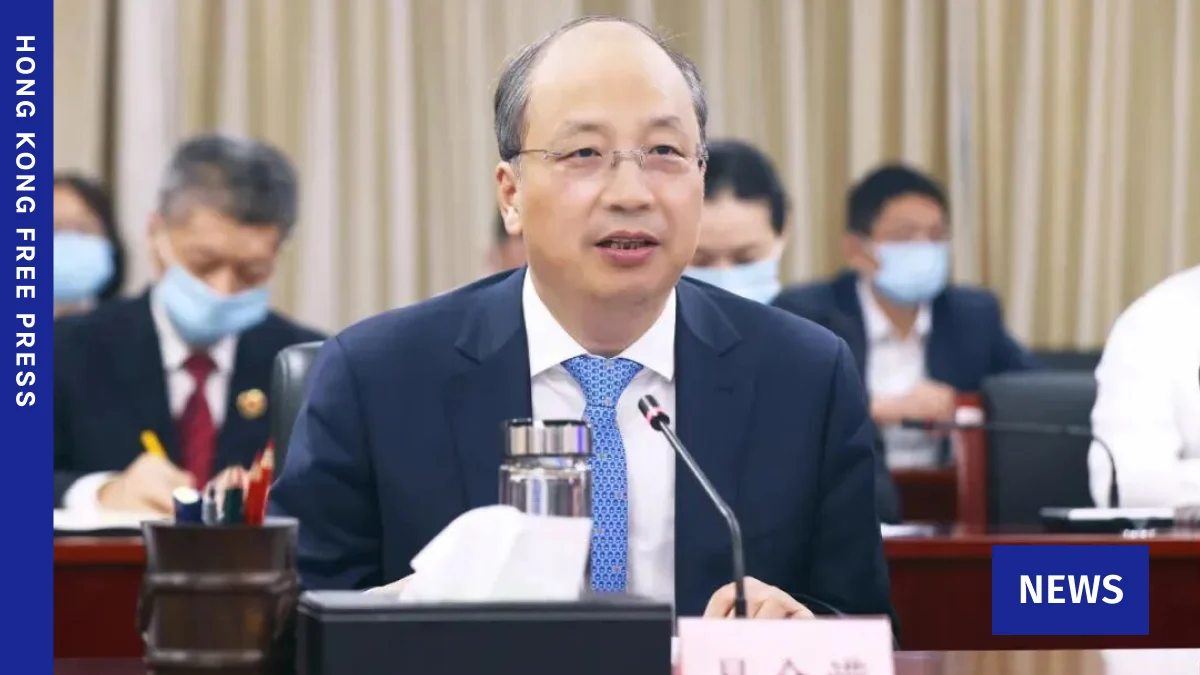
The former head of China’s financial markets regulator, Yi Huiman, is set to face trial for corruption, state media confirmed on Wednesday, marking the latest high-profile official to be ensnared in President Xi Jinping’s extensive and unrelenting anti-graft campaign. This development underscores Beijing’s unwavering commitment to stamping out corruption across all levels of government and within critical economic sectors, particularly finance.
The Supreme People’s Procuratorate, China’s highest prosecutorial body, announced that its comprehensive investigation into Yi Huiman has concluded, and the case has now been officially referred to a court in Qingdao, a major city in Shandong province, for formal legal proceedings. Currently held in custody, Yi’s indictment signals a significant move in the ongoing drive to enforce discipline and integrity within the nation’s powerful financial institutions.
Allegations of Extensive Corruption and Abuse of Power
Yi Huiman faces a serious array of charges, primarily accusing him of leveraging his various influential positions to illicitly acquire "exceptionally large" bribes. The specific allegations detail that he exploited his authority, both as chairman of the China Securities Regulatory Commission (CSRC) and during his prior roles within the banking sector, to "secure benefits for others." Furthermore, he is accused of "unlawfully accepting property from others," indicating a pattern of illicit enrichment and favoritism. According to the official state news agency Xinhua, these transgressions warrant him being "held criminally liable for the offence of accepting bribes." The phrase "exceptionally large" typically signifies sums that are considered substantial even by the high thresholds often seen in corruption cases involving senior officials in China, potentially leading to severe penalties upon conviction.
The meticulous investigation conducted by the Supreme People’s Procuratorate involved gathering extensive evidence to substantiate these claims, ranging from financial records and communications to witness testimonies. The referral of the case to a court in Qingdao for trial indicates that prosecutors believe they have a strong body of evidence to secure a conviction. This move is consistent with the established judicial process in China for high-profile corruption cases, where investigations are often conducted by the Central Commission for Discipline Inspection (CCDI) or the National Supervisory Commission (NSC) before being handed over to the procuratorate for prosecution.
Yi Huiman’s Tenure and the Challenging Financial Landscape

Yi Huiman’s ascent to the pinnacle of China’s financial regulatory system was notable. Before taking the helm at the CSRC, he had a distinguished career in the banking sector, including a significant stint at the Industrial and Commercial Bank of China (ICBC), one of the world’s largest banks, where he served as chairman. He assumed the chairmanship of the China Securities Regulatory Commission in January 2019, a critical period for China’s financial markets. His tenure, which lasted until his removal from office in 2024, was characterized by significant challenges and heightened scrutiny.
During his leadership, China’s financial markets navigated several difficult months. The period saw considerable volatility in the stock markets, partly influenced by global economic headwinds, the prolonged trade tensions with the United States, and domestic economic shifts. Furthermore, the world’s second-largest economy experienced a noticeable slowdown, exacerbated by factors such as the COVID-19 pandemic and subsequent recovery efforts, as well as structural issues within key sectors like real estate. Yi’s role during this time was to ensure market stability, protect investor interests, and advance reforms, a task made increasingly complex by the dynamic economic environment and the inherent risks of a rapidly developing capital market.
His leadership also coincided with intensified regulatory efforts to curb financial risks, de-leverage the economy, and promote the healthy development of capital markets. This included measures to tighten oversight on initial public offerings (IPOs), crack down on market manipulation, and improve corporate governance. Despite these efforts, the market remained sensitive to domestic and international pressures, and public confidence in the regulatory framework was often tested. The announcement of his investigation by anti-corruption agencies in September 2025, just a year after his removal, sent ripples through the financial community, highlighting the persistent challenges of maintaining integrity within the regulatory bodies themselves.
The Enduring Power of Xi Jinping’s Anti-Graft Campaign
The trial of Yi Huiman is a stark reminder of the enduring and far-reaching nature of President Xi Jinping’s anti-corruption campaign, famously dubbed "tigers and flies" to signify its targeting of both high-ranking and low-level officials. Launched shortly after Xi came to power in late 2012, the campaign was initially presented as a necessary measure to restore public trust in the Communist Party, address widespread public discontent over graft, and ensure the Party’s long-term legitimacy. However, it quickly evolved into a powerful tool for consolidating Xi’s authority, neutralizing political rivals, and enforcing strict Party discipline.
Over the past decade, the campaign has seen hundreds of thousands of officials, from local cadres to politburo members, investigated, prosecuted, and punished. Data from the Central Commission for Discipline Inspection (CCDI), the Party’s top anti-corruption watchdog, consistently show staggering numbers of officials being probed annually. This systemic crackdown has touched virtually every sector of Chinese society, including the military, state-owned enterprises, the judiciary, education, healthcare, and critically, the financial sector. The campaign’s relentless pursuit of corrupt officials, regardless of their past stature or perceived influence, has been a defining feature of Xi’s leadership. It has fundamentally reshaped the political landscape, instilling a climate of caution and fear among officials, while simultaneously burnishing Xi’s image as a strong leader committed to clean governance.
Precedents and the Broader Purge in the Financial Sector

Yi Huiman’s case is not an isolated incident within China’s financial regulatory apparatus. The sector has long been identified as a high-risk area for corruption, given the immense sums of capital involved and the significant power wielded by regulators. A notable precedent is the case of Yao Gang, a former vice-chairman of the China Securities Regulatory Commission. In 2018, Yao Gang was sentenced to 18 years in prison after being found guilty of a litany of corruption charges, including insider dealing and bribery. His downfall underscored the vulnerability of even senior financial watchdogs to the temptations of illicit gain and served as a clear warning to others in the industry. The severity of his sentence also signaled the authorities’ determination to impose harsh penalties for financial misconduct.
Beyond these high-profile figures, numerous other officials within banks, insurance companies, and investment firms have been caught in the anti-graft dragnet. These cases collectively illustrate a systemic effort to clean up China’s financial system, enhance regulatory oversight, and ensure the integrity of its capital markets. The crackdown aims not only to punish individual acts of corruption but also to reform the institutional weaknesses that might enable such misconduct, thereby fostering a more transparent and fair financial environment.
The Extensive Reach of the Anti-Graft Campaign: Beyond Finance
The anti-corruption campaign’s reach extends far beyond the financial sector, encompassing virtually every pillar of the Chinese state. The military, in particular, has faced an extensive purge of top officials, a move widely seen as critical for ensuring the absolute loyalty of the People’s Liberation Army (PLA) to the Party and its leader. In recent years, numerous high-ranking military officers, including some of the country’s highest-ranking generals, have been placed under investigation on corruption allegations. These investigations often involve accusations of bribery in promotions, procurement contracts, and land deals.
Earlier this year, the campaign delivered another powerful message through the sentencing of two former defence ministers to suspended death sentences after being found guilty on corruption charges. Such severe penalties, while often commuted to life imprisonment after a period of good behavior, serve as the starkest possible deterrent and highlight the Party’s zero-tolerance policy towards graft within its armed forces. The purge in the military aims to eliminate factionalism, enhance combat readiness, and reinforce the Party’s absolute command over the armed forces.
Moreover, provincial and municipal governments, state-owned enterprises (SOEs), and various other government departments have also seen a continuous stream of officials investigated and removed. From urban planning and infrastructure projects to natural resource management and public services, no sector has been immune. This comprehensive approach reflects a strategic effort by the central leadership to consolidate power, eliminate potential sources of dissent, and project an image of a clean and effective government.
Implications for China’s Governance, Economy, and International Standing

The trial of Yi Huiman carries significant implications for China’s political governance and economic trajectory. Politically, it reaffirms President Xi Jinping’s iron grip on power and his unwavering commitment to maintaining strict Party discipline. The continued targeting of senior officials demonstrates that no one is beyond the reach of the anti-graft authorities, reinforcing the Party’s internal control mechanisms and signaling that loyalty and adherence to Party directives are paramount. This sustained campaign also serves to weed out potential rivals or those perceived as less loyal, further solidifying Xi’s leadership.
Economically, the implications are multifaceted. On one hand, the crackdown on corruption is intended to foster a more transparent and fair business environment, which could theoretically attract foreign investment and encourage domestic entrepreneurship by reducing the burden of illicit payments and improving the rule of law. A cleaner regulatory system in finance, for example, could enhance investor confidence and promote healthy market development. However, the intensity and often opaque nature of the investigations can also introduce an element of uncertainty and risk for businesses and investors. The fear of being caught in the crosshairs of an anti-corruption probe can lead to a chilling effect, deterring risk-taking and slowing decision-making processes, particularly in sectors prone to regulatory scrutiny.
Furthermore, the timing of such high-profile trials, especially in the financial sector, occurs amidst ongoing efforts by Beijing to stabilize its economy and attract foreign capital. While the campaign aims to clean house, it can also raise questions among international observers about the stability of China’s regulatory environment and the predictability of its political system. The emphasis on Party discipline over purely legal processes, as perceived by some international critics, can also complicate China’s efforts to portray itself as a nation governed by the rule of law.
The international community watches these developments closely. While the stated goal of combating corruption is universally lauded, the methodology and scope of China’s campaign often draw scrutiny regarding due process, human rights, and the potential for political motivations. The trial of Yi Huiman will therefore be observed not just as a domestic legal proceeding but as a barometer of China’s commitment to governance, its political direction, and its ongoing efforts to reform its economic and administrative systems in a complex global environment. The outcome will undoubtedly send another powerful message about the Party’s resolve and the future trajectory of its fight against corruption.

 Nana Muazin
 Siti Muinah