
 Laily UPN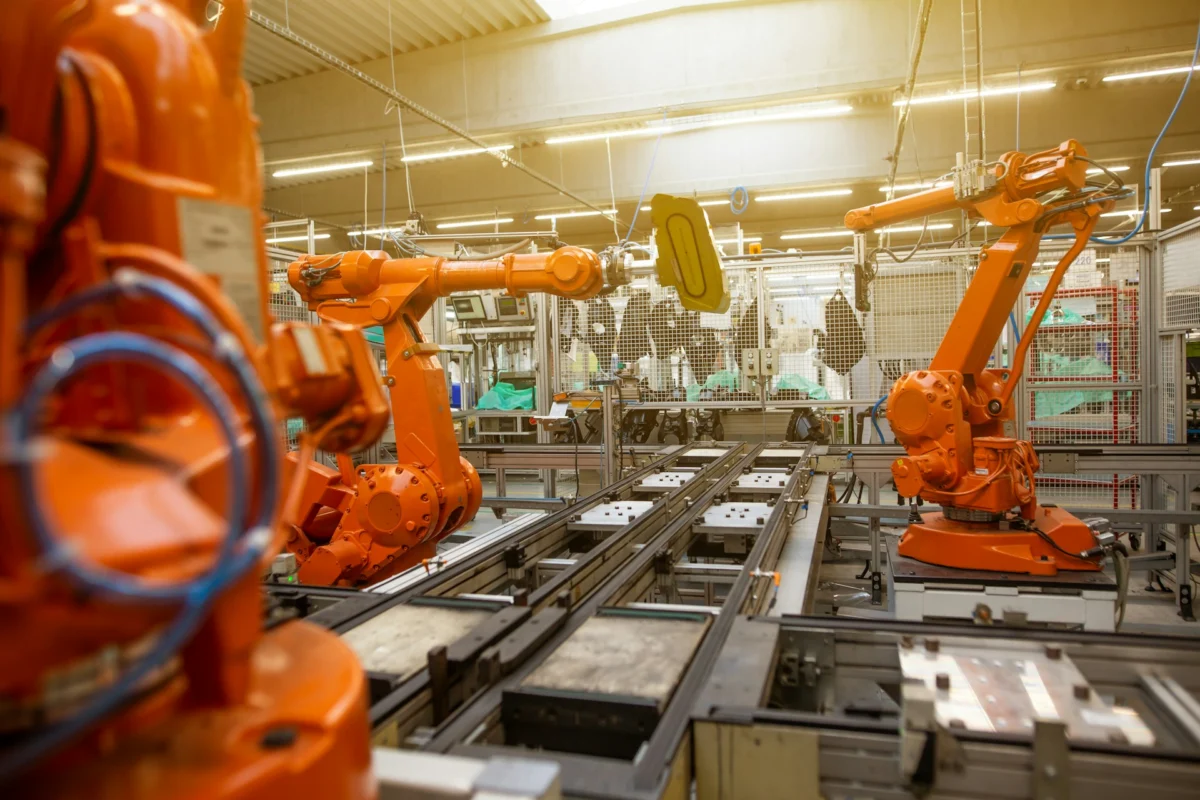
China solidified its position as the undisputed global leader in industrial robotics, installing a staggering 354,000 industrial robots in 2025. This remarkable figure represents a robust 20% year-on-year increase and accounts for an overwhelming 59% of all global installations for the year, according to the latest comprehensive report from the International Federation of Robotics (IFR). This marks the second consecutive year China has held the distinction of being the world’s largest market for industrial robots, underscoring its relentless drive towards advanced manufacturing and automation.
The global industrial robotics landscape witnessed significant expansion in 2025, with the total operational stock reaching an unprecedented 5 million units worldwide, a 9% increase from the previous year. Annual installations across the globe exceeded 600,000 units, demonstrating a widespread acceleration in automation adoption across diverse industries and geographies. A notable shift in market dynamics saw the United States ascend to become the world’s second-largest market, surpassing Japan, a long-standing pioneer and dominant force in the robotics sector. This reordering highlights evolving manufacturing strategies and investment priorities in major industrial economies.
A Decade of Rapid Automation: Historical Context and Chinese Ascent
The journey of industrial robotics began in the mid-20th century, with the first industrial robot, Unimate, introduced in 1961. For decades, the automotive industry in North America, Europe, and Japan remained the primary adopter, utilizing robots for repetitive tasks like welding and painting. However, the early 21st century, and particularly the last decade, has seen an exponential acceleration driven by technological advancements, economic pressures, and strategic national policies.
China’s emergence as the global powerhouse in robotics is not a sudden phenomenon but the culmination of concerted efforts and significant investments. Historically, China’s manufacturing sector relied heavily on its vast and affordable labor force. As the nation’s economy matured, labor costs began to rise steadily, prompting industries to seek alternative solutions to maintain competitiveness and productivity. This economic imperative coincided with strategic government initiatives, most notably the "Made in China 2025" plan, launched in 2015. This ambitious blueprint identified advanced robotics as one of ten critical sectors for national development, aiming to transform China from a global factory into a global leader in high-tech manufacturing.
The "Made in China 2025" strategy provided substantial government subsidies, research and development funding, and preferential policies for companies investing in automation and domestic robot production. This created a fertile ground for both international robot manufacturers to expand their operations within China and for a vibrant ecosystem of domestic robot producers to emerge and thrive. The sheer scale of China’s manufacturing base, encompassing everything from electronics to automotive, consumer goods, and heavy machinery, offered an unparalleled domestic market for these automated solutions, fueling rapid adoption rates that far outpaced other regions.
Deep Dive into China’s Dominance: Drivers and Sectoral Impact
China’s commanding lead in industrial robot installations in 2025 can be attributed to a confluence of factors. Beyond government mandates and rising labor costs, the nation’s extensive industrial infrastructure demands high levels of automation to meet global production requirements and maintain efficiency. The push for higher quality standards in domestically produced goods, coupled with a desire to move up the value chain, has also necessitated precision and consistency that robots excel at providing.
The automotive industry has historically been a significant driver of robot demand globally, and China is no exception. As the world’s largest automotive market and producer, Chinese car manufacturers, both domestic and international brands operating within China, heavily invest in automation for assembly, welding, painting, and inspection processes. However, robot adoption in China has diversified significantly beyond automotive. The electronics industry, particularly for consumer electronics manufacturing, has become another massive consumer of industrial robots, utilizing them for intricate assembly, testing, and handling tasks that require high precision and speed. General industries, including food and beverage, metals, chemicals, and plastics, are also increasingly integrating robots to enhance productivity, improve worker safety, and optimize production lines.
Furthermore, Chinese companies have shown a strong propensity to invest in advanced technologies, integrating Artificial Intelligence (AI) and machine learning capabilities into their robotic systems. This allows for greater adaptability, predictive maintenance, and enhanced decision-making on the factory floor, pushing the boundaries of what industrial robots can achieve. The sheer volume of installations also allows for economies of scale, potentially driving down the cost of robot deployment and making automation accessible to a broader range of enterprises, including small and medium-sized enterprises (SMEs) that are critical to China’s industrial fabric.
Global Landscape Shifts: The United States’ Ascent and Japan’s Enduring Role
While China’s dominance is clear, the broader global landscape is undergoing significant transformations. The United States’ rise to the second-largest market in 2025, surpassing Japan, signals a strategic pivot in American manufacturing. This shift is largely driven by initiatives aimed at revitalizing domestic manufacturing, addressing persistent labor shortages, and enhancing supply chain resilience in the wake of global disruptions like the COVID-19 pandemic. Policies such as the CHIPS and Science Act, while directly targeting semiconductor manufacturing, indirectly stimulate broader automation investments by fostering a high-tech manufacturing environment.
American industries are increasingly turning to automation to reshore production, reduce reliance on overseas supply chains, and mitigate the impact of an aging workforce and a dwindling pool of skilled labor in certain sectors. The automotive industry in the U.S. continues to be a major adopter, but significant growth is also observed in logistics, e-commerce fulfillment, electronics, and general industry, including food processing and pharmaceuticals. The emphasis in the U.S. is often on sophisticated, highly flexible robotic systems and collaborative robots (cobots) that can work alongside human employees, addressing both productivity and safety concerns.
Japan, despite being overtaken by the U.S. in terms of annual installations, remains a titan in the global robotics ecosystem. For decades, Japan has been a global leader in robot manufacturing and innovation, housing some of the world’s largest and most advanced robot producers. While its domestic installation rates may fluctuate, Japan’s influence as a developer and exporter of cutting-edge robotic technology is undiminished. Japanese manufacturers continue to focus on high-end, specialized robots, precision engineering, and advanced components, maintaining their role as a critical supplier to the global robotics industry.
Europe, particularly Germany, Italy, and France, continues to demonstrate stable and significant growth in industrial robot installations. Germany, often referred to as the "factory of Europe," maintains a strong focus on advanced manufacturing, Industry 4.0 initiatives, and the development of intelligent automation solutions. European industries, like their American counterparts, are increasingly adopting robots to enhance competitiveness, improve working conditions, and address demographic challenges. Other Asian markets, such as South Korea (which boasts the highest robot density per capita globally), Taiwan, and Singapore, also continue their strong automation trajectories, driven by high-tech manufacturing sectors and an imperative for efficiency. India, while still an emerging market in industrial robotics, is showing significant potential for growth as its manufacturing sector expands and modernizes.
Driving Forces and Technological Advancements
The sustained growth in industrial robot installations is propelled by a confluence of economic factors and rapid technological advancements. Economically, the imperative for higher productivity, improved quality control, and reduced operational costs remains paramount. Labor shortages, particularly in developed economies and increasingly in parts of Asia, further underscore the need for automated solutions.
Technologically, the capabilities of industrial robots are evolving at an unprecedented pace. The integration of Artificial Intelligence (AI) and machine learning allows robots to perform more complex tasks, adapt to changing environments, and learn from experience. Advanced vision systems, often powered by AI, enable robots to identify, pick, and place objects with greater accuracy and flexibility. Improved sensors and feedback mechanisms contribute to enhanced precision and safety, paving the way for more sophisticated human-robot collaboration (cobots).
The rise of mobile industrial robots (AMRs – Autonomous Mobile Robots) is transforming logistics and intralogistics, enabling flexible material handling within factories and warehouses. Cloud connectivity and the Internet of Things (IoT) facilitate remote monitoring, predictive maintenance, and data-driven optimization of robotic operations, feeding into the broader concept of smart factories and Industry 4.0. The ability to simulate and test robot operations using digital twins further streamlines deployment and improves efficiency. These advancements collectively make robots more versatile, easier to integrate, and more cost-effective for a wider range of applications.
Expert Perspectives and Official Reactions
While specific official statements on the 2025 figures were not immediately available, industry experts and officials have consistently highlighted the strategic importance of these trends. An IFR spokesperson, commenting on the global operational stock surpassing 5 million, would likely emphasize that "the accelerating adoption of industrial robots globally is a testament to their indispensable role in modern manufacturing. From boosting productivity and quality to enhancing worker safety and addressing labor shortages, robots are fundamentally reshaping the industrial landscape. China’s sustained leadership underscores its commitment to high-tech manufacturing, while the growth in other regions like the U.S. reflects a global imperative for industrial competitiveness."
Analysts from leading market intelligence firms would likely concur, noting that "the shift in market rankings, with the U.S. overtaking Japan, signifies a broader strategic recalibration in global manufacturing. Countries are increasingly recognizing automation as a cornerstone of economic resilience and national security, driving significant investments in domestic robot deployment."
From a Chinese governmental perspective, officials from the Ministry of Industry and Information Technology (MIIT) would undoubtedly point to these figures as strong evidence of the success of national industrial upgrading strategies. They would likely highlight the robust growth of China’s domestic robot industry, the increasing sophistication of its manufacturing capabilities, and the nation’s commitment to innovation and high-quality development. Conversely, U.S. commerce officials would likely frame the surge in American robot installations as a positive indicator of the ongoing resurgence of domestic manufacturing and a testament to policies designed to strengthen supply chains and create high-tech jobs.
Broader Implications and Future Outlook
The profound impact of industrial robotics extends far beyond the factory floor, touching upon economic structures, labor markets, and geopolitical dynamics. Economically, increased automation leads to enhanced productivity, allowing companies to produce more goods at lower costs, potentially fostering economic growth and greater competitiveness in global markets. While concerns about job displacement are often raised, the consensus among economists and industry experts is that automation also creates new jobs, particularly in areas like robot programming, maintenance, data analysis, and advanced manufacturing engineering. The challenge lies in reskilling and upskilling the existing workforce to meet the demands of these new "new-collar" jobs.
From a labor market perspective, automation is transforming the nature of work, shifting the focus from repetitive manual tasks to supervisory roles, problem-solving, and human-robot collaboration. This necessitates significant investments in education and vocational training to ensure a smooth transition for workers.
The geopolitical implications are also significant. The race for technological supremacy in AI and robotics is a key component of national industrial strategies, with countries vying for leadership in these critical future technologies. Nations that successfully integrate advanced robotics into their industries are likely to gain a competitive edge in manufacturing and innovation, influencing global supply chains and economic power balances. Automation also enhances supply chain resilience by reducing dependence on external labor forces and enabling faster, more localized production in response to disruptions.
Looking ahead, the industrial robotics market is projected for continued robust growth. Future trends will likely include greater accessibility for Small and Medium-sized Enterprises (SMEs) through more affordable and user-friendly robotic solutions, further integration of AI and machine learning for enhanced autonomy and adaptability, and a diversification of applications into non-traditional sectors such as healthcare, construction, and agriculture. The journey towards a fully automated, intelligent manufacturing ecosystem continues, with China leading the charge and other industrial nations rapidly accelerating their adoption to remain competitive in the evolving global economy.


 Nana Wu