Nana Muazin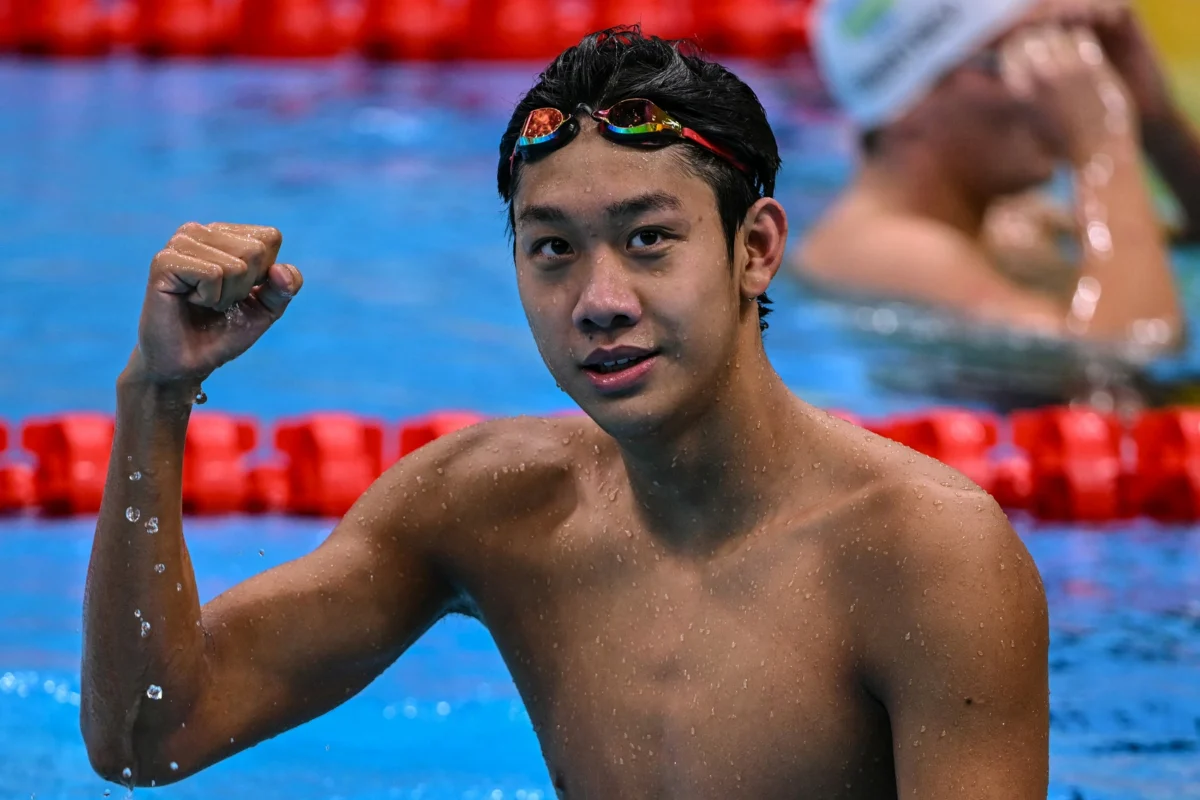
Nagoya, Japan – The 20th Asian Games in Nagoya and the surrounding Aichi prefecture have been a crucible of athletic excellence, marked by groundbreaking achievements and the emergence of a new generation of sporting heroes. On Friday, Chinese swimming sensation Zhang Zhanshuo etched his name into the history books by becoming the first swimmer to secure seven gold medals at a single edition of the continental Games. His monumental feat was paralleled by electrifying performances on the track, where young sprinters from Thailand and China blazed to victory in the 100-meter dashes, shattering Games records and heralding a new era of speed.
Zhang, a towering 19-year-old phenom standing at an impressive 198cm (6ft 6in), delivered a masterful performance in the men’s 400-meter freestyle at the Tokyo Aquatics Centre. He touched the wall in a staggering 3 minutes and 41.28 seconds, a new Asian Games record that underscored his dominance in the pool. In a moment of profound reflection and celebration, Zhang was seen sitting on the lane divider, meticulously counting his seven gold medals on his fingers. This extraordinary haul included individual victories in the 200m, 800m, and 1,500m freestyle events, complemented by his contributions to three relay teams.

Reflecting on his "perfect week," Zhang maintained a remarkable composure, attributing his success to sustained focus and a grounded perspective. "I think the most important thing is to stay grounded and focused, because the Asian Games are not my ultimate goal," the young swimmer stated, his gaze already set on future challenges. With the Los Angeles Olympics less than two years away, Zhang’s performance serves as a powerful indicator of China’s burgeoning strength in aquatic sports.
China’s dominance in the swimming events was a recurring theme throughout the week. The nation secured a remarkable 30 out of the 42 gold medals awarded in the pool. Among their brightest stars was 13-year-old Yu Zidi, a prodigy who captivated audiences by clinching three individual gold medals, all in Games-record times. Her meteoric rise at such a tender age signals immense potential for future international competitions.
The aquatic arena also witnessed a monumental achievement from Japan’s 17-year-old Shin Ohashi. On Thursday, Ohashi shattered the men’s 200-meter breaststroke world record, a testament to the fierce competition and the exceptional talent on display at these Games. While swimming, equestrian, and diving events were primarily held in Tokyo, the core of the 20th Asian Games celebrations unfolded in Nagoya and the broader Aichi prefecture.

Record-Breaking Sprints Ignite the Track
The blue-riband events of the athletics program, the men’s and women’s 100-meter sprints, took place in Nagoya, although the stands were notably not filled to capacity for these marquee races. Despite sparser crowds, the performances themselves were nothing short of spectacular.
China’s 17-year-old sprinter Chen Yujie delivered a commanding performance in the women’s 100m final, crossing the finish line with a comfortable victory in a Games-record time of 11.06 seconds. With her 18th birthday on the horizon in December, Chen expressed her elation, calling her gold medal "the best present for my birthday, to be on the top of the Asian Games podium." Her achievement highlights the growing strength of Chinese women in sprint events.
The men’s 100-meter race was a thrilling affair, ultimately won by Thailand’s 20-year-old Puripol Boonson. Boonson surged ahead in the final quarter of the race, clocking an impressive 9.90 seconds and breaking his own Games record set earlier in the evening. This victory marked a significant milestone for Thailand, as it was their first men’s 100m gold medal since Suchart Jairsuraparp triumphed on home soil at the 1978 Bangkok Games, signifying a revival of their sprint prowess.

By the close of day six, China had amassed an astonishing 98 gold medals, solidifying their position at the top of the overall medal table. Japan followed in a distant second with 28 gold medals, while South Korea occupied third place with 13 golds, showcasing the vast athletic landscape of Asia.
Yulo’s Gymnastics Masterclass and Other Notable Performances
As the gymnastics competitions drew to a close, Filipino star Carlos Yulo delivered a performance that resonated deeply. On the final evening of gymnastics, Yulo secured the men’s vault gold medal, adding to his floor gold won on Thursday. This dual triumph completed his collection of major titles, solidifying his status as a world-class athlete.
"I can’t believe it," a visibly emotional Yulo stated after his victory. "In this whole Asian Games I felt really stressed, but at the same time I enjoyed what I did today. I really did my part. Today was really a miracle for me." The double Olympic champion’s journey has been one of remarkable dedication, though his focus must quickly shift to the upcoming World Championships next month.

In team sports, the women’s basketball semi-finals provided a dramatic encounter. South Korea narrowly defeated China 85-80 in a hard-fought match and will now face hosts Japan in the final for the gold medal. The close scoreline suggests a highly competitive final is in store.
China’s Dominance in Team Sports and North Korea’s Weightlifting Records
China’s imposing presence was also felt in women’s basketball, despite their semi-final loss. Their towering center, 19-year-old Zhang Ziyu, standing at an extraordinary 223cm (7ft 4in), was a formidable force on the court, scoring 22 points in the semi-final. "She was tough to guard," acknowledged South Korea’s Kang Lee-seul, highlighting the challenges posed by Zhang’s sheer size. "We couldn’t defend her, but we focused on fast breaks and shooting more three-pointers."
The weightlifting arena saw North Korea continue its impressive run of form. Oh Kwang Ok set three world records en route to claiming the women’s 57kg bodyweight class gold. Her lifts of 104kg in the snatch and 134kg in the clean and jerk, totaling 238kg, all set new world benchmarks. These records add to the two golds previously secured by North Korean women in the 49kg and 53kg categories, underscoring their exceptional strength and technical proficiency in the sport. To date, North Korea has secured four gold medals and two silvers in the six weightlifting events contested, positioning them as a dominant force in the sport.

Broader Context and Implications
The 20th Asian Games, held in Japan, serve as a crucial stepping stone for many athletes aiming for global recognition, particularly the upcoming Olympic Games. The performances witnessed, from Zhang Zhanshuo’s historic swimming feat to the record-breaking sprints and Yulo’s gymnastics triumph, offer a compelling preview of the talent pool that will likely feature prominently on the world stage.
The sheer dominance of China across multiple disciplines, particularly in swimming and weightlifting, indicates a well-funded and strategically developed sports program. Their emphasis on nurturing young talent, as seen with swimmers like Zhang Zhanshuo and Yu Zidi, suggests a long-term vision for sustained success.
Conversely, the individual brilliance showcased by athletes from Thailand, the Philippines, and North Korea demonstrates the growing competitive landscape within Asia. These nations are not only challenging established powers but are setting new benchmarks, as evidenced by Puripol Boonson’s sprint victory and Oh Kwang Ok’s weightlifting records.

The Games also highlight the complex geopolitical dynamics at play in Asian sports. The presence of North Korea achieving world-record feats in weightlifting, even amidst international scrutiny, showcases their commitment to athletic excellence.
The varying attendance at events, particularly the athletics sprints, raises questions about event promotion and audience engagement strategies. While the performances were world-class, ensuring larger and more vibrant crowds for marquee events remains a challenge for many major sporting gatherings.
As the 20th Asian Games continue, the narratives of resilience, dedication, and breakthrough performances are unfolding, captivating audiences and setting the stage for future sporting spectacles. The records broken and the young stars who have emerged are not just winners of medals; they are architects of a new chapter in Asian athletic history, inspiring a continent and beyond.


 Layla Zulfa
 Ammar Sabilarrohman