Azzam Bilal Chamdy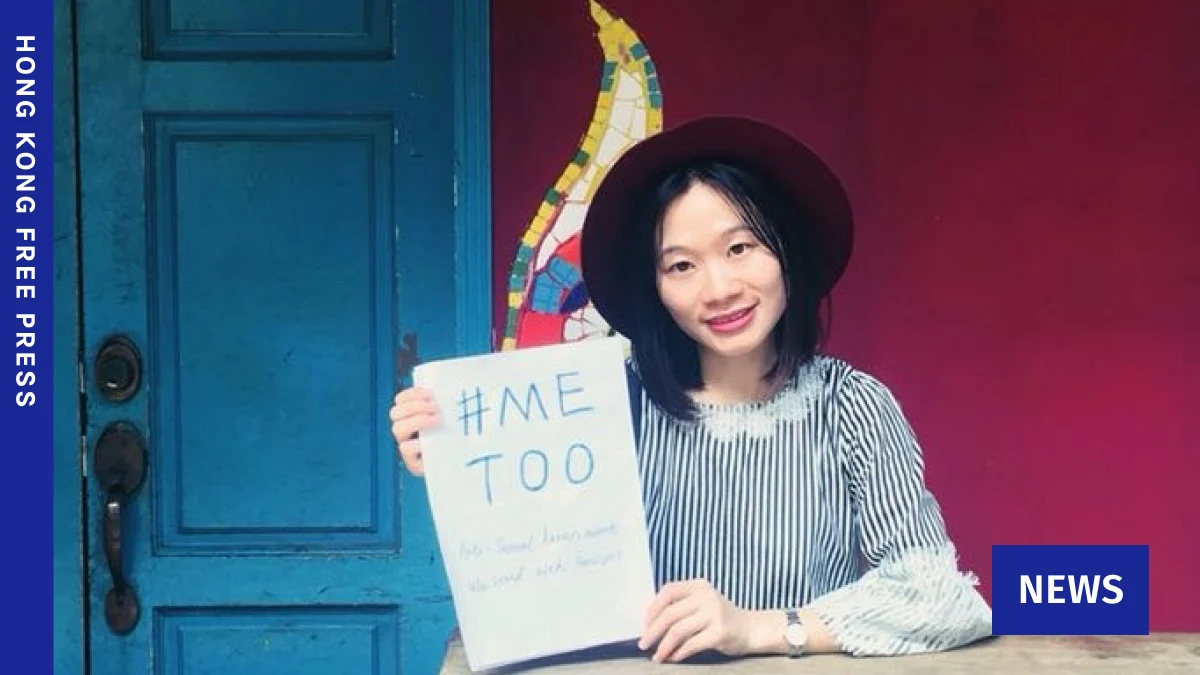
Sophia Huang Xueqin, the prominent Chinese journalist and pioneering figure in the country’s nascent #MeToo movement, is slated for release this Friday after enduring five years in prison, yet her freedom remains highly conditional, shadowed by concerns from friends and international human rights organizations regarding her future under strict state surveillance. Her friend, Rio, speaking from the United States and wishing to be identified only by his English name to protect his safety, expressed profound relief at her impending release but also deep apprehension about how Huang will navigate life stripped of fundamental rights. Huang, 35, and labour activist Wang Jianbing, 40, were detained in September 2021, just hours before Huang was scheduled to depart for the United Kingdom to pursue a master’s degree, a moment she and her supporters had interpreted as a hopeful sign after receiving her passport. Their arrest and subsequent conviction underscore Beijing’s escalating crackdown on civil society, independent journalism, and any form of perceived dissent under President Xi Jinping’s increasingly authoritarian rule.
A Harsh Sentence for Social Discourse

In a verdict handed down in 2024, a Chinese court sentenced Huang to five years in prison, while Wang Jianbing received a three-year and six-month sentence. The pair were found guilty of "inciting subversion of state power," a broad and frequently employed charge against human rights defenders, lawyers, and journalists in China. The court alleged that they had "incited participants’ dissatisfaction with Chinese state power under the pretext of discussing social issues." This charge stemmed primarily from their involvement in informal, weekly gatherings that brought together young activists, journalists, and concerned citizens to discuss a range of social issues, from feminism and LGBTQ+ rights to workers’ struggles and environmental concerns. Rio, who regularly attended these meetings six years ago, described them as invaluable "safe spaces" for open dialogue in an increasingly constricted public sphere. These gatherings, sometimes attracting as many as 30 individuals to Wang Jianbing’s modest living room, fostered a rare environment where participants could openly share their experiences and discuss shared societal challenges without fear of immediate reprisal—a sanctuary now dismantled by the state.
The sentence for "inciting subversion of state power" is a stark reminder of the Chinese Communist Party’s zero-tolerance policy towards any organized activity outside state control, particularly those touching upon sensitive topics that could be perceived as undermining social stability or challenging the Party’s authority. Human rights groups consistently criticize this charge for its vague definition and its weaponization against individuals merely exercising their internationally recognized rights to freedom of expression and association. The cases of Huang and Wang are emblematic of a broader pattern where individuals who seek to foster community and discussion are re-characterized as threats to national security.
A Life Interrupted: The Ordeal of Detention
Huang’s time in detention has been fraught with hardship, according to her supporters and accounts from former inmates who encountered her. She endured periods of solitary confinement, a punitive measure frequently used in Chinese prisons to break the spirit of political prisoners. Her physical health deteriorated significantly, with reports indicating she lost over five kilograms and experienced four months without menstruating, clear signs of the immense stress and poor conditions within the detention facility. These details paint a grim picture of the psychological and physical toll exacted by China’s penal system on those deemed threats to the state. The lack of adequate medical care, nutritious food, and human contact in such facilities is a common complaint among former political prisoners and their families, highlighting systemic issues within China’s justice system.
International concern for Huang’s well-being has been continuous since her arrest. Amnesty International, in an open letter published this week and signed by over 50 human rights organizations, highlighted the severe conditions she faced and warned that her ordeal would not end with her release. These groups have consistently called for her unconditional release, arguing that her detention and trial were politically motivated and violated international human rights standards. The United Nations Working Group on Arbitrary Detention has also examined similar cases in China, often concluding that such detentions are arbitrary and in contravention of international law.
The Shadow of Post-Release Restrictions

Even as friends express relief at Huang’s physical release, their joy is tempered by the understanding that her freedom will be heavily circumscribed. As part of her sentence, Huang will be deprived of her political rights for four years after her release. This "supplemental sentence" is a common tactic employed by Chinese authorities against human rights defenders and journalists, designed to effectively silence them long after their prison terms conclude. The deprivation of political rights typically includes restrictions on freedom of speech, assembly, association, and the right to publish. It often means being unable to vote, stand for election, hold public office, or even engage in public commentary online or in traditional media.
For a journalist like Huang, these restrictions are particularly debilitating. "Sophia is a journalist, and as a journalist, if you don’t have freedom of expression… you’ve stripped away their primary tool," Rio emphasized. "We can foresee that her right to express herself freely online in the future will likely be heavily monitored." This means that Huang will not only be barred from resuming her professional work but also from engaging in any form of public discourse that could be construed as critical of the government. This effectively extends her prison sentence into a period of intensified surveillance and control, creating a chilling effect that extends far beyond her individual case. The authorities’ goal is to isolate former political prisoners, prevent them from reconnecting with activist networks, and deter others from engaging in similar activities.
A Symbol of China’s #MeToo Movement
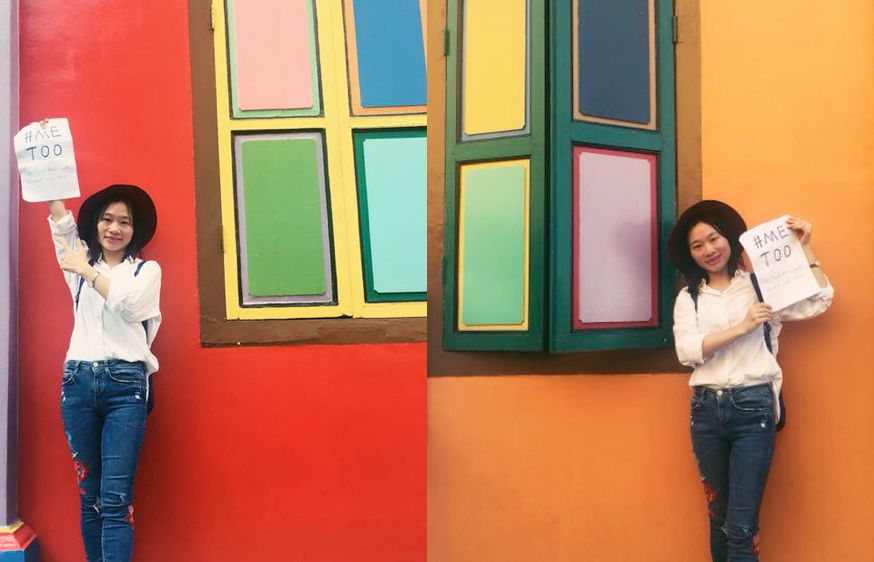
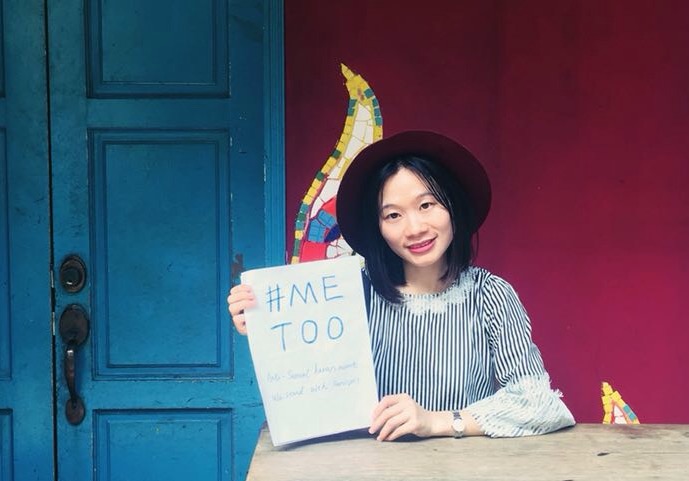
Sophia Huang Xueqin gained national and international recognition as a leading voice in China’s nascent #MeToo movement. In 2017, inspired by the global movement, she bravely shared her own experience of workplace sexual harassment at a Chinese news agency. Her detailed account, coupled with her journalistic background, made her a credible and influential figure. She went on to conduct extensive research into sexual harassment cases in China, documenting dozens of instances and offering support to victims. Her advocacy played a crucial role in bringing the issue of sexual harassment into public discourse within China, challenging a long-standing culture of silence and impunity. She utilized social media extensively, posting photos of herself with the hashtag #MeToo, directly engaging with a wider audience and inspiring others to come forward.
However, women’s rights and feminist activism are highly sensitive topics in China, where authorities have systematically suppressed almost every form of independent feminist organizing over the last decade. Beijing views any autonomous social movement, especially one that could potentially mobilize large numbers of people or challenge patriarchal norms often reinforced by the state, as a threat to social stability and Party control. Since President Xi Jinping assumed power in 2012, the government has intensified its grip on civil society, cracking down on NGOs, lawyers, journalists, and activists under the guise of national security. This repression has seen prominent feminist activists, often referred to as "Feminist Five," detained, and online discussions around women’s rights censored. The court’s assertion that Huang repeatedly published "inflammatory articles and statements that distort facts and attack the Chinese government" clearly illustrates the regime’s perception of her work—not as journalism or advocacy, but as subversive propaganda.
The Broader Implications: A Chilling Effect

The cases of Sophia Huang Xueqin and Wang Jianbing send a powerful message to anyone considering independent activism or critical commentary in China: such actions carry severe personal risks. The protracted detention, the harsh sentences, and the subsequent post-release restrictions are designed to instill fear and enforce self-censorship across society. This has led to a significant shrinking of civil society space, with many independent organizations forced to disband or operate underground, and individuals becoming increasingly hesitant to speak out.
For independent journalism, Huang’s case is particularly disheartening. As a journalist who sought to report on social issues and give voice to the marginalized, her imprisonment and subsequent silencing underscore the immense challenges faced by those attempting to practice objective, critical reporting in China. The state’s narrative increasingly dominates the media landscape, and alternative perspectives are systematically suppressed. This creates an information vacuum, making it difficult for both Chinese citizens and the international community to gain an accurate understanding of social realities within the country.
Internationally, the handling of Huang’s case further damages China’s human rights record and its image as a responsible global actor. While the Chinese government consistently dismisses international criticism as interference in its internal affairs, the continued detention and persecution of human rights defenders erode trust and complicate diplomatic relations. Human rights organizations will continue to monitor Huang’s situation closely, advocating for her full rehabilitation and the restoration of her rights.

Looking Ahead: A Fighter’s Future
Despite the daunting challenges ahead, Huang’s friends remain hopeful for her resilience. "The Xueqin we know… is someone with incredible energy, someone we’d call a fighter," Rio shared, expressing both admiration and concern. He hopes that she will prioritize her own physical and mental well-being above all else, acknowledging the immense pressure she has carried as a symbol of the #MeToo movement in China. "I think what we really hope for is that she takes care of her own physical and mental well-being first."
The road to recovery and reintegration into society will be arduous. Huang will likely face continuous surveillance, restrictions on her movement, and significant obstacles to employment, given her criminal record and political status. Yet, her release, even if conditional, marks the end of a long and harrowing chapter. Her friends are "tremendously" relieved, recognizing the personal cost of her activism. "After five years, it’s finally over for her. She can finally step out and catch her breath," Rio concluded, his words echoing the sentiment of many who have followed her case with bated breath. The world will be watching to see how Sophia Huang Xueqin navigates this new, uncertain phase of her life, a testament to her courage and the enduring struggle for human rights and freedom of expression in China.

 Laily UPN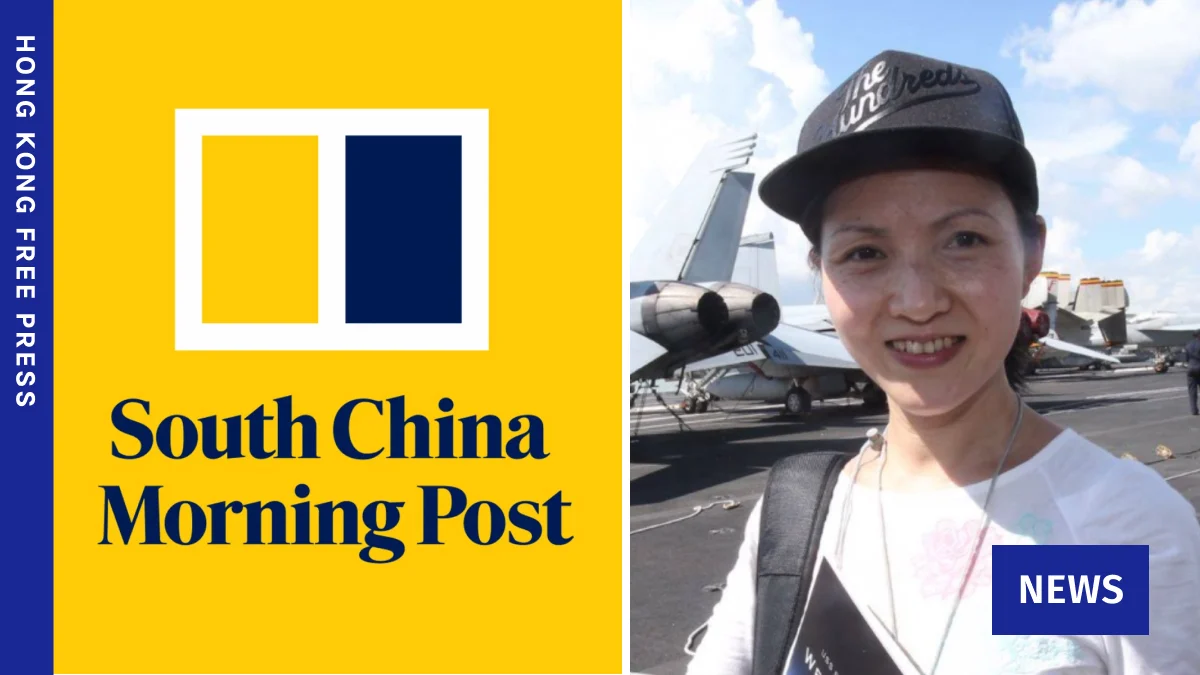
 Reynand Wu