Iffa Jayyana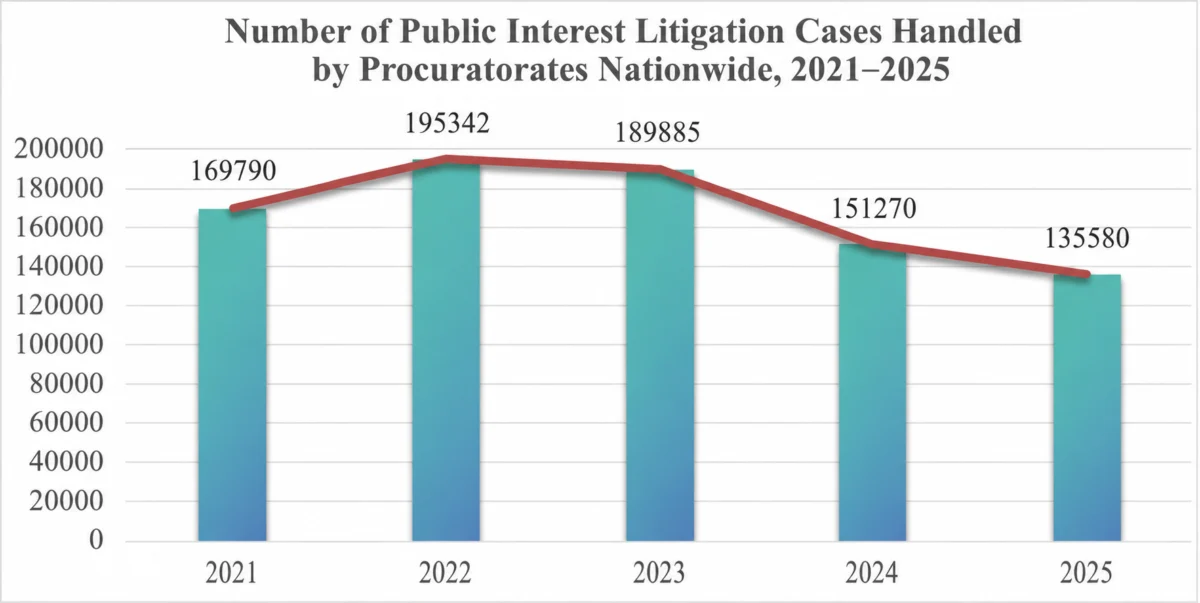
The Standing Committee of the National People’s Congress has released the second reading draft of the Procuratorate Public Interest Litigation Law, marking a significant milestone in the formalization of China’s unique legal supervision system. This legislative development follows years of pilot programs and incremental expansions, aiming to consolidate the authority of the People’s Procuratorate in addressing systemic harms to the national and public interest. The draft law seeks to provide a comprehensive procedural framework for cases ranging from environmental degradation and food safety to the protection of state-owned assets and the rights of vulnerable groups. As the legislative process nears completion, the draft has sparked intense discussion among legal scholars and international observers, particularly regarding its application to foreign entities and the expansive scope of "public interest" within the Chinese judicial context.
Historical Evolution and the Pivot of 2018
The Procuratorate Public Interest Litigation (PPIL) system did not emerge in a vacuum but was born out of a period of heightened social friction. During the early 2010s, China faced a series of high-profile scandals involving massive environmental pollution and widespread food safety violations. These incidents led to a public perception that existing legal remedies were insufficient for addressing "mass harms" where no single individual had the resources or the standing to sue powerful corporate or administrative actors.
While the 2012 Civil Procedure Law and the 2014 Administrative Procedure Law theoretically allowed for public interest cases, the practical hurdles were immense. China’s domestic civil society, which typically drives such litigation in other jurisdictions, remained limited in its capacity and legal standing. Furthermore, the Chinese government has historically maintained a cautious stance toward organized citizen movements, especially those that might challenge state-owned enterprises or administrative agencies.
A turning point occurred in 2015 when the National People’s Congress Standing Committee (NPCSC) authorized a two-year pilot program allowing the procuratorate to initiate public interest litigation. By 2017, the program was formally written into law. However, the most significant shift in the procuratorate’s institutional identity occurred in 2018. Following the establishment of the National Supervision Commission, the procuratorate lost its long-standing authority to investigate corruption cases involving government officials. To maintain its relevance and utilize its staff of trained legal professionals, the Supreme People’s Procuratorate (SPP) pivoted toward "legal supervision" as a core function. PPIL was elevated to one of the "four core work areas" of the procuratorate, alongside criminal prosecution, civil supervision, and administrative supervision.

The Dual Nature of Public Interest Litigation
A critical distinction within the new draft law is the separation between Administrative PPIL and Civil PPIL. Understanding this distinction is essential for interpreting the sheer volume of cases handled by the Chinese legal system in recent years.
Administrative Public Interest Litigation
Administrative PPIL constitutes the vast majority of the procuratorate’s workload, accounting for approximately 91% of all cases handled. This mechanism is designed to oversee administrative agencies that fail to perform their statutory duties, resulting in harm to the public interest. Unlike traditional litigation, the goal of Administrative PPIL is often to resolve the issue without a courtroom battle.
Under the draft law, the procuratorate is required to issue "pre-litigation suggestions" to the relevant administrative agency. These suggestions identify the illegality or negligence and recommend corrective actions. Data from 2025 indicates that the vast majority of these cases are resolved at this stage. Because administrative agencies are generally eager to avoid being sued by another state organ (the procuratorate), they typically adopt the recommended changes, leading to a high "rectification rate" without formal court proceedings.
Civil Public Interest Litigation
Civil PPIL, while less frequent, is more likely to result in actual court filings. These cases are brought against private individuals, corporations, or other non-state entities whose actions—such as illegal dumping or the sale of tainted medicine—harm the public. In these instances, the procuratorate acts as a "representative of the public interest." The draft law clarifies that the procuratorate should only step in if no other authorized social organizations (such as designated environmental NGOs) have filed suit, positioning the state as a secondary but powerful backstop for public rights.
Statistical Analysis of Recent Case Trends
The scale of PPIL in China has expanded rapidly. According to data released for the year 2025, the procuratorate handled a total of 135,580 public interest litigation cases. However, the number of actual lawsuits filed was only 7,305. This discrepancy highlights the "consultative" nature of the Chinese system, where the threat of litigation is used as leverage to ensure administrative compliance or corporate settlement.

The 2025 data breaks down the cases into several key subcategories:
- Environmental Protection: Remains the largest category, focusing on air and water pollution, soil contamination, and the protection of wildlife.
- Food and Drug Safety: A high-priority area aimed at restoring public confidence in consumer supply chains.
- State-owned Assets and Land Use: These are exclusively administrative cases where the procuratorate intervenes to prevent the loss of state property or the illegal transfer of land-use rights.
- New Frontiers: The draft law officially incorporates newer categories such as "Heroes and Martyrs’ Rights," "Personal Information Protection," and "Ethnic Unity."
The inclusion of "Ethnic Unity" in the second reading draft represents a significant expansion of the law’s ideological scope, suggesting that actions perceived to undermine social harmony or ethnic relations could now be subject to state-led public interest litigation.
The Controversy of Article 51 and Extraterritorial Application
One of the most debated aspects of the 2nd reading draft is Article 51, located in the supplemental provisions. The article states: "The people’s procuratorates may lawfully initiate public interest litigation against foreign organizations and individuals that carry out unlawful conduct that infringes on our nation’s lawful interests or societal public interest."
This provision has raised concerns among international legal analysts and foreign businesses operating in China. Some observers argue that Article 51 could be used as a tool of "lawfare," allowing the Chinese state to target foreign firms for actions taken outside of China if those actions are deemed harmful to China’s "national interest."
However, a more technical reading of the draft suggests that Article 51 may not be an unlimited grant of power. Legal experts note that Article 3 of the draft law already defines the specific categories of "public interest" that can be litigated. It is likely that Article 51 is intended to confirm that foreign entities are not exempt from these existing categories—such as environmental damage or data privacy violations—rather than creating a separate, unrestricted standard for foreigners. Nevertheless, the ambiguity of terms like "societal public interest" remains a point of contention, as these terms are interpreted by the procuratorate itself through "Guiding Cases."

Defining the "Public Interest"
A fundamental challenge for the new law is defining what constitutes a "harm to the national interest or societal public interest." The draft law and subsequent guidance from the SPP have attempted to clarify this by establishing that a public interest harm must affect an "indeterminable majority" of people rather than a specific individual.
In practice, the procuratorate has used the following criteria to identify public interest cases:
- The Scope of Impact: Does the harm affect the general public or a large, non-specific group?
- The Nature of the Right: Does the violation involve fundamental rights like health, safety, or the environment?
- The Necessity of State Intervention: Is the situation such that individual victims are unable or unlikely to seek redress on their own?
By anchoring the law in these criteria, the Chinese government aims to present PPIL as a modernization of the "rule of law" that provides a release valve for social grievances. However, critics point out that because the procuratorate is a state organ, it retains the ultimate discretion to decide which "public interests" are worthy of protection and which—particularly those that might conflict with central government policy—are not.
Chronology of the PPIL Framework Development
To understand the current draft, it is necessary to view it within the timeline of China’s broader legal reforms:
- 2012–2014: Revisions to the Civil and Administrative Procedure Laws introduce the concept of public interest litigation but lack specific procedural mechanisms for the procuratorate.
- July 2015: The NPCSC issues a decision authorizing a two-year pilot program in 13 provinces, allowing procurators to bring cases in the areas of environment and food safety.
- June 2017: The pilot is declared a success, and the Civil and Administrative Procedure Laws are formally amended to grant the procuratorate permanent authority to file public interest lawsuits.
- March 2018: The National Supervision Law is passed, and the procuratorate’s anti-corruption functions are transferred to the Supervision Commission. The SPP subsequently prioritizes PPIL to fill the institutional void.
- 2021–2023: The scope of PPIL is expanded via special laws, including the Data Security Law and the Protection of Heroes and Martyrs Law.
- Late 2023: The first reading draft of the dedicated "Procuratorate Public Interest Litigation Law" is released for public comment.
- 2024: The second reading draft is released, incorporating feedback and adding sensitive categories like "Ethnic Unity."
Implications for the Future
The finalization of the Procuratorate Public Interest Litigation Law will likely result in a more standardized and aggressive application of legal supervision across China. For domestic administrative agencies, the law reinforces a culture of accountability to the law, albeit one overseen by a fellow state organ. For the Chinese public, it offers a mechanism for addressing chronic issues like pollution without the need for independent grassroots organizing.

For the international community, the law represents a double-edged sword. On one hand, more robust enforcement of environmental and food safety standards could create a more level playing field for compliant foreign companies. On the other hand, the broad definitions of "national interest" and the specific targeting of foreign entities in Article 51 suggest that the law could be used as a strategic instrument in geopolitical or trade disputes.
As the draft moves toward a third reading and eventual enactment, the international business community will be watching closely to see how the "public interest" is defined in practice. While the procuratorate emphasizes that its goal is "legal supervision" and the "restoration of rights," the integration of ideological categories into a procedural law indicates that the Chinese judiciary remains a key pillar in the state’s broader efforts to maintain social stability and national security. The true impact of the law will not be found in the text itself, but in the selection of cases the procuratorate chooses to pursue—and those it chooses to ignore.


 Suro Senen
 Asro
Asro