 Jia Lissa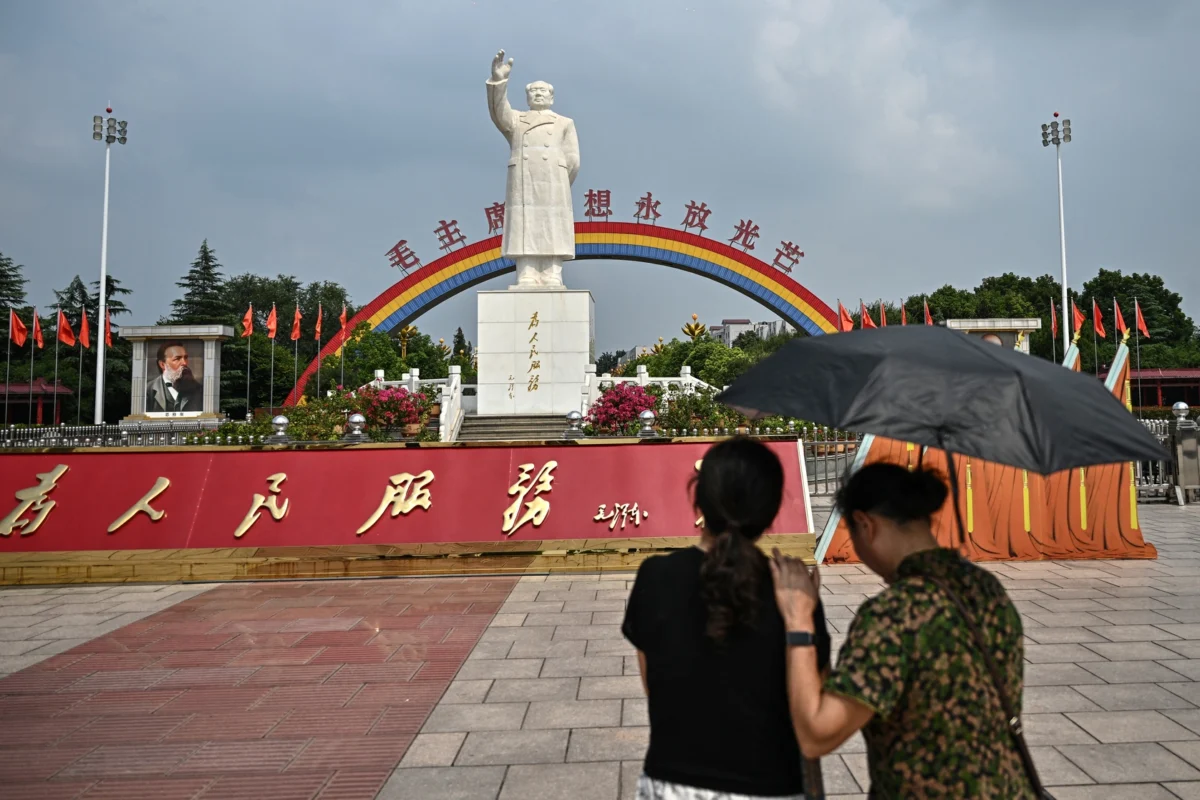
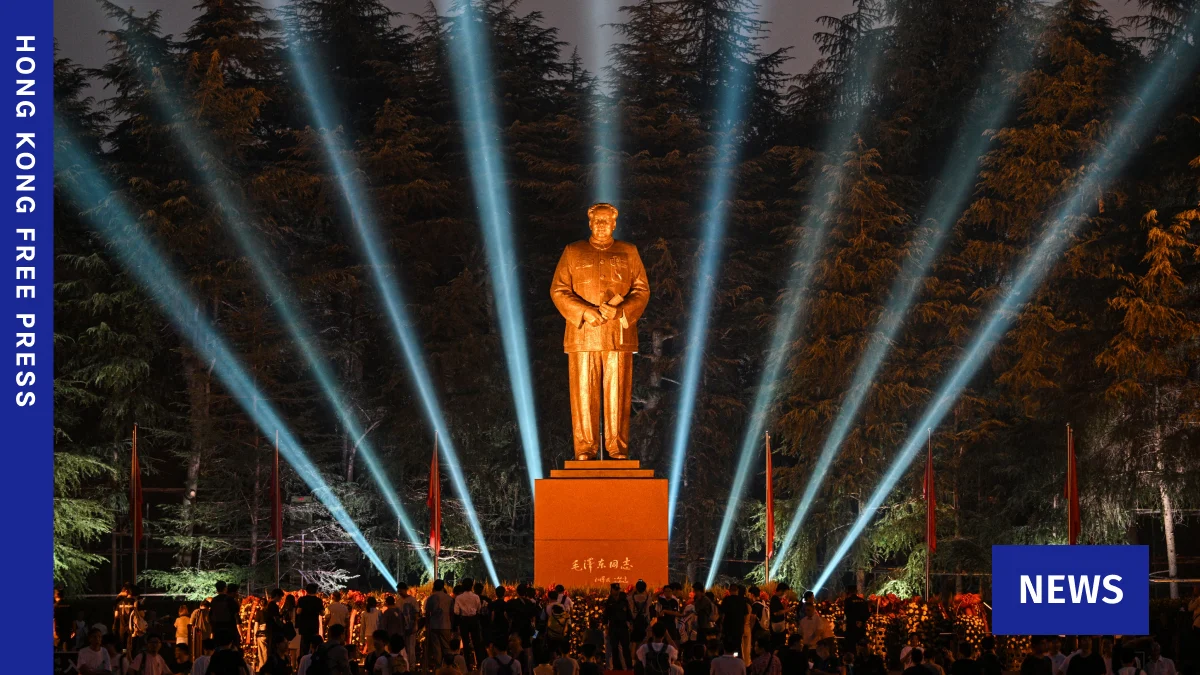
The crimson flags on Nanjie village’s “East is Red” Square hang limp in the sweltering summer heat, casting a quiet shadow over a trickle of tourists. They gather to take photos with a towering statue of Chairman Mao Zedong, its white marble still gleaming almost 50 years after his death. This scene in central Henan province epitomizes China’s intricate relationship with its revolutionary past, where the towering figure of Mao, who passed away on September 9, 1976, remains a potent, if selectively interpreted, presence. Nanjie, often dubbed “China’s last Maoist village,” offers a unique window into a collective way of life that largely vanished with the country’s embrace of market reforms, yet continues to draw pilgrims and curious visitors alike.
The Enduring Icon: Mao’s Ubiquitous Presence
Chairman Mao Zedong, the architect of the People’s Republic of China (PRC), is not merely a historical figure but an inescapable icon deeply embedded in the nation’s fabric. His portrait famously overlooks Tiananmen Square, a perpetual gaze upon the heart of Beijing. His image graces every banknote, making him a daily presence in the lives of hundreds of millions. His embalmed body lies in state in a mausoleum at the southern end of Tiananmen Square, drawing millions of visitors annually, particularly around significant anniversaries of his birth or death. This physical and symbolic ubiquity underscores the Chinese Communist Party’s (CCP) careful cultivation of his image as the foundational leader of modern China. State media frequently produces movies and television shows dramatizing his life, invariably highlighting his heroic deeds and downplaying or omitting the darker chapters of his rule. This deliberate narrative ensures that the message of his "greatness" is continually beamed to the public, reinforcing his role in the national consciousness.

Nanjie: A Living Relic of Collective Ideals
In Nanjie, the commitment to Maoist principles is more than just symbolic; it is a lived reality. Unlike the rest of China, which transitioned dramatically from a centrally planned economy to a "socialist market economy" under Deng Xiaoping’s reforms, Nanjie maintains a communal economic model. Residents live under Maoist principles of shared ownership, where local enterprises are cooperatively owned and profits are reinvested into the community. This unique system funds free housing, education, and healthcare for its residents, a stark contrast to the increasing costs of living in urban China. Electric carts whisk visitors past uniform apartment blocks, plastered with socialist slogans, as guides explain the benefits of this collective system.
The village itself serves as a living museum, with countless murals of the former Chinese leader adorning public spaces. For many, like Xie Kaiyue, a 22-year-old local university student, Mao represents an idealized past. "I still revere him very much," Xie stated, despite being born almost three decades after his death. She added, "I think young people in the village and, actually, myself, aren’t as strong-spirited as in the past… People were purer." This sentiment reflects a yearning for a perceived simpler, more egalitarian era, a nostalgia that is increasingly palpable among some segments of Chinese society grappling with contemporary challenges.
Dazhai: From National Model to Revolutionary Tourism

Around 500 kilometers (310 miles) north, in the mountain village of Dazhai in Shanxi province, a similar sentiment prevails, albeit with a focus on revolutionary tourism rather than a fully collective economy. Dazhai was once promoted by Mao as a national model during the 1960s, lauded for its locals’ industrious efforts to terraform arid hills into irrigated fields through sheer collective will. This agricultural commune was held up as an example for the entire nation, embodying the spirit of self-reliance and hard work that Mao sought to instill.
Today, Dazhai has transformed into a popular destination for "red tourism," attracting visitors keen to reminisce about an era when the Great Helmsman dominated political and social life. Li, a 64-year-old tourist from Xi’an, reflected on his childhood: "(People) didn’t have enough to eat or to wear. But… the whole country was full of vigour, and there was a spirit of struggling with heaven, earth, and people to change every aspect of China. Of course I miss it." This perspective highlights a selective memory, focusing on the collective spirit and national ambition while downplaying the severe material hardships and political repression of the time. Dazhai’s shops now overflow with items supporting Mao’s personality cult – posters, playing cards, crockery emblazoned with his image, and copies of the "Little Red Book" of his quotations, all catering to a market for revolutionary nostalgia.
Mao’s Tumultuous Legacy: A Historical Overview
Mao Zedong’s rule, spanning from the founding of the PRC in 1949 until his death in 1976, was a period of monumental change and profound suffering for China. He led the communist revolution, uniting a war-torn nation after decades of civil conflict and foreign invasion. His early policies, including land reform and industrialization drives, brought significant social restructuring and established the foundations of a modern state. However, his drastic policies also led to catastrophic outcomes.

The Great Leap Forward (1958-1962): This ambitious economic and social campaign aimed to rapidly transform China from an agrarian economy into a communist society through industrialization and collectivization. Peasants were forced into communes, private farming was abolished, and agricultural output was exaggerated, leading to disastrous misallocations of resources. Compounded by poor weather and administrative incompetence, the Great Leap Forward resulted in one of the deadliest famines in human history. While the government officially acknowledges around 15 million deaths, independent historians and demographic studies estimate the death toll to be significantly higher, ranging from 20 to 45 million people. This period remains a highly sensitive topic, often glossed over or omitted in official histories.
The Cultural Revolution (1966-1976): Instigated by Mao to reassert his authority and purge perceived ideological enemies within the Party, the Great Proletarian Cultural Revolution plunged China into a decade of chaos and violence. Intellectuals, government officials, and anyone suspected of "bourgeois" tendencies were brutally targeted as "class enemies." Red Guards, revolutionary student groups, attacked traditional culture, destroyed historical artifacts, and persecuted millions. Schools and universities were shuttered for years, setting back China’s educational and scientific development by generations. The exact number of deaths is difficult to ascertain, but estimates range from hundreds of thousands to several million, alongside the persecution of countless more. The Party itself later acknowledged this period as a "grave mistake," but the details and full extent of its devastation are tightly controlled in public discourse.
The Party’s Carefully Curated Narrative
While the ruling Chinese Communist Party maintains Mao was a revolutionary hero who united the country and laid the foundations for its rise, it has had to navigate the darker aspects of his rule. After his death, the CCP under Deng Xiaoping issued a landmark resolution in 1981, stating that Mao was "70 percent correct and 30 percent wrong." This carefully calibrated verdict acknowledged the "grave mistake" of the Cultural Revolution but upheld Mao’s overall historical importance for the Party’s legitimacy.

This official "party line" is rigorously enforced. References to the more destructive chapters of his decades in absolute power are tightly censored in public discourse, academic research, and museum exhibits. In one museum, text mentioning the Cultural Revolution had been crudely scraped off signage, a testament to the ongoing sanitization of history. Scholar Xu Chenggang, who was targeted as a child during the Cultural Revolution because his father was labeled a "rightist," observed, "Everything you see in the public domain… is the party line. No one is allowed to deviate from this." Under current leader Xi Jinping, public discussion has been further squeezed, with warnings against "historical nihilism" – narratives that contradict the Party’s official version of history. "The Communist Party told people there were mistakes, but what’s the meaning of ‘mistake’? No one knows," Xu added, highlighting the ambiguity that allows for romanticized interpretations.
Contemporary Resonance: Youth and Inequality
The sanitization of history has, perhaps ironically, created a space for romanticized interpretations among some younger generations. Facing intense competition in education and the job market, long working hours (such as the "996" work culture), and growing social inequality, some youths express frustration with the relentless pursuit of material wealth in modern China. In this context, Mao’s egalitarian ideals and the perceived "purity" of the revolutionary era offer a powerful, if distorted, alternative narrative.
In December, a viral video series on Bilibili, a platform popular with those under 30, argued that the 2017 movie ‘Youth,’ which follows young performers in a military dance troupe during the 1970s, was a subtle ode to the Cultural Revolution. These videos, which praised Mao and blamed "capitalist elites" for crushing the movement, quickly garnered over 35 million views in less than a week before being removed by censors. Kerry Brown, head of the Lau China Institute in London and author of a recent book on Mao, notes, "Today, there is more of a sense that the Cultural Revolution was a period of idealism, where society was fired by ideals and not by the relentless pursuit of money and material goods." He swiftly added, "This is, of course, a total fabrication."

Despite the historical inaccuracies, the appeal is clear. China’s rapid economic growth since the reforms has lifted hundreds of millions out of poverty, transforming the nation into a global economic powerhouse. Yet, this growth has also led to significant wealth disparities, environmental degradation, and societal pressures that were theoretically absent in the Maoist era. For those experiencing the downsides of hyper-capitalism, the rhetoric of collective good and social equality, however flawed in practice, holds a certain allure.
Academic Perspectives and the Politics of Memory
Academics offer diverse perspectives on Mao’s enduring influence. Mobo Gao, professor of Chinese studies at Adelaide University, argues that many Chinese credit Mao with laying the foundational infrastructure for China to become a modern, technologically advanced nation. "They ask, where did (today’s China) come from? It came from the establishment of the PRC," said Gao, who lived through the Mao era in rural Jiangxi province. "Who was the one who really established the PRC? It must be Mao." This view emphasizes Mao’s role as the unifier and nation-builder, an indispensable figure in China’s trajectory towards its current global standing.
However, the selective memory and official censorship of historical events like the Great Leap Forward and the Cultural Revolution pose significant challenges to a comprehensive understanding of China’s past. The Party’s narrative aims to consolidate its legitimacy by linking its current success directly to Mao’s revolutionary leadership, while simultaneously distancing itself from the catastrophic failures of his later years. This delicate balance ensures that Mao remains a symbol of national unity and strength, rather than a divisive figure whose legacy might undermine the Party’s authority.

In Shijiazhuang, an industrial city of seven million northeast of Dazhai, 20-year-old Wang Zhihao and his classmates posed with a giant Mao statue opposite the municipal government. "We admire and revere Chairman Mao very much. He is a great figure," Wang said, as the sound of elderly residents singing songs praising the Communist Party drifted over from the nearby square. "He led the founding of New China." This common sentiment, echoed across generations, encapsulates the complex and deeply ingrained reverence for Mao Zedong, a figure whose monumental contributions and devastating mistakes continue to shape China’s identity and future. The ongoing interplay between official narratives, selective memory, and contemporary social realities ensures that Mao’s specter will continue to loom large over the nation for decades to come.

 Sagoh
Sagoh