Laily UPN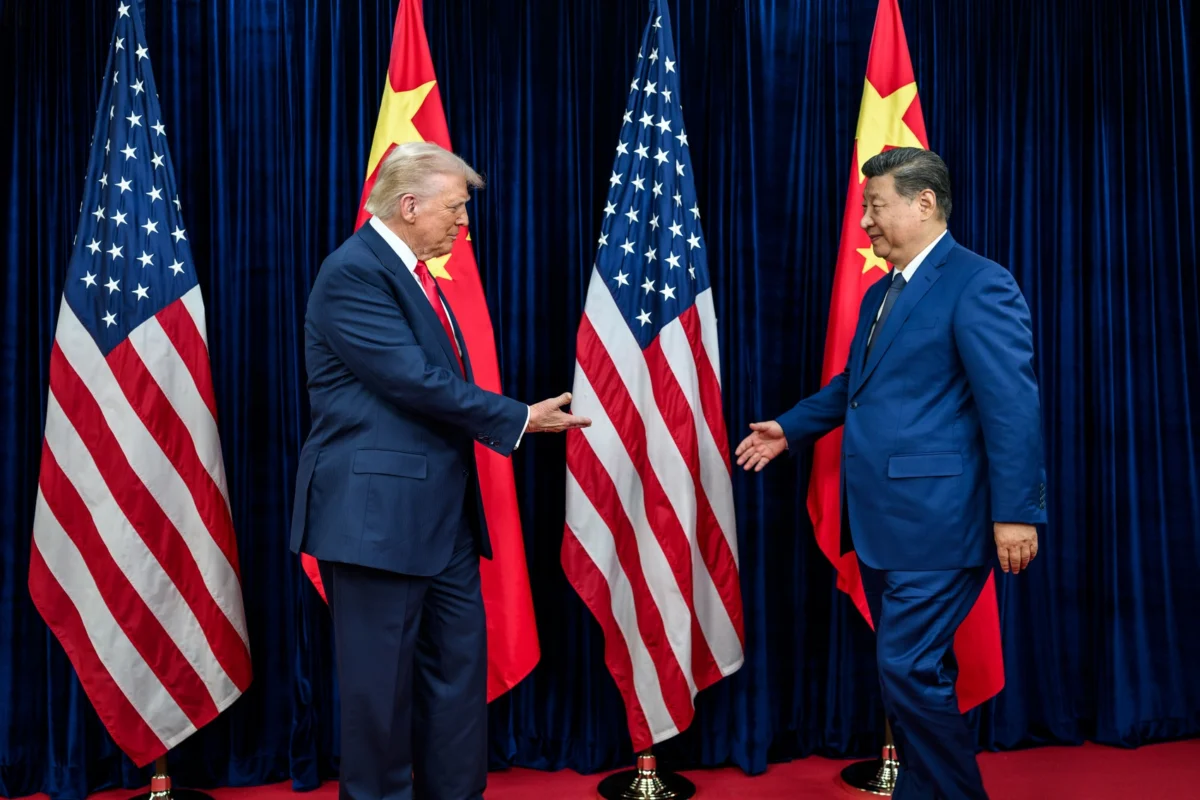
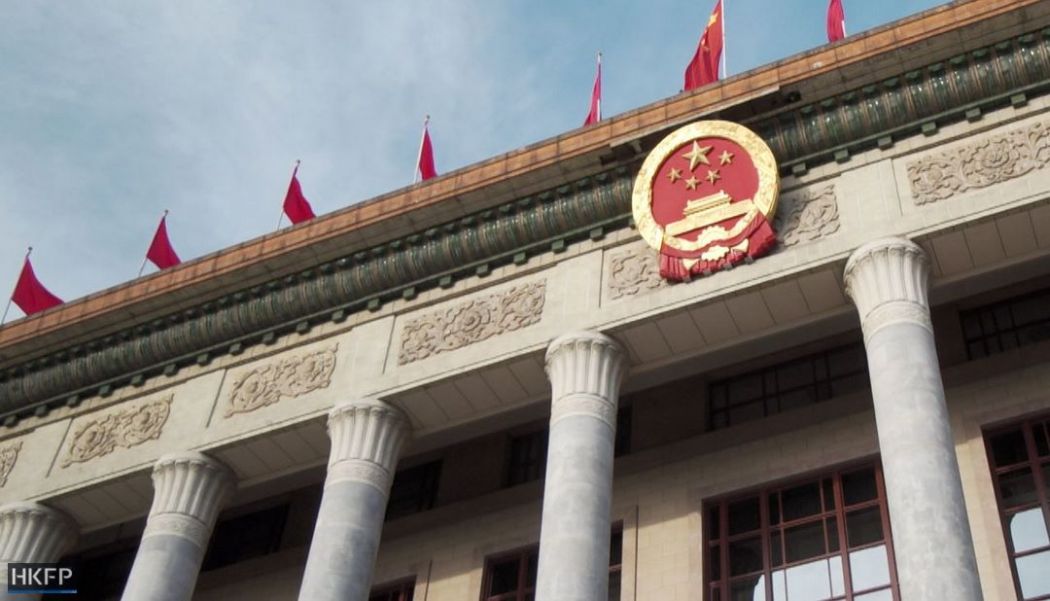
Beijing has escalated its concerns over the burgeoning field of artificial intelligence, with Chen Yixin, China’s Minister of State Security and the head of its premier intelligence agency, issuing a grave warning that advanced AI technologies pose significant threats to the nation’s security and social stability. In a comprehensive article published online on Sunday, Minister Chen articulated a vision of AI as both a crucial battleground for technological supremacy and a potent tool for foreign adversaries to undermine China’s core interests. His remarks underscore a growing international apprehension about the rapid evolution of AI, yet diverge sharply from Western concerns by explicitly framing the risks through the lens of national defense, ideological integrity, and strategic competition rather than existential threats to humanity.
Minister Chen’s commentary specifically highlighted the nefarious potential of generative AI, accusing "hostile forces" of leveraging these sophisticated tools to "fabricate political rumours and spread harmful information." This, he asserted, is part of a calculated strategy to "launch public opinion wars and cognitive warfare against China," directly imperiling the nation’s "political security, institutional security and ideological security." The minister’s strong words reveal a deep-seated apprehension within Beijing’s security apparatus regarding the manipulation of public discourse and the erosion of trust through AI-generated content, often referred to as deepfakes or synthetic media, which can convincingly mimic human-produced information.
This pronouncement arrives at a particularly sensitive juncture in global geopolitics, coinciding with the anticipated meeting between Chinese leader Xi Jinping and US President Donald Trump in Washington later this month. Discussions surrounding AI governance and safety are widely expected to feature prominently on their agenda, reflecting a shared, albeit often divergent, international recognition of AI’s transformative and potentially destabilizing power. While both nations acknowledge the need for oversight, their approaches and primary concerns frequently clash, with China emphasizing state control and national security, and Western nations often focusing on ethical AI, human rights, and the prevention of catastrophic misuse.

The Dual Nature of AI: A Global Consensus on Risk, Divergent National Priorities
The international community has increasingly voiced alarm over the unchecked speed of AI development. Prominent figures in the US tech industry have publicly advocated for a more cautious approach. Dario Amodei, CEO of Anthropic, a leading AI research company, recently cautioned against the "reckless" pace of AI technology development, echoing widespread worries about the risks associated with increasingly powerful and autonomous computer systems. Sam Altman, CEO of OpenAI, the creator of ChatGPT, has publicly concurred with Amodei’s assessment, signaling a growing consensus among some developers that the industry needs to slow down to adequately address safety concerns. These warnings often center on speculative "existential risks," such as superintelligent AI losing control or misinterpreting human commands with catastrophic consequences.
However, Minister Chen’s perspective starkly contrasts with this narrative of existential dread. While acknowledging the general dangers, his focus remains firmly on the immediate and tangible threats to state power and stability. He explicitly dismissed the notion of "existential risks" or the need to "put the brakes on technological advances," instead framing AI as an unavoidable and critical "main battleground for global technological competition and a new track for major power strategic rivalry." This statement encapsulates Beijing’s pragmatic and competitive stance: AI is too strategically vital to slow down; instead, it must be mastered and defended against.
Chen specifically named Anthropic’s Claude Mythos and OpenAI’s ChatGPT-5.5-Cyber, accusing these advanced AI models of possessing "advanced hacking capabilities that potentially pose serious risks to China’s critical information infrastructure." This direct accusation against specific foreign AI models highlights China’s concern over their potential weaponization in cyber warfare and espionage. The capabilities described—intelligent web crawlers, data mining, and profiling analysis—are powerful tools for reconnaissance and intelligence gathering. Chen warned that "foreign intelligence agencies are deeply using technologies such as intelligent web crawlers, intelligent data mining, and intelligent profiling analysis to extensively collect and acquire sensitive information such as key national data, trade secrets, and citizens’ personal privacy." This represents a fundamental concern for any state regarding espionage and data sovereignty.
Chronology of Escalating AI Tensions and Policy Responses
The current alarm from Beijing is not an isolated incident but rather the latest development in an ongoing, intensifying technological rivalry between China and the United States. For years, both nations have recognized AI as a critical component of future economic prosperity and national power.
- 2017: China released its "New Generation Artificial Intelligence Development Plan," outlining ambitious goals to become a world leader in AI by 2030, integrating AI across various sectors, including defense. This marked a formalization of China’s national AI strategy.
- Late 2010s: The US began to perceive China’s rapid AI advancement as a direct challenge to its technological and military superiority, leading to increased scrutiny of Chinese tech companies and investments. Concerns over intellectual property theft and forced technology transfer became prominent.
- 2018-2020: The Trump administration initiated a trade war with China, heavily featuring technology restrictions. Companies like Huawei were placed on entity lists, limiting their access to US technology, including advanced semiconductors essential for AI development. This period saw the overt beginnings of technological decoupling.
- 2021: China introduced sweeping regulations targeting internet platforms and algorithms, including the "Provisions on the Administration of Algorithm Recommendations for Internet Information Services" and later, the "Measures for the Management of Generative Artificial Intelligence Services." These regulations aimed to control content, ensure data security, and enforce "socialist core values" in AI applications, showcasing China’s proactive approach to AI governance.
- 2022-Present: The US imposed further export controls on advanced semiconductor chips and chip-making equipment to China, explicitly citing national security concerns and the prevention of China’s military modernization through AI. This move significantly escalated the technological competition, aiming to hobble China’s ability to develop cutting-edge AI.
- Recent Months: High-level diplomatic engagements between the US and China have increasingly included AI as a discussion point, particularly regarding responsible development, risk mitigation, and the potential for an AI arms race. The upcoming Xi-Trump meeting is poised to be a significant forum for these critical discussions.
Supporting Data and Analysis: The Broader Implications of AI as a Weapon
Minister Chen’s warnings draw on a clear understanding of how AI can be weaponized beyond traditional military applications. The concept of "cognitive warfare" involves using information to influence the perceptions, beliefs, and behaviors of target populations, often without their conscious awareness. Generative AI, with its ability to create hyper-realistic text, images, audio, and video, can produce convincing propaganda, fake news, and deepfakes that are difficult to distinguish from reality. This can sow discord, undermine public trust in institutions, and destabilize social order, precisely the threats Chen described.

For example, sophisticated AI models can rapidly generate thousands of localized, culturally tailored narratives designed to exploit existing societal divisions, amplify grievances, or spread disinformation about public health crises, political events, or foreign policy. The scale and speed at which AI can produce and disseminate such content far exceed traditional human-driven influence operations. This makes the defense against such attacks particularly challenging for any nation, especially one like China, which places a high premium on social harmony and ideological control.
Furthermore, Chen’s reference to the "US-Iran war" demonstrating AI’s key role in the military underscores a universal truth in modern warfare: technological superiority often translates to battlefield advantage. While details of AI’s specific application in that hypothetical conflict are not provided, it can be inferred that AI would play roles in:
- Intelligence, Surveillance, and Reconnaissance (ISR): AI-powered drones, satellite image analysis, and data fusion can provide real-time, comprehensive situational awareness.
- Cyber Warfare: AI can enhance offensive and defensive cyber capabilities, automating vulnerability detection, attack execution, and system hardening. The "advanced hacking capabilities" attributed to foreign AI models directly relate to this domain.
- Logistics and Predictive Maintenance: AI optimizes supply chains, predicts equipment failures, and enhances operational efficiency, crucial for sustained military campaigns.
- Autonomous Systems: While highly controversial, the development of autonomous weapons systems (LAWS) is a significant area of AI military research, promising faster reaction times and reduced human risk in certain scenarios.
The implications for "critical information infrastructure," as highlighted by Chen, are profound. Modern societies are deeply reliant on digital networks for everything from power grids and financial systems to communication and transportation. An AI-enhanced cyberattack could cripple these essential services, leading to widespread disruption, economic collapse, and even loss of life. Securing these systems against increasingly sophisticated, AI-driven threats is a paramount national security concern for all technologically advanced nations.
China’s Strategic Response: Technological Sovereignty and Self-Reliance

In response to these multifaceted threats, Minister Chen unequivocally stated that China must "ensure independent control of key core technologies." This directive is not new but gains renewed urgency in the context of AI. It specifically targets the advanced computer chips vital for training and deploying AI models, an area where China currently faces significant dependencies on foreign (primarily US) technology. The US export controls on these chips are a direct attempt to slow China’s progress in AI and advanced computing.
China’s pursuit of "technology sovereignty" or "tech self-reliance" is a cornerstone of its national strategy. This involves massive investments in domestic research and development, fostering a robust indigenous semiconductor industry, and cultivating a deep talent pool in AI, quantum computing, and other cutting-edge fields. The goal is to eliminate vulnerabilities stemming from reliance on foreign suppliers for critical components and intellectual property, thereby insulating China from external pressure and ensuring its ability to develop and deploy AI on its own terms.
This strategy manifests in several ways:
- National Champions: Supporting domestic tech giants (e.g., Huawei, Tencent, Alibaba, Baidu) to lead AI innovation and develop proprietary solutions.
- Investment: Pouring billions into AI research labs, universities, and startups, often through state-backed funds.
- Talent Cultivation: Prioritizing education in STEM fields and attracting top global AI talent.
- Standardization: Developing national AI standards and ethical guidelines that align with China’s political and social values.
Broader Geopolitical Impact and the Future of AI Governance

Minister Chen’s powerful statement amplifies the ongoing technological arms race between major global powers, primarily the US and China. His assertion that AI is a "main battleground" and a "new track for major power strategic rivalry" leaves little room for ambiguity about China’s perception of the current geopolitical landscape. This competitive framework makes global cooperation on AI governance exceedingly difficult. While there is a shared interest in preventing catastrophic AI misuse, the national security imperatives and strategic rivalries often overshadow these cooperative efforts.
The implications extend to international norms and regulations. If leading nations prioritize their own technological sovereignty and competitive advantage, the prospects for a unified global approach to AI safety, ethics, and non-proliferation remain dim. Instead, the world may see the emergence of different AI ecosystems, each with its own standards, regulations, and technological dependencies, potentially leading to further fragmentation of the digital world.
Ultimately, China’s official stance, as articulated by its intelligence chief, signals a comprehensive strategy: aggressive development of indigenous AI capabilities, stringent internal controls to manage its societal risks, and a robust defense against foreign AI threats. The warning serves as a clear declaration that Beijing views AI not just as a technological frontier but as a critical domain of national security, where vigilance and self-reliance are paramount for safeguarding the nation’s future. The upcoming dialogue between President Xi and President Trump will undoubtedly be a crucial moment to gauge whether common ground can be found amidst these deeply entrenched and diverging national priorities in the age of artificial intelligence.

 Rifan Muazin
 Nana Wu