Rifan Muazin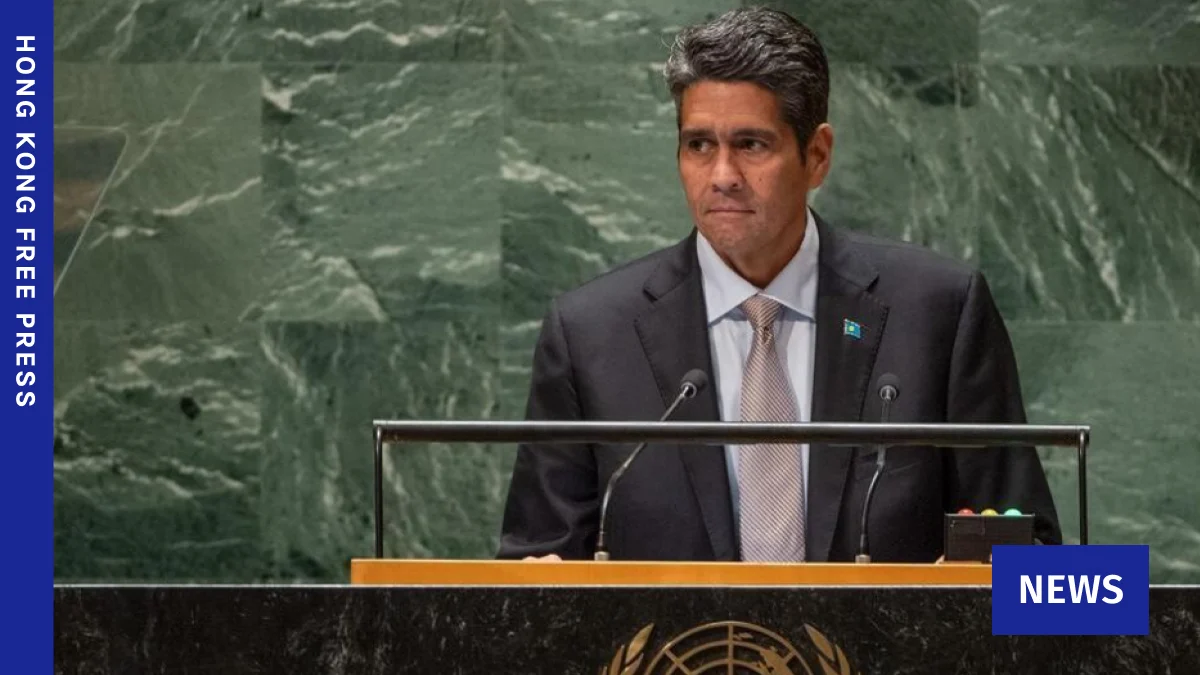
In a resolute demonstration of regional solidarity and a firm assertion of sovereignty, Pacific Island nations have collectively condemned a Chinese intercontinental ballistic missile (ICBM) test conducted earlier this year into their strategic waters. The condemnation came in a joint statement, formally agreed upon Thursday at the Pacific Islands Forum (PIF) summit in Palau, despite considerable pressure from Beijing on the host nation. This unified stance underscores the deep-seated anxieties within the region regarding military activities and a renewed determination to uphold international norms and transparency.
The summit’s communique, a pivotal document outlining the collective position of the forum members, was publicly read by Palau’s President Surangel Whipps during a late-night news conference. A central demand articulated within the statement calls for a minimum of 24 hours’ advance notice for any future intercontinental ballistic missile testing. This specific requirement highlights the nations’ collective concern for safety, regional stability, and the respect for their territorial and economic zones. The consensus was overwhelming, with 17 out of 18 forum members endorsing the statement. The sole dissenting voice came from Naoero, formerly known as Nauru, whose abstention reflected its evolving diplomatic alignment and economic ties.
The July Missile Test: A Catalyst for Concern

The incident that spurred this strong regional response occurred in July, when China test-fired an intercontinental ballistic missile. Beijing provided only "short notice" to a handful of nations, a move widely perceived as insufficient and disrespectful to regional sovereignty, particularly in a part of the world that has long sought to distance itself from the specter of militarization. The missile’s trajectory and impact zone were particularly alarming, as it landed in international waters in close proximity to Tuvalu and Naoero. At the time of the test, both Tuvalu and Naoero maintained diplomatic recognition of Taiwan, a fact that added another layer of geopolitical complexity to the incident. Naoero, however, has since shifted its diplomatic allegiance from Taiwan to Beijing approximately two years prior to this summit, a decision that has significantly influenced its current reluctance to openly criticize China.
The immediate outrage from Pacific countries was palpable and deeply rooted in their collective memory. Decades earlier, the region endured extensive nuclear testing by colonial powers including the United States, Britain, and France. These historical traumas left a devastating legacy of environmental degradation, health crises, and social displacement, forging an indelible commitment among Pacific nations to declare their vast maritime territories a nuclear-free zone. The Chinese missile test, though ostensibly conventional, triggered these profound historical sensitivities, reigniting fears of becoming a testing ground for major global powers once again.
The PIF summit’s communique directly addressed these concerns, stating that leaders "register concern on the recent intercontinental ballistic missile (ICBM) test which overflew a number of members without adequate notice." It further called upon "all states undertaking ICBM testing to ensure transparency and reassurance including through the provision of advanced notification of a test, at least 24 hours, in accordance with international practice." This language not only singles out the recent Chinese action but also sets a clear precedent for future military activities in the region, emphasizing adherence to established international protocols for safety and diplomatic courtesy.
Beijing’s Defense and Regional Dynamics

In response to the growing criticism, Beijing had previously characterized the test launch as "a routine arrangement of China’s annual military training" and maintained that "relevant countries were informed in advance." However, the PIF’s unanimous demand for a minimum of 24 hours’ notice directly challenges Beijing’s claim of adequate prior notification, underscoring the discrepancy between China’s perception of "advance notice" and the Pacific nations’ expectations for transparency and respect.
The diplomatic landscape within the Pacific Islands Forum is complex and increasingly influenced by the geopolitical competition between China and Western powers. Naoero’s singular dissent from the joint statement highlights the economic leverage China wields in the region. Having switched diplomatic ties from Taiwan to Beijing two years ago, Naoero has become a significant recipient of Chinese infrastructure loans and development aid. This economic dependency often translates into a reluctance to publicly challenge Beijing, illustrating the delicate balance many Pacific nations must strike between their collective regional interests and their individual bilateral relationships with major powers.
The diplomatic friction extended beyond the missile test. On Thursday, prior to the official release of the PIF communique, the Chinese foreign ministry openly accused Palau, as the host nation, of "hijacking" the responses of other Pacific nations. Ministry spokesman Guo Jiakun stated in Beijing that "Palau has repeatedly hyped the issue, maliciously hijacking the positions of other Pacific Islands Forum member countries. This scheme will not succeed." Palau President Surangel Whipps, undeterred by Beijing’s accusations, responded firmly: "I think the message from the forum is clear, transparency needs to happen." This exchange underscores the intense diplomatic pressure exerted by China and the Pacific nations’ determination to assert their collective voice.
The comparison with other military activities in the Pacific further clarified the PIF’s position. The United States conducts ballistic missile tests in the Pacific under a defense agreement with the Marshall Islands. However, both Palau and Australia’s leaders emphasized that these tests are "very different" from China’s recent action because "adequate notice is given." This distinction highlights that the concern is not about military activity per se, but about the lack of transparency, prior notification, and respect for regional sensibilities. The US, through its Compacts of Free Association with Palau, the Federated States of Micronesia, and the Marshall Islands, maintains a long-standing security presence and conducts exercises with clear protocols, which Pacific leaders recognize as a different operational framework.

Taiwan Friction and Broader Geopolitical Rivalry
The PIF summit was also a stage for renewed friction over Taiwan’s diplomatic status. Palau, one of Taiwan’s remaining diplomatic allies in the Pacific, extended an invitation to Taiwan’s Foreign Minister Lin Chia-lung to attend the forum as an aid partner. This invitation placed Taiwan alongside a dozen other non-Pacific countries, including China and the United States, who participate in various sideline events and dialogues. Beijing, which views self-ruled Taiwan as an inseparable part of its territory under its "One China Principle," bristled at the presence of the Taiwanese official. China’s Pacific envoy Qian Bo had issued a stern warning to reporters on Monday, stating that there would be "consequences" for Palau’s decision to host the Taiwanese delegation.
Taiwan, in turn, hit back, asserting that its continued presence and diplomatic ties in the Pacific, where it maintains three allies (Palau, Tuvalu, and the Marshall Islands), are crucial in preventing China from "having full control" over the region. This ongoing diplomatic tug-of-war reflects the broader geopolitical competition playing out in the Pacific, where both Beijing and Washington, along with its allies like Australia and New Zealand, are vying for influence, economic partnerships, and strategic positioning. The "One China" policy remains a core tenet of Beijing’s foreign policy, and its efforts to isolate Taiwan internationally are relentless, often employing economic incentives and diplomatic pressure to persuade nations to switch recognition.
Beyond Missiles: Climate Change and Transnational Crime

Despite the significant diplomatic tension generated by the Chinese missile test and Taiwan’s presence, the PIF leaders also remained focused on the region’s most pressing existential challenges: climate change and transnational crime. For low-lying island nations, climate change is not a distant threat but an immediate reality, manifesting through rising sea levels, more frequent and intense extreme weather events, coastal erosion, and threats to food and water security. The forum consistently reiterates the urgent need for global action on climate change, often calling on major emitters to honor their commitments and provide adaptation financing.
Transnational crime, particularly drug trafficking, has emerged as another grave concern. The vast, often unpoliced maritime spaces of the Pacific have become increasingly attractive transit routes for illicit drugs, notably methamphetamine and cocaine, often transported by so-called "narco subs." These semi-submersible vessels pose a significant challenge to the limited surveillance and enforcement capabilities of island nations. Australia, the largest forum member and the Pacific’s most substantial aid donor, pledged an additional AU$600 million (approximately US$432 million) to bolster satellite and drone aerial surveillance capabilities. This investment aims to enhance the region’s ability to track and intercept these vessels, thereby disrupting criminal networks and safeguarding the social fabric of island communities.
US engagement in the region was also prominent. US Deputy Secretary of State Christopher Landau attended the forum, engaging in sideline meetings with regional leaders. Papua New Guinea Prime Minister James Marape raised concerns about new US visa bond charges for Pacific citizens traveling to the United States. These charges, perceived as burdensome and discriminatory, impact the mobility and economic opportunities for many islanders, an issue that PNG sought to address directly with the US. In a demonstration of its commitment to regional stability, Landau pledged an additional $60 million to improve fuel security in the Pacific, a critical initiative aimed at alleviating soaring energy prices exacerbated by global supply chain disruptions and the Middle East crisis, which disproportionately affect remote island economies.
A United Front for Regional Resilience

At the forum’s closing ceremony, Secretary-General Baron Waqa delivered a powerful message that encapsulated the spirit of the summit. He acknowledged the significant challenges confronting the Pacific but emphasized the region’s proven capacity to act in concert. "The bonds between us must remain stronger than the forces that seek to divide us," Waqa declared, underscoring the collective resolve of the Pacific nations to prioritize regional unity and autonomy in the face of external pressures and complex geopolitical dynamics.
The PIF summit in Palau thus concluded with a clear and unequivocal statement: the Pacific Islands are not passive observers in the global arena. They are active stakeholders asserting their rights, demanding transparency, and advocating for a future free from militarization and undue external influence. The condemnation of China’s missile test, alongside discussions on climate change and transnational crime, highlights a region grappling with immediate threats while simultaneously navigating the intricate geopolitical currents that define the 21st century. The call for 24-hour notice is more than a procedural request; it is a declaration of sovereignty, a demand for respect, and a testament to the enduring legacy of historical resilience in the face of profound challenges. The outcome of this summit sends a strong signal that Pacific nations intend to speak with a united voice, shaping their own destiny and advocating for a peaceful, secure, and prosperous future for their people and their vast ocean home.

 Laily UPN
 Nana Wu