
 Nana
Nana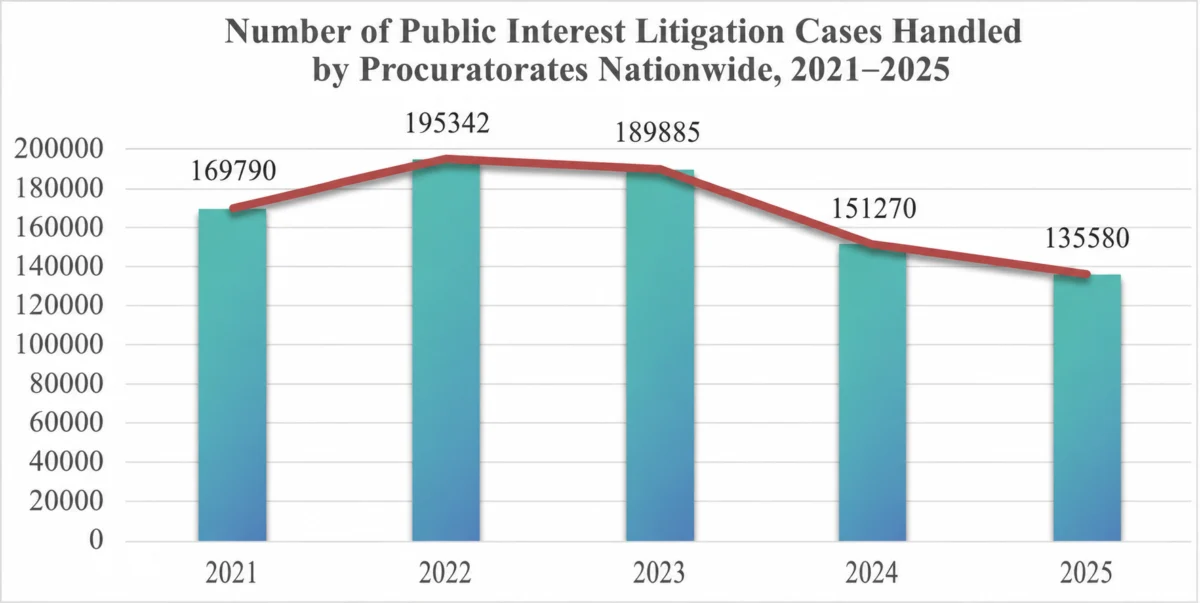
The release of the second reading draft of China’s Procuratorate Public Interest Litigation Law marks a significant milestone in the evolution of the country’s judicial system, signaling a shift toward a more formalized and robust framework for addressing mass harms. As the National People’s Congress moves closer to finalizing this specialized legislation, the draft provides a comprehensive look at how the People’s Procuratorate—China’s state organ for legal supervision—intends to wield its power to protect the "national interest and societal public interest." This development is particularly noteworthy for its clarification of the procuratorate’s authority over administrative agencies and its explicit mention of foreign organizations and individuals as potential subjects of litigation.
The Genesis and Evolution of Procuratorate Public Interest Litigation
The Procuratorate Public Interest Litigation (PPIL) system was not an overnight creation but a response to deep-seated public frustration regarding recurring scandals in environmental protection, food safety, and consumer rights. Historically, while Chinese law technically allowed for mass-harm cases, the hurdles for initiating them were nearly insurmountable for the average citizen. Civil society organizations remained resource-constrained and often lacked the political capital to challenge powerful state-owned enterprises or administrative bodies. Furthermore, the Chinese government has traditionally remained cautious regarding organized citizen movements, preferring a state-led approach to dispute resolution.
The evolution of the PPIL system can be traced through a clear chronological trajectory:
- 2015: The Supreme People’s Procuratorate (SPP) launched a two-year pilot program in 13 provincial-level regions, authorizing procurators to file public interest lawsuits.
- 2017: Following the success of the pilot, the Civil Procedure Law and the Administrative Procedure Law were amended to formally grant the procuratorate the power to initiate public interest litigation.
- 2018: A major institutional shift occurred when the procuratorate lost its authority to investigate corruption cases to the newly formed National Supervision Commission. To maintain its relevance and utility, the procuratorate pivoted toward "legal supervision," making PPIL one of its "four core work areas" alongside criminal, civil, and administrative supervision.
- 2021–2024: The scope of PPIL expanded incrementally through various special laws, covering areas such as the protection of heroes and martyrs, personal information, and the rights of the disabled.
- 2025–2026: The drafting of a standalone Procuratorate Public Interest Litigation Law began, culminating in the current second reading draft, which aims to unify these disparate authorities into a single, cohesive legal framework.
The Unique Role of the Procuratorate as Legal Supervisor
To understand the impact of the new law, one must understand the unique nature of the Chinese Procuratorate. Unlike a standard prosecutor’s office in Western jurisdictions, the Chinese Procuratorate is a "legal supervision" organ. This means it possesses the constitutional authority to oversee whether laws are being implemented correctly by administrative agencies and even the courts.

This supervisory mandate makes the procuratorate a formidable plaintiff. It has the staff, the budget, and the legal authority to take on complex, resource-intensive cases that would bankrupt a private NGO. However, this power also creates a unique dynamic where the state is essentially suing itself—or at least one arm of the state is suing another to ensure compliance with central government directives.
Statistical Analysis: The Reality of "Litigation" in PPIL
A critical distinction in the Chinese system is that most "public interest litigation" does not actually involve a courtroom trial. According to data released for 2025, the procuratorate handled a staggering 135,580 public interest cases. However, lawsuits were filed in only 7,305 of those instances, representing roughly 5.4% of the total caseload.
This discrepancy is explained by the two-tiered nature of the PPIL process:
- Administrative PPIL (91% of cases): This involves the procuratorate identifying a failure by an administrative agency (such as a local environmental bureau) to perform its statutory duties. Before filing a lawsuit, the procuratorate is legally required to issue "pre-litigation recommendations." Because these recommendations come from a powerful supervisory body, administrative agencies adopt them in the vast majority of cases to avoid the embarrassment and political fallout of a public court appearance.
- Civil PPIL: These cases are brought against private entities—such as companies polluting a river or selling tainted food—when no other "qualified" organization (like a designated NGO) is willing or able to sue. Civil cases are much more likely to proceed to a full trial, as they involve seeking compensation or remediation from private actors rather than administrative corrections.
Expanded Scope: From Environment to Ethnic Unity
Article 3 of the second reading draft delineates the specific fields where the procuratorate may intervene. The list has grown significantly since the 2015 pilot, reflecting the government’s evolving priorities.
Shared Areas (Administrative and Civil):

- Environmental and resource protection
- Food and drug safety
- Work safety
- Protection of the rights and interests of vulnerable groups (women, children, the elderly, and the disabled)
- National defense and military interests
- Protection of cultural relics and heritage
- Ethnic unity and progress (a newly emphasized category in the draft)
Administrative-Only Areas:
- Protection of state-owned assets
- Transfer of state-owned land-use rights
Civil-Only Areas:
- Monopolistic conduct
- Large-scale violations of labor rights and interests
- Personal information protection
- Protection of the reputation and honor of heroes and martyrs
The inclusion of "Ethnic Unity" and "Monopolistic Conduct" signals that the procuratorate is being tasked with enforcing social harmony and market order, moving beyond traditional "physical" harms like pollution.
The Extraterritorial Reach: Article 51 and Foreign Defendants
Perhaps the most controversial aspect of the second reading draft is Article 51, located in the supplemental provisions. The article states: “The people’s procuratorates may lawfully initiate public interest litigation against foreign organizations and individuals that carry out unlawful conduct that infringes on our nation’s lawful interests or societal public interest.”
This provision has sparked concern among international legal analysts and foreign business chambers. Some observers have argued that Article 51 could act as a "wild card," allowing the procuratorate to target foreign firms for any perceived harm to the "national interest," even if the conduct does not fall strictly within the categories listed in Article 3.

However, a more nuanced analysis suggests that Article 51 is likely a confirmatory clause rather than an expansion of scope. It clarifies that foreign entities are not immune to the law, but they are still subject to the same procedural restrictions as domestic defendants. For a case to be brought against a foreign firm, there must still be a specific violation of the categories defined in Article 3 (e.g., a food safety violation or a data breach) that results in a quantifiable harm to the public interest.
Implications for International Business and Governance
While the fear of "lawfare" is a frequent topic of discussion, the practical implications for foreign businesses are more grounded in compliance and risk management. The "public interest" standard remains somewhat vague, defined in guiding cases as interests that are "non-specific" (affecting a broad group) and "legitimate."
For foreign firms operating in China, the primary risks under the new law include:
- Environmental Liability: Foreign manufacturing plants may face heightened scrutiny from local procurators looking to meet "green" development targets.
- Data Privacy: With personal information protection listed as a civil PPIL category, foreign tech firms could face state-led lawsuits over data mishandling, which often carry higher reputational risks than standard administrative fines.
- Amorphous Social Categories: The inclusion of "ethnic unity" and "heroes and martyrs" protection creates a layer of political risk. Conduct that is perceived to offend national sentiment could, in theory, be framed as a public interest violation.
However, it is worth noting that China possesses more direct tools—such as the Unreliable Entity List or standard administrative sanctions—to punish foreign firms. PPIL is a relatively cumbersome tool for political signaling, as it requires the procuratorate to prove specific legal violations and seek court-ordered remedies.
Conclusion: A State-Led Vision of Public Interest
The Second Reading Draft of the Procuratorate Public Interest Litigation Law reinforces a vision of the rule of law where the state is the primary arbiter of the public good. By centralizing the power to address mass harms within the procuratorate, Beijing is ensuring that social grievances are addressed through official channels rather than through independent civil society or grassroots activism.

As the law moves toward its final adoption, the international community will be watching closely to see how Article 51 is applied in practice. For now, the message from the Chinese legislature is clear: the procuratorate’s "legal supervision" is expanding, and no entity—domestic or foreign—is beyond its reach when the "national interest" is at stake. The challenge for the Chinese judiciary will be to balance this powerful new tool with the need for a predictable and transparent business environment, ensuring that "public interest" does not become a shorthand for arbitrary enforcement.


 Lina Hope



Provisions on Ensuring the Healthy and Safe Use of the Internet by Minors Draft for Soliciting Comments
The Cyberspace Administration of China (CAC) has unveiled a comprehensive draft of the Provisions on Ensuring the Healthy and Safe Use of the Internet by Minors, marking a significant escalation…