Nana
Nana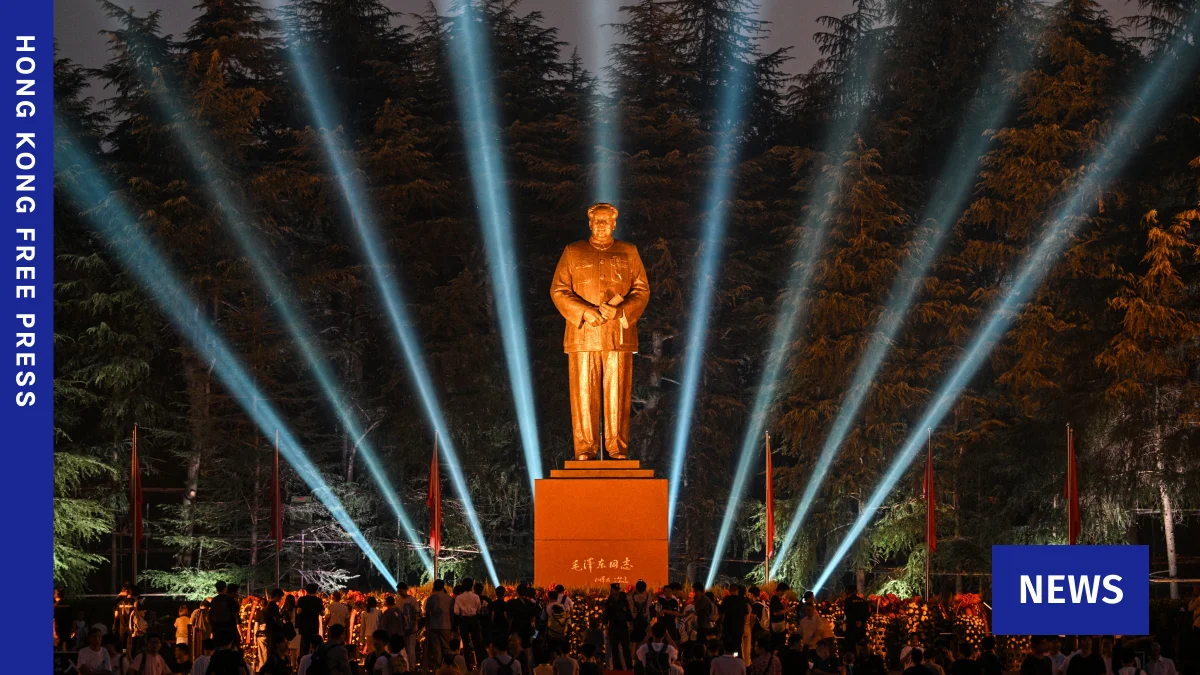
Fifty years after his death, diehard fans of the Chinese Communist leader Mao Zedong lined up Wednesday in his hometown to pay homage, holding portraits, flags, and huge floral tributes, marking a poignant moment of national reflection that underscores the complex and often contradictory legacy of the man who founded the People’s Republic of China. The commemorations in Shaoshan, Hunan province, drew thousands, from fervent long-time admirers to curious university students, all converging on the birthplace of the "Great Helmsman" to remember a figure whose impact continues to shape the nation’s identity, political discourse, and economic trajectory.
The solemn observance began even a day before the official anniversary, with large crowds gathering at the Bronze Statue Square in Shaoshan. On Wednesday, September 9, 2026, the atmosphere was a blend of hushed respect and visible devotion. Visitors, many clad in simple, unassuming clothing, formed meticulously organized queues, stretching for hundreds of meters, leading to the imposing 10-meter-tall bronze statue of Mao Zedong. At its base, a continuous stream of tributes was laid: vibrant chrysanthemum wreaths, bottles of baijiu (Chinese alcohol), and packs of cigarettes—offerings symbolic of respect and remembrance in Chinese culture. Each individual or group approached the statue with reverence, bowing solemnly and observing a few seconds of silence, a powerful collective act of homage. While some posed for photographs, capturing their presence at this historic milestone, watchful police maintained order, ensuring a steady flow of visitors and preventing anyone from lingering too long, a subtle reminder of the controlled nature of public displays of sentiment in China.
Chairman Mao, the architect of modern China, passed away on September 9, 1976. His life and immense legacy were commemorated fervently throughout this week, particularly by those who continue to revere him as a visionary leader who liberated China from foreign domination and internal strife. However, this widespread adulation exists alongside a more critical historical perspective that blames his drastic policies for unprecedented suffering, including mass starvation and the deaths of millions. As China navigates a slowing economy and faces new societal challenges, a palpable nostalgia is growing for Mao’s egalitarian ideals, especially among segments of the population who yearn for a perceived simpler, more equitable past, contrasting sharply with the stark realities of contemporary economic pressures and widening wealth disparities.

The Pilgrimage to Shaoshan: A Nexus of Memory and Ideology
Shaoshan, a once-nondescript village nestled in central Hunan province, has been transformed into a national pilgrimage site, its fame inextricably linked to its most famous son. Born here in December 1893, Mao’s early life in this agrarian setting is a central component of the "red tourism" narrative promoted by the state. Busloads of visitors arrived continuously, pouring into the village to explore sites like Mao’s childhood home, a modest farmhouse overlooking rice paddies where, according to signs, he helped cultivate the land in his youth. The queues to enter this humble dwelling snaked through the surrounding landscape, reflecting the deep desire of many to connect with the origins of the man who fundamentally reshaped China.
The emotional intensity of the commemorations was particularly evident the night before the official anniversary. Around 1,000 ardent admirers gathered at the statue, many donning the short, tunic-style suits famously worn by Mao, often referred to as "Mao suits." This sartorial choice was a deliberate nod to a bygone era, a visual expression of their ideological alignment. They brandished relics of that period: old portraits of the leader, some faded with age, and copies of the "Little Red Book," a collection of Mao’s quotations that was once virtually ubiquitous and served as a guide for daily life and political thought during the Cultural Revolution. The air vibrated with their collective chants, "Long live Chairman Mao!" roared repeatedly, accompanied by pumped fists and the rousing strains of revolutionary songs, creating an atmosphere reminiscent of historical rallies.
Among the visitors, Deng, a 28-year-old tourist, articulated a common sentiment among younger attendees. "I suddenly felt like coming here today to commemorate him, because the 50th anniversary is something that only comes around once in a lifetime," he told AFP, adding that he had "been influenced" by Mao’s spirit and held great respect for him. Similarly, 63-year-old Jing Shiming, visiting from Shanghai, echoed a sentiment often heard among older generations: "We must never forget the people who dug the well from which we drink." He passionately asserted that Mao and leaders of his generation "transformed China from a backward and impoverished country into the prosperous and strong nation it is today," a view that underpins much of the official historical interpretation.

Mao Zedong: Architect of Modern China and its Contradictions
Mao Zedong’s journey from a rural school teacher to the paramount leader of a resurgent nation is one of the most significant narratives of the 20th century. He was a co-founder of the Chinese Communist Party in 1921 and rose to prominence during the Long March (1934-1935), a military retreat that solidified his leadership within the party. His strategic brilliance and populist appeal ultimately led the Communists to victory in the Chinese Civil War, culminating in the proclamation of the People’s Republic of China on October 1, 1949. As the "Great Helmsman," Mao presided over a period of radical transformation, unifying a fractured nation, ending a century of foreign encroachment, and laying the foundations of a socialist state. His vision aimed to elevate China from its semi-colonial past to a position of strength and self-reliance on the world stage.
However, the pursuit of his ambitious goals often came at a staggering human cost. Mao’s legacy is inextricably linked to two of the most catastrophic campaigns in modern history: the Great Leap Forward and the Cultural Revolution.
The Great Leap Forward (1958-1962) was an economic and social campaign designed to rapidly transform China from an agrarian economy into a communist society through industrialization and collectivization. Peasants were forced into communes, private farming was banned, and massive, often unfeasible, industrial projects were undertaken. The policy led to widespread agricultural mismanagement, falsified crop reports, and a severe famine. Historians estimate that between 15 million and 45 million people died of starvation during this period, making it one of the deadliest man-made disasters in human history. The economic impact was devastating, setting back China’s development by years.

The Cultural Revolution (1966-1976), launched by Mao to purge perceived capitalist and traditional elements from Chinese society and consolidate his power, plunged the country into a decade of unprecedented chaos. Millions were persecuted, tortured, and killed. Intellectuals, party officials, and anyone deemed "bourgeois" or "revisionist" were targeted by the Red Guards, student paramilitary units mobilized by Mao. Schools and universities were shut down, cultural relics were destroyed, and the national economy suffered immensely. The estimated death toll varies widely, but it is believed to be in the hundreds of thousands, potentially millions, with millions more suffering severe physical and psychological trauma. The campaign brought China to the brink of economic and social collapse, leaving deep scars that continue to resonate in Chinese society.
While the Communist Party of China (CPC) officially acknowledges that these decades were marked by "mistakes," particularly concerning the Cultural Revolution, Mao is still painted as a heroic figure in the official narrative. He is consistently hailed by state media as "a great proletarian revolutionary," a necessary figure whose contributions outweigh his errors in the grand scheme of China’s rise. This delicate balance reflects the party’s need to maintain its historical legitimacy, which is fundamentally rooted in Mao’s revolutionary leadership, while also distancing itself from the most disastrous consequences of his policies.
The Enduring Legacy: From Ideology to Iconography
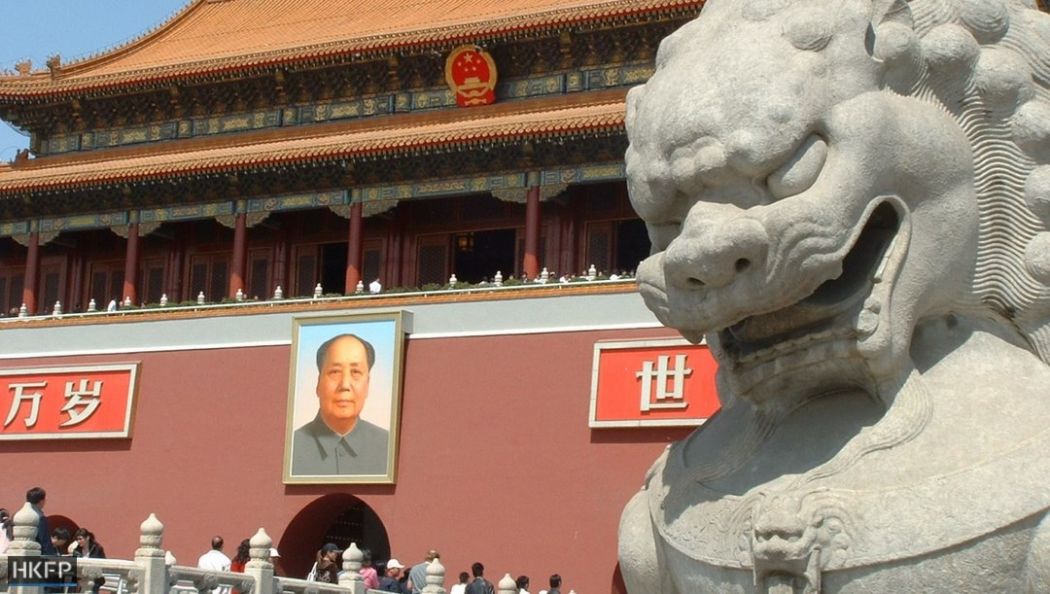
Despite the historical controversies, reminders of Mao are omnipresent across China. His face is emblazoned on every banknote, a constant visual presence in the daily lives of billions. A colossal portrait of him takes pride of place overlooking Tiananmen Square in Beijing, a focal point of national identity and political power. Many Chinese taxi drivers hang good luck charms bearing his face from their rear-view mirrors, a blend of traditional superstition and revolutionary reverence.

The concept of "Mao Zedong Thought," a theoretical framework derived from his writings and speeches, remains a core ideological component of the Communist Party of China. While economic reforms under Deng Xiaoping after Mao’s death largely abandoned the collectivist principles of Maoism, the party continues to invoke his thought as a guiding light, adapting it to contemporary challenges.
Shaoshan, in particular, thrives as a hub for "red tourism," a state-sponsored initiative that encourages citizens to visit sites significant to China’s communist history. This program serves multiple purposes: it educates (or re-educates) the public on the party’s revolutionary narrative, fosters national pride, and generates economic activity in these historically significant locations. Souvenir stores in Shaoshan capitalize on this influx, selling a wide array of Mao paraphernalia, including badges, bronze figurines, caps, and T-shirts. Shop owner Ouyang Qianli expressed her joy at the sight of visitors from across China. "He was selfless and pioneered a new era for China," the 40-year-old said, referring to Mao affectionately as "Grandpa Mao," a common term of endearment. The economic benefits for Shaoshan are undeniable, transforming it into a prosperous town largely fueled by this continuous stream of historical pilgrims.
Nostalgia in Modern China: Economic Anxieties and an Idealized Past
In recent years, China has experienced a discernible wave of nostalgia for the Mao era – a turbulent period that preceded decades of rapid economic development and profound societal change. This longing for the past is often linked to the present-day anxieties stemming from China’s slowing economy, increasing social inequality, and intense competition. Johnny Wei, a 30-year-old observer, noted that the current younger generation has "experienced certain pressures in their daily lives." He posited that "This has led them to reflect on society, and they are beginning to look to history for answers," suggesting that Mao’s egalitarian ideals, however flawed in practice, offer a comforting alternative to the perceived harshness of modern capitalism.
For older generations, memories of the Mao era are often more complex and deeply personal. Ouyang, the shop owner, recounted that when her parents speak of the 1960s, "they even cry," highlighting the profound emotional weight of that period. Yet, she also acknowledged a natural human tendency to soften the edges of difficult memories: "We might – not out of any deliberate intent to forget, but simply because we are living happy lives – gradually let those past hardships recede into the background." This sentiment captures the nuanced way individuals reconcile personal experience with national narratives.
The tourist Deng, while expressing respect for Mao, acknowledged the "controversial" nature of the 10-year Cultural Revolution. However, he quickly added, "But… I see all of this as Comrade Mao Zedong’s arduous process of constantly exploring and striving for China. In his heart, I believe, he was ultimately seeking an ideal and equitable society for China." This perspective reflects a common effort to interpret Mao’s actions, even the most destructive, through the lens of noble intentions, thereby preserving his image as a dedicated revolutionary.
Official Narrative vs. Historical Scrutiny
The management of Mao’s legacy is a critical task for the Communist Party, impacting its legitimacy and vision for the future. The official party line, famously articulated by Deng Xiaoping in 1981, is that Mao was "70% right and 30% wrong." This formula allows the party to acknowledge Mao’s significant contributions to the revolution and the founding of the PRC while selectively critiquing the excesses of his later years, particularly the Great Leap Forward and the Cultural Revolution, without disavowing the party’s foundational figure. This delicate balancing act is crucial for maintaining ideological continuity and national unity.

This controlled environment for historical discourse means that independent academic scrutiny of Mao’s policies and their human toll is largely suppressed within China. While international historians and scholars have extensively documented the devastating impact of the Great Leap Forward and the Cultural Revolution, these critical analyses are often absent from mainstream public discourse in China. The state media consistently reinforces the official narrative, ensuring that Mao’s image as a national hero and revolutionary icon remains largely untarnished in the public imagination, especially during significant anniversaries.
Global Perspectives on Mao’s Influence
Internationally, Mao Zedong remains a figure of intense debate. While admired by some for his anti-imperialist stance and his role in establishing China’s sovereignty, he is widely condemned in the West and by human rights organizations for the immense loss of life and suffering caused by his totalitarian rule and disastrous policies. Academic institutions globally continue to analyze the long-term effects of Maoism on China’s political culture, economic development, and social fabric. The 50th anniversary of his death serves as a reminder of this enduring global fascination and critique, highlighting the stark contrast between internal Chinese veneration and external historical judgments.
Conclusion: A Legacy Still Unfolding

As China observes the 50th anniversary of Mao Zedong’s death, the commemorations in Shaoshan offer a profound glimpse into the nation’s ongoing relationship with its complex past. Mao’s image, imbued with both revolutionary glory and tragic devastation, continues to serve as a powerful symbol – a source of national pride, a focal point for nostalgia, and a lightning rod for unresolved historical questions. His face on banknotes and his portrait over Tiananmen Square attest to his indelible mark on the nation’s psyche. Yet, beneath the surface of official narratives and public displays of reverence, lies a nuanced and sometimes contradictory understanding of his legacy. The blend of fervent admiration, economic anxieties, and a longing for idealized past ideals suggests that Mao Zedong’s influence is not merely historical, but a living, evolving force that continues to shape China’s self-perception and its trajectory in the 21st century. The quiet solemnity and revolutionary fervor observed in Shaoshan reflect a nation still grappling with the monumental figure who brought it into being, and whose shadow continues to loom large over its future.

 Sagoh
Sagoh
 Asro
Asro