Neng Nana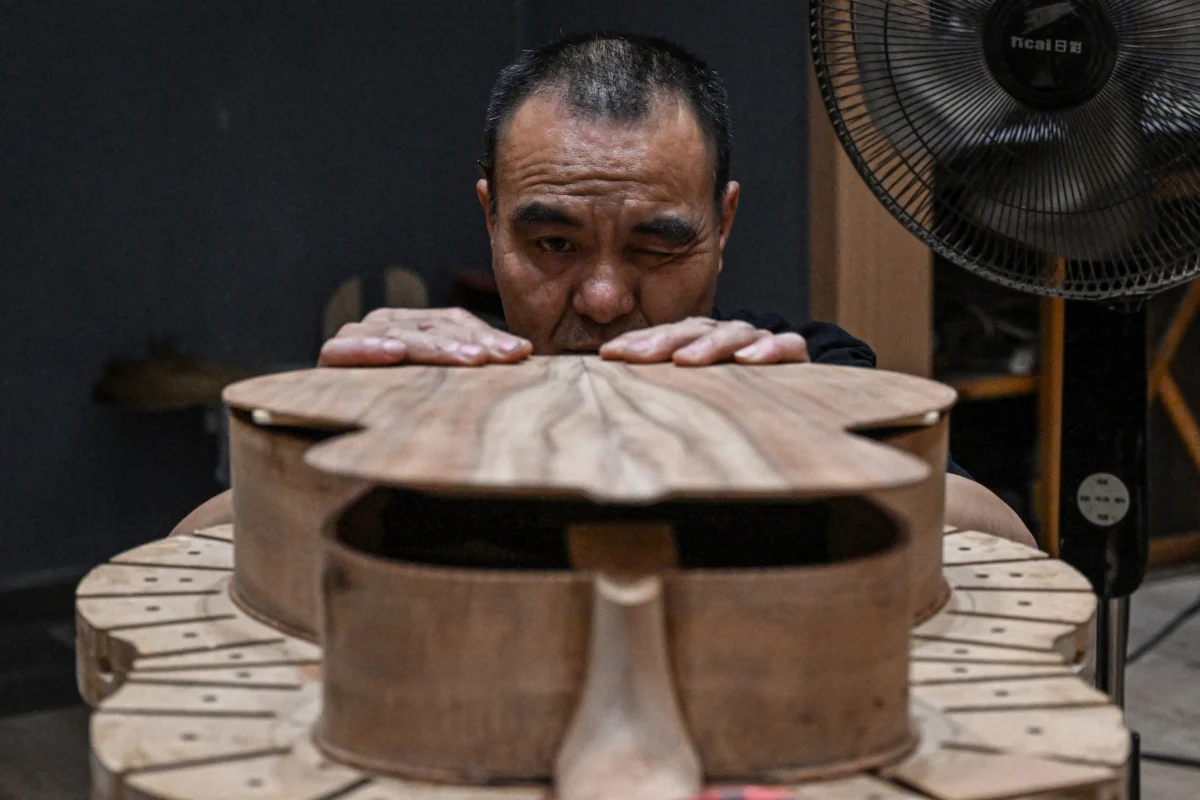
Zheng’an, a once-overlooked town in China’s southwestern Guizhou Province, has undergone a remarkable transformation, evolving from a region with a nascent economy to a global powerhouse in guitar manufacturing. This ascent, characterized by rapid industrialization and strategic government intervention, offers a compelling case study in China’s targeted economic development strategies. The town’s newfound identity is visually striking, with a colossal guitar sculpture dominating its central square, guitar-themed murals adorning public spaces, and even its waste receptacles echoing the iconic instrument’s form. This ubiquitous celebration of the guitar is more than just aesthetic; it is a testament to the town’s specialization, producing an astonishing one in every seven guitars sold worldwide. A mere decade ago, Zheng’an’s contribution to the global guitar market was virtually non-existent.
The phenomenon of specialized manufacturing towns is not unique to Zheng’an within China’s vast industrial landscape. The nation is dotted with hubs dedicated to producing everything from bicycles to socks. However, the sheer speed and magnitude of Zheng’an’s rise distinguish it. It serves as a potent illustration of how China’s industrial strategy, when fueled by a potent combination of local and central government investment and tailored to leverage favorable local conditions, can yield extraordinary economic and social transformations.

The "Phoenix Returns to the Nest" Initiative: A Catalyst for Growth
For many years, Zheng’an’s working-age population faced limited local employment opportunities, prompting a significant exodus of skilled labor to the bustling manufacturing centers of Guangdong Province in southern China. Among these migrants was Zheng Chuanjiu, who eventually established his own successful guitar-making enterprise in Guangzhou, the provincial capital. "The company was doing pretty well at that time, and most of our staff in Guangzhou were also our fellow villagers from Zheng’an," Zheng, the founder of Shenqu Guitar, recounted to AFP. This sentiment highlights the strong community ties that would later play a crucial role in the town’s revitalization.
Recognizing the untapped potential and the desire of its expatriate workforce to return, Zheng’an local authorities launched a pivotal initiative in 2012 known as "return the phoenix to the nest." This program was specifically designed to incentivize skilled migrant workers to return to their hometown and establish businesses, thereby fostering local industrial development. "The county officials reached out to us. They wanted us to come back and develop the industry," Zheng explained, underscoring the proactive engagement from local government. Shenqu Guitar became the pioneering guitar manufacturer to establish its operations within Zheng’an’s newly designated economic zone, signaling the beginning of a new era for the town. The success of this early venture was a powerful draw. "After I’d been working here for a few years, many friends saw how well I was doing and came here to join me to develop the industry," Zheng stated, illustrating the organic growth fueled by peer influence and entrepreneurial spirit.
During a visit to Shenqu in July, the scale of operations was evident, with meticulously arranged rows of finished guitars awaiting final quality checks and shipment. A prominent banner within the factory eloquently captured the prevailing sentiment: "Why go far away to work when home is the best place?" This slogan encapsulates the core philosophy driving the town’s revival – creating opportunities that allow residents to thrive without leaving their ancestral homes.

Leveraging Natural Advantages and Government Support
The "return the phoenix to the nest" initiative, coupled with aggressive government support, proved to be a potent recipe for success. Within approximately a decade, Zheng’an witnessed the emergence of 87 homegrown guitar brands, solidifying its status as a significant industrial cluster. Local authorities actively courted new enterprises by offering comprehensive support packages encompassing financial, tax, and employment incentives. Some businesses were reportedly granted three-year tax exemptions and a decade of free rent, making Zheng’an an exceptionally attractive location for manufacturing startups.
Beyond these governmental inducements, Zheng’an possesses inherent natural advantages that are crucial for guitar production. The region’s climate is remarkably conducive to the craft of luthiery. Master luthier Zhang Weiyi, who relocated his business from Guangzhou to Zheng’an in 2019, attested to this, stating, "Whether the industry is big or small, whether it’s making an impact, that doesn’t really matter to me." Zhang, a 50-year-old artisan, meticulously worked on a custom guitar, sanding a piece of ox bone to fit. He elaborated on his personal philosophy: "My clients are all longstanding clients… Plus, as artisans, we don’t really care much about those things." While Zhang’s individual output is modest, producing around 150 guitars annually, his presence contributes to the town’s artisanal reputation.
Collectively, however, Zheng’an’s manufacturing capacity is immense. Local authorities report that the town produces a staggering 2.5 million guitars per year, fully embodying the moniker emblazoned on banners across the municipality: "Capital of Guitars, City of Music." This dual focus on mass production and artisanal craftsmanship creates a diverse and robust industry ecosystem.

An Export Hub and Economic Engine
Zheng’an has rapidly transformed into a significant export hub. In 2025 alone, the town exported guitars valued at 248 million yuan (approximately $36 million) to over 40 countries worldwide. To further bolster its export capabilities, local authorities have streamlined export-rebate procedures, providing a crucial financial advantage to local firms. From January to July of 2025, registered local enterprises benefited from tax reductions and exemptions totaling 147 million yuan, demonstrating the tangible financial support available to businesses operating in the region.
The substantial government subsidies and assistance provided by China have, in recent years, drawn criticism from the United States and Europe, particularly in sectors like electric vehicles and solar panels, with accusations of unfair trade practices. However, economists argue that fostering specialized regional industries is a vital strategy for combating population drain to major urban centers and stimulating development in historically underserved areas.
Zhejiang University economist Dong Xuebing advocates for a broader adoption of this approach, urging more counties to identify and leverage their unique advantages and industrial foundations to pursue "distinctive, differentiated development." The benefits of such targeted development, he posits, extend beyond purely economic gains, contributing to a more vibrant social fabric.

A Harmonious Atmosphere and a Musical Future
Master luthier Zhang Weiyi beautifully articulated the broader impact of this industrial transformation on the town’s atmosphere. "I think there’s a really nice atmosphere around it," he remarked, describing how music now frequently fills the main square. "All over the streets and alleys, you see quite a few people – both adults and kids – carrying guitar cases, probably on their way to guitar lessons." This paints a picture of a community deeply immersed in its specialized industry, fostering a sense of cultural identity and shared purpose.
The success of Zheng’an is not merely a story of economic policy and industrial output; it is a narrative of community revitalization, the empowerment of local talent, and the creation of a unique cultural identity. The town’s strategic shift, from a source of outward migration to a beacon of specialized manufacturing, underscores the potential of well-executed regional development strategies. As Zheng’an continues to strum its way to global prominence, it serves as an inspiring example of how focused investment, combined with natural advantages and community spirit, can transform a town into a vibrant and globally recognized center of industry and culture. The echoes of guitars, once a rarity, now resonate through its streets, signaling a harmonious future for this dynamic Chinese city.

 Iffa Jayyana
 Siti Muinah