Reynand Wu
The government of the People’s Republic of China has released a comprehensive draft of the Cyberviolence Law, marking a decisive step in the nation’s effort to regulate the digital sphere and provide a robust legal framework for the protection of individuals and organizations online. This legislative move comes as cyberbullying, doxxing, and online defamation have become increasingly prevalent issues within China’s massive internet population, which now exceeds one billion users. The draft law, consisting of seven chapters and sixty articles, outlines a multi-tiered approach involving platform accountability, government oversight, and judicial protection, while establishing stiff penalties for non-compliance.
A Targeted Definition of Digital Aggression
Central to the new legislation is a clear, legal definition of what constitutes cyberviolence. Under Article 2, the law defines cyberviolence as the use of the internet to harm the reputation, honor, privacy, or personal information of individuals or organizations in a "concentrated or sustained manner." This definition encompasses several specific categories of misconduct: the publication of insults, rumors, and incitements of hatred; the illegal disclosure of personal information (commonly known as doxxing); and continuous online intimidation or harassment.
By focusing on the "concentrated" and "sustained" nature of these acts, the law distinguishes between isolated disagreements and systematic digital campaigns. This distinction is critical for law enforcement and judicial bodies to identify and prioritize cases that pose the greatest risk to public order and personal safety.
The Evolution of China’s Digital Governance
The introduction of the Cyberviolence Law is the culmination of several years of incremental regulatory shifts. Historically, online abuse in China was handled through a patchwork of provisions in the Civil Code, the Criminal Law, and the Personal Information Protection Law (PIPL). However, the rapid rise of short-video platforms and social media has outpaced existing regulations.
In 2023, the Supreme People’s Court, the Supreme People’s Procuratorate, and the Ministry of Public Security issued joint guidelines on punishing cyberviolence, which laid the groundwork for this formal legislation. The current draft elevates these guidelines into a national law, centralizing authority under the Cyberspace Administration of China (CAC) and the Ministry of Public Security (MPS). This shift reflects a global trend where governments are increasingly holding digital platforms and individual actors accountable for the real-world consequences of online behavior.
Platform Responsibilities and Technical Mandates
One of the most significant sections of the draft law pertains to the obligations of online service providers. Articles 11 through 22 mandate that platforms—ranging from social media giants to instant messaging services—must take a proactive role in preventing and governing cyberviolence.
Key requirements for platforms include:
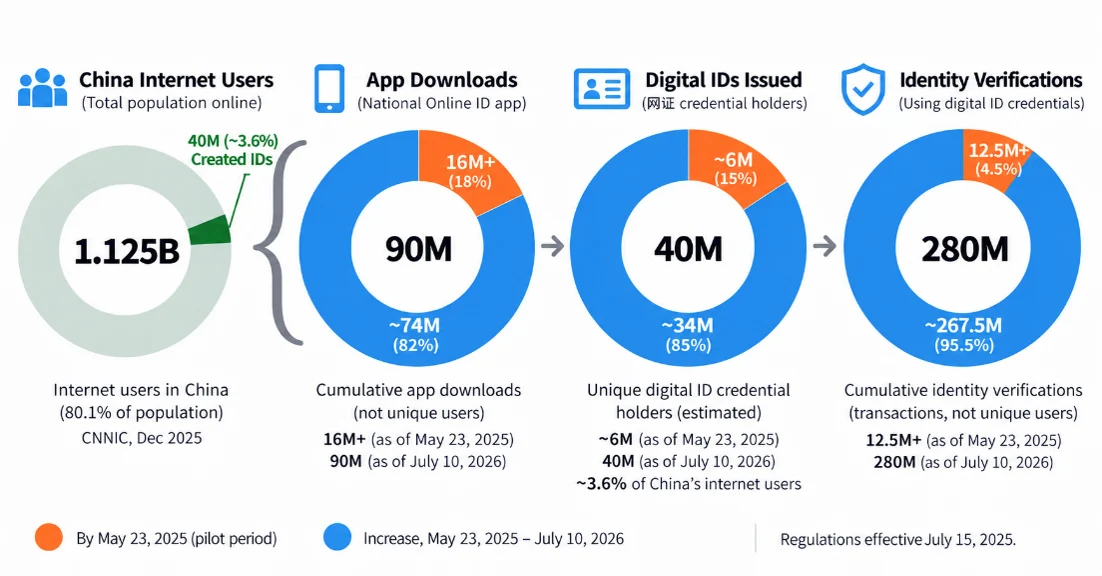
- Real-Name Verification: Article 12 mandates that providers must verify the real identity of users. Those who fail to provide authentic information must be denied service.
- AI and Monitoring Systems: Article 13 requires platforms to develop "early-warning models" and utilize artificial intelligence and big data to identify cyberviolence risks. Platforms are also tasked with labeling AI-generated or synthesized content to prevent the spread of deepfake-related abuse.
- Rapid Response Mechanisms: Large-scale platforms are required to establish "rapid response mechanisms" and provide users with easy-to-use tools for blocking harassment and collecting evidence for legal action.
- Algorithmic Restrictions: If a platform discovers a risk of cyberviolence, it is legally prohibited from using recommendation algorithms to push the offending content, effectively "shadow-banning" or restricting the reach of digital attacks.
Multi-Agency Coordination and Government Oversight
The draft law establishes a "coordinated co-governance" model. While the CAC is responsible for overall coordination, the Ministry of Public Security is tasked with investigating and correcting cyberviolence crimes. Other departments, including education, telecommunications, and culture and tourism, are assigned specific roles based on their administrative duties.
Article 23 emphasizes that the state will conduct "categoric governance" based on the scale of participation and the degree of harm. This ensures that massive "human flesh search" campaigns—where thousands of users collaborate to harass a single target—are met with more severe state intervention than smaller-scale disputes.

Protecting Vulnerable Groups and the Role of Schools
The draft law places a specific emphasis on protecting minors, the elderly, and persons with disabilities. Under Article 14, platforms are required to provide specialized "minors’ modes" that include safety alerts and parental oversight functions.
Furthermore, Article 28 mandates that educational departments incorporate anti-cyberviolence education into school curricula. Schools are required to intervene immediately if they discover a student is either a victim or a perpetrator of cyberviolence, providing psychological support and notifying guardians. Guardians themselves are held to a legal standard of oversight; those who neglect their duty to guide a minor’s internet usage can be subject to "criticism and education" or be required to undergo family education guidance.
Judicial Protections and Public Prosecution
For victims of cyberviolence, the law provides several new avenues for legal recourse. Article 37 introduces "injunctions against harm to personality rights." This allows a victim to apply to a court for an immediate order to stop ongoing or imminent cyberviolence, even before a full trial commences.
Perhaps most importantly, the law clarifies the transition from private to public prosecution. In many jurisdictions, defamation is a private matter. However, Article 42 states that where cyberviolence "seriously impacts social order and the national interests," the procuratorate (prosecutors) shall initiate public prosecution. This removes the burden of investigation from the individual victim and places it on the state, significantly increasing the likelihood of criminal convictions for high-profile offenders.
Penalties and Financial Responsibility
The draft law introduces a tiered penalty system designed to deter both individuals and corporations.
- For Platforms: Organizations that fail to fulfill their management obligations can face fines ranging from 50,000 RMB to 1,000,000 RMB. In cases of serious non-compliance or refusal to correct issues, fines can escalate to 10,000,000 RMB. Platforms may also face business suspension, revocation of licenses, and the closure of their websites or applications.
- For Individuals and MCNs: Multi-channel networks (MCNs) that organize or incite cyberviolence for "marketing hype" face severe restrictions, including being blacklisted and having their monetization suspended. Individual perpetrators can face administrative detention under public security laws or criminal charges if their actions constitute a crime.
- Civil Liability: Article 57 explicitly states that victims are entitled to demand compensation for "mental harm," a provision intended to address the psychological trauma often associated with digital harassment.
Chronology of Legislative Development
The path to the Cyberviolence Law has been marked by several key milestones:
- 2021-2022: A series of high-profile tragic incidents in China involving cyberviolence sparked nationwide outrage and calls for legislative action.
- June 2023: The Supreme People’s Court and other bodies released draft "Opinions on Punishing Cyberviolence Crimes" for public comment.
- September 2023: The finalized "Opinions" were officially implemented, providing a temporary legal basis for police and courts.
- 2024: The National People’s Congress (NPC) included the formulation of a dedicated Cyberviolence Law in its legislative agenda.
- Current Phase: The release of the "Draft for Comments" allows for a period of public and expert feedback before the law is formally enacted and given an effective date.
Analysis of Implications and Public Interest
The proposed law represents a significant shift in how digital space is policed. By codifying the responsibilities of MCNs and "Big V" accounts (influencers with large followings), the government is targeting the "business of hate"—the practice of generating traffic and revenue through manufactured outrage and targeted harassment.
However, the law also includes a crucial safeguard in Article 59, which states that the provisions do not apply to those "lawfully reporting or exposing others’ violations and crimes" or to "public opinion oversight." This clause is intended to ensure that the law is not used to suppress legitimate whistleblowing or investigative journalism.
The global community will likely watch the implementation of this law closely. As one of the most detailed pieces of legislation regarding cyberviolence in the world, it provides a template for how a state can attempt to balance the rapid flow of digital information with the fundamental right to personal dignity and safety. For platforms operating in China, the message is clear: the era of passive moderation is over, and the technical and legal cost of allowing cyberviolence to flourish will now be prohibitively high.


 Nila Kartika Wati