 Suro Senen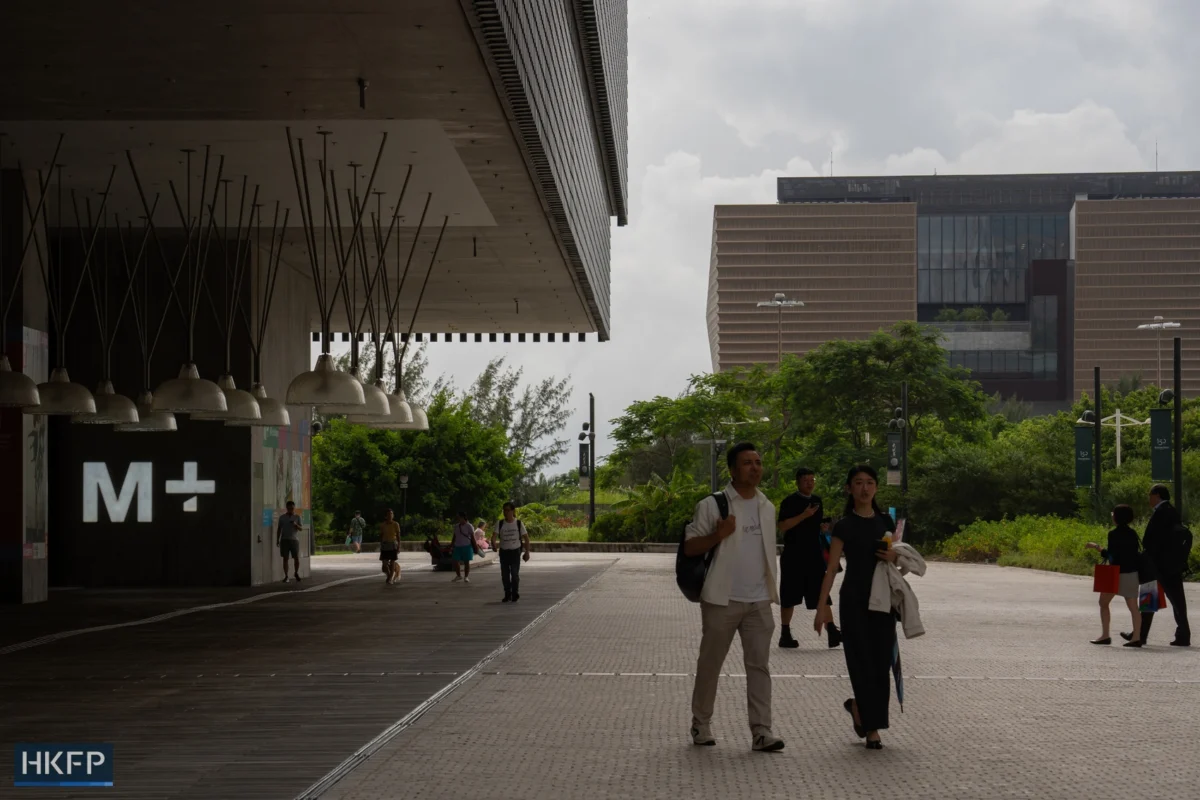
The M+ Museum, a prominent institution dedicated to visual culture, announced on Thursday evening that a scheduled performance by acclaimed Hong Kong singer-songwriter Wong Hin-yan had been cancelled. The event, part of the “M+ at Night: Sonic Phantoms” series, was set to take place on Friday, September 4, 2026, with Wong scheduled to perform alongside renowned jazz double bassist Nelson Fung. The abrupt cancellation, occurring just one day before the scheduled performance, has raised questions and drawn criticism from the public.
In a social media post, M+ cited a “programme change” as the reason for the cancellation, offering no further elaboration. The museum stated that two DJ sets would be performed in Wong’s place. The “M+ at Night: Sonic Phantoms” series, which spans four dates from September to December, had originally announced Wong as part of its lineup in July.
Wong himself addressed the cancellation on his Instagram account on Thursday night, stating that he would be “unable” to perform. His post, echoing the museum’s lack of detail, simply read, “It is what it is.” He expressed his gratitude to the West Kowloon Cultural District Authority, the operator of M+, for their “continued support,” and extended his apologies to fans who had anticipated his performance. Wong also reassured his followers, “I will absolutely continue to sing and write songs. Hope to see you again soon!”

This incident adds to a growing concern in Hong Kong regarding the unexplained cancellation of artistic events and venue bookings. Wong Hin-yan, a respected figure in the local music scene, has a history of engagement with social and political issues. According to an Infrasonica profile, he was part of the “post-80s” generation of activists who opposed the demolition of historic landmarks like Queen’s Pier and the clock tower in 2006. He has also participated in protests against the high-speed rail link to mainland China and performed at solidarity concerts for jailed activists in 2017, demonstrating a consistent commitment to civic engagement.
Wong’s artistic achievements are also notable. In 2022, he received accolades from both Taiwan’s prestigious Golden Horse Awards and the Hong Kong Film Awards for his score for the film The Narrow Road. His multifaceted talent and established reputation make the last-minute cancellation of his performance at a major cultural institution like M+ particularly noteworthy.
A Pattern of Unexplained Cancellations
The cancellation of Wong Hin-yan’s performance is not an isolated incident. In recent years, Hong Kong has witnessed a series of similar events where artists and organizers have faced abrupt cancellations, often with vague justifications. This trend has led to growing unease among artists, cultural practitioners, and the public about the freedom of expression and artistic space in the city.

Last year, a concert by Taiwanese singer Anpu was cancelled in Hong Kong, with organizers citing “irresistible force.” Earlier, singer Pong Nan’s concert, scheduled for January 2025, was axed due to a venue cancellation approximately one month before the show. These instances, coupled with the recent cancellation of Wong’s performance, have amplified concerns about potential external pressures influencing cultural programming.
The phrase “force majeure,” or “irresistible force,” has become increasingly common in these cancellations. While legally defined as an unforeseeable event beyond the control of parties involved, its frequent invocation in Hong Kong has led to it being widely understood as a euphemism for political pressure or censorship. This interpretation stems from the city’s evolving socio-political landscape, particularly following the imposition of the National Security Law in 2020.
Public Reaction and Official Response
The announcement of Wong Hin-yan’s cancellation on M+’s social media platform elicited a swift and critical response from some attendees. Under the museum’s post, one user expressed their disappointment in Chinese, stating, “I only wanted to come because of Wong Hin-yan and Nelson Fung. This ‘programme change’ one day before the show… is either a result of a very strong irresistible force or a scam by your team.” This sentiment reflects a broader public frustration with the lack of transparency and the seemingly arbitrary nature of these cancellations.

M+ later issued an apology in a follow-up comment on Friday, acknowledging the abrupt nature of the change and offering refunds to ticket holders who no longer wished to attend the event. While this gesture addresses immediate logistical concerns for ticketholders, it does little to clarify the underlying reasons for the cancellation, further fueling speculation.
Hong Kong Free Press (HKFP) has reached out to the West Kowloon Cultural District Authority for comment. As of the time of reporting, a comprehensive explanation for the cancellation remains absent.
Background of the “M+ at Night” Series and Wong Hin-yan
The “M+ at Night: Sonic Phantoms” series is designed to explore the intersection of music and visual culture, offering a platform for diverse artists to engage with the museum’s collections and themes. Wong Hin-yan’s involvement was anticipated as a significant contribution, given his reputation for innovative musical compositions and his thematic explorations that often touch upon societal issues.

Wong’s artistic trajectory has been marked by a deep connection to Hong Kong’s cultural and social fabric. His early activism, as documented, indicates a willingness to engage with public discourse and express his views through various means, including his art. His success in film scoring, recognized by major awards, underscores his significant talent and broad appeal. The cancellation of his performance at M+, a venue that aims to be a beacon of contemporary art and culture, raises pertinent questions about the boundaries and operational constraints within Hong Kong’s cultural institutions.
Broader Implications for Hong Kong’s Cultural Landscape
The repeated instances of unexplained cancellations of artistic events in Hong Kong have significant implications for the city’s reputation as a vibrant international hub for arts and culture. Such incidents can deter international artists and organizations from booking venues or staging performances, fearing potential disruptions and an uncertain operating environment. This can lead to a chilling effect on creative expression, potentially limiting the diversity and boldness of artistic offerings.
For local artists, particularly those with a history of civic engagement or whose work touches on sensitive themes, these cancellations can create significant professional and personal challenges. It raises concerns about self-censorship and the ability to freely pursue their artistic vision without fear of repercussions. The reliance on vague justifications like “programme change” or “irresistible force” creates an atmosphere of ambiguity and mistrust, making it difficult for artists to navigate the local arts scene.

The trend also impacts the audience, who are often left disappointed and with a sense of unease about the motivations behind these cancellations. The ability of cultural institutions to provide a consistent and transparent platform for artistic expression is crucial for fostering a healthy and dynamic cultural ecosystem.
As Hong Kong continues to navigate its evolving identity, the consistent pattern of mysteriously axed venue bookings and performance cancellations warrants closer scrutiny. The lack of clear explanations not only erodes public trust but also poses a tangible threat to the city’s status as a global center for creativity and free expression. The case of Wong Hin-yan’s cancelled performance at M+ serves as another stark reminder of the complex challenges facing the arts and cultural sector in contemporary Hong Kong. The demand for transparency and clear communication from cultural institutions is more critical than ever to ensure the continued vitality and integrity of the city’s vibrant artistic landscape.

 Nana Wu
 Basiran