Asep Darmawan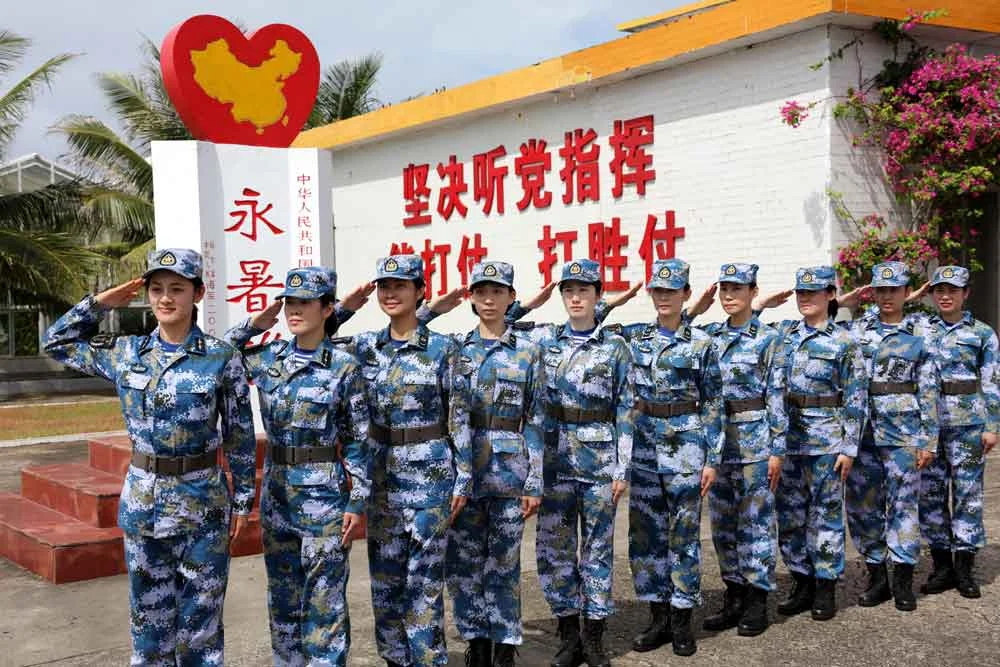
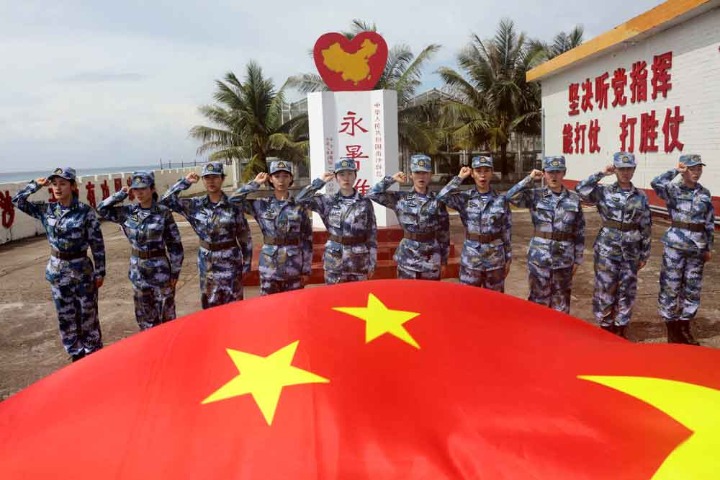
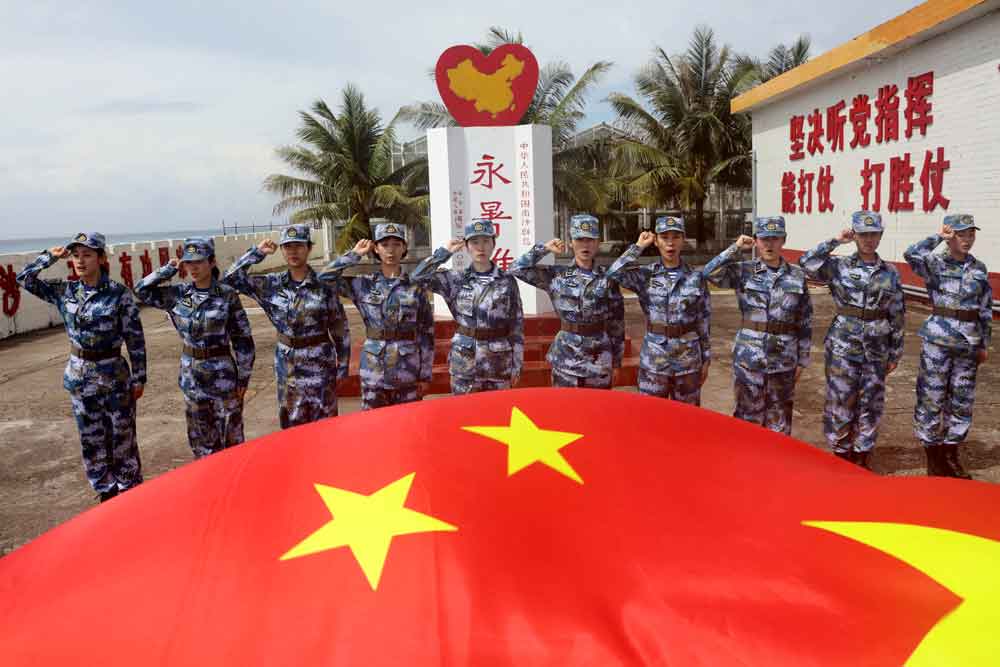
The People’s Liberation Army (PLA) Navy announced on Monday, December 11, 2017, the deployment of 10 female service members to the garrison guarding the Nansha Islands in the South China Sea, a move that represents the first time women have been permanently stationed in China’s southernmost territories. This landmark assignment saw the female contingent formally commence their duties on Yongshu Reef, also known internationally as Fiery Cross Reef, on the same day. The deployment underscores a continuing evolution in the PLA’s operational strategy and personnel management, particularly in strategically vital and remote outposts.
A New Chapter in Garrison Life: The Female Contingent’s Roles
The newly deployed group comprises officers and sergeants, all holding university diplomas, with an average age of 23. Their assignments span a diverse array of critical functions essential for the operational readiness and daily functioning of the island garrison. These roles include staff coordination, communications, and medical services, highlighting the comprehensive nature of their integration into the existing military structure. This strategic placement in varied non-combat roles suggests a deliberate effort to enhance the overall capability and sustainability of the remote outpost, leveraging specialized skills beyond traditional combat functions.
Zhang Jiahong, the political commissar of the PLA Nansha Islands Garrison, emphasized the importance of maintaining the well-being of the deployed personnel. He was quoted in the official news release stating that these female members would be regularly rotated back to the mainland every few months for rest periods, a measure specifically designed to ensure their health and mitigate the challenges associated with prolonged deployment in a remote and isolated environment. This policy reflects an acknowledgment of the unique demands placed upon service members stationed in such locations and a commitment to their welfare.
One of the newly stationed service members, Zhou Yaling, offered a personal perspective on their new environment, remarking on the unexpected development and amenities of the Nansha Islands. She was quoted as saying, "Nansha is more beautiful than what they had imagined. There are airports, harbors, streets, hospitals and sporting grounds. All of them make the islands like a lovely city on the sea." This description paints a vivid picture of the significant infrastructure development undertaken by China on these contested features, presenting them not merely as military outposts but as habitable and functional communities capable of supporting long-term human presence. Her statement inadvertently serves to highlight the extensive transformation of these once-barren reefs into formidable artificial islands equipped with substantial civilian and military facilities.
Prior to this deployment, female PLA members had indeed visited and performed duties on the Nansha Islands, but these engagements were limited to short-term missions. During such assignments, these women remained under the direct command of their sending units on the mainland, rather than being permanently integrated into the island garrison’s command structure. The 2017 deployment, therefore, marks a distinct shift, signaling a move towards sustained female presence and their full integration into the local command and operational frameworks of the Nansha Islands garrison.
The Strategic Heart of the South China Sea: Nansha Islands Context
The Nansha Islands, internationally known as the Spratly Islands, are an archipelago of more than 100 small islands, islets, reefs, and atolls located in the heart of the South China Sea. This region holds immense geographical and geopolitical significance. Strategically positioned along major international shipping lanes, through which an estimated one-third of global maritime trade passes annually, the islands are also believed to sit atop vast reserves of oil and natural gas, in addition to being rich fishing grounds. The strategic importance of the area has led to complex and overlapping territorial claims by several nations: China, Vietnam, the Philippines, Malaysia, Brunei, and Taiwan.
China’s claim over the Nansha Islands, and indeed much of the South China Sea, is historically rooted in what it refers to as the "nine-dash line," a demarcation that encompasses approximately 90% of the sea. This claim is asserted based on historical usage and discovery, a position that is largely disputed by other claimant states and much of the international community, particularly in light of the United Nations Convention on the Law of the Sea (UNCLOS). The ongoing disputes have led to a militarization of certain features in the Spratlys, with various claimants maintaining garrisons and facilities on the islands and reefs they occupy.
Yongshu Reef: A Fortress Transformed
Yongshu Reef, the specific location of the female deployment, has been at the forefront of China’s artificial island building program. Prior to extensive reclamation efforts that began in earnest around 2014, Yongshu Reef was primarily a submerged reef with only a small Chinese outpost. However, through massive dredging and construction, China transformed it into a significant artificial island covering an area of approximately 2.8 square kilometers. This transformation has included the construction of a 3,125-meter runway capable of accommodating military transport and surveillance aircraft, a deep-water port suitable for naval vessels, radar installations, hardened aircraft shelters, missile emplacements, and extensive support facilities.
The facilities described by Zhou Yaling, such as airports, harbors, streets, hospitals, and sporting grounds, are tangible evidence of this massive infrastructure development. These amenities not only serve military personnel but also support potential civilian functions, reinforcing China’s narrative of exercising administrative control and providing public goods in the area. The sheer scale of development on Yongshu Reef, along with others like Mischief Reef and Subi Reef, demonstrates China’s long-term commitment to solidifying its presence and control over these disputed territories, providing a robust logistical and operational hub in the central South China Sea.
A History of Presence: Evolving Roles in the PLA
The deployment of female service members to Nansha Islands is part of a broader trend of gender integration and modernization within the People’s Liberation Army. Historically, women have served in the PLA since its inception, primarily in support roles such as medical, communications, and administrative tasks. However, in recent decades, their roles have expanded significantly, with women now serving in combat units, flying fighter jets, operating naval vessels, and participating in special forces operations. This gradual integration reflects not only a shift in societal norms within China but also a strategic imperative for the PLA to draw from a wider talent pool and enhance its overall capabilities by diversifying its human resources.
The timeline of China’s presence in the South China Sea is marked by a gradual but assertive expansion. From initial occupation of certain features in the 1980s and 1990s, China significantly ramped up its reclamation activities in the 2010s, transforming numerous reefs into artificial islands. These constructions have been accompanied by the deployment of military assets and personnel, steadily increasing the PLA’s operational reach and control in the region. The previous short-term missions by female PLA members to Nansha Islands were precursors to this more permanent deployment, indicating a phased approach to fully integrating all segments of its armed forces into these forward operating bases.
Implications of the Deployment: Reinforcing Claims and Modernizing Forces
The deployment of female personnel to the Nansha Islands carries multifaceted implications, both geopolitical and internal to the PLA.
Geopolitical Signal: From a geopolitical perspective, this deployment serves as a powerful signal of China’s unwavering resolve to assert and normalize its sovereignty claims over the Nansha Islands. By integrating women into the permanent garrison, China reinforces the notion that these artificial islands are not merely temporary military outposts but rather integral, habitable parts of its national territory, capable of sustaining diverse populations. This move contributes to the "civilianization" narrative, even if the primary purpose remains military, thereby further legitimizing China’s long-term presence in the eyes of its domestic audience and, to a degree, attempting to soften international perceptions of militarization. Other claimant states and international observers are likely to interpret this as another step in China’s incremental strategy to solidify its control, potentially increasing regional tensions and complicating future diplomatic resolutions.
Military Modernization: Internally, the deployment reflects the PLA’s continued commitment to military modernization and gender integration. It demonstrates a progressive approach to personnel management, recognizing the valuable contributions women can make in various operational capacities, particularly in roles requiring specialized skills in communications, healthcare, and administration. By deploying highly educated female officers and sergeants, the PLA highlights its emphasis on intelligence, technical proficiency, and a comprehensive approach to garrison management, moving beyond purely combat-focused roles. This also aligns with global trends in military forces worldwide, where women are increasingly taking on broader responsibilities.
Logistical & Operational Enhancement: The presence of female staff in roles such as medical and communications enhances the self-sufficiency and resilience of the Nansha garrisons. A diverse skill set within the garrison reduces reliance on external support for routine operations and emergencies, particularly in such remote locations. The systematic rotation policy for health and well-being also suggests a sophisticated approach to long-term personnel management, crucial for sustaining effective operations on isolated outposts.
Regional Dynamics: The deployment will undoubtedly be scrutinized by neighboring countries and major powers like the United States. While not a direct military escalation, it adds another layer to China’s assertion of "indisputable sovereignty" in the South China Sea. It may provoke further concerns regarding the militarization of the region and the implications for freedom of navigation and overflight, especially given the dual-use nature of the facilities on Yongshu Reef.
Living and Serving in the Remote Outpost
Life on the Nansha Islands, even with modern amenities, presents unique challenges due to their remote and isolated nature. The description by Zhou Yaling of a "lovely city on the sea" with airports, harbors, streets, hospitals, and sporting grounds indicates a significant investment in creating a livable environment. This infrastructure is vital not only for operational efficiency but also for the morale and psychological well-being of the personnel stationed there for extended periods. Access to medical care, recreational facilities, and reliable communication links with the mainland are crucial for combating the stresses of isolation and the harsh tropical climate.
The emphasis on regular rotations back to the mainland for rest underscores the recognition by the PLA command of these inherent challenges. Such policies are essential for mitigating burnout, ensuring physical and mental health, and maintaining high levels of operational readiness for service members in sensitive and demanding environments. The ability to provide a relatively comfortable and fully functional living environment, as described, is a testament to the extensive resources China has committed to these artificial islands, transforming them from rudimentary outposts into sophisticated and sustainable military-civilian complexes.
Looking Ahead: The Future of Gender Integration and Regional Stability
The deployment of female service members to the Nansha Islands marks a significant step in the ongoing evolution of the People’s Liberation Army and China’s strategy in the South China Sea. For the PLA, it signifies a continued commitment to modernizing its forces, diversifying its personnel, and expanding the roles available to women across all branches. This trend is likely to continue, with women increasingly participating in more diverse and demanding roles within the Chinese military.
In the broader context of regional stability, this deployment reinforces China’s enduring presence and administrative control over its artificial islands in the Nansha group. It underscores the long-term nature of China’s ambitions in the South China Sea and its efforts to consolidate its claims through physical presence and the development of robust infrastructure. As China’s military power continues to grow, and its assertiveness in the South China Sea remains a defining feature of its foreign policy, deployments such as this will continue to be closely watched by international observers and will remain a key element in the complex geopolitical landscape of the Indo-Pacific region. The full implications of these developments for international law, regional security, and the balance of power will continue to unfold in the years to come.


 Sagoh
Sagoh
 Asro
Asro