Sagoh
Sagoh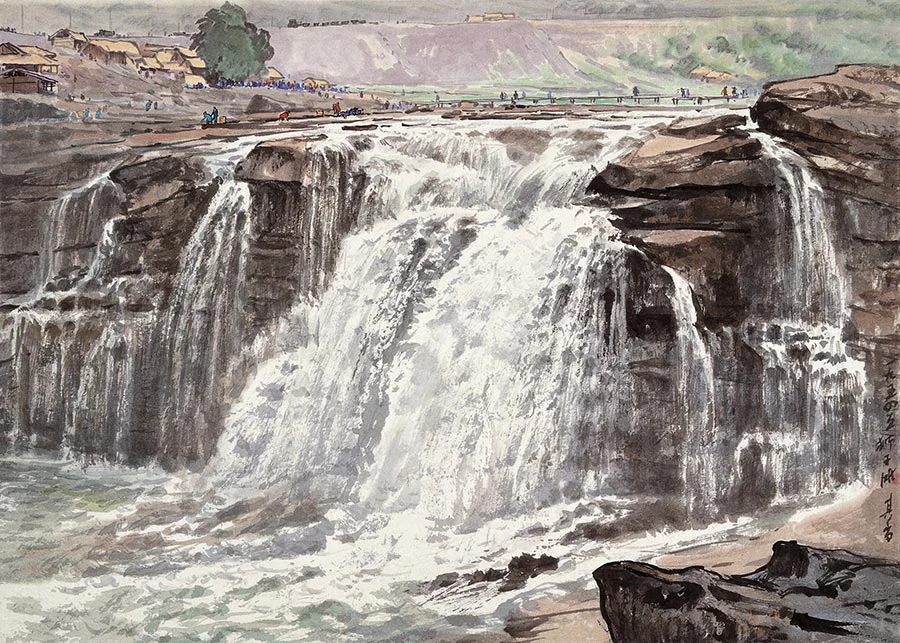
The National Art Museum of China (NAMOC) in Beijing has recently become the custodian of a significant artistic legacy with the generous donation of 71 paintings by the late Zong Qixiang (1917-1999), a revered painter and influential educator. This substantial contribution, made by his family, represents the second major gift of Zong’s works to the esteemed institution, following a remarkable donation of 36 ink-brush paintings and watercolors in 2005. The recent acquisition underscores the enduring importance of Zong Qixiang’s artistic contributions and his profound impact on Chinese art education.
A curated selection of these newly acquired masterpieces, alongside works from previous donations, is currently captivating audiences at NAMOC in an exhibition titled Born to Painting. This evocative exhibition serves as a poignant tribute to Zong Qixiang, coinciding with the centennial anniversary of his birth, a milestone that invites a deeper appreciation of his prolific career and artistic philosophy. The display offers a comprehensive glimpse into the evolution of his style and the thematic preoccupations that defined his artistic journey.
A Legacy Unveiled: The Significance of the Donation
The donation of 71 paintings by Zong Qixiang’s family to NAMOC is more than just an addition to a museum’s collection; it is a profound act of cultural preservation and a testament to the family’s commitment to sharing Zong’s artistic vision with the public. The sheer volume and quality of the donated works ensure that future generations will have ample opportunity to study and be inspired by his oeuvre. This latest contribution significantly enhances NAMOC’s holdings of Zong’s art, solidifying its position as the primary repository for his most important creations.
![Zong Qixiang's family donates 71 paintings to NAMOC[1]- Chinadaily.com.cn](http://www.chinadaily.com.cn/culture/art/tplimages/99330.files/f_art.gif)
The previous donation in 2005, comprising 36 ink-brush paintings and watercolors, already provided a robust foundation for understanding Zong’s artistic development. This new influx of 71 pieces, encompassing a broader range of his stylistic explorations and thematic interests, offers a more complete and nuanced perspective on his artistic achievements. The family’s continued generosity highlights their deep understanding of the public’s right to access and appreciate significant cultural heritage.
Born to Painting: An Exhibition Celebrating a Centennial
The exhibition Born to Painting is not merely a showcase of donated art; it is a carefully orchestrated narrative designed to illuminate Zong Qixiang’s life and artistic trajectory. The exhibition title itself speaks to a profound, innate calling, suggesting that painting was not just a profession for Zong, but a fundamental aspect of his being. This theme resonates throughout the displayed works, which collectively narrate a story of dedication, innovation, and an unwavering passion for artistic expression.
The exhibition prominently features Zong’s iconic ink-brush series depicting Chongqing’s nocturnal cityscape. These powerful works were born out of a period of profound personal and national upheaval. Approximately 78 years ago, during the arduous War of Resistance Against Japanese Aggressions (1931-1945), Zong sought refuge in Chongqing. It was within this wartime sanctuary that he began to translate the city’s vibrant, yet often obscured, night life onto his canvases. His innovative approach to capturing the essence of darkness and light revolutionized traditional ink-brush techniques.
Artistic Innovation: Mastering the Nightscape
Zong Qixiang’s depiction of Chongqing’s night view is a masterclass in artistic innovation, particularly in his masterful manipulation of ink and his sophisticated use of the traditional Chinese painting technique known as liubai, or "leaving blanks." In his pursuit of capturing the elusive luminosity of the night, Zong employed varying shades of ink with remarkable precision. This subtle gradation allowed him to create a sense of depth and atmosphere, imbuing the darkness with life and texture.
![Zong Qixiang's family donates 71 paintings to NAMOC[1]- Chinadaily.com.cn](http://www.chinadaily.com.cn/culture/art/tplimages/99330.files/w_art.gif)
The liubai technique, often misunderstood as mere emptiness, was wielded by Zong as a dynamic element to convey graduating levels of brightness within the inky expanse of night. This deliberate use of negative space was instrumental in rendering the twinkling lights of Chongqing, which seemed to pierce through the darkness. He meticulously depicted the layered architecture clinging to the city’s mountainous terrain, the rugged, winding paths that crisscrossed the slopes, and the bustling, albeit chaotic, streets below. His canvases breathed with the energy of the city, transforming a potentially somber subject into a vibrant testament to resilience and human endeavor.
This innovative approach to ink wash painting pushed the boundaries of the medium, demonstrating Zong’s ability to imbue traditional techniques with contemporary sensibility and personal vision. His exploration of the urban nightscape was not just an aesthetic pursuit but also a reflection of the times, capturing the spirit of a city that, despite the ravages of war, pulsed with life and determination.
A Deep Connection to Nature and a Philosophy of Independence
Beyond his urban nocturnes, Zong Qixiang’s artistic soul was deeply intertwined with the natural world. His lifelong devotion to nature is palpable in the evocative landscapes and botanical studies that form a significant part of his oeuvre. The exhibition likely showcases this profound connection, where the subtle nuances of natural light, the textures of earth and flora, and the vastness of natural vistas are rendered with sensitivity and skill.
Zong’s commitment to nature was not merely observational; it was philosophical. He believed that a true artist must cultivate an independent spirit and a critical eye. His famous admonition to his students at the prestigious Central Academy of Fine Arts – "If you see the world from the perspective of other people, without the critical thinking of yourself, you will end up being nobody" – encapsulates his pedagogical philosophy and his personal artistic ethos. This statement emphasizes the importance of originality, self-reflection, and the courage to forge one’s own artistic path, free from slavish imitation.
![Zong Qixiang's family donates 71 paintings to NAMOC[1]- Chinadaily.com.cn](http://www.chinadaily.com.cn/culture/art/tplimages/99330.files/in_art.gif)
This philosophy undoubtedly informed his artistic practice, encouraging him to experiment, to challenge conventions, and to imbue his work with his unique perspective. It is a guiding principle that continues to resonate with artists and art students today, underscoring the enduring relevance of Zong Qixiang’s legacy beyond his technical prowess.
Timeline of Zong Qixiang’s Artistic Journey and NAMOC’s Engagement
The life and career of Zong Qixiang span a significant period of modern Chinese history, marked by both immense challenges and remarkable artistic development. Understanding this chronology provides crucial context for appreciating the depth and breadth of his contributions.
- 1917: Zong Qixiang is born, marking the beginning of a life that would profoundly shape Chinese art.
- 1930s-1940s (War of Resistance Against Japanese Aggressions): Zong experiences the turmoil of war, seeking refuge in Chongqing. This period proves to be a crucible for his artistic innovation, particularly his exploration of the city’s nightscapes. His early experiments with ink wash painting during this era lay the groundwork for his later celebrated works.
- Post-War Period and Establishment of the People’s Republic of China: Zong continues his artistic career, likely engaging with the evolving artistic landscape and educational reforms of the new China. His dedication to teaching begins to take shape during this era.
- Mid-20th Century: Zong Qixiang becomes an educator at the Central Academy of Fine Arts, where he imparts his artistic knowledge and philosophy to a generation of emerging artists. His emphasis on critical thinking and independent observation profoundly influences his students.
- Late 20th Century: Zong’s artistic output continues, solidifying his reputation as a master of ink wash painting, particularly in landscape and figurative art. His works gain national and international recognition.
- 1999: Zong Qixiang passes away, leaving behind a rich and diverse artistic legacy.
- 2005: Zong Qixiang’s family makes their first significant donation of 36 ink-brush paintings and watercolors to the National Art Museum of China. This event marks the beginning of NAMOC’s substantial collection of his work and raises public awareness of his artistic importance.
- 2017: To commemorate the centennial anniversary of Zong Qixiang’s birth, his family makes a second, even larger, donation of 71 paintings to NAMOC. This event is celebrated with the exhibition Born to Painting, which showcases a selection of these invaluable works.
This chronological overview highlights a consistent dedication to art and education throughout Zong’s life, and NAMOC’s ongoing engagement with his legacy, culminating in the significant acquisition and exhibition of his works.
Supporting Data and Art Historical Context
The National Art Museum of China, established in 1963, is a national-level art museum dedicated to collecting, researching, exhibiting, and preserving modern and contemporary Chinese art. Its collection boasts over 100,000 works, making it one of the most comprehensive repositories of Chinese art in the world. The inclusion of Zong Qixiang’s extensive body of work significantly enriches this collection, particularly in the realm of 20th-century ink wash painting and art education.
![Zong Qixiang's family donates 71 paintings to NAMOC[1]- Chinadaily.com.cn](http://www.chinadaily.com.cn/culture/art/tplimages/99330.files/more_art.gif)
Zong Qixiang’s artistic style is often situated within the broader context of Modern Chinese Ink Wash Painting. This movement, which gained momentum in the early 20th century, sought to revitalize traditional ink painting by incorporating Western artistic principles and adapting to the changing social and political landscape of China. Artists like Zong Qixiang were instrumental in this evolution, demonstrating how traditional techniques could be employed to express contemporary themes and modern sensibilities. His innovative approach to light and shadow, particularly in his nocturnal scenes, can be seen as a departure from purely traditional landscape aesthetics, signaling a move towards greater realism and psychological depth.
The liubai technique, while ancient, found new applications in the hands of artists like Zong. Historically, liubai was often used to depict mist, water, or empty spaces in landscapes. Zong’s ingenious application of this technique to render the complex interplay of light and darkness in an urban nightscape demonstrated a profound understanding of its potential beyond its traditional uses. This innovation contributed to his unique artistic language and cemented his reputation as a visionary artist.
Official Responses and Artistic Community Reactions (Inferred)
While direct quotes from NAMOC officials or members of the art community were not provided in the original text, it is reasonable to infer enthusiastic responses to such a significant donation.
NAMOC’s Perspective (Inferred): Officials at NAMOC would undoubtedly express profound gratitude for the family’s generosity. The donation of 71 significant works is a major event for any museum, especially for an institution dedicated to preserving and showcasing Chinese art. The acquisition would be seen as a crucial step in enhancing the museum’s collection of 20th-century Chinese art, ensuring that Zong Qixiang’s contributions are preserved for posterity and made accessible to a broad audience. The exhibition Born to Painting would be a highlight of NAMOC’s annual programming, attracting significant scholarly and public interest.
![Zong Qixiang's family donates 71 paintings to NAMOC[1]- Chinadaily.com.cn](http://www.chinadaily.com.cn/culture/art/tplimages/99330.files/app.gif)
Artistic Community and Scholars (Inferred): The broader art community, including art historians, critics, and fellow artists, would likely view this donation and exhibition with great enthusiasm. Zong Qixiang is a recognized master, and his works are highly valued for their artistic merit and historical significance. The exhibition would provide an invaluable opportunity for scholars to conduct in-depth research, for students to learn from a master’s oeuvre, and for the public to gain a deeper appreciation for his artistic achievements. The emphasis on his pedagogical philosophy would also be a point of interest, highlighting his role as an influential mentor.
Broader Impact and Implications
The donation of Zong Qixiang’s paintings and the accompanying exhibition carry significant implications for the art world and for Chinese cultural heritage:
- Preservation of Artistic Heritage: The donation ensures the long-term preservation and accessibility of Zong Qixiang’s invaluable artworks. NAMOC’s professional curation and conservation efforts will safeguard these pieces for future generations.
- Enrichment of National Collections: The addition of 71 significant works substantially enhances the National Art Museum of China’s collection, strengthening its representation of 20th-century Chinese art and its educational mission.
- Promotion of Artistic Education: The exhibition serves as a powerful educational tool, offering insights into Zong Qixiang’s artistic techniques, his philosophical approach to art, and his contributions to art education. His emphasis on independent thinking can inspire contemporary art students.
- Celebration of Cultural Milestones: The centennial anniversary of Zong Qixiang’s birth provides a timely occasion to reflect on his life’s work and his enduring legacy within the context of Chinese art history.
- Inspiration for Future Generations: The public display of Zong’s masterpieces, particularly his innovative depictions of Chongqing’s nightscape and his profound connection to nature, serves as an inspiration for emerging artists and art enthusiasts, encouraging them to explore new artistic frontiers while respecting artistic traditions.
- Strengthening Cultural Diplomacy: The exhibition and donation contribute to China’s cultural soft power, showcasing its rich artistic heritage and the contributions of its influential artists to the global art discourse.
In conclusion, the donation of 71 paintings by Zong Qixiang’s family to the National Art Museum of China, coinciding with the centennial of his birth, is a landmark event. The exhibition Born to Painting offers a compelling narrative of an artist who masterfully blended tradition with innovation, deeply connected with nature, and championed independent thought. This significant contribution ensures that Zong Qixiang’s artistic legacy will continue to inform, inspire, and captivate audiences for years to come.

 Asep Darmawan
 Rifan Muazin