Nana Muazin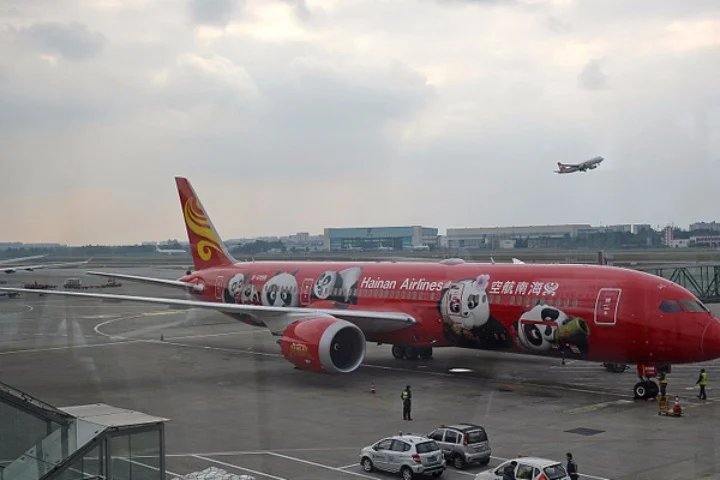
Hainan Airlines, China’s largest private air carrier, is aggressively pursuing an expansion of its direct flight services between China and the United States, driven by a surge in Chinese outbound tourism and a vibrant market demand. The airline has articulated a clear strategy to bolster its presence across North America, with a particular focus on securing crucial flying rights for direct routes connecting Shanghai, a pivotal global financial and commercial hub, with major American cities, especially those already served by direct flights from Beijing. This strategic thrust aims to deepen its market penetration and capitalize on the growing appetite for direct, convenient trans-Pacific travel.
Expanding Horizons: The China-US Aviation Landscape
The burgeoning Chinese middle class and increasing disposable incomes have fueled an unprecedented boom in international travel, with the United States consistently ranking as a top destination. In 2016, Chinese visitors to the U.S. exceeded 3 million, injecting billions of dollars into the American economy through tourism, retail, and hospitality sectors. This trend was projected to continue its upward trajectory, making the China-US aviation corridor one of the most lucrative and fiercely contested global routes. For carriers like Hainan Airlines, this presents both immense opportunity and significant competitive challenges. As a private entity operating alongside state-owned giants such as Air China, China Eastern, and China Southern, Hainan Airlines has carved out a niche by often pioneering routes from second-tier Chinese cities, strategically bypassing the saturated major hubs initially.
Pubin Liang, regional managing director of Hainan Airlines in the United States, underscored the carrier’s commitment to this critical market. "North America is one of our most important markets, and we have kept looking for potential opportunities in this market," Liang stated, emphasizing the airline’s proactive approach to identifying and serving emerging demand. The carrier’s strategy is not merely about increasing capacity but about creating a more comprehensive and accessible network for travelers on both sides of the Pacific.
Strategic Growth: Targeting Key Hubs and Secondary Cities
Hainan Airlines’ immediate ambition revolves around establishing direct links from Shanghai to key US cities. This move is strategic, as Shanghai Pudong International Airport (PVG) serves as a major international gateway and a critical business and tourism nexus. Securing these rights would allow Hainan Airlines to compete more directly with established state-owned carriers and US airlines that already operate extensive networks from Shanghai. The airline’s existing success in connecting second-tier Chinese cities directly to major US destinations provides a strong foundation for this next phase of expansion.
Illustrative of this strategy, Hainan Airlines recently launched significant direct routes, including Chongqing-New York on October 20 and Chengdu-New York on October 26. These flights marked a pivotal moment, representing the first direct air links between these rapidly developing western Chinese cities and the bustling metropolis of New York. Prior to this, Hainan Airlines had already established direct flights connecting Chongqing and Chengdu to Los Angeles, further solidifying its commitment to these growing regional markets. "The successful launch of flights between those two Chinese cities and New York has been a significant breakthrough for us, and we are looking to launch more direct flights between New York and Chinese cities in the future," Liang confirmed, signaling sustained interest in the New York market as a vital gateway.
The rationale behind targeting second-tier cities is rooted in the evolving landscape of Chinese outbound tourism. Travelers from cities like Chengdu, Chongqing, Changsha, and others increasingly prefer direct flights to minimize travel time and avoid the complexities of connecting through Beijing or Shanghai. This demand creates a fertile ground for carriers willing to invest in less traditional, but strategically important, routes.
Partnerships and Network Fortification
Beyond direct route expansion, Hainan Airlines is also focused on fortifying its network coverage within the United States through strategic partnerships. The carrier announced plans to initiate code-sharing programs with Alaska Airlines and JetBlue Airways in the upcoming year. These partnerships are crucial for extending Hainan Airlines’ reach beyond its direct flight destinations, allowing passengers to seamlessly connect to a wider array of cities across the US, particularly on the East and West Coasts. Code-sharing agreements enable airlines to sell tickets on each other’s flights, offering passengers greater convenience and a broader selection of destinations, while allowing the partnering airlines to tap into new markets without the overhead of operating new routes.
However, the path to seamless integration has not been without its challenges. Hainan Airlines previously engaged in code-sharing and connecting flight cooperation with American Airlines. This collaboration, however, encountered difficulties and subsequently weakened after Hainan Airlines launched its own direct service between Beijing and Chicago, a route also operated by American Airlines. This direct competition led to a significant impact on Hainan Airlines’ aspirations for expanding its network in the US Midwest. "This has a significant negative impact, especially on our expansion of networks in the Midwest," Liang acknowledged. "Now, we face significant challenges in growing our business in this area with Chicago as the hub." This highlights the delicate balance between direct competition and cooperative partnerships in the highly competitive aviation industry. For a foreign carrier, securing strong local partnerships is paramount for comprehensive network penetration and passenger convenience.

Financial Performance and Market Resilience
Hainan Airlines’ aggressive expansion strategy has translated into robust financial performance in its trans-Pacific operations. Between January and September of the current year, the airline reported sales revenue of 2.59 billion yuan (approximately $390 million) from its China-US flights. This figure represents a commendable 19 percent year-on-year increase, underscoring the strong market demand and the effectiveness of the airline’s route development. Furthermore, the average passenger load ratio on these flights consistently exceeded 80 percent, indicating high occupancy rates and efficient utilization of aircraft capacity.
Despite this overall success, the airline navigates the inherent seasonality of international travel. Hainan Airlines experiences outstanding sales performance during peak travel periods, notably from June to October, and during the winter holiday months of December and January. These periods align with major Chinese holidays, summer vacations, and year-end travel. Conversely, during off-peak seasons, the airline faces operational pressures common to the industry. To mitigate these challenges and stimulate demand during leaner periods, Hainan Airlines proactively adjusts its business strategies, frequently offering promotions such as package deals that bundle flight tickets with tourism destination resort tickets and hotel accommodations. This dynamic pricing and product bundling approach helps maintain healthy load factors and revenue streams throughout the year.
A Decade of Trans-Pacific Connectivity: Hainan Airlines’ Route Evolution
Hainan Airlines’ journey across the Pacific commenced nearly a decade ago, evolving into the Chinese airline operating the most direct flights between the two countries. Currently, it boasts an impressive portfolio of 12 direct routes, showcasing a steady and strategic expansion:
-
June 2008: Hainan Airlines launched its inaugural China-US direct flights connecting Beijing and Seattle. This pioneering route marked the airline’s entry into the competitive trans-Pacific market and laid the groundwork for future expansion. Seattle, home to major technology companies and a significant port city, proved to be a strategic choice for its initial foray.
-
September 2013: The airline initiated direct flights between Beijing and Chicago. This was a significant milestone, as it represented the first such route operated by a Chinese airline, challenging the dominance of US carriers on this important business and cultural corridor. Chicago’s O’Hare International Airport serves as a major hub for connections across the Midwest and beyond.
-
June 2014: Hainan Airlines launched nonstop flights between Beijing and Boston. This route provided a direct link to a major educational and biomedical research hub, catering to a substantial segment of student and academic travelers, as well as business commuters.
-
June 2015: This year saw a considerable expansion with three new direct routes: Shanghai and Seattle, complementing the Beijing-Seattle service; Beijing and San Jose, California, targeting the burgeoning Silicon Valley technology sector; and a new connection between Shanghai and Boston, further strengthening its presence on the East Coast from China’s commercial capital.
-
December 2016: Hainan Airlines inaugurated direct flights between Beijing and Las Vegas. This route was particularly noteworthy as it served as the first direct flight between the Chinese mainland and the popular entertainment and convention destination, tapping into the growing Chinese interest in leisure and luxury travel.
-
January 2017: The airline launched direct flights connecting Changsha, the capital of Hunan province in Central China, to Los Angeles. This move further exemplified its strategy of linking second-tier cities with major US gateways, acknowledging the distributed nature of demand across China.
-
October 2017: Hainan Airlines commenced direct flights between Chongqing and New York, as well as Chengdu, capital of Sichuan province, and New York. These two flights were hailed as groundbreaking, establishing the first direct air connections between New York and these two significant western Chinese cities, unlocking new travel possibilities for millions.

This chronological expansion demonstrates a methodical approach to market penetration, starting with key hubs and progressively extending to a wider network of cities based on evolving demand and strategic opportunity.
Industry Perspectives and Future Outlook
Aviation industry analysts closely monitor the dynamics of the China-US routes. Lin Zhijie, a prominent aviation industry analyst and columnist at Carnoc, a leading civil aviation website in China, offered valuable insights into the market’s current state. He noted that flights between major Chinese cities and the United States are becoming "quite saturated," indicating intense competition among carriers. This saturation is a key driver for airlines, including Hainan Airlines, to pivot towards launching direct flights between second-tier Chinese cities and the United States, despite the inherent operational cost pressures associated with establishing and maintaining such long-haul routes.
Zhijie emphasized that "there is still demand for more China-US routes," particularly from these underserved regional markets. However, he also introduced a crucial caveat, highlighting that "the possible fluctuation of Sino-US relations should also be taken into consideration." Geopolitical factors and bilateral trade relations can significantly impact travel demand, visa policies, and even aviation agreements, adding a layer of complexity and potential volatility to long-term planning for airlines operating in this corridor.
Economic and Geopolitical Implications
The aggressive expansion by carriers like Hainan Airlines has profound economic and geopolitical implications. Economically, increased direct flights facilitate greater trade, investment, and tourism, strengthening bilateral economic ties. For US cities, the direct influx of Chinese tourists and business travelers translates into boosted local economies, job creation in hospitality and related sectors, and enhanced cultural exchange. Similarly, for Chinese cities, these routes open new avenues for international engagement, fostering local economic development and elevating their global profiles.
From a geopolitical standpoint, the robust air links signify a deepening of people-to-people connections, which can serve as a bedrock for broader diplomatic relations. However, as Zhijie noted, these connections are also susceptible to geopolitical shifts. Any significant deterioration in Sino-US relations could impact travel demand, visa issuances, and regulatory frameworks, posing risks to airline operations and profitability. The long-term sustainability of these routes, therefore, hinges not only on market demand and operational efficiency but also on a stable and cooperative bilateral environment.
Challenges and Opportunities Ahead
Hainan Airlines’ ambitious plans face a multifaceted landscape of challenges and opportunities. On the opportunity front, the continued growth of China’s outbound tourism market, the increasing affluence of second-tier city populations, and the strategic advantages of point-to-point connections offer significant upside. The airline’s ability to forge strong code-sharing partnerships will be critical to leveraging these opportunities and providing comprehensive travel solutions.
However, challenges abound. Intense competition from both Chinese state-owned carriers and major US airlines on established routes demands continuous innovation in service, pricing, and product offerings. Operational costs for long-haul international flights, including fuel, crew, and maintenance, are substantial and subject to global market fluctuations. Furthermore, gaining new flying rights, particularly for coveted routes like Shanghai-US, involves complex regulatory processes and often political considerations. The experience with American Airlines underscores the potential for partnerships to turn competitive, requiring flexible and adaptable strategies.
As Hainan Airlines navigates this dynamic environment, its commitment to direct trans-Pacific connectivity positions it as a key player in shaping the future of China-US aviation. Its strategy of combining direct flights from emerging regional hubs with robust domestic US network partnerships offers a blueprint for growth, provided it can effectively manage competitive pressures and adapt to the broader geopolitical climate. The carrier’s continued investment in this vital corridor reflects a strong belief in the enduring demand for closer ties between the two largest economies in the world.


 Nila Kartika Wati
 Lina Hope