Muslim
The overarching objectives guiding China’s foreign policy in the coming years will be the cultivation of a new form of international relations and the construction of a community with a shared future for mankind, declared Foreign Minister Wang Yi. These ambitious goals, articulated during a significant symposium in Beijing on Saturday, underscore a strategic pivot in China’s engagement with the global stage, emphasizing a departure from traditional power dynamics and a commitment to collective development and multilateral cooperation.
The symposium, themed "International Developments and China’s Diplomacy in 2017," convened a distinguished assembly of diplomats and leading researchers to dissect the prevailing global landscape and China’s evolving role within it. Minister Wang’s keynote address, delivered with gravitas and strategic foresight, provided a comprehensive outline of the nation’s diplomatic agenda, directly informed by the directives set forth at the 19th National Congress of the Communist Party of China (CPC). This pivotal congress, held in October 2017, laid the groundwork for China’s domestic development trajectory and its corresponding international posture.
Strategic Imperatives for a New Era of Diplomacy
Wang Yi emphasized that China’s pursuit of a moderately prosperous society in all respects necessitates the creation of a more favorable external environment and the generation of stronger external impetus. This statement signifies a recognition that China’s domestic progress is intrinsically linked to global stability and its ability to harness international cooperation. The foreign minister’s pronouncements suggest a proactive, rather than reactive, approach to foreign affairs, seeking to shape the international order in alignment with China’s developmental aspirations and its vision of global governance.
"For China’s diplomacy in the new era, we will take a longer and broader perspective and be even more open-minded and resourceful," Wang Yi stated, signaling a commitment to strategic depth and adaptability in navigating complex geopolitical currents. This indicates a departure from a purely nationalistic or self-centered approach, embracing a more inclusive and collaborative framework for international engagement. The emphasis on being "resourceful" points to China’s readiness to employ innovative solutions and leverage its growing capabilities to address global challenges.
Navigating Pressing Global Issues: A Diplomatic Blueprint
Minister Wang’s address also delved into several critical international hotspots, offering insights into China’s principled stance and its proposed solutions.
The Korean Peninsula Nuclear Issue: A Call for Dialogue over Conflict
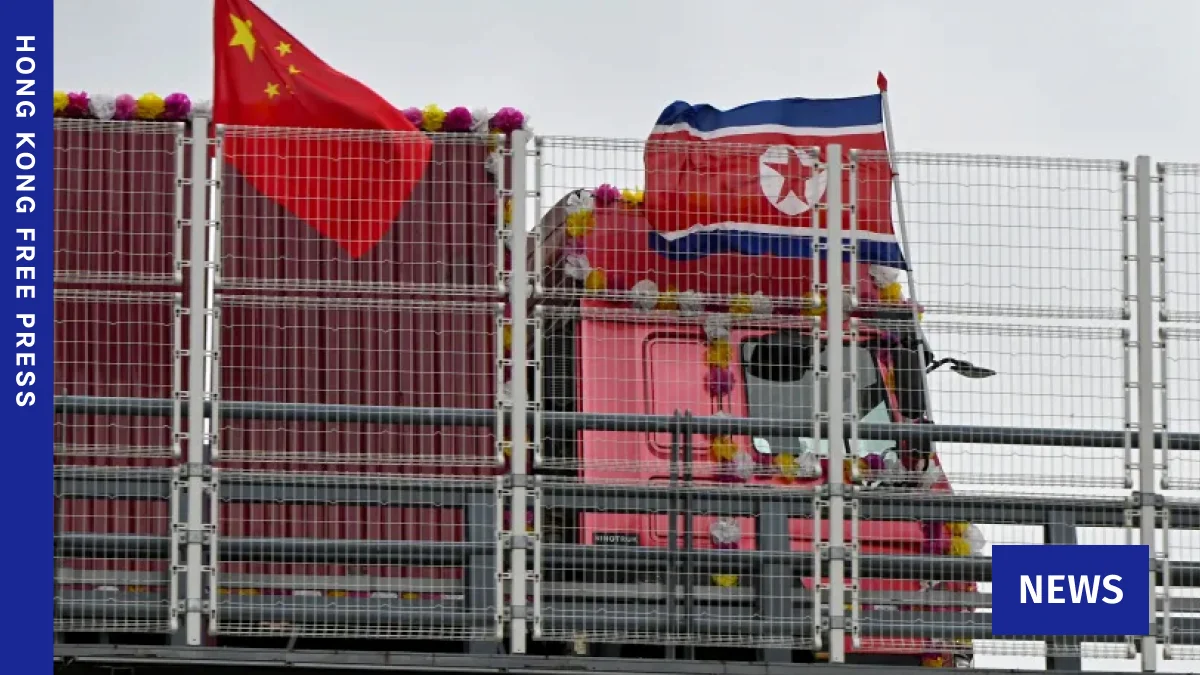
Reiterating China’s unwavering position, Wang Yi asserted that "war is by no means acceptable" in resolving the Korean Peninsula nuclear issue. He underscored the persistent viability of negotiation as the primary avenue for de-escalation and resolution. This stance reflects China’s deep-seated concern over regional stability and the catastrophic consequences of military conflict. Beijing has consistently advocated for a peaceful, diplomatic solution, emphasizing the need for all parties to exercise restraint and engage in constructive dialogue.
Wang highlighted China’s significant contributions to addressing the nuclear issue, stating, "China has put in more efforts and borne a greater cost than any other party in addressing the Korean Peninsula nuclear issue." This assertion is supported by China’s consistent implementation of United Nations Security Council resolutions, its active participation in multilateral talks, and its role as a key mediator in past negotiations. China’s economic leverage and its geographical proximity to North Korea position it as a crucial actor in any lasting resolution. The ongoing economic sanctions imposed by the UN Security Council, which China has abided by, represent a significant economic burden for the nation.
The Middle East: A Steadfast Support for Palestinian Rights
Addressing the protracted Israeli-Palestinian conflict, Wang Yi reaffirmed China’s consistent and firm support for the Palestinian people’s endeavor to restore their lawful rights. He articulated China’s vision for a two-state solution: "We support the establishment of an independent Palestinian state that enjoys full sovereignty, with East Jerusalem as its capital and based on the 1967 border." This long-held position aligns with international consensus and UN resolutions.
Furthermore, Wang stressed the imperative of determining the status of Jerusalem through dialogue and negotiation, grounded in UN resolutions. This nuanced approach acknowledges the sensitivity of the issue while advocating for a peaceful and internationally recognized resolution. China’s consistent support for the Palestinian cause, coupled with its growing influence in the region, positions it as a potential facilitator for peace talks.
Shaping Bilateral Relations: Strategic Anchors and Mutual Respect
Minister Wang also provided an overview of China’s key bilateral relationships, emphasizing the importance of strategic communication and mutual understanding.
China-US Relations: A Foundation of Mutual Respect
The foreign minister noted the productive interactions between President Xi Jinping and US President Donald Trump, characterized by three meetings and numerous communications. Wang described these engagements as providing "a strategic anchor to what is the most complicated and consequential relationship in the world." This highlights the critical importance of the Sino-American relationship for global stability and the effective management of international affairs.
"China is willing, on the basis of mutual respect, to live peacefully with the American superpower," Wang declared. He further elaborated on the need for the US to understand and accept China’s chosen path of socialism with Chinese characteristics, tailored to its unique national conditions. This statement underscores China’s assertion of its sovereign right to self-determination in its political and economic development, while simultaneously signaling a desire for peaceful coexistence and cooperation with the United States. The ongoing trade disputes and geopolitical tensions between the two nations underscore the complexity of this relationship, making such pronouncements of intent particularly significant.
China-Russia Relations: A Pillar of Global Stability
The robust relationship between China and Russia was also a focal point of Wang’s address. He highlighted the five meetings between President Xi Jinping and Russian President Vladimir Putin throughout the year, underscoring the strategic depth of their partnership. Wang characterized the China-Russia relationship as a "major cornerstone for world peace and stability, fairness and justice, and win-win cooperation." This statement positions the Sino-Russian alliance as a crucial stabilizing force in a volatile international environment, advocating for a multipolar world order based on principles of equity and mutual benefit. The growing alignment between Beijing and Moscow on various international issues, including security and economic development, reflects a shared vision for a global order less dominated by Western influence.
The Belt and Road Initiative: A Global Public Good
A significant portion of Minister Wang’s address was dedicated to the China-proposed Belt and Road Initiative (BRI). He proudly declared the BRI as having become "the most popular international public goods program." This initiative, launched in 2013, aims to enhance connectivity and cooperation across Asia, Europe, and Africa through infrastructure development and trade facilitation.
Supporting data underscores the tangible impact of the BRI. Wang revealed that Chinese businesses have invested over $50 billion and created nearly 200,000 local jobs in participating countries. This economic impact demonstrates the initiative’s potential to foster inclusive growth and create economic opportunities in developing nations. The BRI, often viewed as China’s flagship foreign policy initiative, has been met with both enthusiasm and scrutiny. While proponents highlight its potential to boost global trade and development, critics have raised concerns about debt sustainability and geopolitical implications.
Sun Zhuangzhi, secretary-general of the SCO Research Center affiliated with the Chinese Academy of Social Sciences, provided further context for the upcoming Shanghai Cooperation Organisation (SCO) Summit in Qingdao. He explained that Qingdao’s selection as host city reflects China’s advocacy of the Belt and Road Initiative, noting the city’s strategic importance with both land and maritime connections to Europe. This highlights how China is leveraging multilateral platforms to advance its strategic initiatives.
Zhou Shijian, a senior researcher on China-US trade relations at Tsinghua University, offered an analysis of the BRI’s broader implications. He posited that the initiative will promote global economic development and help balance the north-south economic gap, thereby contributing to the building of a community of shared future for mankind. This perspective aligns with China’s stated goals of fostering shared prosperity and addressing global inequalities.
Upcoming Diplomatic Engagements: Setting the Agenda for 2018
Looking ahead, Wang Yi announced key diplomatic events that will shape China’s foreign policy agenda in 2018. These include preparations for the Shanghai Cooperation Organisation Summit in Qingdao, Shandong province, in June, and the inaugural China International Import Expo in Shanghai in November.
The SCO Summit in Qingdao is expected to be a significant platform for discussing regional security, economic cooperation, and counter-terrorism efforts among member states. The International Import Expo, on the other hand, signals China’s commitment to further opening its markets and promoting imports, a move that Zhou Shijian believes will not only boost China’s economic development but also improve its relations with other countries. This initiative is seen as a reciprocal measure to the increasing trade deficits faced by some of China’s partners and a testament to its commitment to global trade liberalization.
The comprehensive outline of China’s foreign policy objectives and its strategic initiatives, as presented by Foreign Minister Wang Yi, paints a picture of a nation actively seeking to reshape the international landscape. The emphasis on a "community of shared future for mankind" and the pursuit of a "new form of international relations" suggest a long-term vision that prioritizes multilateralism, shared development, and a more equitable global order. As China continues its ascent on the world stage, its diplomatic maneuvers and the implementation of its ambitious foreign policy goals will undoubtedly be closely watched by the international community.


 Nana Wu
 Suro Senen