Reynand Wu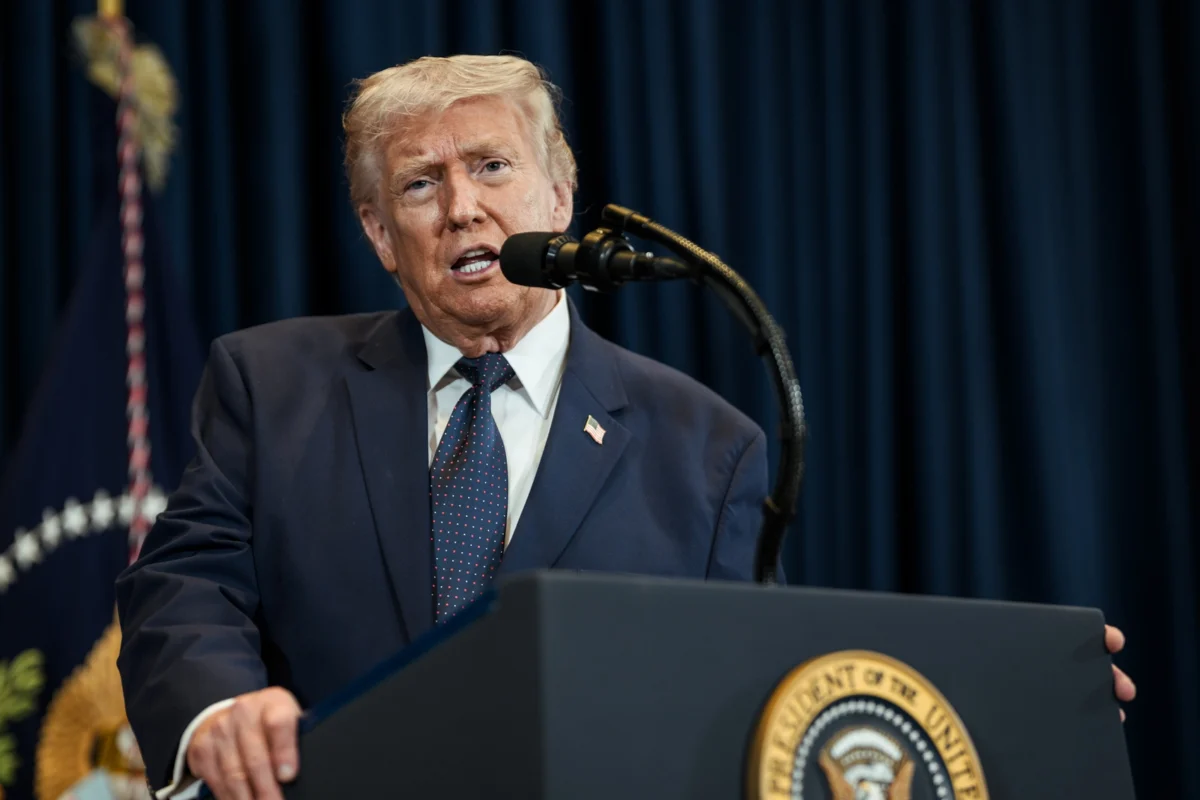
Washington, D.C. – President Donald Trump on Thursday announced the implementation of significant tariffs, reaching up to 100 percent, on imported unmanned drones and their components. This bold move, set to take effect for most items on September 3, 2026, is aimed at reducing the United States’ pronounced reliance on foreign supply chains, particularly from China, which currently dominates the global drone industry. The White House justified the decision primarily on national security grounds, emphasizing the dual-use nature of these increasingly sophisticated aerial systems.
The new tariff structure differentiates between various categories of Unmanned Aircraft Systems (UAS), the formal designation for drones. High-end industrial and commercial drones, specifically those with a takeoff weight exceeding 25 kilograms and equipped with "national security capabilities" such such as thermal cameras, advanced sensors, and specialized docking stations, will face the maximum 100 percent duty rate. Smaller, more consumer-oriented drones, often favored by hobbyists, will incur a 25 percent tariff. This tiered approach signals a targeted effort to safeguard critical infrastructure and sensitive data, while still acknowledging the broader commercial and recreational uses of drone technology.
The Rationale: National Security and Domestic Production

A White House statement accompanying the announcement underscored the administration’s commitment to bolstering domestic manufacturing capabilities. The tariffs, it stated, are designed to "encourage increased domestic production" of drones and their essential components, thereby "reducing reliance on foreign supply chains." This strategic pivot reflects a broader "America First" economic policy that has characterized the Trump administration’s approach to international trade, prioritizing national interests and economic independence.
The national security justification for these tariffs is deeply rooted in evolving geopolitical realities and technological advancements. As early as December 2025, the US Federal Communications Commission (FCC), the federal body responsible for regulating telecommunications, articulated concerns regarding foreign-made drones. The FCC argued that fostering domestic drone production would "reduce the risk of direct UAS attacks and disruptions, unauthorized surveillance, sensitive data exfiltration, and other UAS threats to the homeland." This perspective highlights the growing recognition within Washington of drones as not merely commercial tools but also potential vectors for espionage, sabotage, and military applications.
Clayton Swope, a senior fellow at the Center for Strategic and International Studies, elaborated on the tariffs’ focus, telling AFP, "The tariffs are really targeting industrial and commercial drones, and to a lesser degree smaller drones used by hobbyists." This distinction is crucial, as the larger, more sophisticated drones are often employed in critical sectors such as infrastructure inspection, public safety, energy management, and defense-related activities, making their supply chain security a paramount concern.
The Dual-Use Dilemma and Geopolitical Precedents

The inherent "dual-use" nature of drones – their capacity to serve both civilian and military functions – has become a central point of contention. The FCC’s December 2025 statement explicitly warned that drones "are inherently dual-use: they are both commercial platforms and potentially military or paramilitary sensors and weapons." This capability, the commission added, means that foreign production of drones and their components "could enable persistent surveillance, data exfiltration, and destructive operations over US territory."
Recent global conflicts, particularly the ongoing war in Ukraine, have dramatically underscored this dual-use dilemma. The conflict has showcased how even commercially available and hobbyist drones can be rapidly adapted and weaponized for frontline reconnaissance, target acquisition, and even direct attacks. This real-world application has undoubtedly intensified concerns within US national security circles regarding the provenance and security of drone technology. The ease with which inexpensive, off-the-shelf drones can be modified for military purposes has shifted the strategic calculus, making supply chain integrity a matter of urgent national defense.
China’s Dominance and Washington’s Scrutiny
At the heart of Washington’s concerns lies the overwhelming market dominance of Chinese manufacturers, most notably DJI. Founded in 2006, DJI has, according to multiple industry studies, captured more than two-thirds of the global drone market in recent years. Its sophisticated, user-friendly, and cost-effective products have made it the go-to supplier for consumers, businesses, and even government agencies worldwide, including within the United States.

However, DJI has been under Washington’s scrutiny for several years. US officials have repeatedly accused the company of supplying products used in surveillance operations against ethnic minorities in China, particularly the Uyghurs in Xinjiang. These allegations have fueled fears that DJI’s technology could be exploited for surveillance or data collection against US interests.
As a result, DJI has faced a series of restrictions. Since 2022, the company has been included on a US government list of Chinese entities deemed to have links to China’s military, subjecting it to restrictions on accessing US technology. In 2024, DJI reportedly contested its inclusion on this list, asserting that it is neither owned nor controlled by the military. Despite these denials, US policymakers remain wary. Joshua Steinman, a supply chain expert and former member of the Trump administration’s National Security Council, emphasized this point to AFP: "It is critical that America be able to produce its own unmanned capabilities without parts or even raw materials from China."
A Broader Chronology of Escalating Tech Tensions
The drone tariffs are not an isolated event but rather the latest escalation in an ongoing technology and trade dispute between the United States and China. The timeline of recent actions highlights a tit-for-tat dynamic:

- 2022: DJI is added to a US blacklist of Chinese companies with alleged military ties, restricting its access to US technology.
- December 2025: The FCC issues a strong statement advocating for domestic drone production, citing national security threats posed by foreign-made UAS.
- Late July 2026: The US government expands its blacklist of products and companies barred from import, adding humanoid and quadruped robots. This move was also justified on critical national security risks, signaling a broader strategy to address Chinese dominance in emerging robotic technologies.
- Days Prior to Drone Tariff Announcement: The US imposed fresh tariffs on China and 59 other countries, indicating a continuous and expanding application of trade protectionist measures.
- Last Week (Early August 2026): In a retaliatory move, China announced its own restrictions on drone exports to the United States and blacklisted six US companies. This action was explicitly framed as a response to US trade sanctions imposed over concerns about forced labor and national security.
- August 14, 2026: President Trump officially announces the new tariffs on drones and their components.
- September 3, 2026: The majority of the newly announced drone tariffs are slated to come into effect.
This sequence of events illustrates a deepening technological decoupling, with both superpowers increasingly using trade and export controls as tools of national security and economic competition.
Expert Analysis and Industry Impact
The imposition of these tariffs is expected to have far-reaching implications for various stakeholders. For US domestic drone manufacturers, the tariffs could provide a significant competitive advantage, shielding them from lower-cost foreign competitors and potentially stimulating investment and job creation within the country. However, building a robust domestic drone industry capable of matching the scale, cost-efficiency, and innovation of current market leaders like DJI will be a monumental challenge. The existing supply chains for many critical drone components, from microchips to specialized cameras, are deeply intertwined with Asian manufacturing hubs.
Importers, distributors, and businesses in the US that rely heavily on Chinese-made drones – ranging from agricultural firms utilizing drones for crop monitoring to construction companies surveying sites and public safety agencies deploying them for search and rescue – are likely to face increased costs. These higher expenses could be passed on to consumers or necessitate a search for more expensive, domestically produced alternatives, potentially hindering the widespread adoption and utilization of drone technology in various sectors. Hobbyists, while facing a lower 25% tariff, will still see price increases, which could dampen enthusiasm for the pastime.

Analysts suggest that while the tariffs aim to reduce reliance on China, they may also inadvertently slow down technological adoption and innovation in the US in the short term, as domestic alternatives struggle to catch up in terms of performance and price. The move also risks further fragmenting the global drone market, potentially leading to divergent technological standards and interoperability issues.
Broader Implications for US-China Relations
The drone tariffs are a clear signal of the Trump administration’s unwavering commitment to confront China on economic and national security fronts. This action further intensifies the ongoing trade war and technological rivalry, pushing the two economic giants closer to a full-scale decoupling in strategic sectors. The reciprocal blacklistings and export controls indicate a dangerous spiral where each nation’s defensive measures are perceived as aggressive acts by the other, leading to further retaliation.
Looking ahead, the long-term effectiveness of these tariffs in achieving genuine national security enhancement and fostering a self-sufficient US drone industry remains to be seen. While the intent is clear – to reduce vulnerability to foreign adversaries and stimulate domestic innovation – the execution will be complex, fraught with economic challenges, and likely to provoke continued geopolitical friction. The move sets a precedent for how the US might approach other technologically advanced sectors where China holds a dominant position, as evidenced by the recent blacklisting of humanoid and quadruped robots. The global tech landscape appears to be entering a new, more fragmented era, driven by national security imperatives and a fierce competition for technological supremacy.

 Sagoh
Sagoh
 Asro
Asro