Asep Darmawan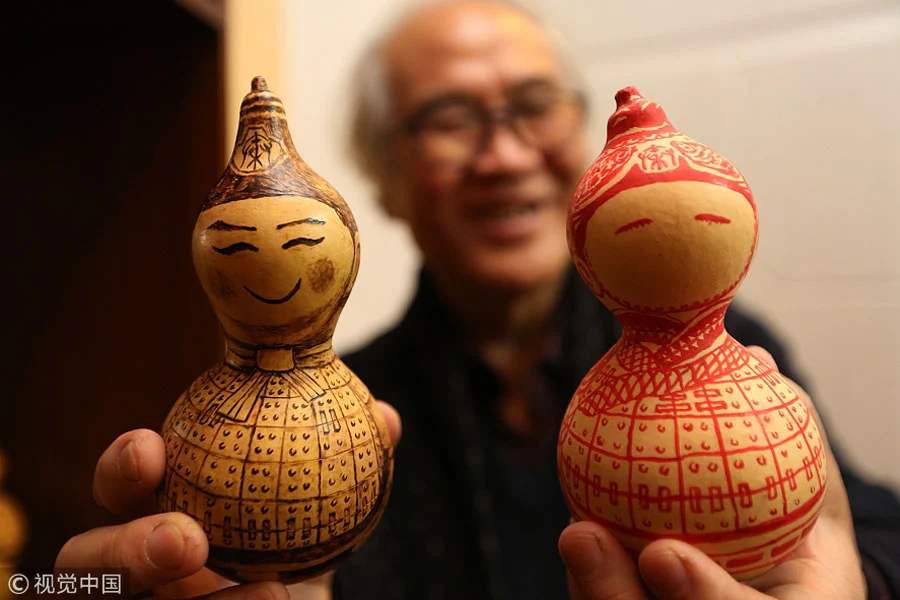
Xi’an, the venerable capital of Northwest China’s Shaanxi province, a city steeped in millennia of history and the cradle of numerous influential dynasties, is now witnessing its profound cultural legacy being reimagined and preserved through an unconventional medium: the humble calabash. Local artist Liang Ping’an has garnered attention for his intricate calabash carvings, transforming the everyday gourd into a vibrant canvas that vividly depicts the city’s iconic historical landmarks and cultural narratives. His work serves not only as a testament to his artistic skill but also as a compelling endeavor to reconnect contemporary audiences with Xi’an’s enduring heritage.
A City of Dynasties and Enduring Culture
Xi’an’s historical significance is undeniable, having served as the imperial capital for a remarkable span of Chinese history. Its illustrious past includes its role as the seat of power for the Western Zhou Dynasty (circa 11th century – 771 BC), the formidable Qin Dynasty (221 – 206 BC), the expansive Western Han Dynasty (206 BC – AD 24), and the culturally rich Tang Dynasty (618 – 907). Each of these eras left an indelible mark on the city, contributing to its architectural marvels, philosophical advancements, and artistic expressions. The discovery of the Terracotta Army, a monumental collection of life-sized clay soldiers, horses, and chariots guarding the tomb of Qin Shi Huang, the first emperor of China, stands as a global testament to the grandeur and ambition of the Qin era. Similarly, the Great Wild Goose Pagoda, a Buddhist pagoda built in the 7th century during the Tang Dynasty, symbolizes the flourishing of Buddhism and the city’s role as a vital hub on the Silk Road.
Liang Ping’an: Breathing Life into Gourds
Liang Ping’an, a resident of Xi’an, has dedicated his artistic practice to this unique form of craft. His chosen medium, the calabash, a versatile plant that can be dried and hardened for decorative purposes, offers a challenging yet rewarding surface for intricate detail. By carefully selecting and preparing these gourds, Liang embarks on a meticulous process of carving, bringing to life a diverse array of Xi’an’s cultural touchstones. His repertoire includes the majestic Great Wild Goose Pagoda, its tiered structure rendered with precision, and the stoic visages of the Terracotta Warriors, each carved figure imbued with a sense of historical gravitas.
The artist’s dedication extends beyond mere replication; he actively seeks to capture the essence and narrative behind these iconic symbols. This approach transforms his carvings from simple decorative items into educational tools, offering viewers a tangible connection to the historical and cultural fabric of Xi’an.
Artistic Philosophy: A Bridge to Tradition
For Liang Ping’an, his calabash carvings represent far more than a personal pastime or a commercial endeavor. He articulates a profound purpose behind his art: "Carving on calabashes is more than a personal hobby," he stated. "I hope people will return to traditional culture and find more inspirations in our city." This sentiment underscores a growing awareness in contemporary China of the importance of preserving and promoting traditional arts and cultural heritage in the face of rapid modernization.
His work can be seen as a deliberate effort to combat the potential erosion of cultural identity that can accompany globalization and rapid economic development. By focusing on historically significant motifs, Liang aims to foster a sense of pride and connection to the past among both local residents and visitors. The tactile nature of the carvings, the intricate details painstakingly etched into the gourd’s surface, invite a deeper engagement than a fleeting glance at a photograph or a description in a textbook.
The Creative Process: From Seed to Masterpiece
The creation of a calabash carving is a multi-stage process that requires patience, skill, and a deep understanding of both the material and the subject matter.
1. Selection and Preparation: The artist begins by selecting high-quality calabashes that are mature, dry, and free from blemishes. The gourds are then thoroughly cleaned and often smoothed to create an ideal canvas. This initial stage is crucial, as the inherent shape and texture of the calabash can influence the final design.
2. Design and Transfer: Liang Ping’an likely sketches his designs meticulously, drawing inspiration from historical records, photographs, and his own knowledge of Xi’an’s landmarks. These designs are then carefully transferred onto the surface of the calabash. This requires precision to ensure symmetry and accurate representation.
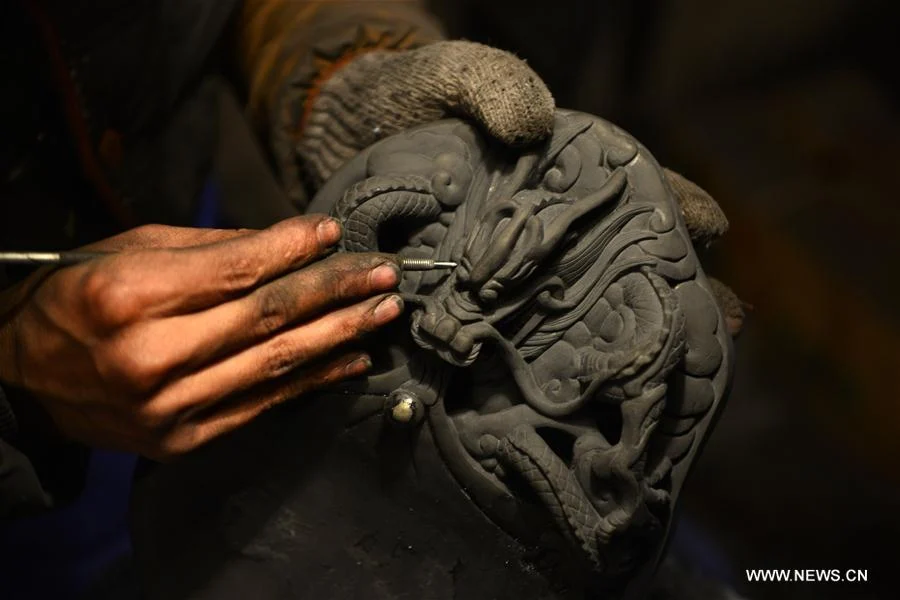
3. Carving: This is the most labor-intensive and skillful part of the process. Using specialized carving tools, Liang meticulously etches away layers of the calabash’s skin to reveal the underlying patterns and forms. The depth, texture, and detail of the carvings are carefully controlled to create a three-dimensional effect. For figures like the Terracotta Warriors, this involves capturing the subtle nuances of their armor, facial expressions, and posture. For architectural elements like the Great Wild Goose Pagoda, it demands attention to proportion and structural detail.
4. Finishing: Once the carving is complete, the calabash is often treated with protective coatings or natural dyes to enhance its appearance and ensure its longevity. This may involve polishing to a sheen or applying natural pigments to bring out the contrast between the carved areas and the natural surface of the gourd.
The entire process, from selecting the raw gourd to the final finishing touches, can take weeks or even months, depending on the complexity of the design.
Cultural Icons as Artistic Inspiration
Liang Ping’an’s chosen subjects are not arbitrary; they are the very symbols that define Xi’an’s identity and draw millions of tourists annually.
-
The Terracotta Warriors: This archaeological marvel, discovered in 1974, comprises thousands of life-sized clay figures of warriors and horses, buried alongside the tomb of Qin Shi Huang. Each warrior is unique, reflecting the diverse faces and ranks of the Qin army. Liang’s carvings likely capture the powerful presence and historical significance of these figures, offering a miniature yet potent representation of this world-renowned excavation. The sheer scale of the original discovery, covering an area of approximately 20,000 square meters, highlights the immense undertaking of carving even a few of these figures onto a calabash.
-
The Great Wild Goose Pagoda: A testament to the Tang Dynasty’s architectural prowess and the flourishing of Buddhism, the Great Wild Goose Pagoda is a prominent landmark in Xi’an. Originally built in 652 AD by the monk Xuanzang to house Buddhist scriptures he brought back from India, it has undergone several reconstructions and expansions. Liang’s renditions of the pagoda would likely emphasize its elegant, multi-storied structure and its spiritual significance as a repository of ancient knowledge.
-
Other Potential Subjects: Beyond these two prominent examples, Liang’s exploration of Xi’an’s cultural icons could extend to other significant sites. This might include representations of the ancient City Wall, one of the longest and best-preserved city walls in China, which dates back to the Ming Dynasty. He might also draw inspiration from the Bell Tower and Drum Tower, iconic landmarks at the heart of the city, or even motifs from Tang Dynasty art and calligraphy, reflecting the dynasty’s golden age of cultural achievement. The intricate patterns and motifs found on ancient bronzes from the Western Zhou or Qin dynasties could also serve as compelling design elements.
Supporting Data and Context
The artistic practice of Liang Ping’an is situated within a broader context of cultural preservation and the burgeoning appreciation for traditional Chinese arts.
-
Tourism Impact: Xi’an is a major tourist destination, attracting millions of domestic and international visitors each year. In 2019, before the global pandemic, Xi’an received over 100 million tourists, generating significant revenue. Art forms like Liang’s carvings can serve as valuable souvenirs and cultural ambassadors, offering visitors a tangible piece of Xi’an’s heritage to take home. The economic impact of such traditional crafts, while difficult to quantify precisely for individual artists, contributes to the local economy and supports a network of artisans and suppliers.
-
Cultural Heritage Preservation Initiatives: The Chinese government has invested heavily in preserving its rich cultural heritage, recognizing its importance for national identity and tourism. This includes funding for archaeological sites, restoration projects, and the promotion of traditional arts and crafts. Liang’s work aligns with these national objectives, even if pursued at an individual level.
-
The Silk Road Revival: Xi’an was the starting point of the ancient Silk Road, a network of trade routes that connected the East and West for centuries. The modern Belt and Road Initiative, launched in 2013, has revitalized interest in Xi’an’s historical role as a gateway to the world. Calabash carvings depicting Silk Road imagery or motifs could further connect Liang’s art to this contemporary narrative.
Reactions and Broader Implications
While the article does not explicitly detail reactions from specific parties, the engagement with Liang Ping’an’s art can be inferred to have several positive implications.
-
Local Community Appreciation: It is highly probable that the local community in Xi’an, proud of their city’s heritage, would view Liang’s work with appreciation and admiration. Such artistic endeavors can foster a stronger sense of local identity and pride.
-
Cultural Exchange: For tourists, these carvings offer a unique and personal connection to Xi’an’s history, moving beyond mass-produced souvenirs. They provide an opportunity for a deeper cultural exchange and understanding.
-
Inspiration for Other Artists: Liang’s success and dedication may inspire other artists in Xi’an and beyond to explore traditional Chinese art forms and to use them to interpret their local heritage. This could lead to a revitalization of various traditional crafts.
-
Educational Value: The intricate detail and thematic focus of Liang’s carvings lend themselves to educational purposes. They can be used in schools or cultural institutions to teach younger generations about Xi’an’s history in an engaging and accessible manner.
A Glimpse into the Future
Liang Ping’an’s calabash carvings serve as a compelling example of how traditional art forms can be adapted to contemporary contexts to celebrate and preserve cultural heritage. His dedication to transforming an ordinary gourd into a vessel of historical narratives underscores the enduring power of art to connect people with their past and inspire future generations. As Xi’an continues to evolve, artists like Liang Ping’an play a crucial role in ensuring that its rich history and vibrant culture remain not only preserved but also dynamically alive, resonating with audiences in novel and meaningful ways. His work is a quiet yet potent reminder that history is not confined to museums and textbooks, but can be found and celebrated in the most unexpected of forms. The continuing exploration of new themes by Liang suggests a dynamic artistic journey, one that promises to further enrich the cultural landscape of Xi’an through his unique and dedicated craft.

 Rifan Muazin