Asep Darmawan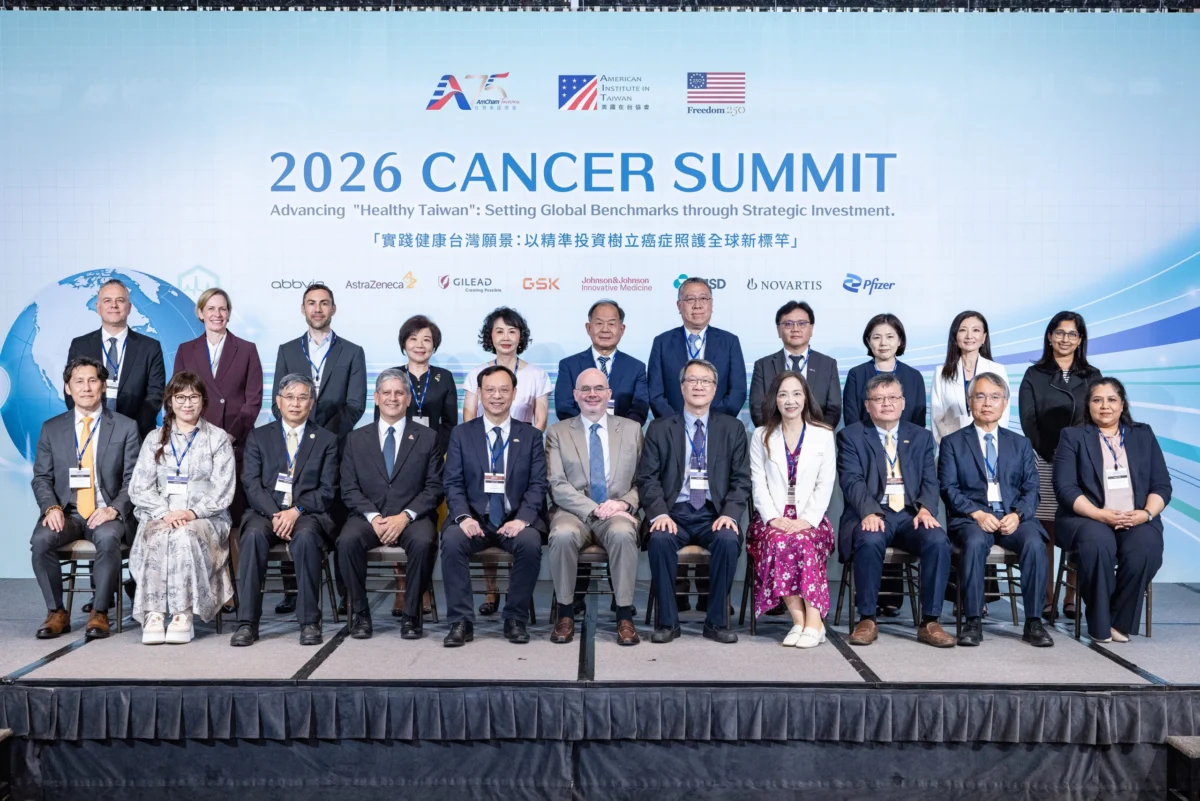
The American Chamber of Commerce in Taiwan (AmCham Taiwan), in a strategic partnership with the American Institute in Taiwan (AIT), convened the 2026 AmCham Taiwan Cancer Summit on July 28 at the Regent Taipei. Operating under the high-level theme of “Advancing ‘Healthy Taiwan’: Setting Global Benchmarks through Strategic Investment,” the summit served as a critical assembly for policymakers, industry titans, clinical researchers, and patient advocacy representatives. The primary objective of the 2026 summit was to refine resource allocation strategies for the newly established Cancer Drugs Fund (CDF), accelerate the integration of breakthrough therapies into the public reimbursement system, and ensure Taiwan’s oncology infrastructure aligns with the highest international standards of care.
The 2026 summit arrives at a pivotal moment for Taiwan’s healthcare system. As the nation grapples with an aging population and the increasing prevalence of complex cancer cases, the burden on the National Health Insurance (NHI) system has reached a critical threshold. The event highlighted a collective commitment to transforming Taiwan into a global leader in oncology, leveraging public-private partnerships to bridge the gap between scientific innovation and patient accessibility.
A Vision for a Healthy Taiwan
AmCham Taiwan President Carl Wegner opened the proceedings by emphasizing that the fight against cancer is a multifaceted global challenge that transcends borders. He noted that addressing the oncology crisis requires a paradigm shift from traditional healthcare spending toward a model of strategic investment. Wegner underscored the necessity of robust public-private partnerships, stating that the translation of laboratory innovation into clinical reality depends on sustainable funding and a resilient, future-ready healthcare ecosystem.
The summit’s agenda was deeply rooted in the "Healthy Taiwan" initiative, a cornerstone policy of President Lai Ching-te’s administration. This vision seeks to fundamentally reshape the nation’s health landscape, with the ambitious goal of reducing the standardized cancer mortality rate by one-third by the year 2030. Achieving such a target requires not only medical advancements but also a comprehensive overhaul of how cancer care is financed and delivered.
Minister of Health and Welfare Shih Chung-liang, a central figure in the event’s Grand Keynote Dialogue, provided a detailed roadmap of the government’s progress. He highlighted the pivotal role of the Healthy Taiwan Promotion Committee in driving national health transformation. Minister Shih revealed that the government has significantly scaled its financial commitment to cancer prevention, increasing the screening budget from NT$2.8 billion to NT$6.8 billion. This 142% increase in funding is intended to detect malignancies at earlier, more treatable stages, thereby reducing the long-term economic and human cost of the disease.
Strategic Investment and the Sustainability of the Cancer Drugs Fund
One of the most anticipated segments of the summit was the first panel discussion, which focused on the strategic investment and long-term sustainability of the Cancer Drugs Fund (CDF). Established in 2025, the CDF was designed to serve as a supplementary mechanism to the National Health Insurance system, specifically aimed at providing faster access to innovative cancer therapies that often face lengthy delays in the standard reimbursement pipeline.
Panelists discussed the "innovation gap"—the period between the global launch of a breakthrough drug and its availability to patients under Taiwan’s public health system. Historically, this gap has been a point of contention for patient groups and international pharmaceutical companies. The CDF aims to bridge this gap by providing a flexible funding pool that can adapt to the rapid pace of medical discovery.
Minister Shih emphasized that the CDF is not merely a financial reservoir but a tool for data-driven decision-making. By advancing the digital transformation of cancer care, the Ministry of Health and Welfare (MOHW) is streamlining prior authorization and administrative procedures. The data collected through these digital platforms allow for real-world evidence (RWE) evaluation, helping the government determine which therapies provide the best clinical outcomes and value for the budget. This ensures that the limited resources of the CDF are directed toward treatments that offer the highest efficacy.
Industry experts on the panel noted that for the CDF to be sustainable, it must be supported by a clear regulatory framework and a transparent evaluation process. They argued that strategic investment in cancer care today will lead to significant savings in the future by reducing the need for late-stage hospitalizations and palliative care, while also allowing patients to return to the workforce sooner.
Aligning with International Standards of Care
The second panel of the summit pivoted toward the clinical and operational alignment of Taiwan’s oncology system with international benchmarks. Medical experts representing diverse fields—including breast cancer, gynecologic oncology, and hematologic malignancies—shared insights into the latest global clinical developments.
A central theme of this discussion was the adoption of the National Comprehensive Cancer Network (NCCN) guidelines. These guidelines are recognized globally as the standard for clinical policy in oncology. Panelists explored how Taiwan can further integrate these recognized protocols into its local healthcare delivery systems to ensure that a patient in Taipei or Kaohsiung receives the same quality of care as one in New York or London.

The experts highlighted the importance of comprehensive care pathways. Modern cancer treatment is no longer just about the administration of drugs; it involves a holistic approach spanning early diagnosis, precision genomic testing, personalized treatment plans, and long-term survivorship follow-up. In the context of hematologic malignancies, for instance, the discussion touched upon the rapid evolution of cell and gene therapies and the infrastructure required to deliver these complex treatments safely and effectively.
Furthermore, the panel addressed the need for Taiwan to become a more prominent hub for international clinical trials. By aligning local clinical practices with international standards, Taiwan can attract more global research investment, providing Taiwanese patients with even earlier access to experimental therapies while contributing valuable data to the global medical community.
The U.S.-Taiwan Healthcare Partnership
The 2026 Cancer Summit is the latest iteration of a collaboration that began in 2021. Since then, AmCham Taiwan and AIT have jointly organized healthcare innovation forums to foster a high-level dialogue between the two nations. In 2023, the forum transitioned into its current format as a dedicated Cancer Summit, reflecting the urgency of the oncology challenge.
The summit’s origins are closely linked to the "Cancer Moonshot" initiative in the United States, which aims to accelerate the rate of progress against cancer. This bilateral exchange has allowed Taiwan to benefit from U.S. expertise in regulatory science and pharmaceutical innovation, while the U.S. gains insights from Taiwan’s highly efficient, data-rich National Health Insurance system.
AIT representatives at the summit reaffirmed that healthcare remains a pillar of the U.S.-Taiwan relationship. The collaboration extends beyond policy discussions to include technical exchanges between the U.S. Food and Drug Administration (FDA) and Taiwan’s Food and Drug Administration (TFDA), as well as partnerships between academic institutions and private sector companies.
Data-Driven Policy and the 2030 Mortality Goal
To reach the national objective of reducing cancer mortality by one-third by 2030, the Taiwan government is adopting a more granular approach to disease management. Minister Shih noted that the MOHW is currently reviewing the mortality burden and treatment gaps across different cancer types. By identifying which cancers are currently underserved or have the highest mortality rates, the government can prioritize resources for tailored prevention and treatment plans.
Supporting data presented at the summit indicated that while Taiwan has made significant strides in treating common cancers like lung and liver cancer, challenges remain in addressing rare cancers and those with high recurrence rates. The digital transformation initiative is expected to play a crucial role here, as the integration of electronic health records and the NHI database will allow for more precise tracking of patient outcomes and the identification of systemic bottlenecks.
The summit also touched upon the economic implications of cancer care. Experts argued that the "cost" of cancer is not just the price of drugs, but the loss of productivity and the burden on caregivers. By investing in innovative care and reducing mortality, Taiwan is essentially protecting its human capital, which is vital for its continued economic competitiveness.
Future Outlook and Broader Impact
As the 2026 Cancer Summit concluded, the sentiment among participants was one of cautious optimism. The establishment of the Cancer Drugs Fund and the significant increase in screening budgets represent tangible progress. However, the path to 2030 remains challenging.
The summit underscored that the success of the "Healthy Taiwan" vision depends on the continued collaboration between the public and private sectors. AmCham Taiwan reaffirmed its commitment to maintaining an active policy dialogue with the government, ensuring that the voices of international innovators and patient groups are heard.
The implications of this summit extend beyond the borders of Taiwan. As a nation with a universal healthcare system and a sophisticated technology sector, Taiwan’s efforts to build a "connected cancer care ecosystem" serve as a potential blueprint for other middle-to-high-income countries facing similar demographic and fiscal pressures. The integration of digital health, strategic funding, and international clinical alignment discussed at the Regent Taipei may well set the global benchmarks that the summit’s theme promised.
Through continued U.S.-Taiwan healthcare collaboration, the stakeholders involved are not just aiming to treat a disease; they are working to build a more resilient society where innovation is accessible, and "Healthy Taiwan" is a reality for every citizen. The recommendations and strategies developed during this summit are expected to inform health policy in the coming years, steering Taiwan toward its ambitious 2030 goals.


 Muslim
 Nana Muazin