Basiran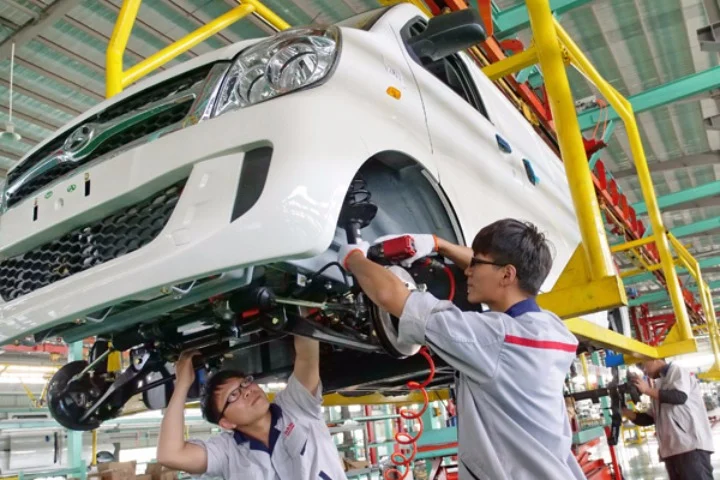
Beijing Automotive Group Co (BAIC Group), one of China’s prominent state-owned automakers, has declared an ambitious strategic pivot towards new energy vehicles (NEVs), committing to a complete cessation of conventional fuel-powered car sales under its proprietary brands by 2025. This landmark decision underscores China’s aggressive drive towards sustainable transportation and positions BAIC Group at the forefront of the automotive industry’s global transformation. The announcement, made by BAIC Group Chairman Xu Heyi, outlines a phased approach, with an initial target to halt sales of self-developed conventional fuel-powered cars within Beijing by 2020, followed by a nationwide production and sales ban by 2025. This move is a critical component of the company’s broader "new energy car campaign," signaling a decisive shift in its long-term corporate strategy and product portfolio.
Strategic Imperative: BAIC’s Vision for a Sustainable Future
BAIC Group’s declaration is not merely an internal corporate policy but a reflection of a profound national strategic imperative in China. As the world’s largest automotive market and a global leader in NEV adoption, China has consistently championed the development and widespread deployment of electric vehicles, plug-in hybrids, and fuel cell vehicles. For BAIC, a conglomerate with a diverse automotive footprint that includes joint ventures with international giants like South Korea’s Hyundai and Germany’s Daimler AG (the parent company of Mercedes-Benz), the focus on its own-branded conventional fuel vehicles for this phase-out is particularly significant. It highlights a commitment to developing indigenous NEV technologies and market leadership, distinct from the strategies of its joint venture partners who operate under separate brand identities and market dynamics. The phase-out timeline signifies an accelerated transition, placing substantial pressure on BAIC’s research and development, manufacturing, and supply chain operations to rapidly innovate and scale up NEV production.
The decision was unveiled during a pivotal event commemorating the opening of a new energy car technology and innovation center in Beijing. This state-of-the-art facility, established by BAIC in collaboration with 14 other esteemed institutions, including its new-energy car arm BJEV, the prestigious Tsinghua University, and leading battery manufacturer CATL (Contemporary Amperex Technology Co. Limited), is designed to be a nexus for groundbreaking NEV research. Chairman Xu Heyi emphasized the center’s role in fostering an open platform to mobilize global innovative resources, facilitating unprecedented cooperation among companies, universities, research facilities, and even end-users. This collaborative ecosystem is envisioned to accelerate technological breakthroughs, standardize industry practices, and streamline the path from conceptualization to commercialization for next-generation NEV solutions. Xu Qiang, head of the Beijing Municipal Science and Technology Commission, lauded the center as a crucial and pragmatic step towards enhancing cooperation, bolstering innovative capabilities, and strengthening core competitiveness within the NEV sector. This collective approach underscores the complexity and capital-intensive nature of NEV development, necessitating broad-based collaboration to overcome technological hurdles and achieve economies of scale.
The Driving Force: China’s Dominance in the NEV Market
BAIC Group’s strategic shift unfolds against the backdrop of China’s undeniable dominance in the global NEV market. The nation has consistently led the world in NEV sales and production, driven by comprehensive government policies, substantial subsidies, and a growing consumer appetite for cleaner transportation alternatives. From January to November of the year the announcement was made, China recorded sales of 609,000 new energy cars, marking a robust 51.4 percent year-on-year growth. Industry analysts, including the China Association of Automobile Manufacturers (CAAM), projected total NEV sales for that year to reach an impressive 700,000 units. This rapid expansion positions China not just as a market leader but as a global incubator for NEV technologies and business models.
The growth trajectory has been sustained by a suite of governmental incentives, including purchase subsidies, tax exemptions, and preferential licensing policies, particularly in congested mega-cities where conventional vehicle ownership is often restricted through lottery systems or high permit costs. Furthermore, China implemented a dual-credit policy, mirroring California’s Zero Emission Vehicle (ZEV) mandate, which compels automakers to produce a certain quota of NEVs or purchase credits from other manufacturers, thereby creating a powerful market-driven mechanism for NEV adoption. These policies have cultivated an environment ripe for domestic automakers like BAIC to invest heavily in NEV R&D and manufacturing capabilities, fostering a competitive landscape that encourages innovation and efficiency.
BAIC BJEV: At the Vanguard of NEV Development
At the heart of BAIC Group’s NEV strategy is BAIC BJEV, its dedicated new energy vehicle subsidiary. BJEV has emerged as a significant player in China’s burgeoning NEV market, consistently demonstrating strong sales performance. In November of the announcement year, BJEV sold 21,598 cars, representing an astounding 85 percent surge from the previous month. This robust monthly performance contributed to its cumulative sales of over 88,000 units in the first eleven months of that year, cementing its position as one of the country’s leading NEV manufacturers. The company’s success is attributed to a combination of competitive product offerings, strategic market positioning, and leveraging government support for NEV development.
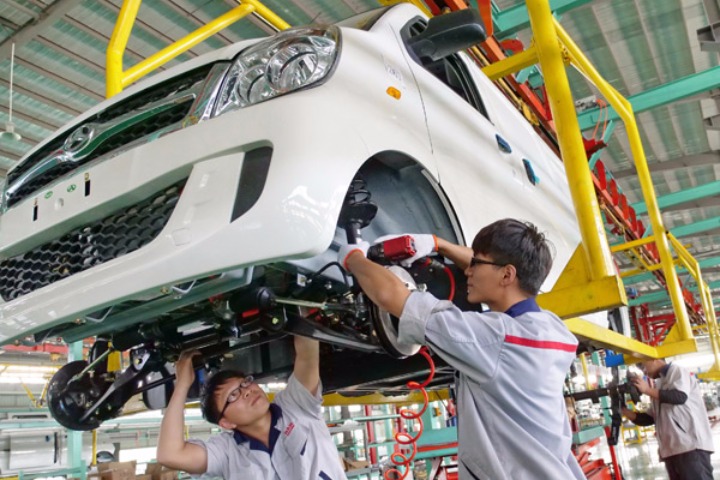
Looking ahead, BJEV has outlined an aggressive investment and expansion plan. At the Guangzhou auto show, BJEV Deputy General Manager Zhang Yong revealed that the company intends to invest approximately 10 billion yuan ($1.5 billion USD at the time) in research and development over the subsequent three to five years. This substantial investment is earmarked for advancing battery technology, electric powertrains, intelligent vehicle systems, and autonomous driving capabilities. Concurrently, BJEV plans to introduce two to three new NEV models annually, ensuring a fresh and competitive product lineup that caters to evolving consumer preferences and market segments. This rapid product cycle is crucial in a fast-paced market where technological advancements and design trends shift frequently.
Beyond individual consumer sales, BJEV is also targeting the burgeoning shared mobility sector with ambitious plans. The company aims to deploy 500,000 new energy vehicles for taxi and ride-sharing services across 1,000 cities by 2022. This strategy not only expands BJEV’s market reach but also contributes significantly to the electrification of public and semi-public transportation fleets, further reducing urban emissions and increasing the visibility and accessibility of NEVs to a broader population. The success of such an initiative hinges on robust partnerships with ride-hailing platforms and municipal authorities, along with the establishment of extensive charging infrastructure.
Addressing Infrastructure Challenges: The Battery Swapping Solution
One of the persistent challenges in widespread NEV adoption has been the issue of charging time and infrastructure availability. To directly address the problem of slow charging, BAIC Group, through BJEV, announced an innovative solution earlier in the year: a substantial investment of 10 billion yuan to construct 3,000 solar-powered battery changing stations. This forward-thinking approach embraces battery swapping technology, which allows drivers to quickly exchange a depleted battery for a fully charged one in minutes, effectively eliminating range anxiety and long charging waits.
The deployment of solar-powered stations also aligns with a broader sustainability agenda, ensuring that the energy used to power NEVs is generated from renewable sources, thereby maximizing the environmental benefits of electric transportation. This strategy has significant implications for fleet operators, such as taxi and ride-sharing companies, where vehicle uptime is critical for profitability. Battery swapping offers a compelling alternative to traditional charging, potentially accelerating the adoption of NEVs in high-utilization scenarios. The sheer scale of the planned deployment – 3,000 stations – underscores BAIC’s commitment to building a comprehensive and user-friendly NEV ecosystem, which is essential for realizing its ambitious sales and deployment targets.
Broader Implications and the Road Ahead
BAIC Group’s bold commitment to phasing out conventional fuel vehicles by 2025 carries profound implications for its own operations, the Chinese automotive industry, and the global transition to sustainable mobility.
- Environmental Impact: A successful transition by a major automaker like BAIC will significantly contribute to reducing air pollution in Chinese cities and lowering the country’s overall carbon emissions, aligning with China’s pledges under the Paris Agreement.
- Economic Transformation: This shift will necessitate massive investments in NEV research, development, and manufacturing, stimulating job creation in new technology sectors and reshaping the automotive supply chain. It will also foster the growth of supporting industries, such as battery manufacturing, charging infrastructure, and smart grid technologies.
- Technological Leadership: By focusing resources on NEVs, BAIC aims to solidify its position as a technological leader, potentially developing intellectual property and manufacturing expertise that can be exported globally. Collaboration with entities like Tsinghua University and CATL will accelerate advancements in battery density, charging efficiency, and vehicle intelligence.
- Competitive Landscape: BAIC’s move will likely intensify competition among Chinese automakers. Other major players like BYD, Geely, SAIC, and Nio are also heavily invested in NEVs, and similar announcements regarding internal combustion engine phase-outs are expected to follow, driving a race towards electrification. This domestic competition, combined with the presence of international automakers also investing in Chinese NEV production, creates a dynamic and innovative market.
- Global Influence: China’s policies and the actions of its leading automakers like BAIC serve as a powerful example for other nations and regions contemplating similar ICE bans. The sheer scale of China’s market means that its success in this transition will have ripple effects across the global automotive industry, influencing design, manufacturing, and policy decisions worldwide.
However, challenges remain. The rapid scaling of NEV production requires robust supply chains for critical raw materials like lithium, cobalt, and nickel, which can be subject to price volatility and geopolitical factors. Ensuring a stable and sustainable supply of these materials, along with responsible sourcing practices, will be crucial. Furthermore, the development of a comprehensive and reliable charging or battery swapping infrastructure, especially in rural areas, needs to keep pace with vehicle deployment to ensure widespread consumer acceptance and convenience. The transition also requires significant workforce retraining and adaptation as traditional automotive manufacturing skills become less relevant and new expertise in electronics, software, and battery technology becomes paramount.
In conclusion, BAIC Group’s declaration to phase out conventional fuel-powered cars under its own brand by 2025 is a testament to China’s unwavering commitment to pioneering a sustainable automotive future. This strategic decision, backed by substantial investments in R&D, infrastructure, and collaborative innovation, positions BAIC as a key player in the global shift towards electric mobility. As the company navigates this transformative journey, its successes and challenges will undoubtedly offer valuable insights into the complexities and immense potential of the worldwide automotive electrification movement.

 Evan Lee Salim
 Suro Senen