 Neng Nana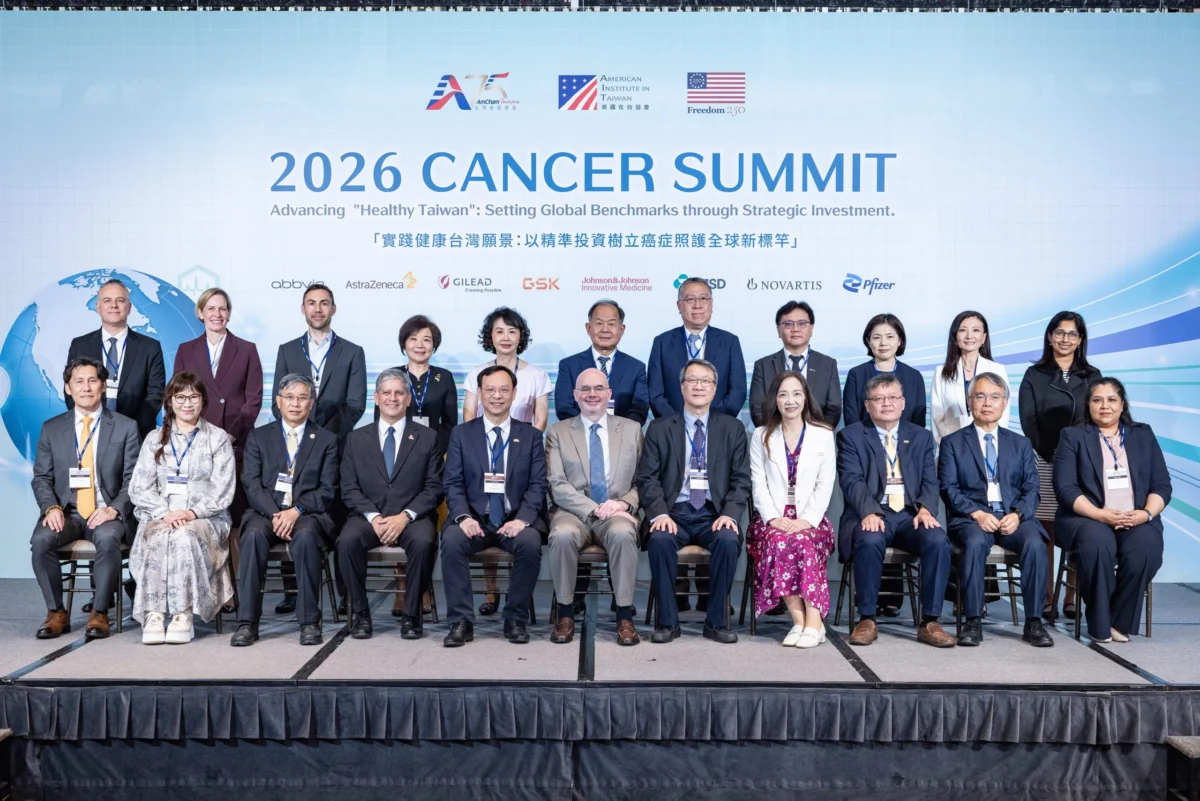
The American Chamber of Commerce in Taiwan (AmCham Taiwan), in a strategic partnership with the American Institute in Taiwan (AIT), convened the 2026 AmCham Taiwan Cancer Summit at the Regent Taipei on July 28, marking a pivotal moment in the island’s healthcare policy trajectory. Under the comprehensive theme "Advancing ‘Healthy Taiwan’: Setting Global Benchmarks through Strategic Investment," the summit served as a high-level assembly for government officials, international industry leaders, academic experts, and patient advocacy representatives. The primary objective was to forge a sustainable path for Taiwan’s cancer care infrastructure, with a specific focus on optimizing the Cancer Drugs Fund (CDF), accelerating access to breakthrough therapies, and ensuring that Taiwan’s oncology standards remain synchronized with the world’s most advanced clinical protocols.
As cancer continues to be the leading cause of death in Taiwan—a position it has held for over four decades—the summit underscored a sense of urgency in transitioning from traditional healthcare models to a more resilient, innovation-driven ecosystem. The discussions highlighted the dual necessity of clinical excellence and fiscal sustainability, particularly as the cost of precision medicine and immunotherapy continues to rise globally.
A Vision for a Healthier Taiwan: The 2030 Mandate
The summit’s proceedings were deeply rooted in the "Healthy Taiwan" initiative, a cornerstone of President Lai Ching-te’s administration. This national vision aims to leverage Taiwan’s technological prowess and medical expertise to improve the quality of life for its citizens while positioning the nation as a global leader in healthcare innovation. A central pillar of this vision is the ambitious goal to reduce Taiwan’s standardized cancer mortality rate by one-third by the year 2030.
AmCham Taiwan President Carl Wegner opened the summit by emphasizing that the fight against cancer is a multifaceted challenge that transcends simple medical treatment. "Cancer remains one of the most complex global health challenges, and addressing it requires not only scientific breakthroughs but also strong partnerships, sustainable investment, and effective collaboration across sectors," Wegner stated. He noted that the role of public-private partnerships is critical in translating laboratory innovation into bedside reality, ensuring that patients do not just survive but thrive through access to the latest medical advancements.
Wegner’s remarks set the stage for a day of rigorous analysis regarding how Taiwan can better integrate into the global healthcare value chain. By aligning with international standards, Taiwan not only improves patient outcomes but also enhances its attractiveness as a hub for clinical trials and biotechnological research and development.
Strategic Investment and the Cancer Drugs Fund
A highlight of the summit was the Grand Keynote Dialogue featuring Minister of Health and Welfare Shih Chung-liang. Minister Shih provided a detailed roadmap of the government’s efforts to modernize the National Health Insurance (NHI) system and its specific focus on oncology. He acknowledged that while Taiwan’s NHI is world-renowned for its accessibility and efficiency, the rapid pace of pharmaceutical innovation has created financial pressures that require new funding mechanisms.
"Cancer prevention and control cannot be sustained without stable, long-term funding," Minister Shih told the assembly. To address this, the Ministry of Health and Welfare (MOHW) has significantly scaled up its financial commitments. The national budget for cancer screening has been aggressively expanded from NT$2.8 billion to NT$6.8 billion, reflecting a proactive shift toward early detection, which is statistically proven to reduce long-term treatment costs and improve survival rates.
Furthermore, the establishment of the Cancer Drug Fund (CDF) in 2025 represents a landmark policy shift. The CDF is designed to act as a "bridge" for innovative drugs that show clinical promise but are still undergoing the lengthy evaluation process for permanent NHI reimbursement. By providing a dedicated financial stream, the CDF ensures that Taiwanese patients can access life-saving treatments at the same time as their counterparts in the United States and Europe, rather than waiting several years for administrative approval.
Digital Transformation and Data-Driven Oncology
Beyond financial investment, Minister Shih emphasized the role of digital transformation in streamlining cancer care. The MOHW is currently advancing initiatives to digitize the prior authorization process for cancer treatments, which has historically been a source of administrative delay for both doctors and patients. By utilizing real-world data and integrated electronic health records, the government aims to create a more responsive system that can evaluate the effectiveness of drugs in real-time.
This data-driven approach serves two purposes: first, it ensures that budget resources are allocated to the most effective treatments; and second, it provides a wealth of longitudinal data that can be used for follow-up evaluations and further clinical research. This digital evolution is seen as essential for managing the "mortality burden" of different cancer types, allowing the government to prioritize resources for cancers with the highest unmet needs or those showing the highest mortality rates.

Aligning with International Standards of Care
The summit’s second panel discussion delved into the technical aspects of clinical alignment. Medical experts representing various oncology specialties—including breast cancer, gynecologic cancers, and hematologic malignancies—shared insights on how Taiwan can better adopt international clinical guidelines. A specific point of reference was the National Comprehensive Cancer Network (NCCN) guidelines, which are considered the gold standard in oncology globally.
The panelists argued that aligning with NCCN guidelines is not merely a matter of prestige but a clinical necessity. Such alignment ensures that Taiwanese patients receive the most current evidence-based care, reducing variations in treatment quality across different hospitals. The discussion also touched upon the importance of comprehensive care pathways, which include everything from genetic counseling and early diagnosis to palliative care and long-term survivorship support.
The integration of precision medicine—where treatments are tailored to the genetic profile of the individual patient—was a recurring theme. Experts noted that while the technology exists in Taiwan, the regulatory and reimbursement frameworks must evolve to support its widespread application. This includes the implementation of Next-Generation Sequencing (NGS) in standard diagnostic protocols, a move that the MOHW has already begun to support through targeted subsidies.
The Evolution of the Cancer Summit: A Timeline of Collaboration
The 2026 Cancer Summit is the latest iteration of a long-standing collaboration between the United States and Taiwan. The partnership began in earnest in 2021, when AmCham Taiwan and AIT launched a series of healthcare innovation forums. These forums were initially designed to foster a broader dialogue on healthcare policy, but they quickly evolved to focus on the most pressing health crisis: cancer.
- 2021: Launch of the first U.S.-Taiwan Healthcare Innovation Forum, focusing on pandemic resilience and digital health.
- 2022: Expansion of the forum to include discussions on biopharmaceutical supply chains and regulatory harmony.
- 2023: Under the leadership of AmCham’s Pharmaceutical Committee, the forum was officially rebranded as the "Cancer Summit," focusing exclusively on oncology innovation.
- 2024-2025: The summit became a primary platform for advocating for the creation of the Cancer Drug Fund (CDF) and aligning Taiwan’s reimbursement timelines with global standards.
- 2026: The current summit focuses on the "Healthy Taiwan" vision and the long-term sustainability of the newly established CDF.
This trajectory was inspired by the U.S. "Cancer Moonshot" initiative, originally launched by then-Vice President Joe Biden in 2016 and reignited in 2022. The Moonshot initiative aims to reduce the cancer death rate by at least 50% over the next 25 years. By mirroring these goals, Taiwan has strengthened its bilateral ties with the U.S. in the healthcare sector, facilitating a robust exchange of policy perspectives and clinical expertise.
Broader Economic and Geopolitical Implications
The implications of the 2026 Cancer Summit extend beyond the clinical realm. For Taiwan, investing in a "Connected Cancer Care Ecosystem" is also a strategic economic move. As a global leader in semiconductor manufacturing and information technology, Taiwan is uniquely positioned to lead the "Bio-ICT" revolution—the intersection of biotechnology and information communications technology.
By creating a favorable environment for pharmaceutical innovation and clinical trials, Taiwan can attract significant foreign direct investment (FDI) from global life sciences companies. This, in turn, fosters a local ecosystem of startups and research institutions, diversifying Taiwan’s economy and reducing its reliance on traditional manufacturing sectors.
Furthermore, health cooperation has become a vital pillar of the U.S.-Taiwan relationship. In an era of shifting geopolitical dynamics, collaboration on "soft power" issues like healthcare allows both nations to demonstrate the benefits of a democratic, transparent approach to public health. The summit serves as a reminder that the U.S.-Taiwan partnership is not just about security and trade, but also about improving the lives of individuals through shared scientific and humanitarian goals.
Looking Ahead: The Path to 2030
As the summit concluded, the consensus among participants was clear: while Taiwan has made significant strides in cancer care, the journey toward the 2030 mortality reduction goal requires sustained momentum. The establishment of the CDF and the increase in screening budgets are critical first steps, but the long-term success of these initiatives will depend on continuous policy refinement and the ability to adapt to new scientific discoveries.
AmCham Taiwan reaffirmed its commitment to serving as a bridge between the private sector and the government. Through its Pharmaceutical Committee, the Chamber will continue to advocate for policies that prioritize patient access and reward innovation. The goal is to ensure that Taiwan’s National Health Insurance system remains a sustainable model of excellence, capable of providing "connected" care that is early, precise, and world-class.
In the words of the summit’s closing summary, the "Healthy Taiwan" vision is not just a government target; it is a social contract. By strategically investing in cancer care today, Taiwan is securing a healthier, more prosperous future for the generations of 2030 and beyond. The 2026 Cancer Summit has provided the blueprint; the task now lies in its execution.

 Raul Delapena Setiawan
 Basiran