Neng Nana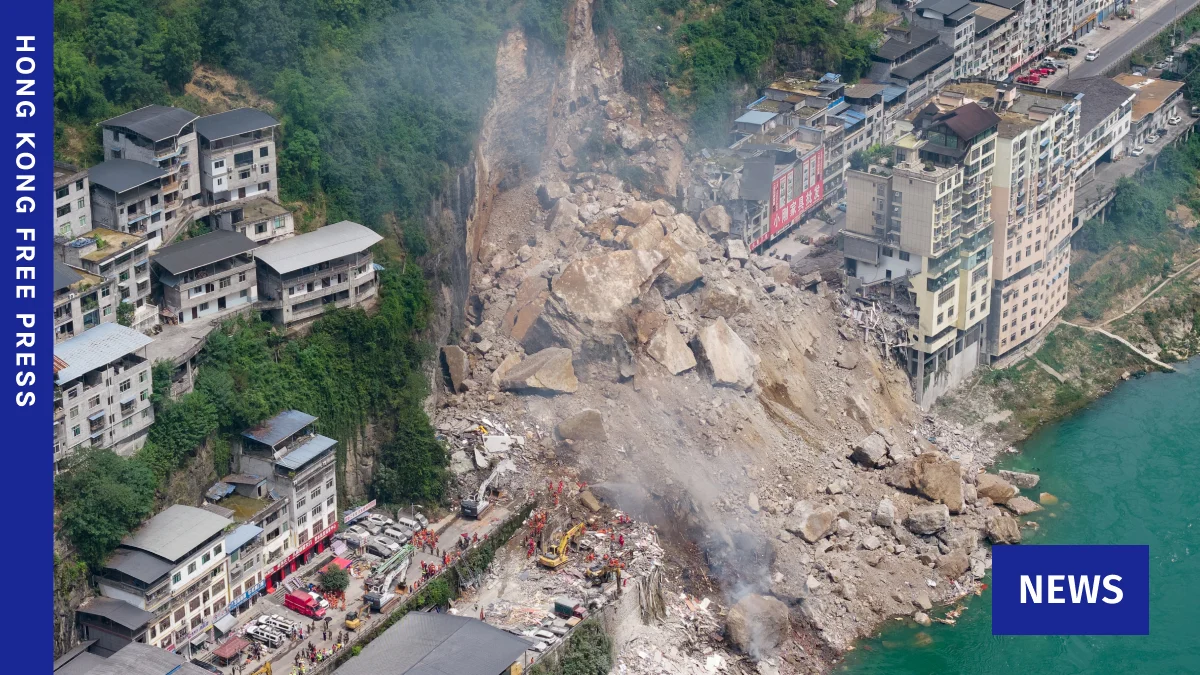
Rescuers have confirmed an additional 30 fatalities in the catastrophic landslide that struck Pengshui County in southwestern China’s Chongqing Municipality earlier this month, bringing the total number of confirmed deaths to 41. The updated toll, announced by county authorities late Tuesday, follows meticulous DNA testing and identification of bodies and remains recovered from the immense debris field. The disaster, which occurred on July 17, 2026, unleashed a torrent of earth and rock that engulfed several residential and commercial structures nestled at the foot of a mountain and along a vital riverbank, leaving a community grappling with profound loss and widespread destruction.
The catastrophe unfolded with terrifying speed, transforming a bustling area into a landscape of rubble and despair. Eyewitness accounts from the morning of July 17 describe a sudden, thunderous roar as a massive section of the mountainside gave way. The landslide, propelled by an immense force, swept downwards, obliterating homes and businesses in its path before depositing a colossal heap of earth and rocks into the residential and commercial street below. The sheer scale of the devastation left little hope for those trapped beneath the debris, with state media footage vividly illustrating the magnitude of the destruction and the desperate scene confronted by initial responders.
The Catastrophe Unfolds: A Timeline of Despair

The initial hours following the landslide were marked by chaos and urgent calls for assistance. Local emergency services were immediately mobilized, quickly joined by provincial and national disaster relief teams. The People’s Liberation Army (PLA) and armed police units were among the first on the scene, deploying hundreds of highly trained personnel alongside firefighters, medical staff, and geological experts. Their immediate priority was to locate and rescue any survivors, though the overwhelming nature of the debris presented immense challenges. Specialized equipment, including heavy excavators, life detectors, and search-and-rescue dogs, were brought in to sift through the unstable piles of earth, concrete, and twisted metal.
In the days immediately following the disaster, rescue workers faced a daunting task. The unstable ground, coupled with the vast quantity of material that had collapsed, made operations perilous. Reports from the scene indicated a grim reality, with rescuers warning that there were "no signs of life" as they painstakingly searched for the approximately 50 individuals initially reported missing. This early assessment underscored the high probability of a significant loss of life, setting a somber tone for the recovery efforts. By the end of the first week, authorities had confirmed 11 fatalities, a number that, while tragic, was widely anticipated to rise as the arduous search continued. The recovery process was further complicated by the need for careful handling of remains, recognizing the emotional weight and the subsequent necessity for precise identification.
Intensifying Search and Identification Challenges
The transition from active rescue to recovery and identification is always a somber milestone in disaster management. In Pengshui, this phase became particularly critical due to the extensive fragmentation of remains and the sheer volume of material to be sifted through. The local authorities, in coordination with forensic experts, initiated a comprehensive process of collecting and analyzing human remains found within the landslide’s footprint. This meticulous work involved collecting samples for DNA testing, a crucial step in accurately identifying victims and providing closure to grieving families. The use of advanced forensic techniques is a standard protocol in major disasters across China, reflecting a commitment to dignified recovery and accurate victim accounting.

The announcement on Tuesday marked a significant, albeit heartbreaking, update. "Following DNA testing and identification of bodies and remains found at the site, an additional total 30 victims have been confirmed," authorities in Pengshui County stated, elevating the overall death toll to 41. This jump from the initial 11 confirmed deaths reflected the painstaking and often slow process of identifying victims in such devastating circumstances, where bodies may be buried deep or severely fragmented. The announcement brought a definitive, though tragic, number to the human cost of the landslide, allowing families to begin the long process of mourning and remembrance. The confirmation also effectively ended the official search phase, shifting focus towards long-term recovery and investigation.
Chongqing’s Vulnerable Landscape: A Region Prone to Disasters
The landslide in Pengshui County is a stark reminder of the inherent geological vulnerabilities that characterize much of southwestern China. Chongqing, a sprawling municipality directly under the central government, is geographically diverse, featuring vast mountainous areas, deep river valleys, and a complex geological structure. Pengshui itself is situated along the Wu River, a major tributary of the Yangtze, in a region defined by its steep slopes and intricate topography. This terrain, while picturesque, is inherently unstable, particularly when subjected to external stressors.
The geology of the region predominantly comprises sedimentary rocks, often fractured and weathered, which are highly susceptible to erosion and destabilization. Layers of shale, sandstone, and limestone, when saturated with water, can lose their cohesion, leading to catastrophic slope failures. Furthermore, the area is known for its intense and prolonged rainfall, especially during the summer monsoon season from June to September. Heavy, sustained precipitation is a primary trigger for landslides in this part of China, as water infiltrates the soil and rock, increasing pore pressure, reducing shear strength, and ultimately causing slopes to collapse. While no specific cause beyond "landslide" was immediately detailed, the timing in July strongly implicates heavy rainfall as a likely contributing factor. Historical seismic activity, though not directly cited as a cause for this specific event, also plays a long-term role in fracturing bedrock and making slopes more prone to collapse.

A Broader Pattern: Landslides Across China
The Pengshui disaster is not an isolated incident but rather part of a broader pattern of geological hazards that frequently afflict China. The nation, with its vast and varied geography, is one of the most landslide-prone countries in the world. Just weeks prior to the Chongqing event, another significant landslide in northwestern Gansu province buried 33 people and left 21 dead, underscoring the pervasive nature of this threat. These incidents highlight the immense challenges faced by Chinese authorities in protecting communities nestled in hazardous terrains.
Common causes of landslides across China include a combination of natural phenomena and human activities. Intense rainfall, often exacerbated by extreme weather events linked to climate change, remains the most frequent trigger. Earthquakes, like the devastating 2008 Wenchuan earthquake, can also destabilize vast areas, leading to secondary landslides years after the initial seismic event. Human factors also play a significant role. Rapid infrastructure development, including road construction, mining operations, and the expansion of residential areas into previously untouched slopes, can alter natural drainage patterns and destabilize geological formations. Deforestation, though less of a primary factor in this specific region, also contributes to soil erosion and reduced slope stability in other parts of the country.
In response to these persistent threats, the Chinese government has invested heavily in disaster mitigation and prevention efforts. These include the establishment of sophisticated geological hazard monitoring and early warning systems, particularly in high-risk areas. Relocation programs for communities living in extremely vulnerable zones are also in place, alongside engineering solutions such as retaining walls, drainage systems, and slope stabilization projects. Despite these extensive efforts, the sheer scale and complexity of China’s mountainous regions mean that completely eliminating the risk of such natural disasters remains an insurmountable challenge.

Mobilization and Official Response
The official response to the Pengshui landslide was swift and comprehensive, reflecting China’s well-established emergency management protocols. Immediately following the collapse, local authorities activated emergency response mechanisms, deploying a multi-agency task force. The initial wave of responders focused on immediate search and rescue, utilizing a range of tools from manual digging to advanced radar and thermal imaging devices. The presence of hundreds of rescue workers, as depicted in state media, underscored the national commitment to disaster relief.
Beyond the immediate rescue, the broader official response encompassed several critical areas. Provincial and central government bodies were involved in coordinating resources, providing financial aid, and ensuring logistical support for the operation. Expert teams, including geologists, engineers, and urban planners, were dispatched to assess the site’s stability, investigate the precise cause of the landslide, and advise on future mitigation strategies. The meticulous process of victim identification through DNA testing, managed by forensic specialists, demonstrates a systematic approach to handling mass casualty events, prioritizing accuracy and respect for the deceased and their families. Furthermore, the authorities initiated investigations into the circumstances leading to the disaster, potentially examining land use planning, construction standards for affected buildings, and the effectiveness of any existing early warning systems in the immediate vicinity. Such investigations are crucial for learning lessons and implementing preventative measures for future incidents.
Beyond the Rubble: Long-Term Implications and Resilience

The human cost of the Pengshui landslide is immeasurable, extending far beyond the tragic loss of 41 lives. Survivors, many of whom have lost family members, homes, and livelihoods, will face a long and arduous journey toward recovery. The psychological trauma inflicted by such an event can linger for years, requiring sustained support and mental health services. The immediate economic impact on the affected community is also severe, with residential properties and commercial establishments obliterated, disrupting local economies and displacing families.
In the long term, the disaster carries significant implications for urban planning and infrastructure development in China’s mountainous regions. It necessitates a critical re-evaluation of construction practices in geologically unstable areas, potentially leading to stricter building codes, more rigorous geological surveys before development, and even strategic relocation of communities from high-risk zones. The incident will undoubtedly prompt further investment in advanced monitoring technologies and more robust early warning systems, especially given the increasing frequency and intensity of extreme weather events attributed to climate change. As global temperatures rise, heavier rainfall events are projected in many parts of China, exacerbating the risk of landslides and other hydrological disasters. This reality places an added imperative on authorities to integrate climate resilience into all future disaster preparedness and urban planning initiatives.
The Pengshui landslide serves as a grim reminder of nature’s formidable power and the ongoing vulnerability of human settlements, even in an era of advanced technology and engineering. While the immediate focus remains on recovery and support for the bereaved, the broader challenge for China lies in building greater resilience against the growing threats posed by geological hazards and a changing climate, ensuring that such tragedies are mitigated to the greatest extent possible in the future.


 Ali Ikhwan
 Raul Delapena Setiawan