 Reynand Wu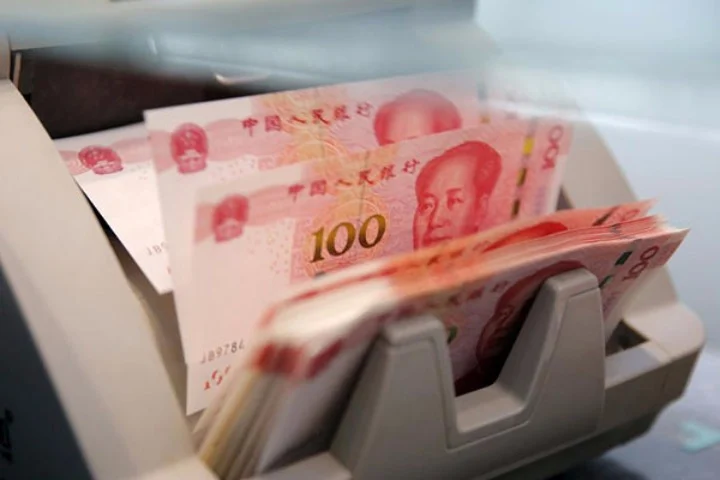
China’s financial landscape in November presented a nuanced picture, characterized by an accelerated expansion in money supply and a surge in new yuan-denominated loans, signaling robust support for economic growth. Simultaneously, the nation’s monetary authority reiterated its unwavering commitment to risk prevention as a paramount policy priority, underscoring a delicate balancing act between fostering economic momentum and safeguarding financial stability. This dual emphasis highlights Beijing’s ongoing efforts to navigate a complex economic environment, striving for sustainable growth while proactively addressing systemic vulnerabilities.
November Data Reveals Mixed Signals for China’s Economy
According to data released by the People’s Bank of China (PBOC), the nation’s central bank, on a recent Monday, the M2, a broad measure of money supply encompassing cash, checking deposits, and easily convertible near money, increased by 9.1 percent year-on-year last month. This figure marked an acceleration from the 8.8 percent growth recorded in October, suggesting a deliberate injection of liquidity into the economy. Despite this uptick, the November M2 growth rate remained 2.3 percentage points lower than the figure observed a year earlier, indicating that while liquidity support was enhanced, the overall trend reflects a more restrained monetary environment compared to previous periods of aggressive expansion. The marginal increase in M2 suggests a calibrated approach by the central bank, aiming to provide sufficient liquidity without unleashing excessive inflationary pressures or fueling speculative activities.
Concurrently, new lending in yuan by banks experienced a significant surge, reaching 1.12 trillion yuan ($169.69 billion) in November. This figure represented an almost doubling of the 663.2 billion yuan recorded in October, and it substantially surpassed market expectations, which had hovered around 800 billion yuan. While impressive, it was slightly lower than the 1.27 trillion yuan in new loans reported in September, demonstrating some month-to-month volatility but a strong underlying demand for credit. The robust loan growth underscores the banking sector’s continued role as a primary engine for financing economic activity, channeling funds towards businesses and households. By the end of November, the total outstanding yuan loans had increased by 13.3 percent from a year earlier, reflecting the cumulative effect of sustained credit expansion. Furthermore, the cumulative new loans issued in the first 11 months of the year reached a staggering total of 12.94 trillion yuan, surpassing the full-year record of 2016 by 290 billion yuan. This unprecedented annual lending volume highlights the significant capital infusion into the economy, a key factor supporting China’s GDP growth targets.
Beyond traditional bank lending, China’s total social financing (TSF), a comprehensive measure of credit and liquidity in the economy that includes off-balance sheet financing, also witnessed a notable increase. TSF expanded to 1.6 trillion yuan in November, up from 1.04 trillion yuan a month earlier. TSF provides a broader perspective on financial flows, encompassing not only yuan loans but also corporate bonds, government bonds, trust loans, entrusted loans, bankers’ acceptances, and equity financing. The increase in TSF suggests that various channels of financing contributed to the overall credit expansion in November, indicating a multi-pronged approach to supporting economic activity. The growth in TSF is often seen as a leading indicator of future economic activity, with higher TSF typically correlating with stronger investment and consumption.
PBOC Governor Underscores Urgency of Proactive Risk Management
Amidst these robust lending figures, Zhou Xiaochuan, the then-governor of the People’s Bank of China, delivered a stark message during an internal meeting. He asserted that financial regulators must "prevent financial risks more proactively and effectively" to maintain a crucial balance with economic growth. Zhou’s statement, coming from the head of the central bank, carried significant weight, reinforcing the government’s steadfast commitment to financial deleveraging and risk mitigation. His emphasis on "proactive and effective" prevention indicates a shift towards a more anticipatory and comprehensive regulatory framework, moving beyond reactive measures to preempt potential crises.
Zhou further elaborated on the strategic direction for China’s financial sector, stating that "the next step is to identify the key targets of financial reform, opening-up and innovative development." This directive signals a comprehensive approach to modernizing China’s financial system, aiming to make it more resilient, efficient, and integrated with global markets, while also fostering responsible innovation. These remarks underscore the understanding within China’s top financial leadership that structural reforms are essential not only for long-term growth but also for building a robust defense against financial instability.
The Broader Context: China’s Deleveraging Campaign and Financial Stability
Zhou Xiaochuan’s statements and the policy rhetoric emanating from Beijing are set against a backdrop of a multi-year national campaign to rein in surging debt levels and mitigate systemic financial risks. China’s rapid economic expansion over the past two decades, particularly following the global financial crisis of 2008 when the country implemented a massive stimulus package, led to a significant accumulation of debt across various sectors, including state-owned enterprises (SOEs), local governments, and real estate. This rapid credit growth fueled concerns among both domestic and international observers about the potential for a financial crisis.
Recognizing these vulnerabilities, China’s top financial regulators have been actively engaged in cooling money supply growth and introducing stringent regulations targeting high-risk lending practices. A particular focus has been placed on the "shadow banking" sector – a vast, unregulated network of non-bank lending that includes wealth management products (WMPs), trust loans, entrusted loans, and various forms of off-balance sheet financing. These instruments often carry higher risks due to their opaque nature, complex interconnections, and lighter regulatory oversight compared to traditional bank loans. The regulatory crackdown has aimed to bring these activities under greater scrutiny, reduce arbitrage opportunities, and limit the proliferation of high-risk assets. Measures have included stricter capital requirements for banks, tighter rules on interbank lending, and efforts to consolidate and rationalize the WMP market.
Historical Precedent and Policy Evolution
The current emphasis on financial stability represents an evolution in China’s economic policy. Historically, periods of high growth were often prioritized, sometimes at the expense of accumulating risk. However, the leadership under President Xi Jinping has increasingly stressed "quality over quantity" in economic development, making risk prevention one of the "three critical battles" identified at the 19th Party Congress in late 2017, alongside poverty alleviation and pollution control. This strategic shift underscores a fundamental reorientation of economic priorities, moving towards more sustainable and balanced growth.
The establishment of the Financial Stability and Development Committee (FSDC) under the State Council in 2017 was a significant institutional development in this regard. The FSDC was designed to enhance coordination among various financial regulators (PBOC, banking, insurance, and securities commissions) and provide a more unified approach to overseeing China’s vast and complex financial system. Its mandate includes identifying and mitigating systemic risks, promoting financial reform, and ensuring the stability of financial markets. This centralized approach aims to address the fragmentation of regulatory oversight that historically contributed to the growth of shadow banking and other risky activities.
Analyst Perspectives: Navigating 2018’s Financial Landscape
Financial analysts widely concur with the government’s assessment of the ongoing need for risk prevention. Louis Kuijs, Head of Asia Economics at Oxford Economics, articulated this sentiment, stating, "In 2018, we expect policymakers to remain focused on reducing financial risks and deleveraging parts of the financial system deemed particularly risky, foreseeing regulatory tightening with respect to interbank market activity and shadow banking." Kuijs’s assessment aligns with the prevailing view that while the November data showed a temporary acceleration in credit, the overarching policy direction for the foreseeable future will remain geared towards deleveraging.
He further projected that policymakers would aim for a gradual slowdown of credit growth in the coming year. "After probably slightly exceeding the 13.8 percent target for 2017, we project credit growth to ease further, to around 13 percent in 2018." This forecast suggests that while credit will continue to expand, its pace will be moderated, reflecting a conscious effort to prevent excessive debt accumulation. Such a measured slowdown would allow the economy to deleverage without experiencing a sharp contraction, a scenario often referred to as a "soft landing" for credit. Analysts generally believe that a controlled slowdown in credit is crucial for sustainable economic health, reducing the likelihood of future financial shocks.
The Delicate Balance: Growth Versus Risk Mitigation
The challenge for Chinese policymakers lies in striking a delicate balance between supporting economic growth and mitigating financial risks. Rapid deleveraging, while necessary, can potentially stifle investment and consumption, leading to a sharper-than-desired economic slowdown. Conversely, too much liquidity and credit expansion, even if intended to support growth, risk exacerbating existing debt problems and fostering new bubbles. The November data, with its increased M2 and loan figures, illustrates this tension. On one hand, it indicates robust economic activity and confidence, potentially driven by infrastructure spending and a resilient property market. On the other hand, it raises questions about the pace and effectiveness of the deleveraging campaign.
The surge in new loans and TSF in November could be interpreted in several ways. It might suggest that the economy required additional liquidity to maintain its growth trajectory, particularly given global uncertainties and domestic structural adjustments. It could also reflect a seasonal push by banks towards the end of the year to meet lending quotas or to capitalize on strong demand from certain sectors. Another perspective is that while headline credit figures remain high, the composition of credit is shifting away from riskier, off-balance sheet instruments towards more transparent, on-balance sheet bank loans, which would align with the regulatory agenda. However, continued high aggregate credit growth still means the overall debt burden continues to increase, albeit potentially at a slower or more manageable pace.
Future Outlook for Monetary Policy and Financial Reforms
Looking ahead to 2018 and beyond, China’s monetary policy is widely expected to remain "prudent and neutral," as consistently articulated by the PBOC. This stance implies a flexible approach, with targeted adjustments to liquidity rather than broad-based easing or tightening. The central bank is likely to utilize a range of policy tools, including open market operations, reserve requirement ratios, and targeted lending facilities, to manage liquidity conditions and guide credit growth. The focus will likely be on structural adjustments, directing credit towards priority sectors such as innovation, green development, and small and medium-sized enterprises (SMEs), while curbing lending to speculative activities or highly indebted entities.
Financial reforms will continue to be a central theme. This includes further opening up China’s financial markets to foreign participation, enhancing market-based mechanisms for interest rate and exchange rate formation, and strengthening regulatory oversight. The ongoing efforts to address shadow banking will likely intensify, with regulators seeking to standardize financial products, improve transparency, and consolidate supervision. The goal is to build a more resilient, efficient, and internationally competitive financial system that can effectively support China’s long-term economic development while safeguarding against systemic risks. The balancing act between fostering growth and ensuring stability will remain the defining characteristic of China’s financial policy in the coming years.


 Evan Lee Salim
 Suro Senen