Sagoh
Sagoh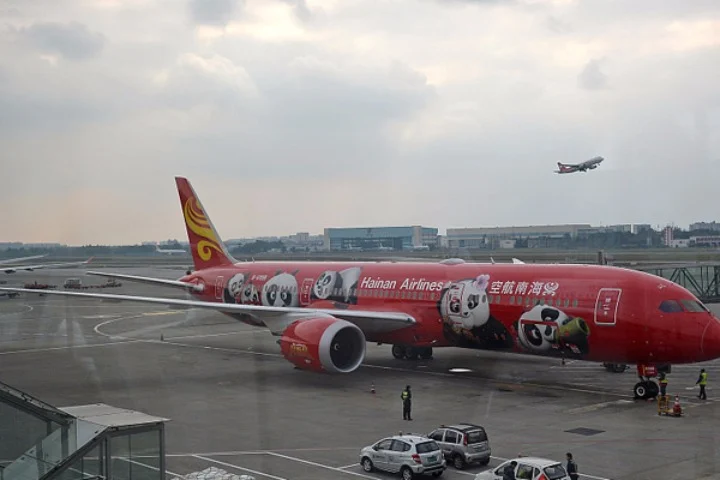
China’s largest private air carrier, Hainan Airlines, is embarking on an aggressive expansion strategy aimed at significantly enhancing its presence in the lucrative China-United States direct flight market. The airline has articulated clear ambitions to secure additional flying rights, particularly for direct services connecting Shanghai, a pivotal economic and financial hub, with major American cities that already benefit from direct links to Beijing. This strategic push is underpinned by a burgeoning demand for trans-Pacific travel, fueled by increasing Chinese outbound tourism and robust business exchanges, further invigorating an already dynamic aviation sector.
The carrier’s proactive stance is a direct response to the escalating volume of Chinese travelers seeking direct access to destinations across the United States. The US has consistently been a top destination for Chinese tourists, with annual visitor numbers seeing robust growth in the years leading up to this expansion, driven by factors such as eased visa restrictions and increasing disposable incomes among China’s burgeoning middle class. This trend has not only stimulated market vitality but has also intensified competition among both Chinese and American airlines vying for a share of this high-yield segment. Hainan Airlines aims to capitalize on this growth by not only adding new direct routes but also by significantly extending its operational reach within the US through strategic alliances.
To bolster its network coverage and facilitate seamless travel for its passengers, Hainan Airlines has announced plans to initiate code-sharing programs with two prominent American carriers: Alaska Airlines and JetBlue Airways. Slated for launch in the coming year, these partnerships are critical for strengthening Hainan Airlines’ footprint across the United States, with a particular focus on enhancing connectivity along the bustling East and West Coasts. Code-sharing agreements allow airlines to sell seats on each other’s flights, providing passengers with more destination options and simpler connections, while enabling the participating airlines to expand their virtual networks without incurring the significant operational costs of launching new routes themselves. For Hainan Airlines, this means improved access to numerous secondary cities and regional hubs beyond its direct gateway destinations, offering a more comprehensive travel experience for its customers and strengthening its competitive position against larger state-owned rivals.
Pubin Liang, the regional managing director of Hainan Airlines in the United States, underscored the carrier’s determination to augment its market share. "We are striving to get the flying rights to launch direct flights between Shanghai and major US cities, especially those that already offer direct flights to Beijing," Liang stated, highlighting the strategic importance of Shanghai as a primary departure point. Shanghai, as China’s most populous city and a global financial center, serves as a critical gateway to the vast Yangtze River Delta region, home to hundreds of millions of people and a hotbed of economic activity. Establishing direct routes from Shanghai to key US destinations like New York, Los Angeles, San Francisco, and Chicago would not only cater to significant existing demand but also provide a crucial alternative to the currently saturated Beijing-centric routes, offering greater convenience and choice for travelers from eastern China.
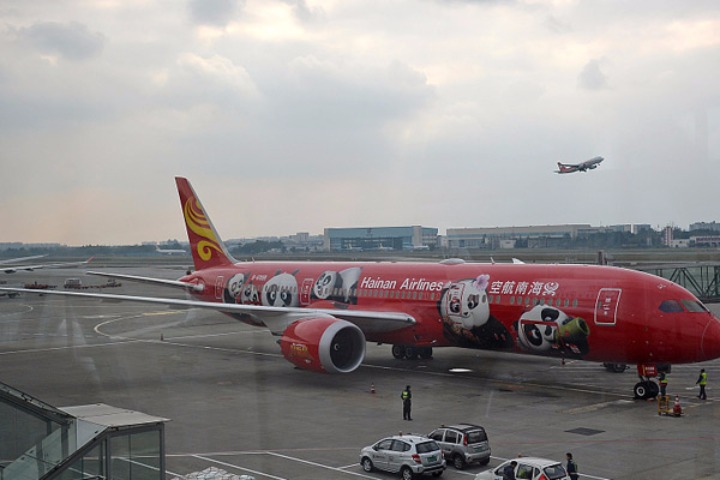
Liang further elaborated on the carrier’s innovative strategy of launching direct flights from China’s rapidly developing second-tier cities to major US metropolitan areas. "We launched a number of direct flights between second-tier Chinese cities and major US cities, following the increasing demand from smaller Chinese cities. North America is one of our most important markets, and we have kept looking for potential opportunities in this market," Liang affirmed. This approach taps into previously underserved markets, offering residents of these burgeoning urban centers the convenience of direct international travel, bypassing the need for domestic transfers through Beijing or Shanghai. This strategy not only caters to growing regional affluence but also positions Hainan Airlines as a pioneer in connecting these emerging Chinese economic powerhouses directly to the global stage, fostering regional economic development and international ties.
Demonstrating this commitment, Hainan Airlines successfully inaugurated two significant direct flights in late 2017: Chongqing to New York on October 20, and Chengdu to New York on October 26. These routes marked a pivotal moment, becoming the first direct air links from Western China to New York, significantly reducing travel times and enhancing connectivity for millions residing in these dynamic regions. Prior to these New York services, Hainan Airlines had already established direct flights connecting both Chongqing and Chengdu with Los Angeles, further solidifying its presence in the trans-Pacific market from China’s interior. The success of these new routes, particularly to New York, is seen as a major breakthrough, with Liang indicating plans for more direct flights between New York and various Chinese cities in the future, signaling a deepening commitment to the East Coast gateway.
Hainan Airlines’ foray into the China-US market commenced in June 2008 with its inaugural direct flight between Beijing and Seattle. Over the past decade, the airline has steadily expanded its trans-Pacific network, evolving into the Chinese carrier operating the most direct routes between the two countries. Currently, Hainan Airlines boasts a portfolio of 12 direct China-US routes, a testament to its sustained growth and strategic vision. This extensive network includes critical connections such as Beijing to Chicago, Beijing to San Jose (serving Silicon Valley), Beijing to Las Vegas (a key leisure destination), and Shanghai to Boston (linking academic and biotech hubs). This diverse array of routes highlights Hainan Airlines’ efforts to cater to a broad spectrum of travelers, encompassing business, tourism, education, and family visits, utilizing a modern fleet of wide-body aircraft such as the Boeing 787 Dreamliner, known for its fuel efficiency and passenger comfort on long-haul routes.
Market Dynamics and Financial Performance
The robust performance of Hainan Airlines’ China-US operations is clearly reflected in its financial metrics. Between January and September of the current year, the airline generated a substantial sales revenue of 2.59 billion yuan (approximately $390 million) from its trans-Pacific flights. This figure represents an impressive 19 percent year-on-year increase, underscoring the strong market demand and the effectiveness of the airline’s expansion strategy. Furthermore, the average passenger load factor for these flights consistently exceeded 80 percent, a robust indicator of high seat occupancy and operational efficiency. An 80% load factor is generally considered a healthy benchmark in the airline industry, signifying that the vast majority of available seats are being utilized, contributing positively to profitability and sustainability of the routes, especially for long-haul international services.
While the China-US flight season typically experiences peak demand from June to October and again during the December-January holiday period due to summer vacations, school breaks, and major holidays, Hainan Airlines has recorded outstanding sales performance during these busy windows. However, like all airlines operating long-haul international routes, Hainan Airlines confronts operational pressures during the low seasons. To mitigate these challenges and maintain revenue streams, the airline strategically adjusts its business approach, frequently offering attractive promotions. These initiatives often include discounted fares, value-added package deals that bundle flights with tourism destination resort tickets, and hotel accommodations. Such dynamic pricing and product bundling strategies are crucial for stimulating demand during leaner periods and ensuring optimal capacity utilization across its network, demonstrating adaptive management in a competitive market.
Strategic Partnerships and Competitive Landscape
The landscape of airline alliances and partnerships is complex and constantly evolving, as illustrated by Hainan Airlines’ previous collaboration with American Airlines. Earlier, Hainan Airlines had engaged in code-sharing and connecting flight agreements with American Airlines, which provided mutual benefits by extending network reach. However, this cooperation experienced a significant weakening following Hainan Airlines’ decision to launch its own direct flight service between Beijing and Chicago, a route already operated by American Airlines. This direct competition on a key, high-volume route inevitably led to a reduction in collaborative efforts and a re-evaluation of the partnership by both carriers.
Pubin Liang acknowledged the adverse consequences of this shift, stating, "This has a significant negative impact, especially on our expansion of networks in the Midwest. Now, we face significant challenges in growing our business in this area with Chicago as the hub." The Midwest region, with Chicago O’Hare International Airport serving as a major hub for American Airlines and offering extensive domestic connections, presents a critical market for connecting Chinese travelers to a vast network of domestic destinations. The diminished cooperation has consequently complicated Hainan Airlines’ ability to seamlessly extend its reach into this vital region, forcing it to seek alternative strategies, such as its new partnerships with Alaska Airlines and JetBlue, to build out its internal US connectivity.
Lin Zhijie, a respected aviation industry analyst and columnist at Carnoc, a leading civil aviation website in China, provided an insightful perspective on the current market dynamics. Zhijie noted that direct flights between major Chinese cities like Beijing and Shanghai and the United States are nearing saturation, compelling airlines to increasingly focus on launching direct services from second-tier Chinese cities to the US. While this strategy addresses untapped demand and provides convenience for regional travelers, it also introduces inherent operational cost pressures due to potentially lower initial passenger volumes and the significant investment required for market development and brand awareness in these newer markets.
Zhijie further emphasized a critical geopolitical dimension: "There is still demand for more China-US routes, but the possible fluctuation of Sino-US relations should also be taken into consideration." This highlights the broader context in which international aviation operates, where bilateral relations, trade policies, visa regulations, and even political rhetoric can significantly influence travel demand, air cargo volumes, and airline profitability. Airlines investing heavily in trans-Pacific routes must remain agile and responsive to potential shifts in the diplomatic and economic relationship between the two global powers, as geopolitical tensions can lead to sudden drops in passenger numbers or changes in regulatory environments.
A Decade of Trans-Pacific Expansion: Hainan Airlines’ US Route Timeline
Hainan Airlines’ journey across the Pacific began just over a decade ago, marking a steady and ambitious expansion that has reshaped the connectivity between China and the United States. The following timeline chronicles the key milestones in the airline’s development of its American routes, illustrating its strategic growth from its initial foray to its current extensive network, highlighting its role as a key player in the trans-Pacific aviation market.
- October 2017: Hainan Airlines launched direct flights connecting Chongqing and New York, followed shortly by Chengdu, capital of Sichuan province, and New York. These inaugural services were groundbreaking, establishing the first direct air links between New York and these two significant cities in Western China. This move was particularly noteworthy for providing millions of residents in these rapidly developing economic zones with unprecedented direct access to the East Coast of the United States, circumventing the need for transfers through traditional hubs like Beijing or Shanghai. The routes serve a growing demographic of business travelers, students, and tourists from China’s interior.
- January 2017: Hainan Airlines inaugurated direct flights between Changsha, the bustling capital of Hunan province in Central China, and Los Angeles. This route further diversified the airline’s network, linking another dynamic second-tier Chinese city with a major US gateway. Los Angeles, a prime destination for tourism, entertainment, and trade, continued to be a strategic focus for Hainan Airlines in connecting various Chinese regions to the American West Coast.
- December 2016: A significant milestone was achieved with the launch of direct flights between Beijing and Las Vegas. This route was the first direct flight service connecting Las Vegas, a global entertainment and convention hub, with the Chinese mainland. It opened up a new avenue for Chinese tourists and business delegates looking to visit the iconic city, further diversifying the types of US destinations served by Hainan Airlines beyond traditional business and educational centers and tapping into the burgeoning Chinese leisure travel market.
- June 2015: This period saw a triple expansion for Hainan Airlines. The carrier launched direct flights between Shanghai and Seattle, providing a new non-stop option from China’s eastern megalopolis to the Pacific Northwest. Simultaneously, it established direct flights between Beijing and San Jose, California, strategically targeting the heart of Silicon Valley and catering to the high demand from tech industry professionals and investors. Concurrently, Hainan Airlines initiated direct flights connecting Shanghai and Boston, forging a crucial link between China’s commercial capital and a leading US hub for education, healthcare, and biotechnology. These launches demonstrated a clear strategy to connect China’s economic powerhouses directly to key US regional centers with high-value traveler segments.
- June 2014: Hainan Airlines inaugurated nonstop flights between Beijing and Boston. This route marked an important step in directly connecting China’s capital with a major East Coast intellectual and medical hub, catering significantly to the student and academic exchange market, as well as medical tourism, which sees a substantial flow of Chinese visitors to American medical institutions.
- September 2013: Hainan Airlines launched direct flights


 Evan Lee Salim
 Suro Senen