 Ali Ikhwan
California’s Governor Jerry Brown declared that climate change has driven weather patterns to unprecedented extremes, and the western United States state must now brace for a persistent wildfire threat, which he characterized as a "new normal." His stark assessment followed a visit to communities devastated by a series of massive wildfires that swept across Southern California, underscoring the escalating challenges posed by a warming planet.
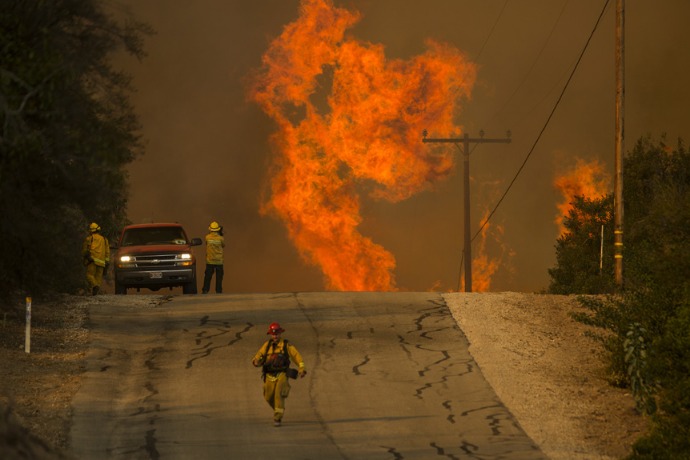
Escalating Wildfire Crisis in Southern California
The devastating blazes, which ignited in early December 2017, rapidly consumed vast tracts of land and threatened densely populated areas. Six major wildfires raged from Santa Barbara County in the north to San Diego County in the south, scorching over 708.2 square kilometers (approximately 273 square miles) and reducing 793 structures to ashes by the time of Governor Brown’s remarks. The economic and emotional toll on residents was immense, with tens of thousands forced to evacuate their homes, leaving behind livelihoods and cherished possessions in the face of the infernos.
The immediate catalyst for the widespread destruction was identified as the unusually potent and sustained Santa Ana winds. These powerful, dry downslope winds, originating from the inland deserts, are a seasonal phenomenon in Southern California during the fall and winter months. Often referred to as "devil winds" due to their role in rapidly spreading wildfires, they reached exceptional intensity during this period. This year, the winds combined with a prolonged hot and dry fire season that extended well into the typically cooler Christmas period, creating a volatile environment ripe for catastrophic fires.

The severity of the situation prompted Governor Brown to declare a state of emergency five days prior to his press conference, mobilizing state resources and coordinating with federal and local agencies to combat the blazes and provide relief to affected populations. The declaration allowed for expedited deployment of personnel, equipment, and funding to support firefighting efforts and aid in recovery.
Governor Brown’s "New Normal" Declaration and Call to Action
Speaking to reporters after surveying the damage in Ventura County, a region heavily impacted by one of the largest fires, Governor Brown articulated a grim reality shaped by a changing climate. "We’re facing a new reality in this state," he stated, emphasizing that the extreme weather events, including increasingly severe wildfires, are no longer isolated incidents but a persistent feature of California’s future.

Brown linked these extreme weather patterns directly to global climate change, a phenomenon that scientists have long warned would lead to more frequent and intense natural disasters. He stressed the urgent need for California to adapt and better prepare for this escalating threat. This preparedness, he explained, extends beyond immediate firefighting capabilities to encompass long-term strategies for mitigating the effects of climate change and building resilience.
The governor outlined his intention to dedicate the coming months to developing a comprehensive plan to address the multifaceted impacts of climate change. This plan, he indicated, would involve significant investment in not only combating fires but also in proactive forest and vegetation management. He also highlighted the necessity of rethinking how communities are built and how people live in a region increasingly susceptible to environmental hazards.

"We have to have the resources to combat the fires and we have to also invest in managing vegetation and forests, and all the ways we dwell in this very wonderful place, but a place that’s getting hotter," Brown elaborated. His vision encompassed a holistic approach, acknowledging that the state’s natural beauty and desirability as a place to live are increasingly threatened by its vulnerability to extreme weather.
Brown also took the opportunity to criticize the federal government’s stance on climate change, urging for more decisive action rather than complacency. "It’s a time to do more, not less," he asserted, drawing a parallel between the unpredictable nature of wildfires and other persistent geological threats like floods and earthquakes. His remarks underscored a growing divide between state and federal approaches to environmental policy and the urgency with which California intended to confront the climate crisis.

A Chronology of the 2017 Southern California Wildfires
The series of fires that gripped Southern California in early December 2017 unfolded rapidly, overwhelming local resources and demanding a statewide response.
- Early December: Unseasonably warm temperatures, low humidity, and the onset of strong Santa Ana winds create tinderbox conditions across Southern California.
- December 4th: The Thomas Fire ignites in Santa Paula, Ventura County. Fueled by intense Santa Ana winds, it quickly explodes in size, becoming the largest and most destructive of the blazes.
- December 5th: Governor Jerry Brown declares a state of emergency for Ventura and Los Angeles counties, mobilizing state resources to assist local firefighting efforts.
- December 6th: Additional fires, including the Rye Fire, Creek Fire, and Skirball Fire, erupt in Los Angeles and Ventura counties, further straining resources and prompting widespread evacuations.
- December 7th: The Lilac Fire ignites in San Diego County, contributing to the growing conflagration and forcing evacuations in that region.
- December 8th: Firefighters continue to battle the relentless blazes, with containment efforts hampered by persistent Santa Ana winds and challenging terrain. The cumulative acreage burned across all fires surpasses hundreds of square miles, and thousands of structures are confirmed destroyed or damaged.
- December 9th – 10th: While some winds begin to subside, firefighters work to gain control of the fires. Evacuations remain in place for many communities, and the full extent of the damage becomes clearer.
- December 11th: Governor Jerry Brown holds a press conference to assess the situation, declaring wildfires a "new normal" due to climate change and outlining plans for future mitigation and adaptation strategies.
Supporting Data and Expert Context
The fires of December 2017 were not isolated events but part of a broader trend of increasing wildfire activity in California and the western United States. Scientific research consistently points to climate change as a significant driver of this trend.

- Rising Temperatures: Average temperatures in California have risen, leading to longer and more intense fire seasons. Warmer temperatures contribute to drier vegetation, making it more susceptible to ignition and faster spread.
- Drought Conditions: Prolonged periods of drought, exacerbated by climate change, deplete moisture in forests and grasslands, turning them into highly flammable fuel.
- Changes in Precipitation Patterns: While overall precipitation may not decrease significantly in some regions, shifts in timing and intensity can lead to drier conditions during critical fire periods.
- Fuel Accumulation: Decades of effective fire suppression have, in some areas, led to an unnatural accumulation of dead vegetation and dense forest undergrowth, which can fuel more intense and uncontrollable fires when they do ignite.
- Wind Events: While Santa Ana winds are a natural phenomenon, their impact can be amplified by drier conditions and increased fuel loads, turning a normal wind event into a catastrophic fire accelerant.
According to data from the National Interagency Fire Center (NIFC), the acreage burned by wildfires in the United States has shown a significant upward trend over the past few decades, with a substantial portion of that increase occurring in the western states. The fires of 2017 in California were a stark illustration of this national pattern.
Broader Implications and Future Outlook
Governor Brown’s declaration of a "new normal" signifies a critical shift in how California, and potentially other regions facing similar threats, must approach disaster preparedness and climate policy. The implications of this evolving landscape are far-reaching:

- Increased Investment in Firefighting and Prevention: The financial burden of combating increasingly severe wildfires will likely necessitate greater investment in firefighting resources, including personnel, equipment, and technology. Prevention strategies, such as forest thinning, controlled burns, and creating defensible spaces around homes, will become even more crucial.
- Rethinking Land Use and Development: The expansion of communities into fire-prone areas, known as the Wildland-Urban Interface (WUI), poses significant risks. Future development will need to consider fire resilience, with stricter building codes and land-use planning to minimize exposure.
- Climate Adaptation Strategies: Beyond immediate disaster response, California must accelerate its efforts in climate adaptation. This includes investing in renewable energy sources, improving water management, and developing infrastructure resilient to extreme weather events.
- Economic Impacts: The destruction of homes, businesses, and infrastructure has significant economic repercussions. The cost of rebuilding, coupled with lost productivity and tourism, can be substantial. Insurance costs are also likely to rise in high-risk areas.
- Public Health Concerns: Wildfires release large amounts of smoke and particulate matter into the air, posing serious public health risks, particularly for vulnerable populations such as children, the elderly, and individuals with respiratory conditions.
- Political and Policy Debates: The escalating wildfire crisis is likely to intensify political debates surrounding climate change, environmental regulations, and resource allocation, both at the state and federal levels. Governor Brown’s direct criticism of Washington’s response highlights this ongoing tension.
The fires of December 2017 served as a potent reminder that the challenges posed by climate change are not abstract future threats but present-day realities demanding urgent and comprehensive action. California, with its diverse ecosystems and significant population density in fire-prone regions, finds itself at the forefront of this evolving environmental crisis, necessitating a fundamental re-evaluation of its strategies for resilience and sustainability. The "new normal" of more extreme weather demands a more proactive and adaptive approach from governments, communities, and individuals alike.


 Nana Wu
 Suro Senen