Jia Lissa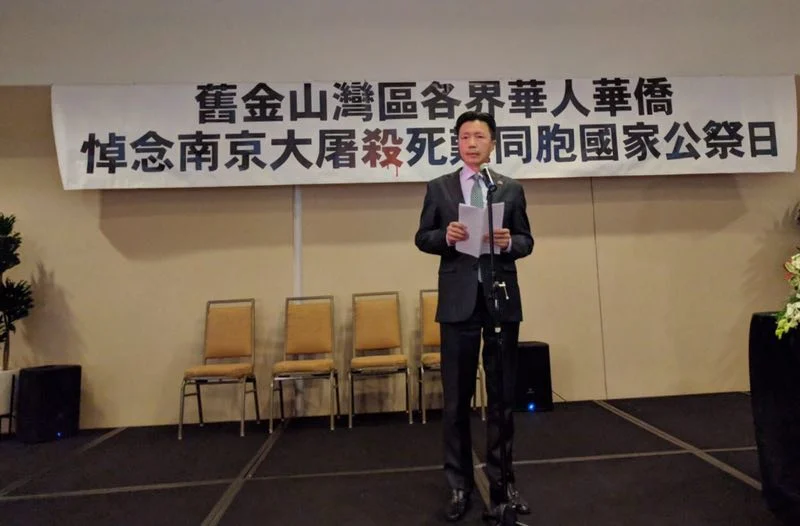
Hundreds of activists and members of the Chinese and broader Asian communities gathered in San Francisco on Sunday to mark the 80th anniversary of the Nanjing Massacre, a horrific period of violence committed by the Japanese military during World War II. The solemn memorial service, held annually for the past two decades, aimed to shed light on the war crimes perpetrated by the Imperial Japanese Army and to ensure that this dark chapter of history is never forgotten.
A Solemn Gathering to Remember and Educate
The memorial, a cornerstone of remembrance for the Chinese diaspora in the San Francisco Bay Area, was jointly organized by several prominent organizations: the Rape of Nanking Redress Coalition, the Committee to Promote Reunification of China, the Alliance for Preserving the Truth of Sino-Japanese War, and the Comfort Women Justice Coalition. Their collective efforts aim to prevent historical revisionism and to foster a deeper understanding of the atrocities that occurred.
Zha Liyou, acting Chinese consul general in San Francisco, addressed the assembled crowd, emphasizing the gravity of the events. "The Japanese Army blatantly violated international conventions and committed the extremely cruel atrocity in Nanjing, where 300,000 Chinese civilians were murdered and one third of the buildings were destroyed," Zha stated, underscoring the scale of destruction and loss of life.
The Horrors of Nanjing: A Deep Dive into the Atrocities
The Nanjing Massacre began on December 13, 1937, when Japanese troops captured the then-capital of China, Nanjing. What followed was a period of over 40 days of unspeakable brutality, during which an estimated 300,000 Chinese civilians and unarmed soldiers were systematically murdered. The violence extended to widespread rape, with tens of thousands of women subjected to sexual assault. This horrific event remains a deeply painful scar on the collective memory of China and a stark reminder of the human cost of war.
Judith Mirkinson, president of the Comfort Women Justice Coalition, drew a powerful parallel between the Nanjing Massacre and the plight of "comfort women," women who were sexually enslaved by the Japanese Imperial Army during World War II. "Our stories are linked," Mirkinson asserted. "The fate of over 400,000 women sexually enslaved by the Japanese Imperial Army during World War II is part and parcel of what happened during the Nanjing Massacre." She highlighted the interconnectedness of these wartime atrocities, emphasizing that a comprehensive understanding of history requires acknowledging all forms of suffering inflicted during that era.
Seeking Truth and Reconciliation: A Call for Accountability
Mirkinson articulated a profound sentiment regarding the path to lasting peace in the 21st century, a century already marked by immense violence. "The 20th century has been called the most violent century in the history of the world, and that one way to ensure peace in the 21st century is through truth and reconciliation," she stated. She stressed that reconciliation cannot be achieved without a full acknowledgement of the truth.
"Reconciliation does not come without truth. So the Japanese government must acknowledge their crimes," Mirkinson urged. "They must give justice to those few people who still survive from the Nanjing Massacre and to the memory of what happened there." This call for acknowledgement and justice resonates deeply with survivors and their descendants, who have long sought recognition and accountability for the immense suffering endured.
Broader Context: The Sino-Japanese War and Its Devastating Impact
The Nanjing Massacre was not an isolated incident but a part of the larger, brutal conflict that engulfed China during the Japanese occupation. Japan’s invasion of northeastern China began in September 1931, escalating into a full-scale invasion on July 7, 1937. This prolonged period of occupation, which lasted until 1945, resulted in an estimated 35 million Chinese soldiers and civilians killed or injured. The scale of human loss and suffering during this entire period is almost incomprehensible.
The commemoration in San Francisco this year held particular significance as it coincided with the Chinese government’s designation of December 13th as the National Memorial Day for Nanjing Massacre Victims. This official recognition underscores the event’s importance in national memory and its role in promoting peace and preventing future atrocities.
The Purpose of Remembrance: Honoring Victims, Inspiring Peace
The organizers and speakers at the memorial service were clear about the purpose of their remembrance. It is not about perpetuating animosity, but about ensuring that history is not forgotten and that its lessons are learned. "To remember the atrocities committed by the Japanese Army during World War II does not mean to pass on the enmity but rather to remind people not to forget the history and inspire them to love peace," Zha Liyou explained. He expressed hope that remembering the Nanjing Massacre would offer some solace to the victims and those who sacrificed their lives, assuring them that their experiences are etched into the memory of the Chinese people and the broader tapestry of world civilization.
International Recognition and the Enduring Significance of Memory
The historical significance of the Nanjing Massacre has been formally recognized on an international level. In 2015, the Nanjing Massacre archives were inscribed on the UNESCO Memory of the World Register. This designation signifies the preservation of documented heritage of universal value, acknowledging the profound and lasting impact of these events on human history.
Supporting Data and Chronological Context
To provide a clearer understanding of the historical events surrounding the Nanjing Massacre, the following timeline and supporting data are crucial:
Timeline of Key Events:
- September 18, 1931: Mukden Incident, marking the beginning of Japan’s invasion of Manchuria.
- July 7, 1937: Marco Polo Bridge Incident, leading to the full-scale Second Sino-Japanese War.
- December 13, 1937: Japanese troops capture Nanjing, initiating the massacre.
- Late January 1938: Japanese forces withdraw from Nanjing, ending the systematic slaughter.
- 1937-1945: The duration of the Second Sino-Japanese War, during which an estimated 35 million Chinese soldiers and civilians perished or were injured.
- August 15, 1945: Japan surrenders, marking the end of World War II and the occupation.
- December 13, 2017: 80th anniversary of the Nanjing Massacre, commemorated in San Francisco and globally.
- 2015: Nanjing Massacre archives inscribed on the UNESCO Memory of the World Register.
Supporting Data on the Nanjing Massacre:
- Estimated Death Toll: Over 300,000 Chinese civilians and unarmed soldiers.
- Duration of Mass Slaughter: Approximately 40 days, commencing on December 13, 1937.
- Destruction of Nanjing: Approximately one-third of the city’s buildings were destroyed.
- Rape and Sexual Violence: Tens of thousands of women were victims of rape and sexual assault.
- Comfort Women: An estimated 400,000 women were subjected to sexual slavery by the Japanese Imperial Army across occupied territories during WWII, a related atrocity often discussed alongside the Nanjing Massacre.
- Casualties of the Second Sino-Japanese War (1937-1945): An estimated 35 million Chinese soldiers and civilians killed or injured.
Broader Implications and the Pursuit of Global Peace
The annual commemoration of the Nanjing Massacre serves multiple critical functions. Firstly, it is an act of remembrance and honor for the millions of victims whose lives were brutally cut short. Secondly, it is a vital educational tool, aiming to inform younger generations and the international community about the horrific realities of war and the consequences of unchecked aggression. Thirdly, it acts as a form of advocacy, urging for historical truth, accountability, and justice.
The call for truth and reconciliation from organizations like the Comfort Women Justice Coalition underscores the ongoing need for Japan to fully acknowledge its wartime past. While Japan has issued apologies, many survivors and their supporters feel these have been insufficient or insincere, lacking concrete steps towards genuine atonement and redress. The inscription on the UNESCO Memory of the World Register is a testament to the historical record’s irrefutability, providing a global platform for the truth of these events.
By organizing and participating in such memorial services, the Chinese community and their allies in the San Francisco Bay Area are actively contributing to a global dialogue on historical memory, human rights, and the enduring pursuit of peace. They are a voice reminding the world that understanding and confronting the darkest moments of history is not an act of dwelling on the past, but a necessary step towards building a more just and peaceful future for all. The lessons learned from the Nanjing Massacre and the broader Sino-Japanese War remain profoundly relevant in a world still grappling with conflict and the potential for mass atrocities.


 Nana Wu
 Suro Senen