Pevita Pearce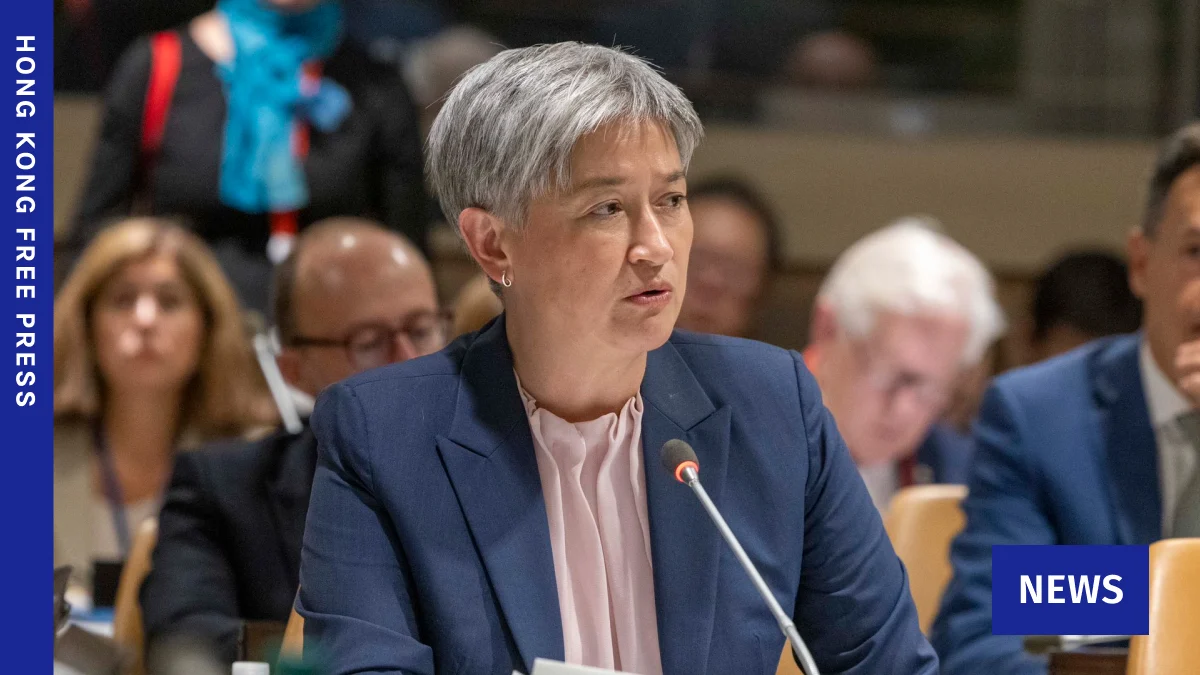
Australian Foreign Minister Penny Wong on Wednesday publicly articulated Canberra’s profound concerns regarding Beijing’s recent test of a nuclear-capable missile in the South Pacific, characterizing the launch as “destabilising” during a pivotal meeting with her Chinese counterpart, Wang Yi, in Manila. This stern diplomatic exchange occurred on the sidelines of a gathering of Southeast Asian ministers in the Philippines, underscoring the escalating regional tensions emanating from China’s growing military assertiveness. The condemnation of the missile test was paired with a strong rebuke of China’s "dangerous conduct" in the South China Sea, following a recent and contentious clash between Philippine and Chinese vessels at a disputed shoal.
Direct Diplomatic Confrontation Over Missile Test

Foreign Minister Wong’s direct communication of Australia’s disquiet to Foreign Minister Wang Yi highlights the gravity with which Canberra views the latest display of China’s military capabilities. The test, which involved a Chinese submarine launching a ballistic missile fitted with a dummy warhead, earlier this month, saw the projectile traverse a significant distance into the Pacific Ocean. While precise coordinates were not disclosed, monitors indicated the missile’s impact zone was located in an expanse of ocean situated broadly between the Solomon Islands, Nauru, and Tuvalu—a strategically sensitive area within the Pacific Island nations.
Australia had previously voiced its dissatisfaction, stating it did not receive sufficient or timely notification of the missile test, an omission that raises questions about transparency and adherence to international norms for military exercises, particularly those involving such potent weaponry. This lack of communication is seen as contributing to regional instability and increasing the risk of miscalculation. Furthermore, the test has drawn widespread condemnation from a dozen Pacific Island countries, which collectively denounced it for infringing upon the region’s long-standing aspiration and declared commitment to remain free of nuclear weapons testing. These nations, many of which have historical memories of nuclear testing conducted by other powers in the past, view such actions as a direct affront to their sovereignty and environmental security. The repeated calls for a nuclear-free Pacific zone, a sentiment deeply embedded in the region’s geopolitical identity since the 1980s, lend particular weight to their collective disapproval.
The development of submarine-launched ballistic missiles (SLBMs) is a significant aspect of any major power’s nuclear deterrent strategy, offering a second-strike capability that enhances strategic stability by ensuring retaliation even if land-based assets are neutralized. China’s continuous investment in advanced naval platforms, including nuclear-powered submarines capable of launching such missiles, signifies a determined effort to modernize and expand its strategic military reach. While China asserts that its military developments are purely for defensive purposes, tests of this nature in international waters, especially without prior notification, invariably fuel regional anxieties and prompt questions about Beijing’s long-term strategic intentions.

Escalating Tensions in the South China Sea
Beyond the missile test, Minister Wong also reiterated Australia’s "real concerns about behaviour that is destabilising and risky" in reference to a recent incident at Second Thomas Shoal (known as Ayungin Shoal in the Philippines). This incident, which occurred on Monday, involved a confrontation between Philippine and Chinese vessels, reportedly resulting in a Philippine sailor being struck on the head with a baton. Reports from the Philippine side indicated that Chinese Coast Guard personnel engaged in aggressive maneuvers, including ramming and employing water cannons against Philippine boats attempting to resupply the BRP Sierra Madre—a deliberately grounded naval vessel that serves as a military outpost for the Philippines in the disputed area.
The Second Thomas Shoal is a critical flashpoint within the broader South China Sea dispute, a complex maritime and territorial disagreement involving China, the Philippines, Vietnam, Malaysia, Brunei, and Taiwan. China claims almost the entire South China Sea under its expansive "nine-dash line," a claim that was largely invalidated by an international arbitral tribunal in The Hague in 2016. The ruling affirmed the Philippines’ sovereign rights over features like Second Thomas Shoal, which lies within its exclusive economic zone (EEZ). Despite this international legal decision, China has consistently rejected the ruling and continues to assert its claims through a persistent and escalating presence of its Coast Guard and maritime militia.
The recent confrontation at the shoal is part of a pattern of increasing aggression by Chinese vessels aimed at preventing Philippine resupply missions to the BRP Sierra Madre. The vessel, intentionally beached in 1999, is a symbol of Philippine sovereignty in the Spratly Islands and its continued presence is crucial for Manila’s claims in the area. Incidents involving water cannons, physical contact, and dangerous maneuvers not only endanger the lives of personnel but also significantly heighten the risk of unintended escalation into a broader conflict. Such actions are perceived by many regional states and international observers as a deliberate challenge to the rules-based international order and freedom of navigation.
Australia’s Regional Posture and Support for Maritime Security
In light of these developments, Foreign Minister Wong underscored Australia’s steadfast commitment to a region characterized by peace, stability, and prosperity. She stressed the imperative for all nations, including major powers, to adhere strictly to international law, particularly the United Nations Convention on the Law of the Sea (UNCLOS). UNCLOS provides the international legal framework governing all maritime activities, including navigation, resource exploitation, and the resolution of maritime disputes. Adherence to its provisions is widely considered fundamental to maintaining order and predictability in the world’s oceans.

In a tangible demonstration of Australia’s commitment to regional maritime security and its deepening partnership with the Philippines, Wong announced a substantial donation of 413 million Philippine pesos (approximately $6.7 million USD) worth of cutting-edge drone technology and comprehensive operator training to the Philippine Coast Guard. This significant aid package, announced during Wong’s visit to a Philippine Coast Guard vessel on Tuesday, is designed to bolster the Philippines’ surveillance and reconnaissance capabilities in its maritime domains, including the contested areas of the South China Sea. The provision of advanced drone technology will enable the Philippine Coast Guard to monitor its territorial waters more effectively, enhance its ability to respond to incidents, and improve maritime domain awareness—critical components for upholding its sovereign rights and ensuring maritime safety.
This Australian initiative forms part of Canberra’s broader "Pacific Step-Up" strategy, which aims to strengthen its engagement and partnerships across the Indo-Pacific region. By investing in the maritime security capabilities of key regional partners like the Philippines, Australia seeks to contribute to a more secure and stable regional environment, where international law is respected and disputes are resolved peacefully. The move also signals a strengthening of Australia’s diplomatic and security ties with the Philippines, which has recently intensified its own alliance with the United States in response to China’s assertiveness.
Broader Geopolitical Implications and the Rules-Based Order

The twin incidents—China’s missile test and the South China Sea confrontation—serve as stark reminders of the complex and increasingly fraught geopolitical landscape of the Indo-Pacific. They highlight the ongoing strategic competition between established powers and China’s growing military might and willingness to challenge existing norms.
The missile test in the South Pacific raises alarms not only for regional security but also for global non-proliferation efforts. While a dummy warhead was used, the capability demonstration underscores China’s advanced missile technology, which could potentially be deployed in a conventional or nuclear capacity. Such tests, particularly those without adequate transparency, contribute to an arms race dynamic and complicate efforts to build trust and reduce strategic risks among nuclear-armed states. The Pacific Islands, having borne the brunt of nuclear testing in the past, view any such activity with profound apprehension, fearing environmental consequences and a resurgence of great power competition in their backyard.
In the South China Sea, the repeated confrontations pose a direct threat to freedom of navigation, a principle vital for global trade and security. The international community, including major maritime nations, relies on the unimpeded passage through these waters. China’s tactics, which blur the lines between civilian and military actions, challenge the ability of smaller states to assert their sovereign rights and manage their exclusive economic zones. The injury to a Philippine sailor marks a dangerous escalation, raising the specter of direct physical conflict and demanding a robust international response to uphold the principles of peaceful resolution of disputes and adherence to international law.

The discussions in Manila, particularly between Foreign Ministers Wong and Wang Yi, occur at a delicate juncture for Australia-China relations. After a period of significant diplomatic strain, marked by trade disputes and political tensions, there have been concerted efforts from both sides to stabilize and normalize the relationship. However, Australia’s unwavering commitment to a rules-based international order and its strong stance on regional security issues, as articulated by Minister Wong, demonstrate that while dialogue is ongoing, Canberra will not shy away from confronting Beijing on actions perceived as destabilizing or contrary to international law. This balancing act—engaging diplomatically while firmly defending national interests and regional stability—defines the current state of Australia’s foreign policy in the Indo-Pacific.
Ultimately, the incidents underscore the urgent need for robust multilateral diplomacy and a concerted international effort to de-escalate tensions, promote transparency, and reinforce the adherence to international law in the Indo-Pacific. The stability and prosperity of the region, and indeed the global economy, depend on the ability of nations to navigate these complex challenges without resorting to coercion or conflict.


 Evan Lee Salim
 Muslim