Asro
Asro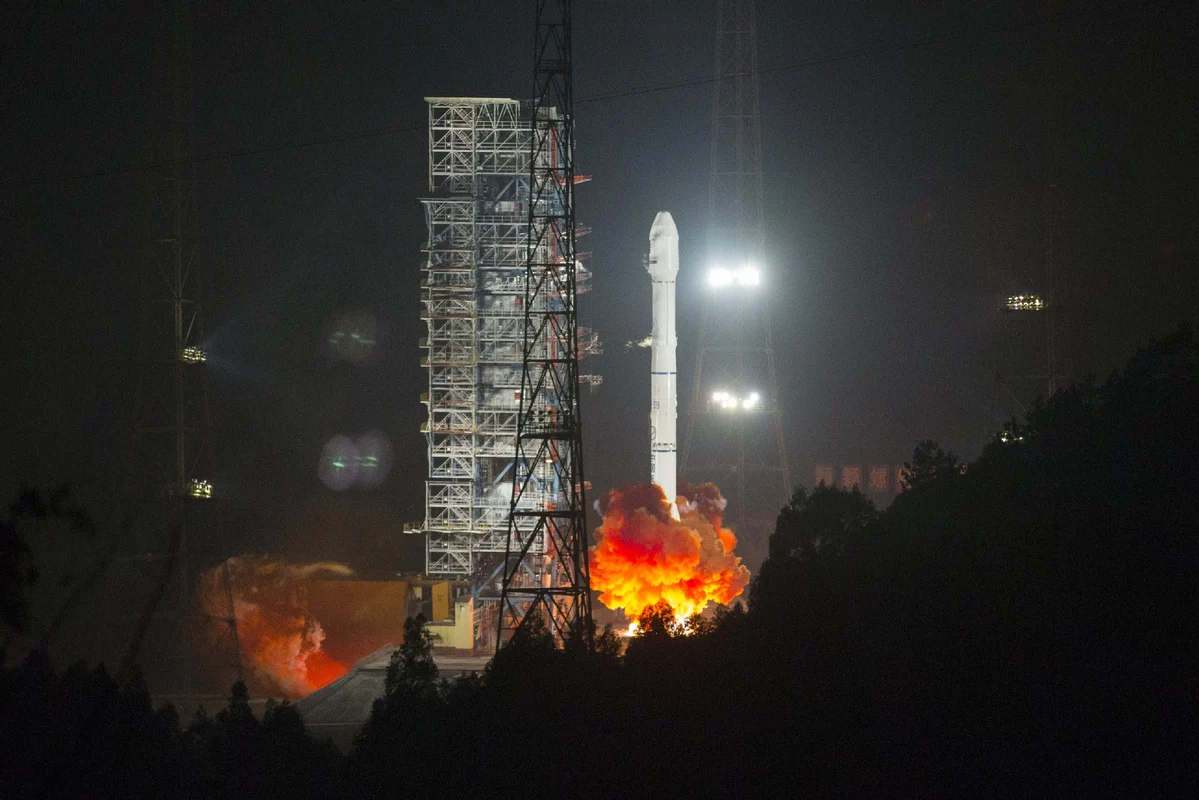
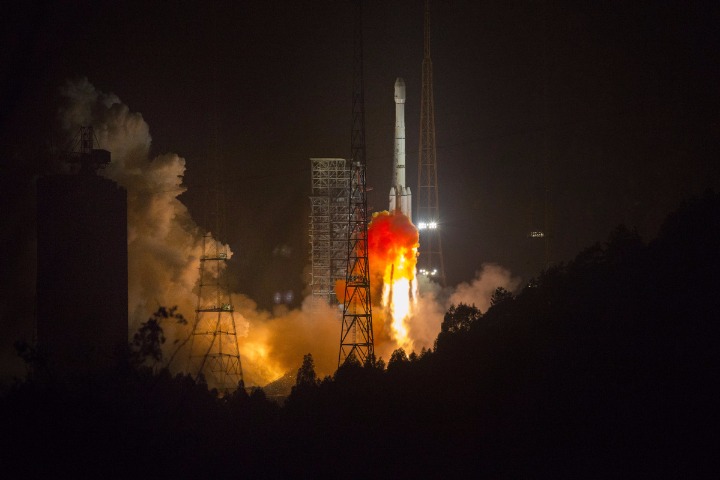
The successful launch of Algeria’s first communication satellite, Alcomsat-1, from China’s Xichang Satellite Launch Center in Sichuan province on Monday, December 11, 2017, at precisely 00:40 Beijing time, signifies a pivotal moment in the burgeoning space cooperation between China and Algeria. This landmark achievement, executed aboard a Long March-3B carrier rocket, marks the 258th mission for China’s venerable Long March rocket family and heralds a new chapter in Algeria’s technological advancement and digital transformation.
A Milestone in Sino-Algerian Aerospace Partnership
Alcomsat-1 represents the inaugural collaborative project in the aerospace industry between the People’s Republic of China and the People’s Democratic Republic of Algeria. The satellite’s successful insertion into its designated orbit underscores the deepening strategic partnership between the two nations, extending beyond traditional economic and political ties into the highly sophisticated realm of space technology. This venture is not merely about placing a satellite in orbit; it is a testament to shared ambition and mutual trust, paving the way for future joint endeavors in space exploration and application.
The satellite, designed to operate for a significant lifespan, is poised to revolutionize Algeria’s communication infrastructure. Its capabilities are multifaceted, encompassing a broad spectrum of critical applications that will directly benefit Algerian citizens and institutions. These include enhanced broadcast and television services, ensuring wider reach and higher quality programming across the nation. Furthermore, Alcomsat-1 will bolster emergency communication networks, a vital component for disaster preparedness and response. The satellite will also be instrumental in facilitating distance education, bridging geographical divides and expanding access to learning opportunities for students in remote areas.
Empowering Algeria Through Advanced Satellite Technology
The strategic deployment of Alcomsat-1 is set to significantly advance Algeria’s e-governance initiatives, enabling more efficient delivery of public services and fostering greater citizen engagement. For businesses, the satellite will provide robust enterprise communication solutions, improving connectivity and operational efficiency. Perhaps one of the most transformative applications will be the expansion of broadband internet access, bringing high-speed connectivity to underserved regions and unlocking new economic and social opportunities. Additionally, the satellite will support satellite-based navigation systems, crucial for transportation, logistics, and resource management.
This comprehensive suite of applications highlights Algeria’s forward-thinking approach to leveraging space technology for national development. The collaboration with China, a global leader in satellite manufacturing and launch services, has provided Algeria with access to cutting-edge technology and expertise, accelerating its journey towards becoming a digitally empowered nation.
The Long March Legacy: A Reliable Pathway to Space
The Long March-3B carrier rocket, the workhorse behind this successful launch, has a distinguished track record in the global space industry. Its deployment for the Alcomsat-1 mission underscores China’s growing capacity to support international clients with reliable and cost-effective launch services. The Long March series, initiated in 1970, has evolved significantly over the decades, with continuous improvements in design, performance, and safety. The 258th flight mission signifies the program’s maturity and its crucial role in China’s ambitious space agenda, which includes the development of its own space station and lunar exploration programs.
The successful launch of Alcomsat-1 at precisely 00:40 local time on December 11, 2017, was the culmination of meticulous planning, rigorous testing, and the dedicated efforts of hundreds of engineers and technicians from both nations. The launch window was carefully selected to ensure optimal orbital insertion, minimizing fuel consumption and maximizing the satellite’s operational lifespan.
Background Context: A Growing Trend in Space Diplomacy
The launch of Alcomsat-1 is emblematic of a broader global trend where space technology is increasingly becoming a tool for diplomatic engagement and economic development. China, in particular, has been actively expanding its commercial launch capabilities and offering satellite development services to a growing number of international partners. This strategy not only diversifies China’s economic interests but also solidifies its position as a major player in the global space arena.
For Algeria, this project represents a significant leap in its technological self-reliance. Historically, many developing nations have relied on established space powers for their satellite needs. However, with the rise of countries like China offering more accessible and customized solutions, nations are increasingly able to tailor space assets to their specific national priorities. This shift empowers them to control their own data, enhance national security, and drive domestic innovation.
The initial discussions and agreements for Alcomsat-1 likely spanned several years, involving extensive negotiations on technical specifications, payload design, manufacturing processes, and launch services. This collaborative process would have involved Algerian engineers and scientists working closely with their Chinese counterparts, fostering knowledge transfer and building capacity within Algeria’s nascent space sector.
Timeline of a Historic Launch
- Early 2010s: Initial discussions and feasibility studies between China and Algeria regarding potential cooperation in the satellite sector.
- Mid-2010s: Formal agreement signed for the development and launch of Algeria’s first communication satellite. Design and manufacturing of Alcomsat-1 commence in China.
- Late 2016 – Early 2017: Intensive testing and integration of the Alcomsat-1 satellite and its associated ground control systems. Algerian personnel receive training on satellite operations and management.
- December 2017: The Alcomsat-1 satellite is transported to the Xichang Satellite Launch Center. Final pre-launch checks and preparations are conducted.
- December 11, 2017, 00:40 Beijing Time: The Long March-3B carrier rocket successfully launches Alcomsat-1 into its preset orbit.
- Post-Launch: Initial telemetry data confirms successful orbit insertion and satellite health. Ground control teams begin the process of satellite commissioning and payload activation.
Official Responses and Inferred Reactions
While specific official statements from the immediate aftermath of the launch are not detailed in the provided content, it is reasonable to infer enthusiastic responses from both the Chinese and Algerian governments.
From the Chinese side, the launch would have been hailed as a significant success for China’s CASC (China Aerospace Science and Technology Corporation) and a testament to the nation’s growing prowess in the global space market. Officials would likely have emphasized the reliability of the Long March rockets and the comprehensive capabilities offered by China’s aerospace industry. The launch would also have been framed as a concrete example of China’s commitment to fostering mutually beneficial partnerships under initiatives like the Belt and Road Initiative, showcasing how technological cooperation can drive development in partner nations.
From the Algerian side, the launch would have been met with immense pride and optimism. Algerian leaders would have celebrated this milestone as a crucial step towards national technological sovereignty and a catalyst for socio-economic progress. The Minister of Post, Telecommunications, Information and Technology, or a similar portfolio holder, would likely have expressed deep gratitude to China for its partnership and highlighted the transformative potential of Alcomsat-1 for the Algerian people. The satellite’s deployment would have been seen as a strategic asset for national security, economic diversification, and improved quality of life.
Discussions regarding the potential for future collaborations, perhaps involving more advanced satellites or even joint participation in space exploration missions, would have been a natural progression following such a successful undertaking.
Broader Impact and Implications
The successful launch of Alcomsat-1 carries significant implications for both Algeria and the broader landscape of international space cooperation.
For Algeria:
- Digital Inclusion: Alcomsat-1 is a critical enabler of digital inclusion. By extending broadband internet and telecommunications services to remote and rural areas, it bridges the digital divide, allowing more citizens to participate in the digital economy, access online education, and benefit from e-governance services. This is particularly important for a country with a vast geographical area and diverse terrain.
- Economic Growth: Enhanced communication infrastructure is a prerequisite for economic development. Improved connectivity facilitates business operations, supports the growth of industries reliant on data and communication, and can attract foreign investment. The satellite’s navigation capabilities can also optimize logistics and resource management.
- National Security and Resilience: The ability to maintain communication networks, especially during emergencies or natural disasters, is paramount for national security and resilience. Alcomsat-1 provides Algeria with greater control and redundancy in its communication systems, reducing reliance on external infrastructure.
- Technological Advancement and Human Capital Development: The project involves significant technology transfer and capacity building. Algerian engineers and technicians would have gained invaluable experience in satellite design, operation, and maintenance, fostering a domestic pool of expertise that can support future space-related endeavors.
For China:
- Commercial Space Leadership: Each successful international launch reinforces China’s position as a reliable and competitive provider of launch services and satellite technology. This strengthens its commercial space sector and contributes to its overall global influence in high-technology industries.
- Geopolitical Soft Power: By assisting developing nations in acquiring advanced space capabilities, China enhances its diplomatic ties and projects a positive image as a partner in development, contributing to its soft power.
- Innovation and R&D: Collaboration with international partners often leads to innovation and the refinement of technologies, benefiting China’s own space programs and research and development efforts.
For the Global Space Industry:
- Democratization of Space: The increasing accessibility of satellite technology from nations like China is contributing to the democratization of space, enabling more countries to leverage space assets for their development goals.
- Increased Competition: The growing number of capable space nations fosters healthy competition, potentially leading to more cost-effective solutions and faster technological advancements across the industry.
- Focus on Applications: The success of projects like Alcomsat-1 highlights the growing emphasis on the practical applications of space technology for societal benefit, moving beyond pure exploration to address tangible development needs.
In conclusion, the launch of Alcomsat-1 is more than just a technical feat; it is a potent symbol of international cooperation, technological empowerment, and a shared vision for a more connected and advanced future. It underscores the transformative power of space technology when harnessed for the benefit of nations and their people.


 Nana Wu
 Suro Senen