 Nana
Nana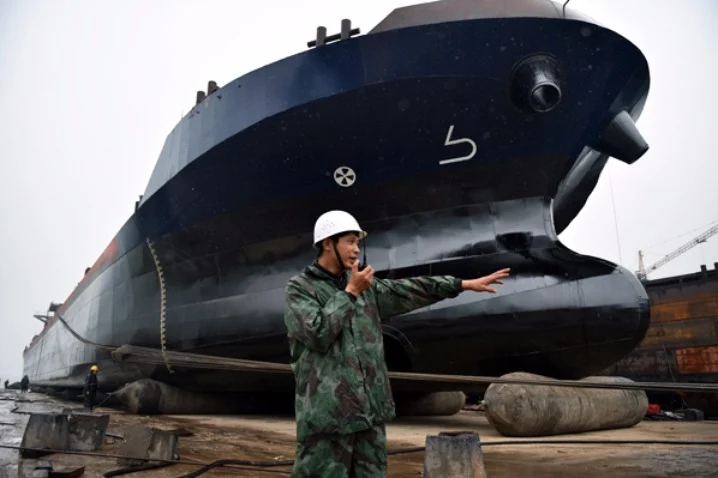
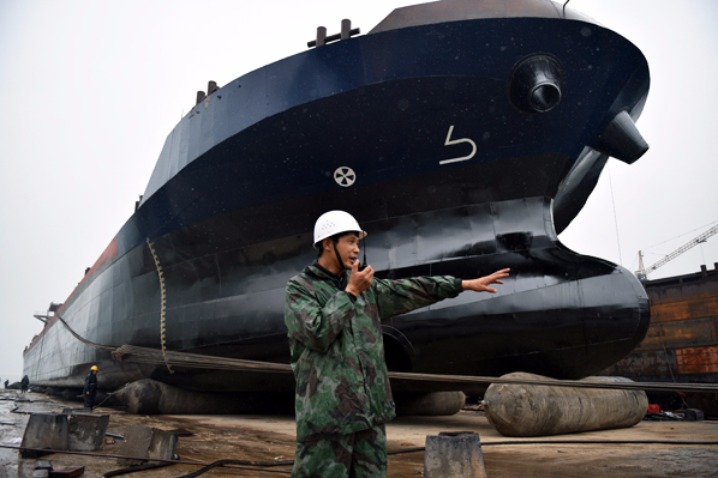
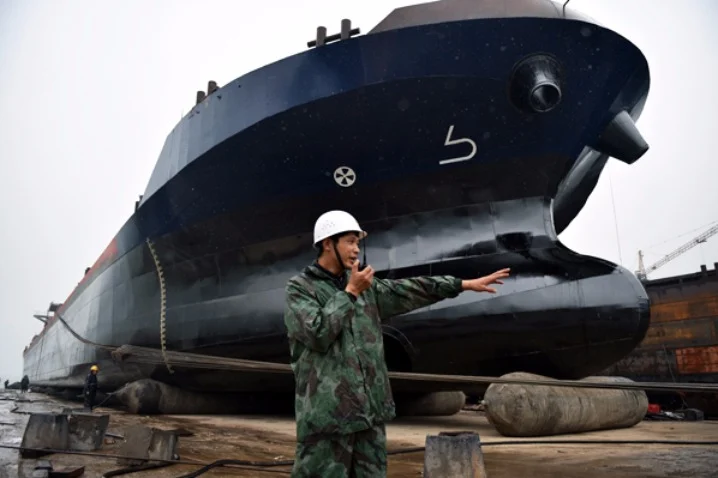
In a significant realignment of the global maritime industry, China has surged ahead to claim the top spot in worldwide shipbuilding orders for the first eleven months of the year, eclipsing South Korea for the first time in seven years. This milestone, revealed by data from the authoritative British shipbuilding and marine analysis agency Clarkson Research Services, underscores China’s burgeoning strength and strategic pivot within the high-stakes sector, signaling a profound shift from a focus on sheer volume to an emphasis on high-value-added and technologically advanced vessels.
The data, released on a Friday, highlighted China’s impressive cumulative order volume of 7.13 million compensated gross tons (CGT) across 324 vessels from January to November. This performance significantly outpaced South Korea, which recorded 5.74 million CGT during the same period. The metrics further solidified China’s dominant position, securing a substantial 36.3 percent of the global market share – a decisive 7 percentage points higher than South Korea’s 29.4 percent. This ascendancy is not merely a statistical victory but represents the culmination of years of strategic investment, technological advancement, and a concerted national effort to transform China into a leading maritime power.
Historical Context: Shifting Tides in Global Shipbuilding
For decades, the global shipbuilding landscape has been characterized by a dynamic interplay of national economies, technological prowess, and strategic industrial policies. Historically, European nations, particularly the United Kingdom and Germany, dominated shipbuilding in the 19th and early 20th centuries. The post-World War II era saw Japan rise to prominence, leveraging efficient production techniques and a robust industrial base to become the world’s leading shipbuilder.
By the late 20th century, South Korea emerged as a formidable challenger, quickly surpassing Japan. Korean shipyards, such as Hyundai Heavy Industries, Samsung Heavy Industries, and Daewoo Shipbuilding & Marine Engineering (now Hanwha Ocean), capitalized on lower labor costs, massive government support, and a keen focus on high-value ships like Liquefied Natural Gas (LNG) carriers, very large crude carriers (VLCCs), and complex offshore structures. Their dominance was cemented through a combination of aggressive pricing, advanced engineering, and rapid delivery capabilities, often leaving competitors struggling to keep pace.
China’s entry into the global shipbuilding arena began in earnest in the early 2000s, initially focusing on simpler, mass-produced vessels like bulk carriers and tankers, often at highly competitive prices. This strategy allowed Chinese yards to rapidly expand capacity and gain market share, albeit often at the lower end of the value chain. However, the ambition to move beyond this "quantity over quality" paradigm was always clear. Government initiatives, substantial state-backed investments, and a national industrial strategy aimed at technological self-sufficiency and upgrading key industries, including shipbuilding, laid the groundwork for the current breakthrough. The global financial crisis of 2008-2009, which severely impacted global trade and shipping demand, ironically provided an opportunity for Chinese yards to consolidate their position while some established players struggled.
The Numbers Game: China’s Ascendance in Orders
The data from Clarkson Research Services provides a clear quantitative measure of China’s recent success. The metric of Compensated Gross Tons (CGT) is particularly telling as it accounts for the amount of work required to build a ship, reflecting both its size and complexity. Therefore, a higher CGT figure indicates not just more ships, but more sophisticated and valuable vessels. China’s 7.13 million CGT signifies a significant leap in its capability to secure orders for complex projects, moving beyond the simpler vessel types that characterized its earlier growth.
This market leadership represents a critical inflection point. For seven consecutive years prior to this period, South Korea had maintained its position as the top shipbuilder by order volume. China’s ability to not only close this gap but decisively surpass its rival demonstrates a fundamental shift in the industry’s competitive dynamics. The 36.3 percent global market share for China, compared to South Korea’s 29.4 percent, highlights a growing divergence in their trajectories, with Chinese shipyards increasingly attracting a broader range of international clients for diverse and high-spec vessels.
A Strategic Pivot: High-Value Vessels Drive Growth
A key factor underpinning China’s resurgence is its deliberate strategic pivot towards high-value-added ships. The era of simply churning out basic bulk carriers is gradually being replaced by a focus on technologically intensive and economically lucrative segments. This includes ultra-large container vessels (ULCVs), sophisticated LNG carriers, advanced offshore platforms, and, most notably, luxury cruise ships – a segment traditionally dominated by a handful of European yards.
This shift is not accidental but a direct outcome of national industrial policies, such as "Made in China 2025," which prioritize technological innovation, smart manufacturing, and the development of high-end equipment. Chinese shipyards have invested heavily in research and development, upgrading their facilities, and fostering a skilled workforce capable of handling complex engineering challenges.
Flagship Orders: Cruising into New Territory
Several landmark orders this year illustrate China’s growing prowess and ambition in the high-end shipbuilding market. One such example is the significant order placed by French shipping giant CMACGM SA. In August, the company commissioned nine state-of-the-art 22,000 twenty-foot equivalent units (TEU) container vessels. These massive ships, among the largest in the world, were divided between Shanghai Waigaoqiao Shipbuilding Co and Hudong Zhonghua Shipbuilding Co. The construction of ULCVs demands advanced engineering, sophisticated welding techniques, and precise logistical coordination, signifying the trust global shipping lines are placing in Chinese yards for their most critical assets.
Even more indicative of China’s ascent into an entirely new league is the groundbreaking agreement signed in October. China State Shipbuilding Corp (CSSC), China Investment Corp (CIC), and Carnival Corp, the world’s largest cruise operator, committed a staggering 25.5 billion yuan ($3.85 billion) to build a super luxury cruise ship. This order marks a momentous "first of its kind" for Chinese shipbuilding companies. Cruise ship construction is widely regarded as the pinnacle of shipbuilding complexity, integrating hotel-level luxury, entertainment facilities, advanced propulsion systems, and strict safety standards. Successfully securing and executing such an order is a powerful testament to China’s rapidly developing capabilities and its ambition to compete at the very highest echelons of maritime manufacturing. This venture also holds significant implications for China’s burgeoning domestic cruise market and its broader tourism industry.
Smart Ships and Green Initiatives: Charting a Sustainable Future
Beyond sheer size and luxury, China’s shipbuilding industry is also at the forefront of innovation in smart and environmentally friendly technologies. This aligns with global trends driven by stringent international regulations and a growing demand for sustainable shipping solutions.
The delivery of the world’s first smart ship, "Great Intelligence," by China State Shipbuilding Corporation, exemplifies this technological leap. With a loading capacity of 38,800 metric tons, this vessel integrates advanced features such as intelligent navigation systems, optimized routing algorithms, real-time performance monitoring, and predictive maintenance capabilities powered by artificial intelligence and big data analytics. Such "smart ships" promise greater operational efficiency, reduced fuel consumption, and enhanced safety, laying the groundwork for a future of autonomous and highly optimized maritime transport.
Environmental considerations are also gaining paramount importance. COSCO Dalian shipyard’s orders with Thordon Bearings, a marine industry solution provider, for its water-lubricated propeller shaft bearings, highlight this commitment. These innovative bearings utilize seawater as the lubrication medium, completely eliminating the need for oil, which can cause significant pollution if leaked. Alex Li, managing director of CY Engineering Co Ltd, Thordon Bearings’ partner in China, emphasized that this order is a "significant sign showing Chinese shipbuilders’ commitment to reducing industry-borne emissions and pollutants." This move is particularly relevant in the context of the International Maritime Organization’s (IMO) increasingly strict regulations, such as the IMO 2020 sulfur cap and ambitious decarbonization targets, pushing the industry towards cleaner propulsion systems and operational practices.
Expert Perspectives and Competitive Dynamics
Industry experts acknowledge the profound implications of China’s rise. Dong Liwan, a shipbuilding industry researcher at Shanghai Maritime University, articulated the competitive pressure, stating that "with the orders for high-value-added ships continuing to go to Chinese shipyards, their South Korean competitors will definitely feel the pinch." This "pinch" will likely manifest as increased competition for remaining high-end orders, potentially leading to further consolidation among South Korean yards or a renewed focus on ultra-specialized niches.
Sun Licheng, president of China Classification Society, provided an insightful overview of China’s strategic vision. He emphasized that the industry is "realizing the transformation with its hardworking spirit to achieve technical breakthrough and innovation." He further elaborated on a multi-faceted approach: "While maintaining growth, it is realizing production mode transformation, structural adjustment and transformation, and upgrading, and reinforcing China’s shipbuilding status in the world." Sun outlined an ambitious national goal: "to become a strong shipbuilding country by 2020, and to accelerate the development of advanced intelligent manufacturing and industrial equipment capability." This declaration underscores a sustained commitment to technological leadership and self-sufficiency, indicating that China’s current success is part of a larger, long-term national strategy.
South Korean shipyards, traditionally leaders in LNG carriers and complex offshore drilling rigs, are expected to respond by doubling down on their R&D efforts, potentially exploring even more advanced and specialized vessel types, and further optimizing their production processes to maintain a competitive edge. The global market, however, is finite, and the shifting balance of power will inevitably lead to strategic adjustments across the board.
Economic Significance and Geopolitical Resonance
The robust performance of China’s shipbuilding sector carries significant economic and geopolitical implications. Economically, a thriving shipbuilding industry creates tens of thousands of jobs, both directly in shipyards and indirectly across a vast supply chain encompassing steel manufacturing, machinery, electronics, and maritime services. It boosts export revenues, contributes significantly to GDP, and stimulates innovation across related industrial sectors. For China, it reinforces its position as a global manufacturing powerhouse and a key player in international trade.
Geopolitically, China’s ascendancy in shipbuilding is intrinsically linked to its broader maritime ambitions, including the "Belt and Road Initiative" (BRI). A strong domestic shipbuilding capacity allows China to construct the vessels needed to support its expanding global trade routes and strategic maritime interests. It also enhances China’s naval capabilities and its influence in global maritime governance. The ability to build complex vessels like cruise ships and large container ships signals not just industrial might but also strategic autonomy in key manufacturing sectors.
Navigating Future Challenges and Opportunities
Despite its current success, China’s shipbuilding industry faces several challenges. Global overcapacity remains a persistent issue, leading to intense competition and downward pressure on prices. Volatility in global trade, commodity prices, and geopolitical tensions can significantly impact shipping demand and, consequently, shipbuilding orders. Furthermore, maintaining a technological lead requires continuous investment in R&D and talent development. Competition from other emerging shipbuilding nations, while currently less significant than South Korea, could also materialize in the long term.
However, the opportunities for growth and innovation are substantial. The global push for decarbonization in shipping, driven by IMO targets, presents a massive opportunity for shipyards capable of building alternative-fueled vessels (e.g., LNG, methanol, ammonia, hydrogen), electric ships, and those incorporating advanced energy efficiency technologies. The development of autonomous shipping and digital twin technologies will also require significant R&D, areas where China is actively investing. Diversification into specialized vessels, such as offshore wind installation vessels, research ships, and arctic-class vessels, could also open new market segments.
In conclusion, China’s achievement of topping global shipbuilding orders marks a pivotal moment, signaling its transformation from a volume-driven player to a leader in high-value, technologically advanced maritime manufacturing. This shift reflects years of strategic investment and innovation, positioning China not just as a major industrial force but as a definitive global maritime power poised to shape the future of shipping. The reverberations of this ascendancy will undoubtedly continue to reshape the global shipbuilding landscape for years to come, challenging established norms and fostering new competitive dynamics across the industry.

 Evan Lee Salim
 Suro Senen