Nana Muazin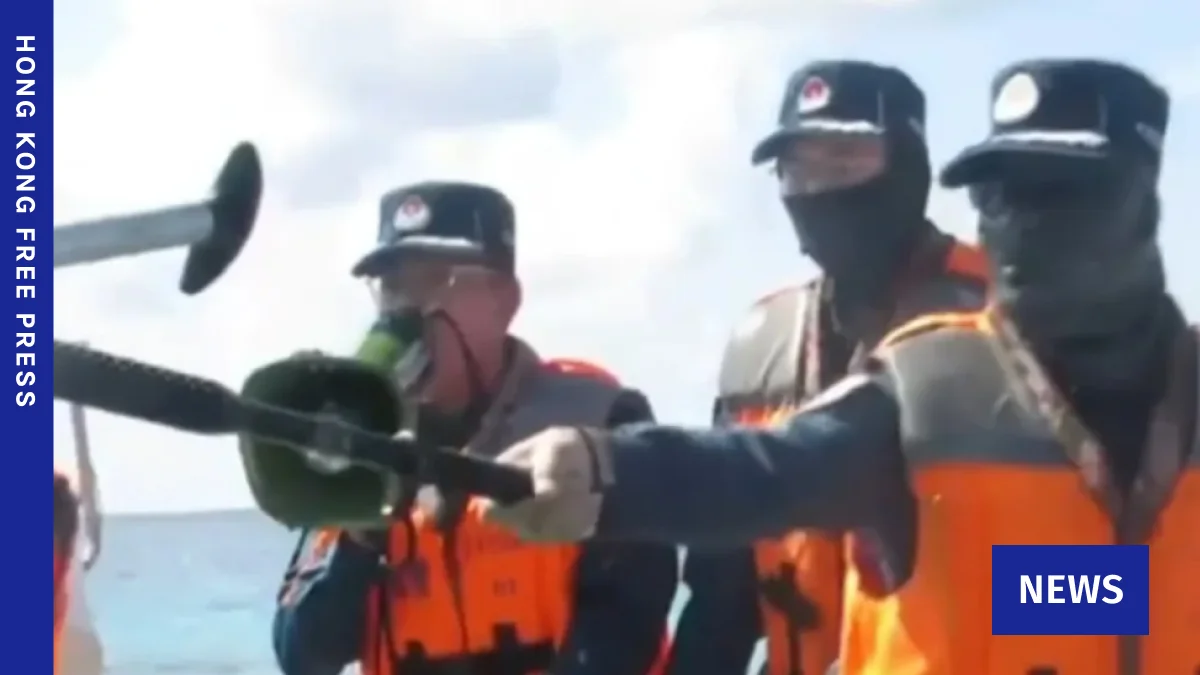
Manila, Philippines – The Philippines has lodged a strong condemnation against China’s coast guard, accusing it of deploying water cannons and executing "dangerous manoeuvres" on Thursday to obstruct Filipino vessels attempting to deliver essential aid to fishermen operating near the disputed Scarborough Shoal. This latest incident, marking the second such confrontation in just four days, casts a long shadow over ongoing regional security discussions, including a high-level forum in Manila attended by top diplomats from both China and the United States.
The confrontation unfolded near Scarborough Shoal, a strategically vital and resource-rich reef formation situated approximately 240 kilometres (124 miles) west of the Philippines’ main island of Luzon. According to the Philippine Coast Guard (PCG), a China Coast Guard (CCG) vessel closed to within a perilous 50 metres (164 feet) of the BRP Datu Dumangsil before unleashing a powerful stream of water for two minutes. Shortly thereafter, a second Chinese coast guard vessel executed what the Philippine statement described as a "dangerous manoeuvre," crossing the bow of the Dumangsil’s sister vessel, the BRP Datu Paiburong, at a distance of 500 metres.
Despite the aggressive tactics, Philippine officials confirmed that neither of their vessels sustained direct hits and were able to continue their mission to supply fuel and provisions to Filipino fishermen in the area. This act of defiance underscores Manila’s unwavering commitment to asserting its sovereign rights and protecting the livelihoods of its citizens in the contested waters.

Escalating Tensions and a Pattern of Confrontation
The Thursday incident is not an isolated event but rather the latest in a series of increasingly assertive actions by Beijing in the South China Sea. It follows closely on the heels of a more violent encounter just four days prior, near the Second Thomas Shoal (also known as Ayungin Shoal or Ren’ai Jiao). In that clash, the Philippine military accused China Coast Guard personnel of physically assaulting a Filipino sailor with a baton during a resupply mission to the BRP Sierra Madre, a deliberately grounded naval vessel that serves as a Philippine outpost. China, in turn, asserted that the Philippines had instigated the incident.
These recent events signal a concerning escalation after a period of relative calm, rekindling fears of broader instability in one of the world’s most critical maritime arteries. Both Manila and Beijing summoned each other’s ambassadors on Tuesday following the Second Thomas Shoal incident, a diplomatic move typically reserved for serious bilateral disagreements. The international community, particularly Manila’s allies, has been quick to condemn Beijing’s actions, raising the stakes for diplomatic resolutions.
The Disputed Waters: A Geopolitical Chessboard

The South China Sea is a vast expanse of water crucial for global trade, rich in fishing grounds, and believed to hold significant oil and natural gas reserves. Beijing claims sovereignty over almost the entirety of the sea, including the flashpoint Scarborough Shoal and Second Thomas Shoal, through its controversial "Nine-Dash Line" claim. This expansive claim, which covers areas thousands of kilometres from China’s mainland, has been consistently challenged by neighbouring countries, including the Philippines, Vietnam, Malaysia, Brunei, and Taiwan.
In 2016, the Permanent Court of Arbitration (PCA) in The Hague delivered a landmark ruling, unequivocally rejecting China’s historical claims and declaring its assertion over the Nine-Dash Line to lack any legal basis under the United Nations Convention on the Law of the Sea (UNCLOS). China, however, has vehemently refused to acknowledge the ruling, dismissing it as "null and void" and continuing to enforce its claims through maritime patrols, artificial island building, and aggressive actions against vessels from other claimant states.
Scarborough Shoal: A Symbol of Chinese Assertiveness
Scarborough Shoal, known as Panatag Shoal in the Philippines and Huangyan Island in China, has been a major flashpoint since 2012, when China effectively seized control of the area after a prolonged standoff with Philippine naval vessels. Prior to this, Filipino fishermen had unimpeded access to the shoal’s rich fishing grounds, a vital source of livelihood for countless coastal communities. Since 2012, Chinese coast guard vessels have maintained a near-constant presence, often blocking Filipino fishermen from accessing the inner lagoon and harassing those who venture too close. The latest water cannon incident near Scarborough Shoal highlights China’s continued efforts to assert de facto control over the area, despite international legal mandates.

Second Thomas Shoal: A Deteriorating Stand-off
The situation at Second Thomas Shoal presents a different but equally volatile scenario. The BRP Sierra Madre, a rusty World War II-era landing craft, was deliberately grounded on the shoal in 1999 to serve as a permanent Philippine military outpost. A small contingent of Filipino marines is stationed on board, relying on periodic resupply missions for survival. These missions, often undertaken by small civilian boats escorted by the Philippine Coast Guard, have become regular flashpoints. Chinese vessels frequently attempt to block or interfere with these resupply efforts, employing water cannons, dangerous shadowing, and now, alleged physical assault, to prevent the delivery of supplies and reinforce their claim over the shoal. The Philippines views these missions as essential for maintaining its presence and sovereign rights over its exclusive economic zone (EEZ).
Official Responses and International Repercussions
China Coast Guard spokesman Jiang Lue issued a statement asserting that the Filipino vessels "intruded into the jurisdictional waters of China’s Huangyan Island despite repeated dissuasions and warnings." He added that the China Coast Guard "took necessary measures, including tracking, monitoring, blocking, and controlling the Philippine vessels in accordance with the law, and expelled them." This narrative consistently frames Chinese actions as defensive and lawful responses to perceived infringements on its sovereignty.

However, the Philippines, backed by its allies, views these actions as violations of international law and a direct challenge to the rules-based international order. The United States, a treaty ally of the Philippines under the 1951 Mutual Defense Treaty, has repeatedly reaffirmed its commitment to Manila’s security, including in the South China Sea. Any armed attack on Philippine public vessels, aircraft, or armed forces – including its coast guard – in the Pacific, which includes the South China Sea, could trigger the treaty. While specific statements regarding this latest incident are pending, historical patterns suggest strong condemnation from Washington. Other allies like Japan, Australia, and European Union member states have also expressed concern over China’s escalating actions and reiterated the importance of freedom of navigation and adherence to international law.
ASEAN’s Dilemma and the Code of Conduct
The timing of these incidents is particularly sensitive, occurring as Manila hosts a series of high-level meetings involving the Association of Southeast Asian Nations (ASEAN) and its dialogue partners. Maritime security issues, particularly those pertaining to the South China Sea, are consistently high on the agenda. ASEAN members, many of whom are also claimants or deeply affected by the disputes, have long sought to establish a legally binding Code of Conduct (COC) with China for the waterway. The aim is to create a framework for managing disputes peacefully, preventing incidents, and promoting cooperation. However, negotiations for the COC have dragged on for years, hindered by China’s reluctance to agree to a robust and enforceable code that might constrain its assertive actions, and by the differing interests and approaches among ASEAN members themselves.
The recent confrontations serve as a stark reminder of the urgency of finalizing such a code, even as they simultaneously highlight the deep divides and mistrust that make its realization so challenging. The incidents risk further complicating diplomatic efforts and potentially pushing some ASEAN members closer to alliances with external powers to counterbalance China’s growing influence.

Broader Implications for Regional Stability and Global Trade
The ongoing tensions in the South China Sea have far-reaching implications beyond the immediate claimant states. The waterway is one of the busiest shipping lanes in the world, with an estimated one-third of global maritime trade, valued at over $3.4 trillion annually, passing through its waters. Any significant disruption or conflict in the region could have catastrophic effects on global supply chains, energy prices, and economic stability.
Furthermore, China’s persistent disregard for international law and the PCA ruling sets a dangerous precedent, potentially emboldening other nations to challenge established norms and escalate territorial disputes. The erosion of the rules-based international order could lead to a more unpredictable and perilous global landscape.
The Philippines, under President Ferdinand Marcos Jr., has adopted a more assertive stance against Chinese incursions compared to its predecessor, actively documenting and publicizing incidents to garner international support. This strategy, while increasing transparency, also risks provoking stronger reactions from Beijing. The delicate balance between asserting sovereign rights, maintaining regional peace, and avoiding direct conflict remains a critical challenge for Manila and its partners. As the regional security forum continues, the international community will be closely watching for any diplomatic breakthroughs or further escalations that could define the future of this vital and volatile maritime region.


 Evan Lee Salim
 Muslim