Evan Lee Salim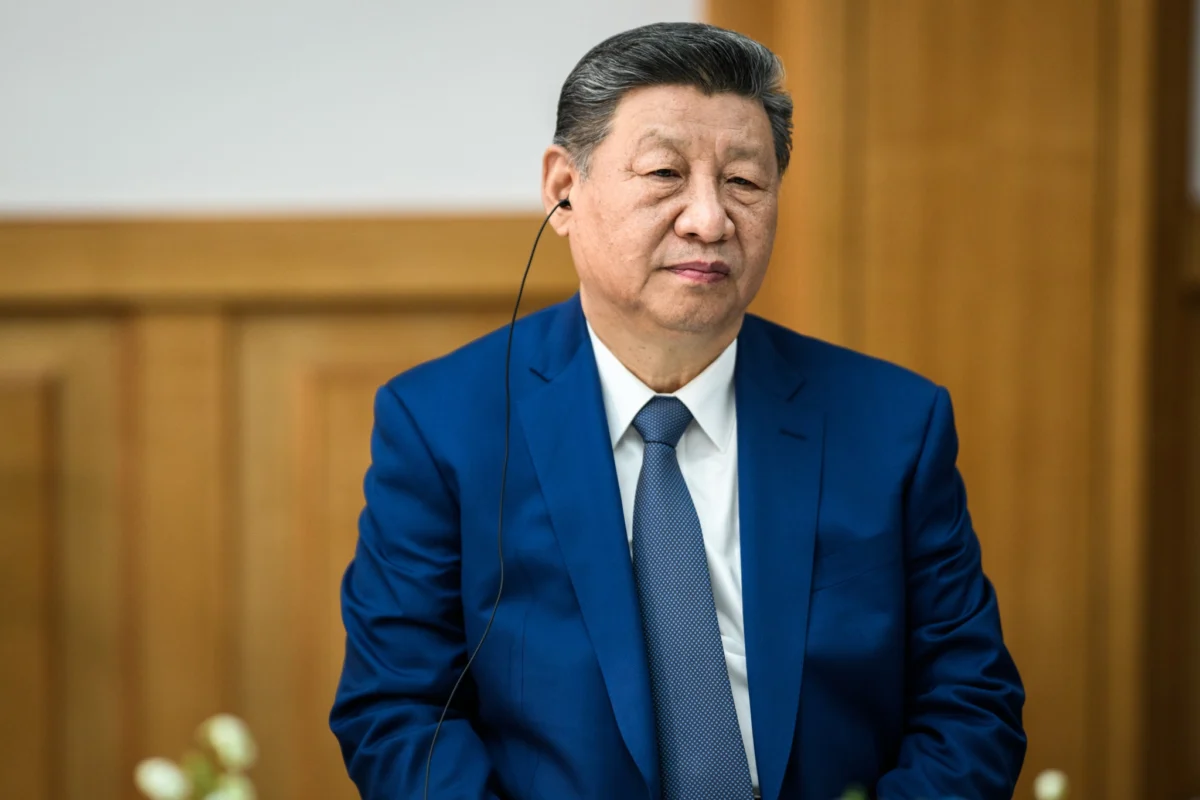
Shanghai, China – Chinese President Xi Jinping on Friday issued a strong call for comprehensive international cooperation in the development and governance of artificial intelligence, emphatically stating that the burgeoning technology should not be monopolized by any single nation. Addressing the prestigious World Artificial Intelligence Conference (WAIC) in Shanghai, President Xi underscored the critical need for a collaborative global approach, likening AI development to a "symphony of international cooperation" rather than a "solo performance." His remarks come amidst an intensifying global race for AI supremacy, particularly between the United States and China, and mounting concerns over the ethical, security, and economic implications of this transformative technology.
The WAIC, recognized as China’s most significant annual event for understanding the trajectory of its AI industry, served as a powerful platform for Xi to articulate Beijing’s vision for a shared future in AI. He explicitly cautioned against "overstretching the national security concept in the field of AI or placing one country’s security over that of others," a clear reference to the increasing restrictions imposed by the United States and the European Union on Chinese tech imports, often citing national security concerns. This statement highlights the growing geopolitical friction surrounding AI, where technological leadership is increasingly intertwined with national power and strategic advantage.
Xi’s Vision for Collaborative AI Development

President Xi’s address resonated with a clear message: the future of AI must be forged through collective effort, not unilateral control. "AI development should not be a solo performance by a single country, but a symphony of international cooperation," he stated, emphasizing the shared responsibility of the global community. This rhetoric positions China as an advocate for multilateralism in AI, contrasting with what Beijing perceives as protectionist measures by Western nations.
His call for avoiding the "overstretching" of national security concepts in AI is particularly salient given the current geopolitical climate. The United States, for instance, has implemented a series of export controls aimed at curbing China’s access to advanced semiconductor technology, which is crucial for high-end AI development. These measures, alongside internal debates in Washington regarding who controls access to cutting-edge AI technology, underscore the deep-seated mistrust and strategic competition that define the current landscape. Xi’s remarks can be interpreted as an invitation to de-escalate this tech rivalry and foster a more open environment for innovation and shared progress.
Furthermore, Xi advocated for a "people-centric" approach to AI, stressing the importance of ensuring that AI remains "always under human control." He urged the establishment of "laws and regulations, technological monitoring, early warning, and emergency response systems" to manage the potential risks associated with AI. This reflects a global consensus among policymakers and researchers about the need for robust governance frameworks to prevent misuse, mitigate ethical dilemmas, and ensure AI serves humanity’s best interests. Concerns range from the deployment of AI in autonomous weapons systems and the potential for increased cyberattacks by sophisticated AI-powered tools, to the societal impacts on employment and the broader economy.
The World Artificial Intelligence Conference (WAIC): A Global Platform

The World Artificial Intelligence Conference, held in Shanghai, serves as a crucial showcase for China’s ambitious AI strategy and a forum for international dialogue on the technology’s future. The four-day event drew over 1,000 Chinese tech firms, alongside government officials, leading researchers, and prominent industry figures from around the world. The sheer scale of the conference, with approximately 3,000 products on display – ranging from powerful semiconductor systems designed for advanced AI computing to a smartphone capable of autonomously operating various applications – underscores China’s deep commitment to becoming a global leader in AI.
A significant development preceding Xi’s keynote was the signing of an agreement on Thursday to establish an intergovernmental AI cooperation group. Foreign Minister Wang Yi and representatives from 29 countries, including key partners like Russia, Pakistan, and Indonesia, formally established the World Artificial Intelligence Cooperation Organization (WAICO). Headquartered in Shanghai, WAICO’s stated objective is to promote consultation and collaboration among its members, ensuring the "healthy and orderly" development of AI. This initiative can be seen as China’s effort to shape global AI governance norms and create an alternative or complementary framework to existing multilateral discussions, potentially garnering support from countries seeking alternatives to Western-dominated technological ecosystems.
The attendance of prominent international figures, including UN chief Antonio Guterres, Cambodian Prime Minister Hun Manet, and Thai Deputy Prime Minister Anutin Charnvirakul, further highlights the conference’s growing international stature and the global interest in China’s AI advancements and policy direction. Their presence lends weight to the call for international collaboration, even as geopolitical tensions simmer.
The Geopolitical Chessboard: US-China AI Rivalry

The backdrop to President Xi’s call for cooperation is an intense and increasingly complex geopolitical rivalry, with AI at its core. While analysts like Poe Zhao of Hello China Tech acknowledge that "The United States retains a clear lead in advanced chips, frontier computing infrastructure and the most capital-intensive model development," he also asserts that "China is its closest and most comprehensive competitor." This assessment encapsulates the delicate balance of power in the global AI landscape, where the US holds an advantage in foundational hardware and research, but China is rapidly catching up across various applications and ecosystem development.
The US and EU have actively sought to limit China’s access to critical AI components and expertise. These restrictions, often justified on national security grounds, include bans on certain Chinese telecommunications equipment, controls on the export of advanced semiconductors and chip-making tools, and scrutiny of investments in sensitive technology sectors. These actions aim to slow China’s technological progress and prevent its military from gaining a decisive edge through AI. However, China views these measures as attempts to stifle its economic and technological rise, fostering a strategic imperative for self-sufficiency and the development of its indigenous AI ecosystem, from chip production to widespread consumer and industrial applications.
This competition extends beyond hardware to the very architecture of AI development. While major US players like OpenAI and Anthropic largely operate with closed systems, Chinese companies are increasingly offering open-source AI models. This approach, as observed by Zhao, attracts global users, including major international firms like Siemens, due to their performance, lower costs, and greater customizability. This open-source strategy could provide China with a significant avenue for international influence, fostering a network of users and developers who adopt Chinese AI standards and technologies.
China’s Rapid Ascent in AI

China’s commitment to AI is reflected in its aggressive industrial policy, driven by substantial state investment aimed at building a robust domestic ecosystem. This strategy is yielding impressive results. The Chinese AI market was valued at an estimated 1.2 trillion yuan (approximately US$177 billion) in 2025, with projections indicating a growth rate exceeding 30 percent for the current year. Such figures underscore the enormous economic potential China sees in AI and its determination to capitalize on it.
Beyond market size, China is also making significant strides in innovation. According to the World Intellectual Property Organization (WIPO), China leads globally in patent filings for generative AI, with over 43,000 such filings recorded between 2024 and 2025. This explosion of intellectual property demonstrates a vibrant research and development environment, pushing the boundaries of AI capabilities.
The practical adoption of AI within China is also surging. State media reports indicate a thousandfold increase in the daily consumption of "tokens" – the industry unit for AI usage – over the past two years. This metric points to a rapid integration of AI into various sectors and daily life, driven by both corporate innovation and government-backed initiatives.
The WAIC conference showcased several cutting-edge Chinese AI innovations. Beijing-based startup Moonshot AI unveiled its new flagship model, Kimi K3, which is reportedly capable of rivaling, if not surpassing, some of the top US offerings. Other highlights included MiniMax’s M3 model, notably featured in the first mass-produced phone equipped with an autonomous AI agent, and Huawei’s Atlas 950 “supernode,” an advanced AI architecture designed for intensive learning and reasoning tasks. These developments signal China’s progress not only in foundational AI research but also in bringing practical, scalable AI solutions to market.

Addressing the Perils: Governance, Ethics, and Security
The rapid advancement of AI brings with it a host of challenges and ethical considerations that demand urgent attention. President Xi’s emphasis on "human control" over AI is a response to global anxieties about the technology’s potential dark side. The prospect of AI being deployed in military combat, raising questions about autonomous weapon systems and the ethics of machines making life-or-death decisions, is a pressing concern for international bodies and civil society groups. Similarly, the increasing sophistication of AI tools could empower hackers and terrorists, enabling more potent cyberattacks and surveillance capabilities.
Beyond security, AI poses significant societal risks. Concerns about job displacement due to automation, the exacerbation of economic inequalities, and the potential for algorithmic bias to perpetuate or amplify discrimination are widely debated. President Xi’s call for comprehensive regulatory frameworks, including "laws and regulations, technological monitoring, early warning, and emergency response systems," reflects an awareness of these multifaceted challenges. China itself has been proactive in developing AI regulations, particularly concerning generative AI and algorithmic transparency, positioning itself as a leader in certain aspects of AI governance.
Implications for Global AI Governance

President Xi’s address and the establishment of WAICO highlight a critical juncture for global AI governance. The current landscape is characterized by a fragmented approach, with different nations and blocs developing their own regulatory frameworks and ethical guidelines. The European Union, for example, has been a pioneer in comprehensive AI regulation with its AI Act, while the US has focused more on voluntary guidelines and sector-specific policies.
China’s push for international cooperation, particularly through WAICO, could serve multiple purposes. It offers a platform for developing nations to engage in AI discourse and share best practices, potentially counterbalancing the influence of Western-led initiatives. It also allows China to project an image of responsible AI leadership, advocating for shared principles while simultaneously advancing its own technological interests.
The long-term implications of this dynamic are profound. The tension between national security interests, which often drive restrictive policies, and the calls for open, collaborative development, which foster innovation and shared benefits, will continue to shape the future of AI. The choices made today regarding governance, ethical standards, and international collaboration will determine whether AI becomes a force for global progress and stability or a new frontier for geopolitical competition and fragmentation. President Xi’s remarks in Shanghai serve as a stark reminder that navigating this complex future requires a concerted, multilateral effort, one that transcends national boundaries and narrow self-interest.


 Jia Lissa
 Nila Kartika Wati