
 Laily UPN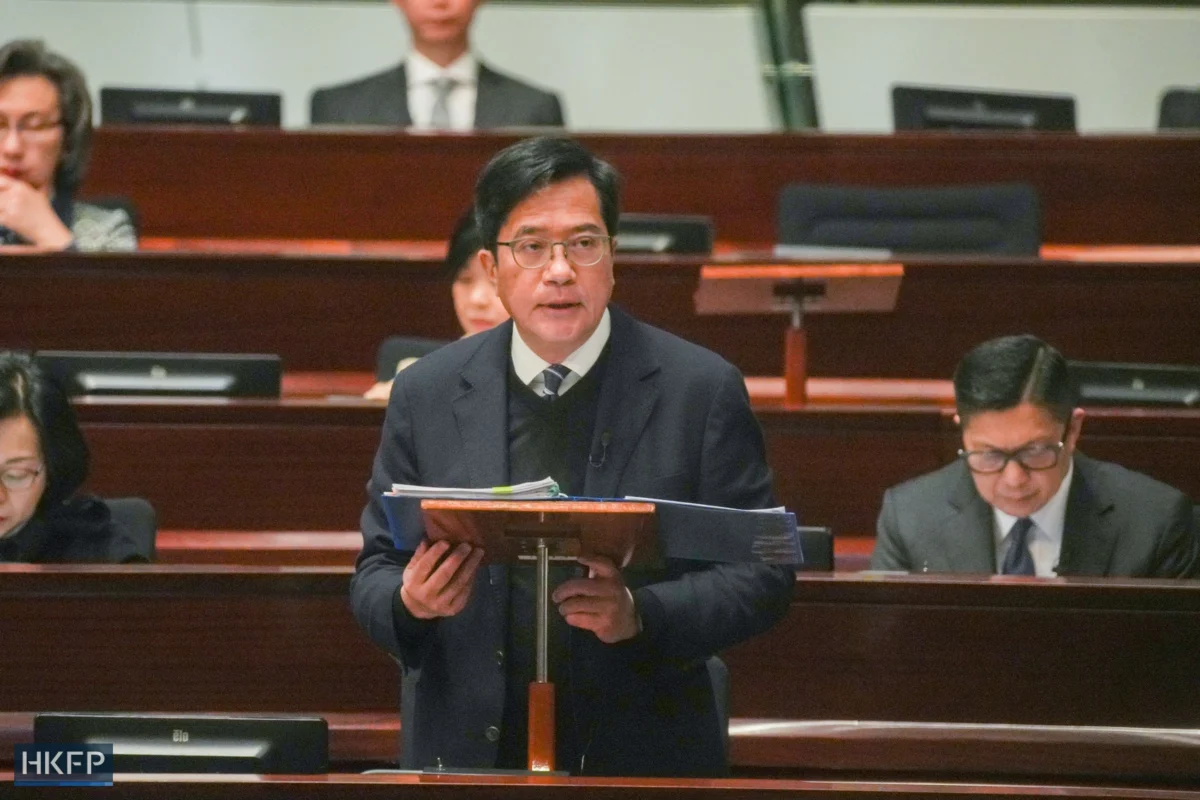
Hong Kong’s Deputy Financial Secretary, Michael Wong, has forcefully refuted recent assertions by Stephen Roach, the former Chairman of Morgan Stanley Asia, that the city has devolved into "just another big Chinese city." Wong countered that Roach’s perspectives are tainted by an underlying anti-China bias, rather than an objective assessment of Hong Kong’s enduring strengths and economic dynamism.

In a pointed op-ed published in Sing Tao on Wednesday, Wong addressed what he described as a concerted effort by some media commentators to "talk down Hong Kong’s prospects." He emphasized the city’s "extraordinary resilience" in navigating complex global challenges and maintaining its distinct international character. Wong’s remarks appeared to be a direct response to Roach’s recent critique, published on his Substack, which characterized Hong Kong’s transformation as "dramatic" and highlighted concerns regarding the rule of law and the suppression of activism.
Roach’s article, provocatively titled "From Hong Kong to Xianggang," utilized the Mandarin romanization of the city’s name, signaling a perceived shift in its identity and global standing. He pointed to the growing dominance of Chinese companies within Hong Kong’s Initial Public Offering (IPO) market as evidence of Beijing’s influence. While acknowledging that Hong Kong had "reclaimed its former position of global IPO leadership," Roach argued this was a result of "deliberate support from Beijing," positioning the city primarily as "China’s principal international fundraising platform" rather than an independent global financial hub.

Wong, however, presented a starkly different picture, asserting that the international community’s recognition of Hong Kong’s unique advantages is "growing ever stronger." He cited the latest Global Financial Centres Index, where Hong Kong maintained its third-place ranking globally, and notably, achieved a higher overall score than in the previous reporting period. This ranking, Wong contended, is a testament to the city’s sustained competitiveness and appeal to international investors and talent.
A History of Scrutiny and Rebuttals
This is not the first time Roach’s assessments of Hong Kong have drawn a strong rebuke from city officials. In February 2024, Roach penned an article for the Financial Times declaring Hong Kong "over." At that time, he cited the underperforming stock market and the Beijing-imposed National Security Law as factors that had eroded "any remaining semblance of local political autonomy." While Roach conceded in his recent piece that the stock market has since seen a recovery exceeding his expectations, he framed this not as an apology or a concession, but as a point of observation within his broader narrative.

Roach’s recent op-ed further detailed his concerns, referencing the resignation of foreign judges from Hong Kong’s highest court, the closure of independent bookstores, and an apparent exodus of expatriates countered by an influx of mainland Chinese immigrants. He noted a perceived shift in the city’s linguistic landscape, stating, "Walking the streets of Hong Kong, today you are more likely to hear Mandarin than Cantonese, a dramatic shift in the tone of the city from its pre-2020 past." Roach also pointed to the IPO market’s composition, where mainland Chinese companies now constitute a significant majority, as indicative of a fundamental change in the city’s economic identity.
Official Reassurance Amidst Global Economic Shifts
In his rebuttal, Deputy Financial Secretary Michael Wong sought to reassure stakeholders and counter what he termed "biased" narratives. He highlighted Hong Kong’s robust economic performance in recent years, citing data that indicates increased economic growth and trade volumes. Wong emphasized that the city’s strategic location, robust legal framework (albeit subject to evolving interpretations), and its deep integration into both mainland China and global markets continue to make it an attractive proposition for businesses and capital.

"Some critics appear to be driven more by bias against China than by objective analysis," Wong stated in his op-ed. "Their criticisms are neither supported by evidence nor aligned with facts." He underscored that investors and skilled professionals continue to demonstrate "full confidence in Hong Kong," attributing this sustained trust to the city’s "global connectivity and international character." Wong’s response suggests a broader strategy by the Hong Kong government to actively counter negative international perceptions and reaffirm the city’s unique advantages in a rapidly changing geopolitical and economic landscape.
Hong Kong’s Economic Resilience: Data and Context
Hong Kong’s economic trajectory in recent years has been marked by significant challenges, including the COVID-19 pandemic and the geopolitical tensions stemming from its relationship with mainland China. However, official figures paint a picture of a determined recovery. The city’s Gross Domestic Product (GDP) saw a notable rebound in the periods following the pandemic’s initial waves. For instance, in 2023, Hong Kong’s GDP grew by an estimated 3.2%, following a 2.1% expansion in 2022, indicating a sustained return to growth after a contraction in 2020.

The IPO market, a key barometer of Hong Kong’s financial health, has also shown signs of resilience. While the number of new listings and the capital raised have fluctuated, Hong Kong has consistently ranked among the top global financial centers for IPO activity. In 2023, the city remained a significant player in the global capital markets, attracting listings from both domestic and international companies. The government has actively promoted initiatives to bolster this sector, including tax incentives and streamlined listing processes, aimed at attracting more companies, particularly from emerging industries and the Greater Bay Area.
Furthermore, Hong Kong’s role as a gateway to mainland China remains a critical component of its economic identity. The city’s sophisticated financial infrastructure, adherence to international standards in areas like anti-money laundering and capital controls, and its common law legal system provide a unique platform for foreign companies seeking to access the vast Chinese market, and for Chinese enterprises looking to raise capital internationally. This dual role, while subject to evolving dynamics, continues to underpin Hong Kong’s strategic importance.

Broader Implications and Future Outlook
The debate between officials like Michael Wong and commentators such as Stephen Roach highlights a fundamental tension in understanding Hong Kong’s evolving role. Roach’s perspective, rooted in concerns about political autonomy and the rule of law, reflects a viewpoint prevalent among some international observers who prioritize distinct democratic institutions and individual liberties. His focus on the linguistic shift and the increasing presence of mainland-linked entities underscores anxieties about the erosion of Hong Kong’s unique cultural and political identity.
Conversely, Wong’s emphasis on economic resilience, international rankings, and government-led initiatives reflects the official narrative of Hong Kong’s adaptability and continued relevance as a global financial hub. The Hong Kong government’s strategy appears to be centered on leveraging its existing strengths – its strategic location, financial expertise, and deep ties with mainland China – while seeking to mitigate the negative impacts of geopolitical shifts and internal policy changes.

The long-term implications of this dynamic remain to be seen. Hong Kong’s ability to maintain its competitive edge will depend on its capacity to balance its unique advantages with the evolving political and economic landscape of mainland China. The continued influx of talent and capital, the robustness of its legal and regulatory frameworks, and its ability to foster innovation and maintain an open business environment will be crucial determinants of its future success. As the city navigates these complex currents, public statements from key officials like Deputy Financial Secretary Michael Wong will play a significant role in shaping international perceptions and investor confidence. The dialogue underscores the ongoing scrutiny and the strategic importance of Hong Kong in the global financial order.

 Azzam Bilal Chamdy
 Lina Irawan