Muslim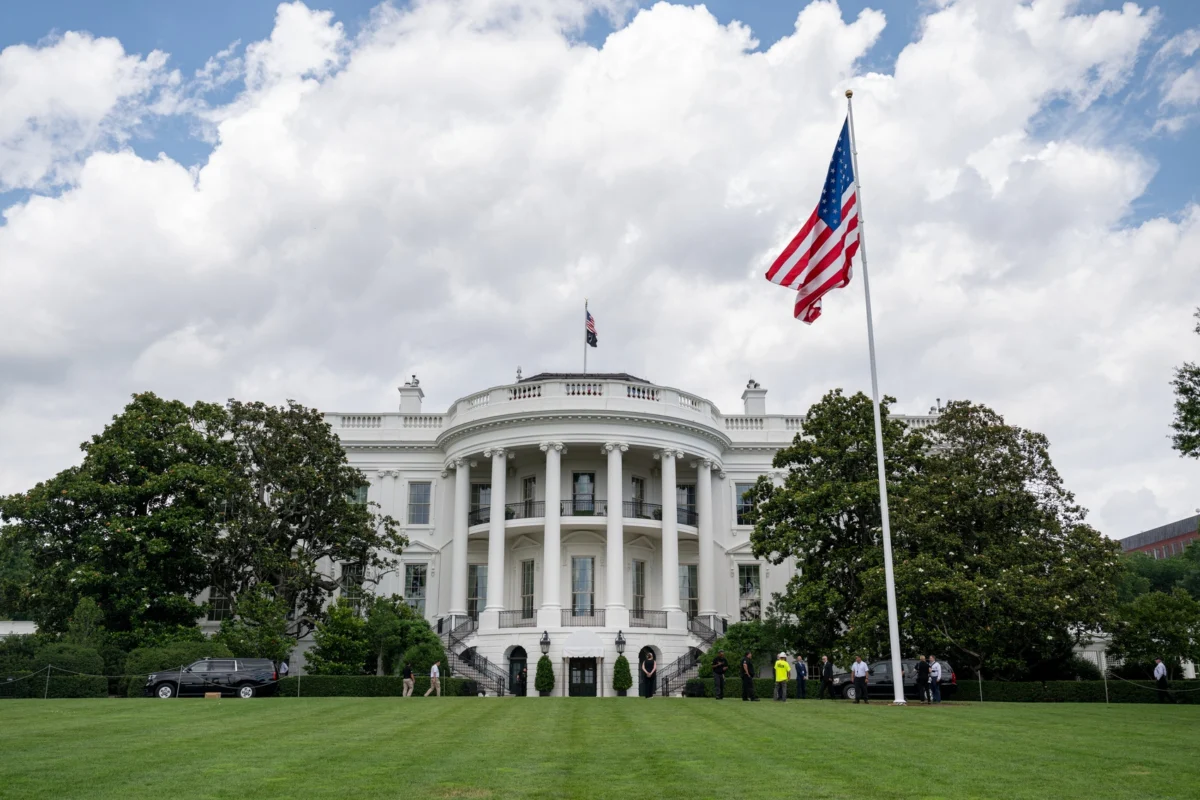
Beijing has vehemently rejected accusations from US President Donald Trump, labeling his claims of Chinese interference in US election data as "pure fabrications" and "malicious smears." The strong rebuke came on Friday, following Trump’s assertion that China had illicitly acquired 220 million voter files, an allegation that revives his long-standing, unsubstantiated claims of widespread voter fraud and casts a shadow over upcoming midterm elections. This diplomatic exchange underscores the deep mistrust and escalating rhetoric that characterize contemporary US-China relations, further complicating the already contentious discourse surrounding electoral integrity in the United States.
Beijing’s Vehement Rebuttal
Chinese Foreign Ministry spokesperson Lin Jian addressed the allegations directly during a news conference, stating, "The relevant claims made by the US side are pure fabrications and malicious smears that have long since been proven to be groundless statements." Lin unequivocally denied any Chinese involvement in American electoral processes, asserting, "China has no interest in the US election and has never interfered in it." The spokesperson then pivoted the accusation back to Washington, remarking, "The international community sees very clearly who it is that habitually interferes in the internal affairs of other countries." He concluded by urging the US to reflect on its own conduct: "We urge the US side to reflect on its own actions, stop baselessly smearing China, refrain from making an issue of China in its elections, and do more to benefit China-US relations." This robust denial highlights Beijing’s consistent position on non-interference in other nations’ domestic affairs, a principle it frequently invokes when confronted with accusations of espionage or cyber activities.

President Trump’s White House Address and Unsubstantiated Allegations
The Chinese response was triggered by President Trump’s address from the White House on Thursday. During his remarks, Trump asserted that the US electoral system had been "dangerously exposed" and called for lawmakers to implement new restrictions on voting. These proposed measures, which often include stricter voter ID laws, limitations on mail-in ballots, and reductions in early voting periods, have historically faced significant opposition, even within his own Republican Party, due to concerns about voter access and potential disenfranchisement.
A central component of Trump’s Thursday address was his promise to declassify intelligence purportedly showing that China had "illicitly acquired 220 million voter files." This specific claim introduces a new dimension to his long-standing narrative of electoral compromise. While the acquisition of voter data, which is often publicly available, is not inherently illicit, the context of "illicit acquisition" suggests espionage or cyber theft, implying a direct attempt to compromise or manipulate the electoral process. The figure of 220 million voter files is significant, representing a substantial portion of the American electorate, and such a breach, if substantiated, would constitute a major national security incident. However, the President did not provide immediate evidence or details regarding the nature of this alleged acquisition, nor did he specify which election cycle or data set was targeted.
A Persistent Pattern of Election Fraud Claims

President Trump’s latest allegations are not isolated incidents but rather a continuation of a pattern of claims regarding electoral integrity that predates and extends beyond his presidency. His assertion that the 2020 presidential election was "rigged" remains a cornerstone of his political messaging, despite a comprehensive lack of evidence. Following the 2020 election, more than 60 lawsuits filed by Trump’s campaign and its allies were rejected or dismissed by various state and federal courts, including the Supreme Court. These rulings consistently found no credible evidence of fraud on a scale that could have altered the election’s outcome.
Furthermore, recounts and audits conducted in several key states, often at the behest of Trump’s team, reaffirmed the original results. Even the US Department of Justice, under the leadership of an Attorney General appointed by Trump, found no evidence of widespread voter fraud that would have changed the election’s results. Officials from the Cybersecurity and Infrastructure Security Agency (CISA), part of the Department of Homeland Security, declared the 2020 election "the most secure in American history," a statement that led to the dismissal of CISA’s director at the time. The persistent nature of these claims, despite widespread refutation from legal bodies, electoral officials, and intelligence agencies, has deeply polarized the American public and fueled distrust in democratic institutions.
The Broader Geopolitical Context: US-China Relations
These accusations surface against a backdrop of severely strained US-China relations. The Trump administration was characterized by an aggressive stance towards Beijing, marked by a trade war, heightened rhetoric over intellectual property theft, human rights abuses in Xinjiang and Hong Kong, and increased military posturing in the South China Sea. Accusations of cyber espionage and influence operations have been a recurring feature of this adversarial relationship, with both nations frequently accusing the other of malign activities.

The US intelligence community has previously identified China as a significant cyber threat, capable of sophisticated operations targeting critical infrastructure, corporate secrets, and government data. While the intelligence community has pointed to Russia as the primary foreign actor interfering in the 2016 and 2020 US elections through disinformation campaigns and hacking, direct allegations of China illicitly acquiring massive voter databases for manipulation purposes have been less prominent in public intelligence assessments until now. If substantiated, such an act would represent a significant escalation in China’s alleged efforts to influence US domestic politics, moving beyond economic espionage to direct electoral interference. However, without the declassified intelligence Trump promised, these claims remain unsubstantiated and highly contentious.
Domestic Political Ramifications and Electoral Trust
The implications of President Trump’s statements are far-reaching, both domestically and internationally. Domestically, such claims further erode public confidence in the integrity of the US electoral system. A significant portion of the American electorate, particularly those who support Trump, has expressed doubts about election fairness, a sentiment exacerbated by repeated allegations of fraud without accompanying proof. This skepticism poses a profound challenge to the peaceful transfer of power, a cornerstone of democratic governance.
His call for new voting restrictions also reignites a contentious debate over voter access versus election security. Advocates for stricter voting laws often cite concerns about potential fraud, while opponents argue that such measures disproportionately affect minority groups, low-income voters, and students, thereby suppressing legitimate votes. With midterm elections approaching, the debate over electoral rules and the specter of disputed results could intensify, further polarizing the political landscape and potentially leading to legal challenges and civil unrest. The political appetite for sweeping changes to federal voting laws, as suggested by Trump, remains minimal, with bipartisan consensus on such issues being elusive.

The Role of Information and Disinformation in Modern Politics
The current episode also highlights the critical role of information and disinformation in modern political discourse. In an era of rapid information dissemination through social media and diverse news channels, unsubstantiated claims can quickly gain traction, shaping public perception regardless of their factual basis. When such claims originate from high-ranking political figures, their impact is amplified, making it challenging for factual corrections or official rebuttals to fully counter the initial narrative.
For intelligence agencies, the challenge lies in balancing transparency with national security. The promise to declassify intelligence related to China’s alleged voter file acquisition puts pressure on these agencies to provide concrete evidence, while also navigating the sensitivities of intelligence gathering and diplomatic relations. Without verifiable evidence, claims of foreign interference, particularly those that contradict previous official assessments, can be dismissed as political maneuvering, further complicating the public’s ability to discern truth from fiction.
Looking Ahead: Midterm Elections and Beyond

As the US approaches its next cycle of midterm elections, the persistent narrative of election fraud and foreign interference will likely continue to play a significant role. These claims can mobilize political bases, influence legislative agendas, and potentially lead to further challenges to election results. The specific accusation against China, whether proven or not, adds another layer of complexity to the US-China rivalry, intertwining geopolitical tensions with domestic political debates.
The international community will closely watch how these allegations unfold, given the global implications for cybersecurity, electoral integrity, and diplomatic relations between the world’s two largest economies. The credibility of US elections, both domestically and internationally, is at stake, as are the principles of truth and accountability in public discourse. Without clear, verifiable evidence, President Trump’s claims risk being perceived as political tools designed to sow doubt and galvanize support, rather than genuine concerns about national security, thereby deepening the chasm of distrust in an already fractured political landscape. The imperative for transparency, coupled with rigorous fact-checking and adherence to established legal and electoral processes, remains paramount in navigating these turbulent waters.

 Nana
Nana
 Ali Ikhwan