Reynand Wu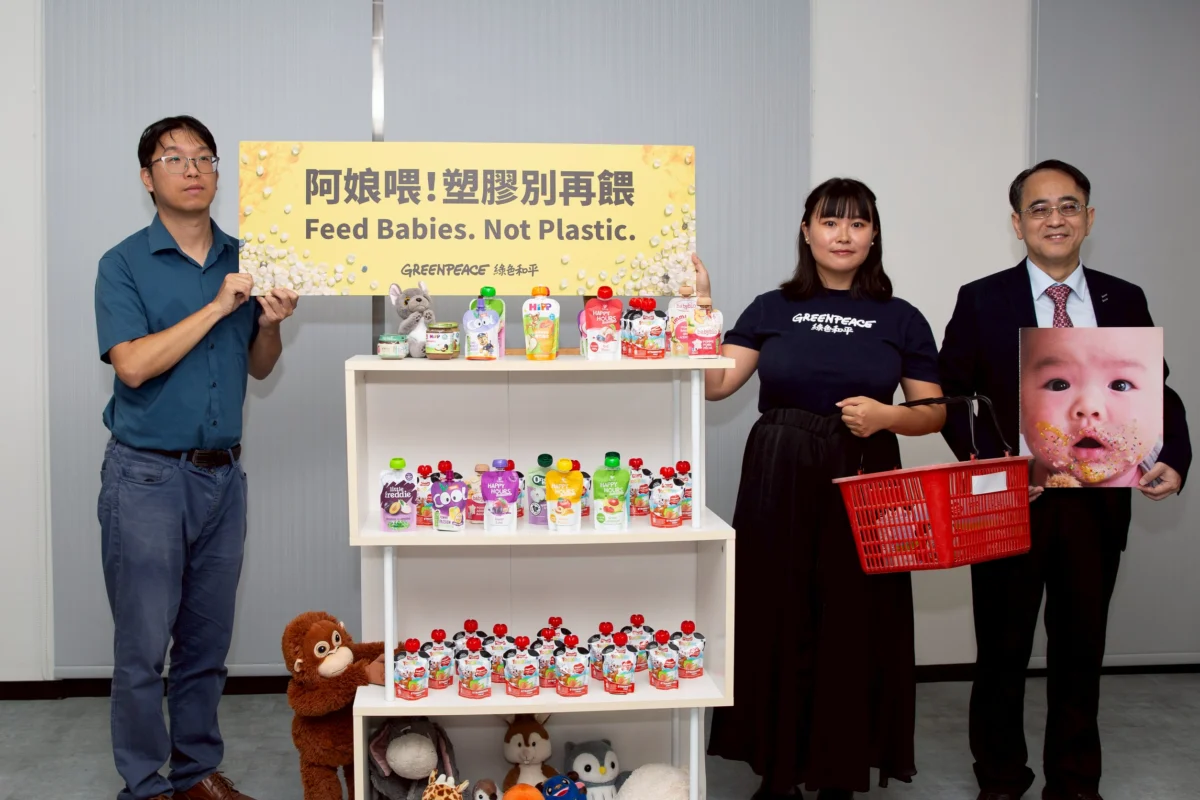
Taipei, July 14, 2026 – A child’s first taste of solid food, often a carefully chosen fruit puree or yogurt, may inadvertently introduce them to a pervasive environmental pollutant: plastic. A comprehensive new survey released today by Greenpeace Taiwan reveals that a staggering 80 percent of baby food products, specifically fruit purees and yogurts, sold through major retail channels in Taiwan are packaged in plastic pouches. The situation is even more acute in hypermarkets, where 100 percent of these essential infant foods are exclusively offered in plastic pouches, leaving parents with virtually no non-plastic packaging alternatives.
The findings, detailed in Greenpeace’s "Packaging Survey of Baby Food Products, Including Fruit Purees and Yogurts, in Major Retail Channels in Taiwan," highlight a significant gap between parental concern for infant health and the prevailing market practices. The survey, conducted in April 2026, meticulously examined offerings across a broad spectrum of retail environments, including hypermarkets, pharmacies, dedicated baby product stores, and prominent online shopping platforms such as Momo, PChome, Shopee, and Coupang. While hypermarkets presented a monolithic plastic pouch landscape, other channels showed slightly more variation, with pharmacies, baby product stores, and online platforms reporting between 74 and 79 percent of their baby food selections packaged in plastic pouches. Prominent brands frequently found in these plastic pouches include Babybio, HiPP, Pascual, and Earth Love, underscoring the widespread nature of this packaging choice across well-known infant nutrition labels.
"Parents are making purchasing decisions with the explicit goal of nourishing their children, not to expose them to the potential risks associated with plastics from their very first solid meals," stated Chi Lo, Communications Officer at Greenpeace Taiwan. "When nearly 80 percent of these products utilize plastic pouches, it transcends a matter of simple parental choice. It indicates a market that has demonstrably failed to provide adequate safer alternatives, and a regulatory framework that has lagged behind the evolving scientific understanding of plastic-related health concerns."
The Hidden Threat: Microplastics and Chemical Contaminants
The concern surrounding plastic pouches extends beyond their post-consumer environmental impact. These multi-layered packaging solutions, typically composed of materials like polyethylene terephthalate (PET), aluminum foil, and polyethylene (PE), have the inner PE layer, spout, and cap in direct contact with the food. Recent scientific investigations are increasingly pointing to plastic packaging as a significant, and often overlooked, pathway for human exposure to microplastics.
Building on mounting global research, a 2025 study commissioned by Greenpeace International and conducted by Norway’s SINTEF Ocean laboratory provided alarming evidence. This independent analysis tested pouch-packaged baby food products from two major multinational brands. The results were unequivocal: microplastics were detected in every single product subjected to testing. In some fruit puree samples, the concentration of microplastics reached an astonishing level of up to 99 microplastic particles per gram of food, translating to more than 10,000 microplastic particles per pouch. Similarly, certain yogurt products were estimated to contain upwards of 5,000 microplastic particles per pouch.
Further analysis of the food samples revealed the presence of common polymers such as polyethylene (PE) and polypropylene (PP), strongly suggesting that the packaging materials themselves are a primary source of these microscopic plastic fragments. Beyond microplastics, the SINTEF study also identified dozens of plastic-related chemicals within the food. Of particular concern were substances linked to toxicity and endocrine-disrupting properties, raising profound questions about the long-term health implications for vulnerable infants.
Expert Consensus: Embracing the Precautionary Principle for Child Protection
The growing body of scientific evidence has prompted calls from medical and scientific experts to adopt a more proactive approach to protecting children from potential plastic-related harms. Dr. Tzung-Hai Yen, a respected nephrologist at Chang Gung Memorial Hospital in Linkou, emphasized the current state of scientific understanding, noting that while definitive human health thresholds for microplastic exposure are still under investigation, animal and cell studies have provided compelling evidence of adverse effects. These studies have indicated that high levels of microplastic exposure may induce oxidative stress, inflammation, and even damage to vital organs.
"The imperative for action should not be contingent upon the complete and irrefutable proof of detrimental health impacts on humans," Dr. Yen stated. "The precautionary principle must serve as the guiding ethos for our actions, compelling us to proactively mitigate human exposure to microplastics. Infants and young children are at a critical developmental stage, making them inherently more susceptible to the adverse effects of environmental contaminants than adults. Therefore, prioritizing the reduction of their exposure is a matter of utmost urgency."
Echoing these concerns, Dr. I-Lun Hsiao, Director of the Food Safety Testing and Functional Development Research Center at Taipei Medical University, highlighted that the risks associated with plastic pouches are not limited to microplastics alone. She explained that these packaging materials can also leach other chemically complex substances, known as non-intentionally added substances (NIAS), which can be generated during the manufacturing process or through degradation during use.
Dr. Hsiao pointed out a critical regulatory deficiency in Taiwan when compared to established international frameworks. "Compared to the European Union, the United States, and Japan, Taiwan currently lacks a comprehensive regulatory framework specifically governing the chemicals utilized in plastic food packaging and mandating transparent information disclosure," she observed. The presence of plastic-related chemicals with potential endocrine-disrupting properties is particularly worrying. Dr. Hsiao further elaborated on the complex nature of chemical interactions within the human body, noting that when multiple chemicals are ingested simultaneously, they can exhibit synergistic effects, potentially amplifying their individual risks and posing a greater threat to health than any single substance in isolation.
A Joint Appeal: Strengthening Regulations for a Healthier Future
In light of these pressing concerns, Greenpeace Taiwan and a coalition of experts are issuing a strong appeal to the Food and Drug Administration (FDA) of Taiwan and other relevant government agencies. Their joint demands include:
- Enhanced Regulatory Oversight: Implementing stringent regulations on the use of plastic packaging materials for infant and baby food, with a particular focus on prohibiting the use of materials known to leach microplastics or hazardous chemicals.
- Mandatory Testing and Disclosure: Requiring manufacturers to conduct regular, independent testing of their products for microplastics and a comprehensive range of plastic-related chemicals, and to publicly disclose these findings transparently.
- Promotion of Sustainable Alternatives: Incentivizing and supporting the development and adoption of safe, reusable, and compostable packaging alternatives for infant food products.
- Public Awareness Campaigns: Launching educational initiatives to inform parents about the potential risks associated with plastic packaging in baby food and to promote healthier, more sustainable choices.
Greenpeace is also directly appealing to baby food manufacturers, urging them to take immediate and proactive steps. This includes conducting thorough internal testing for microplastics and hazardous chemicals in their products and making the results of these tests publicly accessible.
"Every parent’s fundamental desire is to provide the very best nutrition for their children," Chi Lo reiterated. "It is unacceptable that the next generation should be compelled to bear the burden of potential health risks stemming from conventional plastic packaging. Given the ongoing scientific uncertainties surrounding the full spectrum of plastic pollution’s impact on human health, it is incumbent upon the government to significantly strengthen food packaging regulations. Concurrently, we must address the root cause by reducing unnecessary plastic production at its source and actively phasing out single-use plastic products and packaging that are both unnecessary and carry high-risk profiles. Only through such a multi-faceted approach can we genuinely safeguard the health of the next generation from the pervasive threat of microplastics and associated plastic-related chemicals."
The appendices referenced in the original report, "Appendix 1: Packaging Survey of Baby Food Products, Including Fruit Purees and Yogurts, in Major Retail Channels in Taiwan" and "Appendix 2: Greenpeace Report – The Microplastics Crisis: Hidden Risks of Plastic Pouches in Baby Food", provide further detailed data supporting these critical findings and recommendations. The implications of this report extend beyond Taiwan, potentially serving as a catalyst for similar investigations and regulatory reforms in other regions grappling with the pervasive use of plastic in infant nutrition.

 Evan Lee Salim
 Lina Hope