Sagoh
Sagoh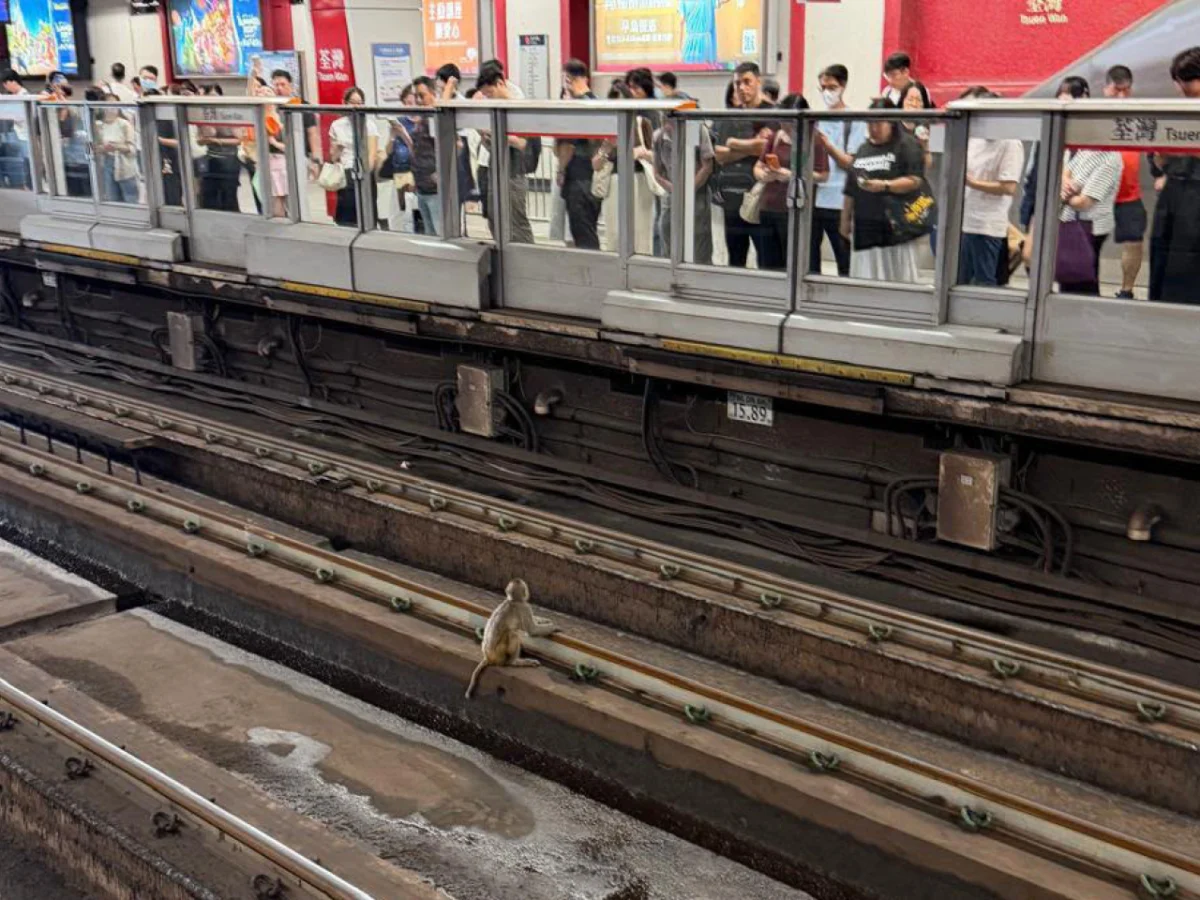
Hong Kong, July 26, 2026 – Commuters on Hong Kong’s MTR Tsuen Wan Line experienced significant delays on Friday morning due to an unusual obstruction on the tracks: a monkey. The disruption, which lasted for approximately one hour, marks the second primate-related transit incident to affect the city’s extensive rail network in as many days, raising questions about urban wildlife management and its impact on public infrastructure.
The incident unfolded at approximately 9:00 AM on Friday, July 26, 2026, at Tsuen Wan station. Passengers reported seeing a monkey on the railway tracks, prompting an immediate response from authorities. Police officers and personnel from the Agriculture, Fisheries and Conservation Department (AFCD) were dispatched to the scene to manage the situation and ensure the safe removal of the animal.

Normal MTR services on the Tsuen Wan Line were eventually restored around 10:00 AM, after the monkey was successfully apprehended and removed from the tracks. While the direct impact on train frequency was minimal, the hour-long operational halt caused considerable inconvenience to morning commuters, a period typically characterized by high passenger volume.
This latest event follows a similar disruption on Thursday, July 25, 2026, which affected the MTR Kwun Tong Line. On that occasion, a primate was sighted at Kowloon Bay station during the morning rush hour. According to the MTR Corporation, that incident primarily led to increased journey times rather than a reduction in train frequencies. The MTR’s statement indicated that while services were impacted, the operational integrity of the line was maintained with adjustments to train schedules to accommodate the situation.
The recurring nature of these primate-related disruptions has drawn attention to the growing interaction between wildlife and Hong Kong’s urban environment. Experts suggest that the city’s unique geographical landscape, characterized by the proximity of dense urban centres to natural, undeveloped areas, contributes to such encounters.

Expert Perspectives on Urban Wildlife Encounters
Mark Mak, Executive Chair of the non-profit Veterinary Services Society, offered a perspective on the increasing presence of wild animals in urban settings. Speaking to iCable, Mak explained that it is an inevitable consequence of urban development in a city like Hong Kong. "We’re building a city on animal habitats," he was quoted as saying in Cantonese, emphasizing the natural inclination of wildlife to seek resources, including food, within areas that were once their own. Mak further articulated that it is unrealistic to expect animals to understand or respect human-defined boundaries, urging against alarm when they venture into urban spaces. This sentiment underscores a broader ecological challenge faced by many global cities.
Regulatory Framework and Penalties
The presence of unauthorized individuals or animals on MTR tracks is a serious safety concern, carrying significant penalties under Hong Kong law. Trespassing on train tracks is an offense punishable by a fine of up to HK$5,000. Furthermore, entering paid areas of the MTR system without a valid ticket is also subject to penalties, with a maximum penalty of HK$5,000 or imprisonment for up to three years. While these regulations are primarily aimed at human trespassers, they highlight the stringent safety protocols surrounding the MTR network.
Broader Context: Hong Kong’s Wildlife and Urbanization
Hong Kong, despite its reputation as a bustling metropolis, boasts a surprising diversity of wildlife, including a significant population of macaques. These primates, primarily Rhesus macaques and Long-tailed macaques, are native to the region and have adapted to coexisting with humans, often venturing into parks, residential areas, and even hiking trails in search of food. This adaptation, however, can lead to conflicts, particularly when animals become habituated to human food sources, increasing their boldness and their proximity to populated areas.

The AFCD is responsible for managing wildlife in Hong Kong, including responding to reports of animals in distress or posing a public nuisance. Their efforts often involve monitoring wildlife populations, educating the public on how to interact safely with animals, and, in cases like these MTR incidents, intervening to remove animals from dangerous situations. However, the recurring nature of such events suggests a need for ongoing evaluation and potential enhancement of wildlife management strategies within the urban fringe.
Implications for Public Transport and Urban Planning
The MTR, as Hong Kong’s primary mode of public transportation, operates a complex and highly efficient network. Disruptions, even for a short duration, can have a ripple effect, impacting thousands of commuters and potentially affecting economic activity. The primate incidents, while seemingly minor in isolation, highlight a vulnerability that could be exacerbated by increasing urbanization and the consequent encroachment on natural habitats.
This situation prompts a broader discussion on urban planning and the integration of green spaces with infrastructure development. As Hong Kong continues to evolve, balancing the needs of a dense population with the preservation of biodiversity and the management of wildlife corridors becomes increasingly critical. Ensuring the safety and efficiency of public transport systems while coexisting with a diverse urban ecosystem requires a multi-faceted approach, involving robust wildlife management, public awareness campaigns, and thoughtful urban design.

The AFCD’s role in such incidents is crucial, involving not only the immediate removal of the animal but also the assessment of its well-being and potential rehabilitation or relocation if necessary. The department’s expertise is vital in mitigating risks to both the public and the wildlife itself.
The repeated occurrences on the MTR network may also prompt a review of trackside safety protocols and early detection systems. While the current measures are designed to prevent human intrusions, the unpredictable nature of animal behavior may necessitate additional considerations. The MTR Corporation, as the operator, has a vested interest in maintaining uninterrupted service and will likely be working closely with relevant authorities to address these challenges.
The financial implications of such disruptions, while not explicitly detailed in the original reports, can be significant, encompassing operational costs, potential damage to infrastructure, and the indirect economic impact of delayed commutes.

In conclusion, the recurring presence of monkeys on MTR tracks in Hong Kong serves as a vivid reminder of the delicate balance between urban development and the natural world. While the immediate concern is the disruption to public transport, the underlying issue points towards the ongoing need for effective wildlife management and integrated urban planning strategies that acknowledge and accommodate the presence of native fauna within the city’s expanding footprint. The authorities’ swift response in both instances prevented further escalation, but the incidents underscore a persistent challenge that will likely continue to require vigilance and adaptive solutions.
Additional reporting: Hans Tse.

 Suro Senen
 Muslim